

In this article
Introduction
Lawn care has evolved dramatically since the first mowers hit the market over a century ago. Today, homeowners and landscaping professionals alike rely on various lawn mowers to maintain pristine yards. But how did this essential gardening tool come to be? Understanding the history of famous lawn mower manufacturers provides insight into the innovations that have shaped these machines.
This article will take you through the timeline of notable manufacturers, their contributions, and how their technologies have transformed lawn care. By the end, you’ll have a clearer picture of the major players in the lawn mower industry and their impact on modern gardening.
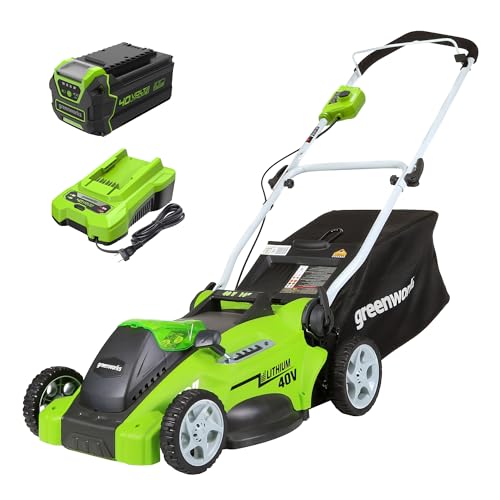
Greenworks
Greenworks 40V 16in Push Lawn Mower, 4.0 Ah Battery and Charger | Quiet walk-behind mower with push-button start; gas-free operation eliminates fumes and pull starts
- [16" LAWN MOWER] - This 40V lawn mower cuts up to 1/3 acre with fully charged 4.0Ah battery (varies based on grass condition and o…
- [ULTRA LIGHTWEIGHT] - 35% lighter than steel deck mowers
- [SINGLE LEVER HEIGHT ADJUST] - 5 position height adjustment
If you’re considering upgrading your lawn mower, the Greenworks 40V 16in Push Lawn Mower is a great option. With its lightweight design and efficient battery, it makes lawn maintenance easier than ever.
The Early Years of Lawn Mowers
The first lawn mower was invented in 1830 by Edwin Beard Budding in England. Budding’s design was a simple push mower made from iron with a cylindrical blade. This innovation allowed for more effective grass cutting compared to manual methods, quickly gaining popularity among homeowners and estates.
Following Budding’s invention, several manufacturers emerged. In 1868, the first American lawn mower was produced by the Smith & Smith Company. This marked the beginning of a competitive landscape in the lawn care market.
Key Manufacturers and Their Innovations
Throughout the years, several manufacturers have stood out, each contributing unique advancements:
- John Deere: Founded in 1837, John Deere began producing mowers in the 1960s. Their innovations include the development of riding mowers and zero-turn mowers, which greatly improved maneuverability and efficiency.
- Honda: Entering the market in the 1960s, Honda focused on engineering high-performance engines. Their mowers are known for fuel efficiency and reliability, becoming popular choices for both residential and commercial use.
- Husqvarna: This Swedish company has a long history dating back to 1689. They revolutionized the industry with their introduction of robotic mowers in the early 2000s, paving the way for automated lawn care.
- Toro: Established in 1914, Toro specializes in professional-grade equipment. Their innovations include the first self-propelled mower and advancements in lawn mower technology that allow for better grass management.
Modern Trends in Lawn Mower Manufacturing
Today, the lawn mower industry is experiencing trends toward electric and robotic mowers. Consumers are increasingly looking for eco-friendly options that reduce noise and pollution. Manufacturers like Greenworks are leading the charge with battery-powered models, such as the Greenworks 40V 16in Push Lawn Mower. This mower offers a lightweight design and features like a 2-in-1 system for mulching and bagging.
Robotic mowers have also gained traction. Companies like Husqvarna and Worx are developing models that autonomously mow lawns, offering convenience and time savings for homeowners.
Comparison of Lawn Mower Types
| Type | Power Source | Best For | Pros | Cons |
|---|---|---|---|---|
| Push Mowers | Manual or Electric | Small yards | Lightweight, eco-friendly | Requires physical effort |
| Self-Propelled Mowers | Gas or Electric | Medium-sized lawns | Less effort needed | Can be heavier |
| Riding Mowers | Gas or Electric | Large properties | Fast and efficient | Higher cost, larger space needed |
| Robotic Mowers | Battery | Small to medium lawns | Automated, time-saving | Higher upfront cost |
What was the first lawn mower?
The first lawn mower was invented by Edwin Beard Budding in 1830. It was a push mower designed for cutting grass more efficiently than manual methods.
When did riding lawn mowers become popular?
Riding lawn mowers became popular in the 1960s, with manufacturers like John Deere leading the way in innovation and production.
Are electric mowers better than gas mowers?
Electric mowers are generally quieter and produce fewer emissions than gas mowers. However, gas mowers often provide more power and longer runtime for larger lawns.
What are the benefits of robotic lawn mowers?
Robotic lawn mowers offer convenience by autonomously mowing your lawn. They save time and can operate quietly, making them suitable for residential areas.
How do I choose the right lawn mower?
When selecting a lawn mower, consider the size of your lawn, the terrain, and your physical capability. Evaluate whether you prefer a manual, self-propelled, or robotic model based on your needs.
Takeaways for Lawn Care Enthusiasts
- Understand the history of lawn mowers to appreciate modern designs.
- Research different manufacturers and their innovations.
- Consider the size of your lawn when choosing a mower type.
- Look for eco-friendly options like electric mowers.
- Robotic mowers can save time if you have a suitable lawn size.
- Check out the best lawn mowers for small lawns for tailored options.
- Explore additional resources for lawn care tips and best practices.


