
You bought a zero turn mower because your yard is big. Then you pointed it at the slope behind your house and realized the machine has other ideas. On a 25-degree grade, a standard zero turn will slide, scalp the turf, or scare you half to death.
A great hill mower does three things well. It keeps weight low, puts power to both drive wheels through a hydrostatic transmission, and soaks up bumps before they reach your spine. Suspension matters, but it’s only one piece of the puzzle. Tire type, deck size, and rollover protection matter just as much.
Below are five machines that handle slopes differently, from a budget-friendly Husqvarna to a remote-controlled crawler built for 45-degree orchard rows. Each pick includes a realistic slope rating and the buyer it actually fits.
Here’s a quick side-by-side of the key specs so you can see how these five mowers compare at a glance.
| Features | Husqvarna Z254F 23HP | EGO ZT4204L Electric | Nuoyu Remote Crawler | Husqvarna MZ61 | Husqvarna Z254F 24HP |
|---|---|---|---|---|---|
| Engine / Power | 23 HP Kawasaki gas | 22 HP equivalent electric | 9 HP hybrid gas-electric | 24 HP Kawasaki gas | 24 HP Kawasaki gas |
| Deck Size | 54 inch ClearCut | 42 inch stamped steel | 55 cm (21.6 inch) | 61 inch fabricated | 54 inch fabricated |
| Transmission | Hydrostatic | Electric drive | Track drive | Hydro Gear ZT-3100 | Hydrostatic |
| Best Use Case | Residential hills, 1-3 acres | Flat to mild slopes, 2 acres | Steep orchards, 45 degrees | Large commercial properties | Mid-size hilly yards |
| Key Hill Feature | Anti-slip foot area | Low center of gravity | Rubber tracks, 45 degree climb | ROPS, commercial hydro | Fabricated deck, Kawasaki power |
Why Suspension Matters on Hills
Husqvarna
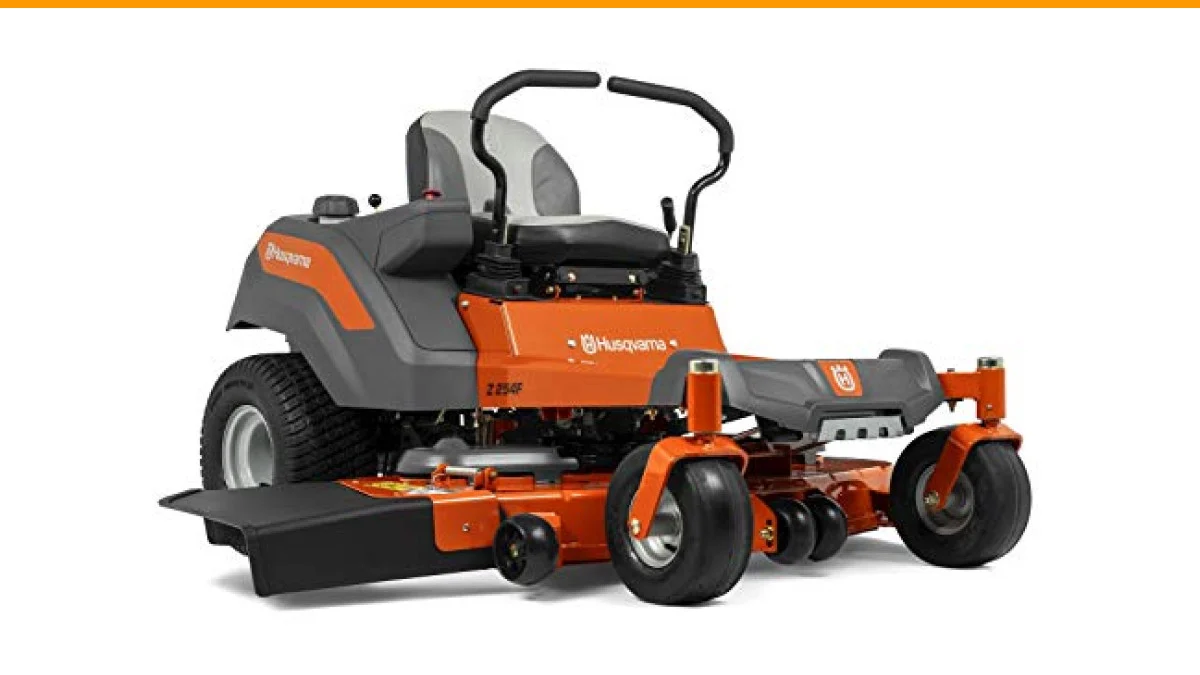
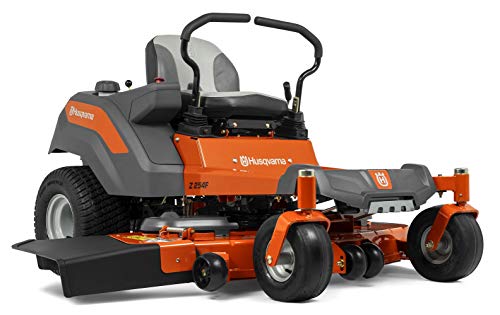
Husqvarna Z254F 54 in. 23 HP Kawasaki Zero Hydrostatic Turn Riding Mower
- 23 HP Kawasaki engine provides reliable startups and a max speed of 6.5 MPH
- Hydrostatic, no-maintenance transmission is worry free, empowering the mower to take on a variety of cutting conditions
- ClearCut deck offers a best-in-class 54 in. cut and better bagging thanks to its deep deck design, superior air flow and high-perf…
Suspension on a zero turn does two jobs. It keeps the deck from bouncing over roots and ruts, and it keeps you planted in the seat so you can steer with both hands. On flat ground, a rough ride is just annoying. On a slope, it’s a safety issue.
There are three suspension types you’ll run into. Seat suspension is the cheapest fix and helps your back, not the machine. A pivoting front axle lets the deck follow the ground contour, which reduces scalping on uneven hills. Independent or full suspension systems cost more and do the most work, especially on washboard terrain.
Here’s the honest part. Suspension does not stop a mower from tipping. It smooths the ride and keeps the deck level, but gravity still wins on a bad slope. Traction and weight distribution are what actually keep you upright. Think of suspension as comfort and deck quality, not a safety feature.
If you want to dig into seat-specific options, this guide to suspension seats for mowers covers the bolt-on upgrades that fit most residential decks.
How Steep Is Too Steep? Slope Grades Explained

EGO Power+
EGO Power+ Electric Riding Lawn Mower, 42" Deck with Zero Turn Radius, Includes (4) 56V 10.0Ah Batteries and Charger - ZT4204L
- POWER OF GAS - This EGO zero turn riding mower is engineered to deliver the equivalent of 22 horsepower and reaches speeds up to 8…
- CUTS UP TO 2 ACRES ON A SINGLE CHARGE - The EGO riding lawn mower cuts up to 2 acres on a single charge with four included 56V 10.…
- CUSTOMIZE YOUR RIDE - The zero turn mower includes an intuitive LCD interface to customize your mowing experience including three…
Manufacturers rarely publish slope ratings, which is why so many buyers get surprised. A 15-degree slope feels mild walking up it. Put a 700-pound mower on it and things change fast.
As a rough rule, most residential zero turns handle up to 15 degrees (about 27% grade) with good tires and dry turf. Commercial machines with wider tires and lower centers of gravity can push 20 degrees (36% grade). Anything past 25 degrees is crawler territory, not wheel territory.
Safe slope limits by mower type

Nuoyu
Remote Control Lawn Mower – Hybrid Gas-Electric, 9HP, Zero Turn, 2-15cm Electric Height, 45° Slope, Self-Developed Circuit – for Orchard, Hillside, Brush – High-Efficiency Crawler Mower
- Zero-turn maneuverability for orchards and tight spaces: The independent track drive allows 360° in-place rotation, making it easy…
- Hybrid power with self-developed control box: The 9HP engine drives the 55cm deck while the brushless motor powers the tracks. The…
- Electric height adjustment for variable terrain: Adjust the cutting height from 2 to 15 cm using the remote, without stopping. Thi…
- Residential zero turn (42-54 inch deck): 10-15 degrees max, dry grass only
- Commercial zero turn (61 inch, fabricated deck): 15-20 degrees with ROPS and weights
- Tracked crawler mower: up to 45 degrees, built for orchard terraces
- Electric zero turn: similar to residential gas, but battery weight can help or hurt balance
Wet grass cuts every one of those numbers by roughly a third. If your slope is slick clay after rain, treat it as a no-go zone.
Husqvarna Z254F 54 in. 23HP
Husqvarna
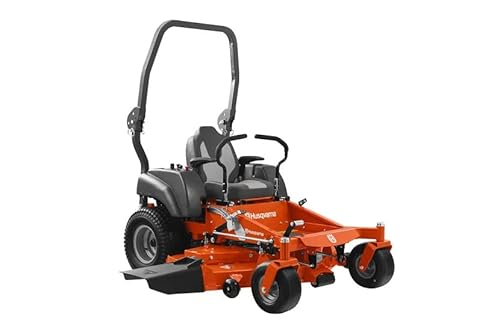
Husqvarna MZ61 (61") 24HP Kawasaki Zero Turn Lawn Mower w/ROPS
- 24HP/726cc Kawasaki FR730V Series V-Twin Engine
- 61-inch, 3-blade fabricated deck
- Hydro Gear ZT-3100 Commercial Grade Hydrostatic Transmission
This is the mower for the homeowner with two or three acres and a slope that’s annoying but not terrifying. The 23 HP Kawasaki engine and 54-inch ClearCut deck make quick work of open lawn, and the hydrostatic transmission means no clutch, no shifting, just two levers.
What stands out is the ergonomics. The anti-slip foot area and comfortable seat matter more than they sound when you’re leaning into a hill for 45 minutes. The ClearCut deck also bags well thanks to its deep design and airflow, which helps if you’re mulching leaves on a slope and don’t want clumps rolling downhill.
The trade-off is suspension. This model doesn’t have a suspension system from the factory, so if your property is genuinely rough, you’ll want to add a suspension seat or look at a commercial machine. It’s also not the tool for anything past about 15 degrees. On wet grass, that drops to 10.
- 23 HP Kawasaki engine, 6.5 MPH top speed
- 54-inch ClearCut deck with strong bagging airflow
- Maintenance-free hydrostatic transmission
- Mulch kit and bagger sold separately
- No factory suspension, so rough terrain needs an upgrade
Best for: The homeowner with 1-3 acres of rolling lawn who wants a reliable, easy-to-run gas mower and doesn’t need commercial-grade slope capability.
EGO Power+ Electric Riding Mower

Husqvarna
Husqvarna Z254F (54") 24HP 726cc FR730 Engine Zero Turn Mower
- 24HP/726cc FR730 engine
- 54 inch FAB Deck
Electric zero turns are finally viable for real yards, and this EGO is the one most buyers ask about. The ZT4204L runs on four 56V 10.0Ah batteries and delivers the equivalent of 22 horsepower with a top speed of 8 MPH. That’s faster than most gas mowers in this class.
The big win is the LCD interface and three driving modes. Standard, Control, and Sport change how aggressively the mower responds to the levers, and Control mode is genuinely useful on slopes because it softens the inputs. You get 10 cutting heights from 1.5 to 4.5 inches, and the 42-inch deck mulches, bags, or side discharges.
Range is the honest limitation. Two acres per charge with the included batteries, and you can add more batteries to extend that. Recharge takes about two hours. On hills, the battery weight sits low in the chassis, which helps stability, but the 42-inch deck is narrower than the Husqvarna, so you’ll make more passes. It’s also scarce at times, so check availability before you commit.
- Four 56V 10.0Ah batteries, roughly 2-hour recharge
- Cuts up to 2 acres per charge, expandable with extra batteries
- Three driving modes including a softer Control setting
- 42-inch stamped steel deck, 10 cutting heights
- No gas, no oil changes, minimal maintenance
Best for: The tech-friendly homeowner with a flat-to-mildly-sloped two-acre yard who wants quiet operation and zero engine maintenance.
Remote Control Lawn Mower
This Nuoyu crawler is a different animal entirely. It’s a remote-controlled hybrid gas-electric machine on rubber tracks, and it climbs slopes up to 45 degrees. If you have orchard terraces, a hillside you’d never mow on a rider, or brush-covered ground, this is the tool that solves a problem nothing else on this list can.
The hybrid setup is clever. A 9 HP engine drives the 55 cm deck while a brushless motor powers the tracks. The remote lets you adjust cutting height from 2 to 15 cm on the fly, which matters when you hit a rough patch with fallen branches. You raise the deck, roll over it, then drop back down.
Two things to know before buying. First, it’s remote-controlled, so you’re not sitting on it. That’s a safety plus on extreme slopes and a comfort minus if you enjoy the ride. Second, the 55 cm deck is narrow, so it’s not a wide-open-lawn machine. It’s a precision tool for tight, steep, irregular ground.
- 45-degree slope capability on heavy-duty rubber tracks
- 9 HP engine plus brushless track motor
- Remote electric height adjustment, 2-15 cm
- 360-degree zero-turn rotation for tight orchard rows
- Track design reduces soil compaction versus wheels
Best for: Orchard owners, hillside property managers, and anyone with slopes so steep a ride-on mower is out of the question.
Husqvarna MZ61 (61″) 24HP
Step up to the commercial side and the MZ61 is what you get. The 24 HP Kawasaki FR730V V-twin and 61-inch fabricated deck put this in a different class from the residential Z254F. The Hydro Gear ZT-3100 transmission is a commercial-grade unit built for continuous duty, not weekend use.
The rollover protection system (ROPS) is the headline feature for hill work. It’s not decoration. On slopes past 15 degrees, ROPS plus a seatbelt is what keeps you alive if the mower tips. The 5-gallon fuel capacity also means fewer refueling stops on large properties, which matters when you’re mowing 5+ acres.
Downsides exist. The 61-inch deck is wide, which is great for open ground and awkward on tight, terraced slopes. It’s also heavier than the residential models, so you need good traction to climb. And it’s often scarce in stock. If you find one available, that’s your window.
- 24 HP Kawasaki FR730V V-twin engine
- 61-inch fabricated 3-blade deck
- Hydro Gear ZT-3100 commercial hydrostatic transmission
- ROPS for rollover protection on slopes
- 5-gallon fuel tank, 4-year consumer warranty
Best for: Large-property owners and light commercial operators who mow 5+ acres and need a machine built to run all day without complaint.
Husqvarna Z254F (54″) 24HP
This is the Z254F with a bump in power. Same 54-inch footprint, but a 24 HP FR730 engine and a fabricated deck instead of the ClearCut. That combination matters on hills because the fabricated deck is stiffer and holds its shape better over years of uneven ground.
If you’ve been comparing the two Z254F models, the 24 HP version is the one to pick for hilly terrain. Extra horsepower helps when you’re climbing with a full bagger or mulching heavy growth. The fabricated deck also resists denting from rocks and roots better than stamped steel.
It still lacks factory suspension, so plan on a suspension seat if your ground is rough. And like the 23 HP version, it’s a residential machine. Treat 15 degrees as your practical ceiling on dry grass. Wet slopes, walk away.
- 24 HP Kawasaki FR730 engine
- 54-inch fabricated deck for durability
- More power than the 23 HP Z254F for heavy cutting
- Same residential hydrostatic transmission
- No factory suspension, seat upgrade recommended
Best for: The homeowner with a mid-size hilly yard who wants more power and a tougher deck than the base Z254F without jumping to commercial pricing.
How We Chose These Products
We started with the keyword itself. Suspension and hills. That immediately ruled out flat-ground-only mowers and pushed us toward machines with either factory suspension, ROPS, or track systems. From there, we looked at engine type, transmission grade, deck construction, and weight distribution.
We also weighed real-world ownership. A mower that’s scarce in stock is still worth recommending if it’s the right tool, but we noted availability. We avoided specs that don’t affect hill performance, like cup holders and headlights. If it doesn’t help you climb, cut, or stay safe on a slope, it didn’t make the cut.
For a broader look at hill-specific machines, this roundup of the best zero turn for hills covers additional models we considered.
Buying Guide: What Really Matters
Engine size is the first thing buyers look at, and it’s the least important for hills. A 24 HP engine won’t help if your tires can’t grip. What matters is the transmission. Hydrostatic is standard, but commercial-grade units like the Hydro Gear ZT-3100 handle sustained slope work without overheating. Residential transmissions will fade on long climbs.
Deck size is a trade-off. A 61-inch deck cuts wide and fast on open ground. A 42-inch deck fits tighter spaces and puts less weight far from the center of gravity. On slopes, a narrower deck is often the smarter choice because the mower stays more balanced. Fabricated decks beat stamped decks for durability on rough terrain.
Don’t overlook tire type. Turf tires are fine for flat lawns but spin on hills. If you’re serious about slopes, look for tires with more aggressive tread or plan to add wheel weights. Tire pressure also matters. Overinflated tires reduce the contact patch and cut traction. Dropping a few PSI can make a real difference on dry grass.
If you want a deeper breakdown of slope-ready machines and suspension systems, this guide to zero turn mowers with suspension covers more options and upgrade paths.
Traction and Stability Upgrades That Actually Work
Tires are your first upgrade. Turf tires look fine until you hit a slope. Swap to a more aggressive tread or add tire chains for winter mowing. Wider tires spread weight and improve grip, but they also change your mower’s footprint, so check clearance.
Wheel weights and wheel spacers are cheap fixes with real results. Weights add downforce to the drive wheels, which improves traction on climbs. Spacers widen the track width, which lowers the center of gravity and reduces tip-over risk. Both are bolt-on and reversible.
Tire pressure is free. Most mower tires ship overinflated for shipping, not mowing. Check the sidewall and drop to the low end of the recommended range for better grip. Just don’t go so low you risk debeading on a hard turn.
How to Mow Hills Safely With a Zero Turn
Mow slopes up and down, not across, whenever possible. Side-hilling is the number one cause of zero turn rollovers. If you must mow across, do it on the gentlest part of the slope and keep your speed low.
Turn at the bottom, not on the hill. Zero turns pivot on the spot, and a pivot on a slope shifts weight fast. Drive to flat ground, turn, then climb again. It’s slower, but it’s safer.
Use ROPS and a seatbelt if your mower has them. ROPS only works if you’re buckled in. If the mower starts to tip, don’t try to jump. Stay in the seat and steer downhill.
Know when to stop. If the grass is wet, if the slope is past your mower’s rating, or if you feel the rear tires losing grip, shut it down. A string trimmer and a walk-behind mower are slower, but they won’t flip on you.
Frequently Asked Questions
Can I add suspension to a zero turn that doesn’t have it?
Yes, in most cases. Suspension seats are the easiest upgrade and fit many residential models. A pivoting front axle is a bigger job and not all frames support it. Check your model’s parts diagram before buying.
What’s the maximum slope a zero turn can handle?
Most residential zero turns top out around 15 degrees on dry grass. Commercial machines with ROPS and good tires can handle 20 degrees. Past that, you’re looking at tracked crawlers or walk-behind equipment.
Do wider tires actually help on hills?
They help by spreading weight and increasing the contact patch, but tread pattern matters more. A wide turf tire still spins on wet grass. Aggressive tread plus correct tire pressure is the better combination.
Is an electric zero turn good for hills?
It can be. Battery weight sits low, which helps stability. But electric mowers tend to have less sustained torque on long climbs than gas equivalents, and range drops on slopes. For mild hills and two acres or less, they work fine.
Our Top Recommendation
For most homeowners with hilly terrain, the Husqvarna Z254F 54 in. 23HP is the pick. It balances price, power, and usability better than anything else on this list. The Kawasaki engine is proven, the hydrostatic transmission is maintenance-free, and the 54-inch deck handles a real yard without being unwieldy on slopes.
If your slopes are steep enough to worry you, step up to the Husqvarna MZ61. The commercial transmission and ROPS make it the safer choice for serious hill work. If you want electric, the EGO ZT4204L is the best option available, as long as your slopes stay mild and your acreage stays under two. And if your terrain is genuinely extreme, the Nuoyu remote crawler is the only machine here that climbs 45 degrees.
Whichever you choose, remember that suspension is comfort, not safety. Traction, weight distribution, and knowing your slope limit are what keep you upright.