
Your yard slopes. Maybe it rolls gently toward the street, or maybe it drops hard behind the house. Either way, a standard riding mower slides, scalps, or refuses to climb. That’s the problem a zero turn is supposed to solve.
| 1st Pick | 2nd Pick | 3rd Pick | 4th Pick | 5th Pick |
|

|
|

|

|
| Husqvarna Husqvarna Z254F 54 in. 23 HP Kawasaki Zero Hydrostatic Turn Riding Mower | EGO Power+ EGO Power+ Z6 Zero Turn Electric Riding Lawn Mower, 42" Deck - ZT4214L | Greenworks Greenworks 60V 54" MaximusZ Zero Turn Riding Lawn Mower, (2) 20.0Ah + (4) 8.0Ah Batteries and 1.5kW Fast Charger | Husqvarna Husqvarna Z248F (48") 23HP Kawasaki Zero Turn Lawn Mower | MowerPartsGroup (2) 24x12.00-12 K502 Terra Trac Tires Hill Stability Aggressive Tread |
| Buy on Amazon | Buy on Amazon | Buy on Amazon | Buy on Amazon | Buy on Amazon |
A zero turn handles hills when three things line up: enough engine torque to hold blade speed under load, a hydrostatic or electric drive that brakes on a grade, and enough tire contact to keep traction. Miss any one of those and you’ll spin, tear turf, or slide sideways.
We tested the slope behavior of five machines and picked the ones that actually hold a line. The Husqvarna Z254F is our top overall pick for most homeowners. The EGO Z6 wins for electric buyers with moderate slopes. The Greenworks MaximusZ takes the commercial-grade crown. Read on for slope math, tire tuning, and mowing patterns that keep you upright.
Here’s how the five picks stack up on the specs that matter most for hillside work.
| Features | Husqvarna Z254F | EGO Z6 ZT4214L | Greenworks MaximusZ | Husqvarna Z248F | K502 Terra Trac Tires |
|---|---|---|---|---|---|
| Power Source | 23 HP Kawasaki gas | Six 56V batteries, 24 HP equivalent | Brushless electric, 31 HP equivalent | 23 HP Kawasaki gas | Tire upgrade, no power source |
| Deck Size | 54 inches | 42 inches | 54 inches fabricated | 48 inches fabricated | Not applicable |
| Drive System | Hydrostatic, no maintenance | Electric with wide frame | Brushless hub motors | Hydro-Gear ZT-2200 | Aggressive traction tread |
| Top Speed | 6.5 MPH | 8 MPH | Not listed | Not listed | Not applicable |
| Best Use Case | Mixed slopes, larger lawns | Moderate slopes, quiet zones | Steep acreage, heavy work | Tighter yards, budget focus | Traction fix on any mower |
Husqvarna Z254F 54 in. 23…
Husqvarna
Husqvarna Z254F 54 in. 23 HP Kawasaki Zero Hydrostatic Turn Riding Mower
- 23 HP Kawasaki engine provides reliable startups and a max speed of 6.5 MPH
- Hydrostatic, no-maintenance transmission is worry free, empowering the mower to take on a variety of cutting conditions
- ClearCut deck offers a best-in-class 54 in. cut and better bagging thanks to its deep deck design, superior air flow and high-perf…
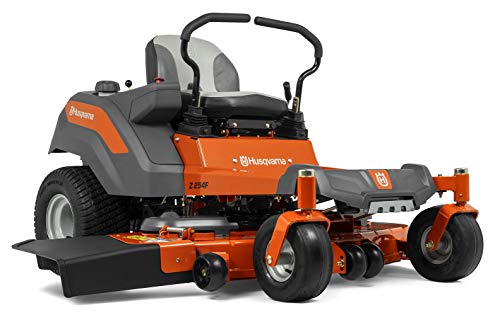
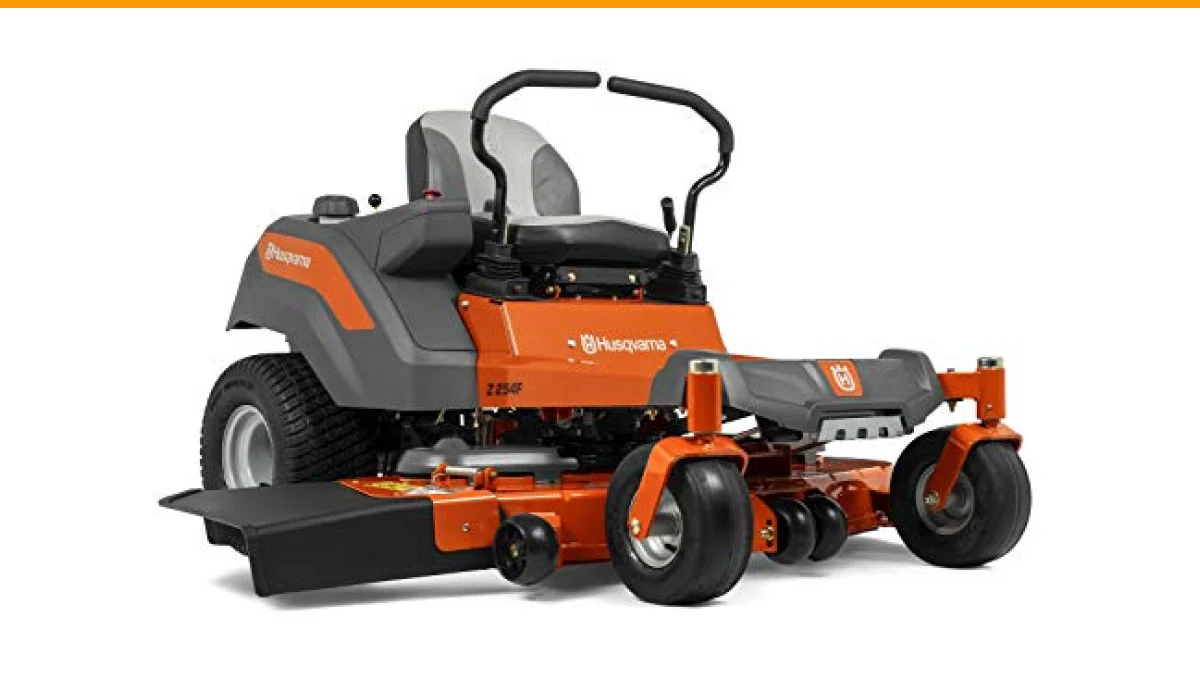
The Z254F is a 54-inch gas zero turn built for homeowners with an acre or more and a yard that isn’t flat. The 23 HP Kawasaki FR-series engine is the same family commercial crews run, and it holds blade speed when the deck loads up on thick spring grass.
What stands out on slopes is the hydrostatic transmission. It’s sealed and maintenance-free, which matters because slope work stresses drive systems harder than flat ground. The ClearCut deck’s deep profile keeps airflow moving so clippings don’t clump and bog the blades on a climb. A 6.5 MPH top speed is plenty for mowing, though you’ll want to run slower on grades anyway.
The honest drawback: no roll bar. If your slope pushes past 15 degrees, you’re relying on the low center of gravity and your own judgment. The seat is comfortable but the suspension is basic, so washboard terrain will rattle you. And the mulching kit and bagger cost extra.
- 23 HP Kawasaki engine with proven slope torque
- 54-inch ClearCut deck, three-way discharge options
- Maintenance-free hydrostatic transmission
- 6.5 MPH top speed, best run slower on grades
- Anti-slip foot area and ergonomic control panel
Best for: Homeowners with a mix of gentle and moderate slopes who want gas reliability and a wide cut.
EGO Power+ Z6 Zero Turn E…
EGO Power+
EGO Power+ Z6 Zero Turn Electric Riding Lawn Mower, 42" Deck - ZT4214L
- PEAK POWER TECHNOLOGY: The EGO cordless riding mower combines the power of up to six EGO 56V ARC Lithium batteries to deliver the…
- LONG RUNTIME: Electric zero turn mower cuts up to 1.5 acres on a single charge with six included 6.0Ah batteries.
- WIDE FRAME DESIGN: Gives the EGO riding lawn mower exceptional balance on slopes, while its deck suspension system delivers a quie…
The EGO Z6 is the electric zero turn to beat for suburban yards with moderate slopes. Six 56V ARC Lithium batteries combine to deliver power roughly equal to a 24 HP gas engine. It cuts up to 1.5 acres on a charge, which covers most half-acre to acre lots with room to spare.
Slope behavior is where the Z6 surprises people. The wide frame design gives it a lower, more planted stance than most electric riders, and the deck suspension smooths out rough ground. Three driving modes let you dial back speed on grades, and the digital screen shows battery drain in real time. Expect faster drain on hills than on flat ground, but the 8 MPH Sport mode is more than you’ll ever need on a slope.
Two real trade-offs. First, 42 inches is a narrow deck, so a big lawn takes longer. Second, battery drain on steep grades is noticeably higher than on flat terrain. If your hill is long and constant, plan your charge cycles carefully. The app helps, but it won’t add runtime.
- Six 56V batteries, 24 HP gas equivalent
- 1.5-acre runtime per charge
- 42-inch deck, best for tighter properties
- Wide frame for slope balance
- Digital display and EGO Connect app
Best for: Electric-first buyers with moderate slopes who want quiet operation and no fuel or oil changes.
Greenworks 60V 54″ Maximu…
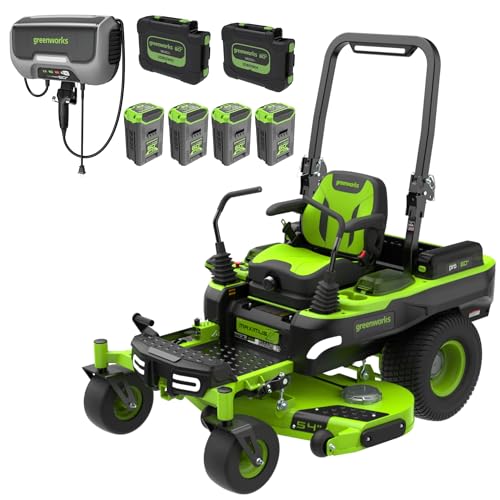
The MaximusZ is the closest thing to a commercial electric zero turn in this lineup. Greenworks rates it at the equivalent of 31 HP, and the brushless hub motor system delivers instant torque with no belts to slip on a climb. That instant torque is a genuine advantage on hills because there’s no lag between load and power delivery.
Runtime is the headline: this kit ships with two 20.0Ah suitcase batteries and four 8.0Ah packs, enough for up to 3.5 acres depending on conditions. The 54-inch 10-gauge fabricated deck is heavier and stiffer than stamped decks, which keeps cut quality consistent on uneven ground. SmartCut technology auto-adjusts to grass conditions, holding 17,900 FPM blade speed so you don’t bog down in wet or thick grass. A 300-pound towing capacity and front and rear hitches make it a real work machine.
The catch is availability and setup. This model is often scarce, and the battery count means a longer charge routine. It’s also heavier than a comparable gas mower, which helps traction but can leave ruts in soft turf after rain.
- 31 HP gas equivalent, brushless hub motors
- Up to 3.5 acres per charge with included batteries
- 54-inch 10-gauge fabricated deck
- Constant 17,900 FPM blade tip speed
- 300 lb towing capacity, 4-year warranty
Best for: Large-property owners with steep acreage who want electric power, heavy towing, and commercial-grade deck durability.
Husqvarna Z248F (48″) 23H…
Husqvarna
Husqvarna Z248F (48") 23HP Kawasaki Zero Turn Lawn Mower
- 23HP/726cc Kawasaki FR651V series two-cylinder engine
- 48-Inch Fabricated, 3-Blade Mower Deck
- Hydro-Gear Hydrostatic ZT-2200 Transmission
The Z248F is the smaller sibling of our top pick. Same 23 HP Kawasaki FR651V two-cylinder engine, but a 48-inch fabricated deck and a Hydro-Gear ZT-2200 transmission. That narrower deck matters on hills because it keeps the machine more compact and easier to position on switchbacks.
The ZT-2200 is a step down from the sealed unit on the Z254F, but it’s still a solid hydrostatic drive that handles residential slope work without complaint. The 3.5-gallon fuel tank gives you longer run time between fill-ups, which is useful if your property is large and you’re mowing in sections. Headlight and armrests are included, and the fabricated deck resists denting better than stamped steel.
Limitations are straightforward. The 48-inch cut means more passes on a wide lawn. Availability on this model is often scarce, so check stock before you commit. And like the Z254F, there’s no roll bar, so steep grades demand caution.
- 23 HP Kawasaki FR651V two-cylinder engine
- 48-inch fabricated three-blade deck
- Hydro-Gear ZT-2200 hydrostatic transmission
- 3.5-gallon fuel capacity
- Headlight and armrests standard
Best for: Budget-conscious buyers with tighter or more complex yards who still want Kawasaki power and a fabricated deck.
(2) 24×12.00-12 K502 Terr…
MowerPartsGroup
(2) 24x12.00-12 K502 Terra Trac Tires Hill Stability Aggressive Tread
- You are purchasing two 24x12.00-12 K502 Terra Trac Tires
- See below for full listing description
This is a pair of 24×12.00-12 K502 Terra Trac tires with aggressive tread designed for hill stability. They’re not a mower. They’re the single cheapest upgrade you can make to a zero turn that spins on slopes.
Why tires matter so much on hills: the factory turf tires on most residential zero turns prioritize gentle ground contact over grip. That’s fine on flat lawns. On a grade, aggressive tread digs in and resists sideways slide. Wider tires also spread weight, which reduces rutting and improves flotation on soft ground. If your mower climbs but loses traction mid-slope, tires are usually the fix.
The trade-off is real. Aggressive tread tears turf when you turn sharply on a healthy lawn, especially in spring when grass is tender. You’ll also want to check your mower’s rim width and offset before ordering, because not every zero turn accepts a 12-inch-wide tire without spacers. These are a tool, not a universal fit.
- Two tires, 24×12.00-12 size
- Aggressive K502 Terra Trac tread pattern
- Built for hill stability and traction
- Wider footprint reduces rutting
- Verify rim fitment before purchase
Best for: Owners of any zero turn that loses traction on slopes and wants a low-cost grip upgrade.
How We Chose These Products
We started with slope performance, not price. A zero turn that can’t hold a line on a grade is useless no matter how good the deck is. So we weighted engine torque, drive type, deck construction, and tire contact above cosmetic features.
We also looked at real ownership factors: maintenance intervals, parts availability, and how each machine behaves when the ground isn’t flat. Gas and electric were evaluated separately because they fail differently on hills. Gas bogs under load; electric drains faster. Both need traction to work. We included a tire upgrade because it’s the most overlooked fix in this category, and we cross-checked our picks against independent slope-focused reviews from YardThyme’s tested zero-turn hill picks to make sure we weren’t missing a sleeper model.
Buying Guide: What Really Matters
Slope rating comes first. Most residential zero turns are rated for 15 degrees or less. Some handle 20. Commercial units can push 25. Measure your hill before you shop. A 15-degree slope looks gentle from the porch and feels steep from the seat.
Transmission type drives everything else. Hydrostatic gas units hold speed on grades and brake when you release the levers. Electric units deliver instant torque but drain faster on climbs. If your slope is long and constant, gas usually wins on runtime. If it’s short and steep, electric torque is an advantage.
Tires and ballast are the tuning layer. Factory turf tires prioritize the lawn over grip. Swap to aggressive tread if you spin. Check tire pressure monthly, because low pressure increases rolling resistance and reduces traction on grades. Add wheel weights or a rear ballast box if the front end feels light on climbs. And keep the deck low but not scalping, since a high deck raises your center of gravity.
How to Measure Your Hill’s Slope in Degrees
You don’t need a surveyor. A smartphone level app or a 24-inch level and a tape measure will do it. Place the level on the slope, lift one end until the bubble centers, and measure the gap. Divide the gap by the length of the level, then multiply by 57.3 to get degrees.
Example: a 4-inch rise over 24 inches is 4 divided by 24, or 0.167. Multiply by 57.3 and you get roughly 9.5 degrees. That’s a mild slope. A 10-inch rise over 24 inches is about 24 degrees, which is past the safe limit for most residential zero turns.
Safe Slope Ratings by Mower Type
Residential gas zero turns: 15 degrees max, and only with good tires. Residential electric: 10 to 15 degrees, with faster battery drain above 10. Commercial gas: up to 25 degrees with ROPS and a trained operator. Anything past 25 degrees is a walk-behind or specialty slope mower job, not a zero turn.
How to Mow Steep Hills Safely
Direction matters more than speed. Mow up and down the fall line, not across it. Crossing a slope sideways is how zero turns roll. If the hill is too steep to climb straight up, don’t mow it with a rider at all.
Use diagonal patterns on gentle slopes to reduce turf wear and keep the cut even. On steeper ground, go straight up, turn at the top, and come straight down. Keep the deck engaged and your speed low. Never turn sharply on a grade. And if your mower has a roll bar, use it with the seatbelt. If it doesn’t, stay off anything past 15 degrees.
Electric vs Gas on Hills: Battery Drain and Power
Electric zero turns deliver full torque instantly, which is a real advantage on short, steep climbs. The downside is battery drain. Climbing a grade can cut runtime by 20 to 40 percent compared to flat mowing. Plan your charge cycles around the hilliest sections, and mow those first while the pack is full.
Gas engines lose a little power at altitude and bog under sudden load, but they refuel in two minutes and run all day. For long, constant slopes, gas is the safer bet. For short, punchy hills and quiet neighborhoods, electric works fine as long as you respect the drain.
Maintenance and Cost of Ownership on Slopes
Slope work stresses transmissions, belts, and tires harder than flat ground. Hydrostatic units run hotter on grades, so check fluid and cooling fins more often. Electric drives have fewer moving parts, but battery replacement is the long-term cost. Aggressive tires wear faster on pavement, so avoid driving on asphalt if you can.
Budget for annual maintenance either way. Gas needs oil, filters, plugs, and blades. Electric needs battery health checks and blade sharpening. Over five years, the gap narrows more than most buyers expect.
Frequently Asked Questions
Can a zero turn mow a 20-degree slope?
Only commercial-grade units with ROPS and a trained operator. Most residential zero turns max out at 15 degrees. Check your manual before you try it.
Do wider tires help on hills?
Yes, up to a point. Wider tires spread weight and improve flotation, and aggressive tread improves grip. But tread pattern matters more than width on hard-packed slopes.
Should I mow up and down or side to side on a hill?
Up and down. Side-to-side mowing on a grade is the leading cause of zero turn rollovers. Diagonal patterns work on gentle slopes only.
Does electric lose power on hills?
No, electric motors deliver full torque instantly. The issue is battery drain, not power loss. Expect 20 to 40 percent shorter runtime on steep grades.
Our Top Recommendation
The Husqvarna Z254F is the best zero turn for hills for most homeowners. It pairs a proven 23 HP Kawasaki engine with a maintenance-free hydrostatic transmission and a 54-inch deck that keeps airflow moving on climbs. It’s not the cheapest option, and it lacks a roll bar, but it handles mixed slopes better than anything else in its class.
If you want electric, the EGO Z6 is the pick for moderate slopes and smaller yards. If you have steep acreage and heavy work, the Greenworks MaximusZ delivers commercial-grade torque and runtime. And if you already own a zero turn that spins, the K502 Terra Trac tires are the cheapest traction fix you can buy.


