Overgrown acreage doesn’t wait for a good weekend. Brush hits knee height in a couple of weeks, saplings crowd the fence line, and a standard riding mower just stalls out or burns through belts. That’s the moment most rural property owners start hunting for a tow-behind rough-cut mower.
A good one needs three things: enough engine to grind through thick growth, blades that survive rocks and stumps, and a hitch setup that lets you reach ditch slopes and under low tree limbs. The Earthquake Acreage 42795 targets all three. This tow-behind brush mower review breaks down what it actually does well, where it falls short, and whether it fits your land.
Only one model is covered here because this is a focused, single-product review. If you’re comparing multiple brands, the best tow-behind brush mowers guide covers the wider field. Read on for the full Earthquake breakdown.
Here’s a quick spec comparison to frame what this mower brings to the table.
| Features | Earthquake Acreage 42795 |
|---|---|
| Deck & Cutting Width | 44-inch steel deck |
| Engine | 17.5HP Briggs & Stratton |
| Starting Method | Keyed electric start with battery |
| Cutting Height Range | 3.5 to 7.5 inches |
| Offset Capability | Up to 4 feet either side |
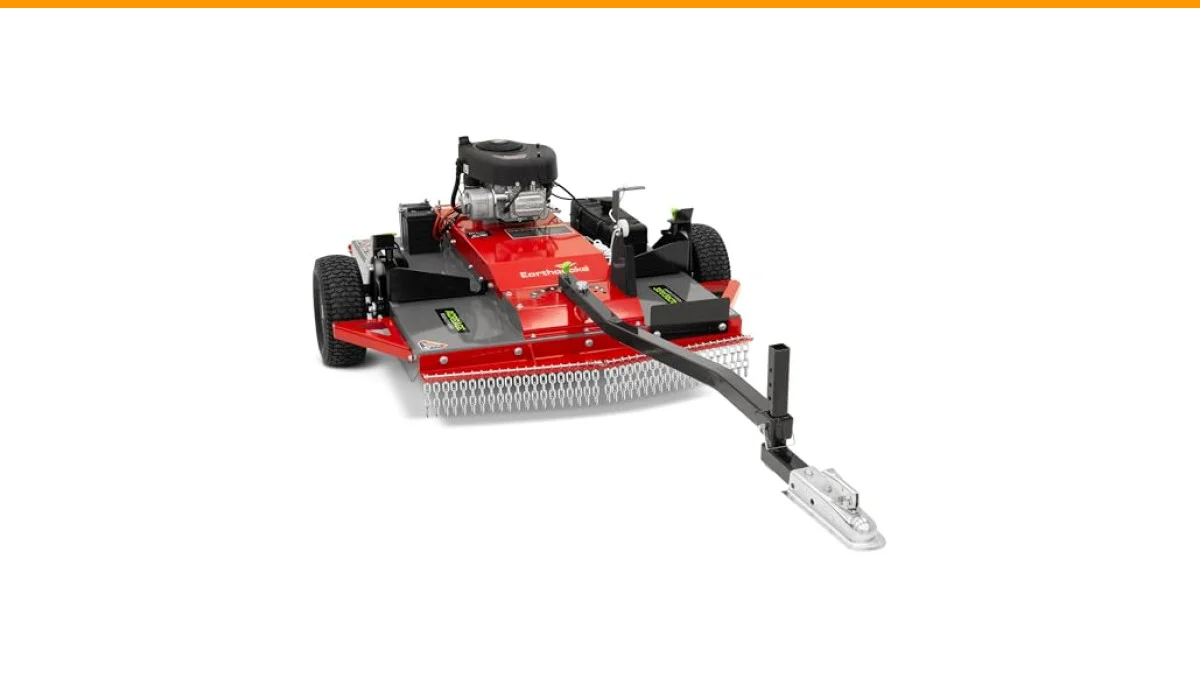
Earthquake Acreage Tow-Behind Mower

EARTHQUAKE
Earthquake Acreage Tow-Behind Mower, 44” Steel Deck, 17.5HP Briggs & Stratton, Electric Start w/Battery, Manual Blade Lever, Adjustable Tow & Height, 2” Ball, Model 42795
- ROUGH & TOUGH: The Acreage can clear tall grass, thick brush and saplings up to 3" thick in a single 44” wide pass. Two pivoting b…
- ADJUSTABLE OFFSET MOWING: Fully offset the mower behind the tow vehicle up to 4’ in either direction for mowing trails or ditch sl…
- TRUSTED POWER: Maintain overgrown properties with an always reliable 17.5hp Briggs & Stratton engine. Its Advanced Debris Manageme…
The Acreage 42795 is a rough-cut tow-behind mower built for people who own more land than time. It hooks to an ATV, UTV, or garden tractor with a 2-inch ball hitch and cuts a 44-inch swath through tall grass, thick brush, and saplings up to 3 inches thick. If your property has trails, fence lines, or pasture edges that a finish mower can’t touch, this is the tool aimed at that job.
The standout feature is the pivoting break-away blade system. Two blades swing out of the way when they hit rocks or stumps instead of shearing off or damaging the spindle. That single design choice saves real money on blade replacements if your land is anything like most rural acreage — rocky, uneven, and full of surprises. The 17.5HP Briggs & Stratton engine pairs with an Advanced Debris Management System that deflects grass and chaff away from the engine housing, which matters when you’re mowing dry, dusty summer growth for hours.
Offset mowing is the other big selling point. You can slide the deck up to 4 feet to either side of the tow vehicle. That’s how you cut ditch banks, reach under low-hanging branches, and mow along fence lines without driving the ATV into the fence. Height adjusts from 3.5 to 7.5 inches without tools, so you can raise the deck on the fly when the terrain gets rough.
Electric start with an included battery removes the pull-cord frustration. Turn the key and go. Blade engagement happens with a lever pull, and disengagement uses a rope from the seat — a small detail, but one that keeps you from climbing off the machine every time you need to stop the blades.
Now the honest part. This mower is heavy and it demands a capable tow vehicle. A small lawn tractor won’t cut it on steep or wet ground. The scarce availability means you may wait for restock, and the manual blade lever isn’t as convenient as an electric PTO clutch on premium competitors. It’s also a rough-cut machine — don’t expect a manicured lawn finish. It cuts growth down, not pretty.
- 44-inch cutting width clears a lot of ground per pass
- Break-away blades protect the drive system from rock and stump damage
- 4-foot offset reaches ditches, slopes, and under tree limbs
- Tool-free cutting height adjustment from 3.5 to 7.5 inches
- Electric start with battery eliminates pull-starting
Best for: Rural property owners with 2+ acres of brush, trails, or pasture edges who already own an ATV or UTV and want a rough-cut mower that survives rocky ground.
How We Chose These Products
This review focuses on one model because the Earthquake Acreage 42795 stands out in the tow-behind rough-cut category for a specific reason: the break-away blade design. Most budget tow-behind mowers use fixed blades that bend or snap on the first rock. That’s a repair bill waiting to happen. The pivoting system here addresses the single most common failure point in this product class.
Evaluation criteria covered four areas: engine reliability and displacement, blade protection design, hitch and offset flexibility, and real-world usability features like electric start and tool-free height adjustment. Availability and tow-vehicle requirements were weighed as practical constraints, not just specs on a page. You can see how this model stacks against others in the UTV tow-behind mower category.
Buying Guide: What Really Matters
Engine size drives everything. A 17.5HP Briggs & Stratton handles thick brush and saplings up to 3 inches, but if your land is mostly light grass, you’re paying for power you may not need. Match horsepower to the worst growth you’ll face, not the average.
Blade protection is the spec most buyers overlook. Fixed blades are cheaper upfront but expensive after the first rock strike. Pivoting or break-away blades cost more initially and save money over years of rough mowing. If your property has rocky soil or hidden stumps, this feature alone should decide your purchase.
Hitch compatibility and offset range matter more than most people realize. A 2-inch ball hitch is standard, but check your tow vehicle’s towing capacity and ground clearance. Offset mowing lets you reach places the tow vehicle can’t go — ditch banks, fence lines, under low branches. Four feet of offset is generous for this class.
Our Top Recommendation
The Earthquake Acreage 42795 earns the recommendation for anyone with rough acreage and an ATV or UTV already in the barn. The combination of a reliable 17.5HP engine, break-away blades, 4-foot offset, and electric start covers the practical needs of rural mowing without overcomplicating things. Check the current price on Amazon before committing — availability fluctuates.
If your budget is tighter or your land is smaller, a lighter tow-behind mower for small yards and hills may suit you better. And if you’re still weighing brands, the full tow-behind mower comparison covers alternatives across price ranges.
Frequently Asked Questions
Can I tow the Earthquake Acreage with a riding lawn mower?
Technically yes, if the mower has a hitch and enough power. But a standard riding mower lacks the torque and traction for 44 inches of thick brush. An ATV or UTV is the realistic minimum for anything beyond light grass.
How thick a sapling can this mower cut?
The manufacturer rates it for saplings up to 3 inches thick in a single pass. Anything larger needs a chainsaw first. The break-away blades handle the occasional thicker stem without damage, but repeated abuse will wear them faster.
Does the offset feature affect cutting quality?
Offset mowing shifts the deck sideways, which changes the balance slightly on slopes. On flat ground, cut quality stays consistent. On steep ditch banks, you’ll notice the deck riding at an angle, so adjust height accordingly.
What maintenance does the break-away blade system need?
Check the pivot points every few mows for debris buildup and lubricate them periodically. The blades themselves sharpen like any mower blade. The pivoting mechanism is simple, but ignoring it leads to blades that don’t swing freely and lose their protective advantage.