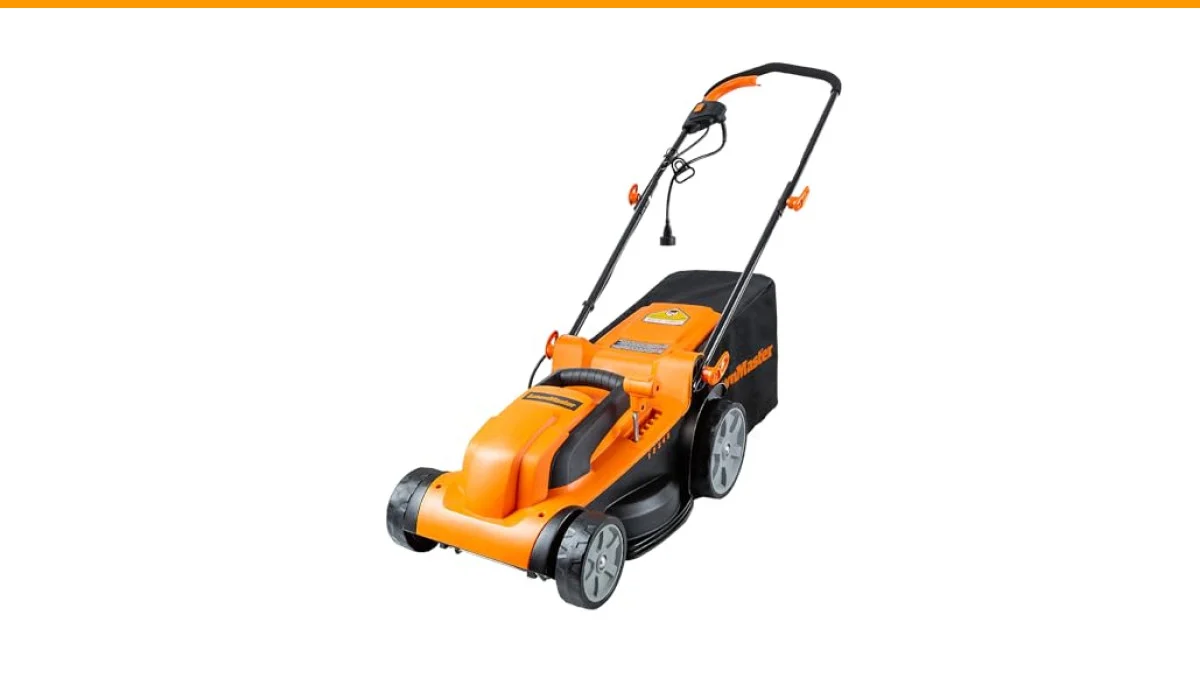
Dragging a dead-weight mower across a damp, half-acre lawn while the bag clogs every ten feet is a special kind of Saturday misery. You finish the job exhausted, and the grass clippings you fought to collect end up in a landfill instead of feeding your turf. Mulching solves the disposal problem, but only if the mower has the suction, blade design, and drive power to actually chop the clippings fine enough to disappear.
A great mulching mower needs three things working together: a robust engine that holds RPMs in thick grass, a deck designed to circulate clippings for multiple cuts, and a drive system that does the heavy pushing so you can focus on steering. Self-propelled gas models remain the standard for medium to large yards because they deliver the torque and runtime that battery units often struggle to match, especially when the grass is damp or thick.
We have spent hours comparing the leading models on the market to find the ones that genuinely excel at mulching, not just cutting. This roundup covers five distinct options, from high-torque beasts for tough terrain to budget-friendly picks that still offer rear-wheel drive. We focused on real-world performance factors like deck clogging, wet grass handling, and long-term maintenance costs, not just spec sheets.
Here is a quick look at how the key specs stack up against each other.
| Features | BILT HARD 201cc | PowerSmart 22-Inch | PowerSmart 21-Inch | SENIX 21-Inch | PowerSmart 22-Inch 170cc |
|---|---|---|---|---|---|
| Engine Power | 201cc, 9.0 ft-lb torque | 170cc OHV | 170cc OHV | 144cc OHV | 170cc OHV |
| Cutting Width | 21-inch | 22-inch | 21-inch | 21-inch | 22-inch |
| Discharge Options | 3-in-1 | 3-in-1 | 3-in-1 | 2-in-1 | 3-in-1 |
| Drive Type | Rear-Wheel, Single-Speed | Rear-Wheel | Rear-Wheel | Push (High Wheels) | Rear-Wheel |
| Height Adjust | 8 Positions, 1.2-3.75 in | 6 Positions, 1.5-3.9 in | 6 Positions, 1.5-3.9 in | 6 Positions, 1.25-3.75 in | 6 Positions, 1.5-3.9 in |
| Best For | High torque needs | Speed & wide cuts | Slopes & traction | Budget flat yards | Large bag capacity |
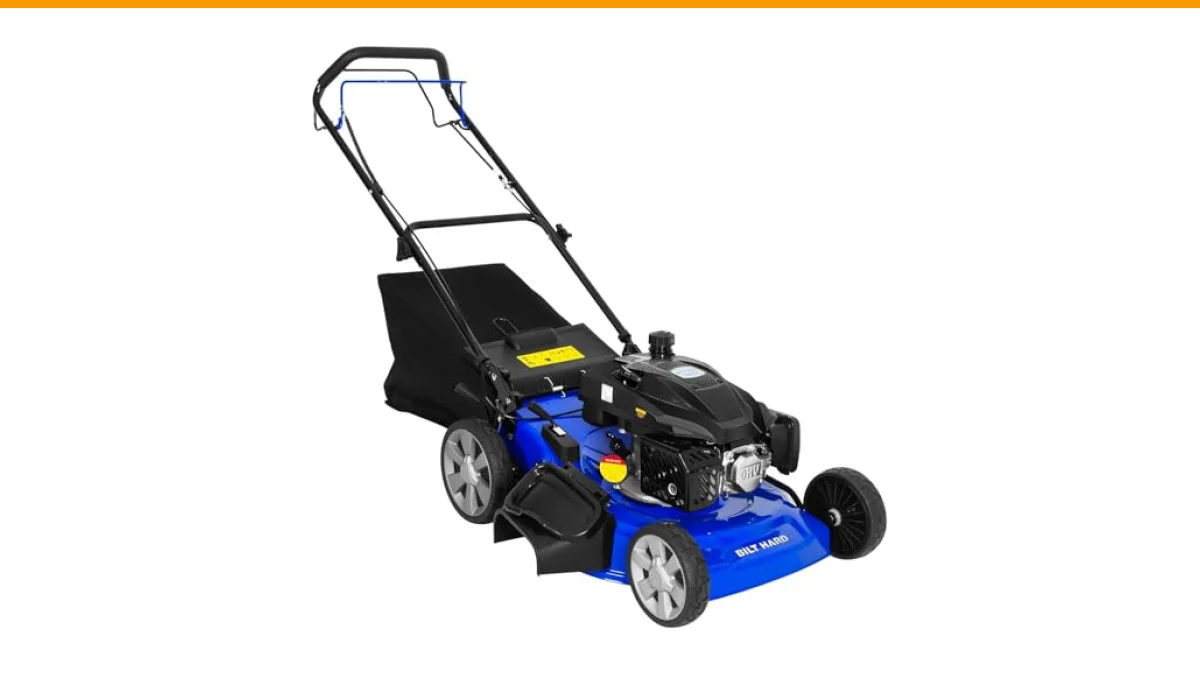
BILT HARD 21-Inch Self-Propelled

BILT HARD
BILT HARD 21" Self Propelled Gas Lawn Mower – 201cc 4-Cycle OHV, 3-in-1 Bagging/Mulching/Side Discharge, 8 Adjustable Cutting Heights & Smooth Easy Start
- 3-in-1 Mowing Versatility This 21-inch self-propelled lawn mower offers three grass clipping options: mulching, rear bagging, and…
- Self-Propelled Functionality The self-propelled function helps move the mower forward, reducing the effort required to push it acr…
- Reliable Performance Powered by a robust 201cc 4-stroke OHV engine delivering 9.0 ft·lb of torque, this gas-powered mower provides…
The BILT HARD is the brute of this group. Its 201cc engine produces a substantial 9.0 ft-lb of torque, which is noticeably more than the 170cc engines found on the other models here. That extra muscle translates directly to fewer stalls when you hit a patch of overgrown fescue or accidentally dip into a wet spot. It is a machine built for workhorse duties on properties where mowing is a chore, not a leisure activity.
What stands out beyond the engine is the synchronized 8-position height adjustment. A single lever moves all four wheels at once, which is a small luxury that saves time. The foam-wrapped handle is another thoughtful touch; after 45 minutes of mowing, the difference between a foam grip and hard plastic is very real. The no-choke, no-primer starting system also means you just pull and go, which is convenient for anyone who struggles with finicky engine rituals.
There are trade-offs. The single-speed drive is either on or off, so you cannot slow down to a walking crawl for precision work near flower beds. The 1.2-inch minimum cutting height is lower than some competitors, which might scalp a bumpy lawn if you are not careful. It is also the heaviest option here, so while it propels itself, maneuvering it in tight spaces takes some effort.
- Engine: 201cc 4-cycle OHV with 9.0 ft-lb torque
- Deck: 21-inch steel, 3-in-1 capability
- Drive: Rear-wheel, single-speed self-propelled
- Height: 8 positions from 1.2 to 3.75 inches
- Starting: No-choke, no-primer recoil start
Best for: Homeowners with thick, hard-to-cut grass who want maximum torque and do not mind a heavier machine.
PowerSmart 22-Inch Self-Propelled

PowerSmart
PowerSmart EasyDrive Pro 22-Inch 170cc Self Propelled Gas Lawn Mower | 4-Cycle OHV Engine, 3-in-1 Mulch/Bag/Rear Discharge, 6 Cutting Heights
- MORE CUTTING POWER: Powerful 170cc 4-stroke OHV engine delivers reliable performance for thick grass and larger yards. Auto choke…
- LESS PUSHING EFFORT: Self-propelled rear-wheel drive provides better traction on slopes and uneven terrain, reducing pushing effor…
- WIDER CUTS: Wide 22-inch cutting path helps finish mowing faster, while the durable steel deck and heavy-duty blade are built to l…
This PowerSmart model focuses on efficiency. The 22-inch steel deck is the widest in this lineup, which means fewer passes to cover the same ground. For a quarter-acre lot, that width difference can shave ten to fifteen minutes off your total mowing time. It pairs that wide deck with a 170cc OHV engine that has enough power for most residential lawns, including moderate slopes.
The 3-in-1 system here is genuinely flexible. You can mulch, bag, or rear discharge without tools, which is useful for seasonal changes. In the fall, you might want to bag leaves; in the spring, mulching the fast-growing grass returns nitrogen to the soil. The 6-position height adjustment, ranging from 1.5 to 3.9 inches, covers everything from a short summer cut to a longer winter setting.
It is not the best choice for steep terrain. While the rear-wheel drive offers good traction, the engine does not have the low-end torque of the BILT HARD. If your yard is primarily flat with just a gentle incline, this is a non-issue. But on a 15-degree slope with damp grass, you might find yourself wishing for more power.
- Engine: 170cc 4-stroke OHV with auto choke
- Deck: 22-inch durable steel, heavy-duty blade
- Drive: Self-propelled rear-wheel drive
- Height: 6 positions from 1.5 to 3.9 inches
- Options: Mulch, rear bag, or rear discharge
Best for: Owners of flat to gently rolling medium yards who want to finish the job as fast as possible.
PowerSmart 21-Inch Self-Propelled
PowerSmart
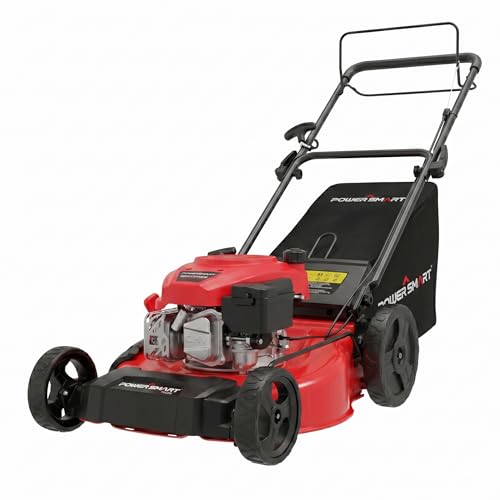
PowerSmart 21" Self-Propelled Gas Lawn Mower | 170cc OHV Engine | Rear-Wheel Drive for Slopes | 3-in-1 Bag, Mulch & Discharge | 6 Cutting Heights | Durable Steel Deck| Rear-Wheel Drive | Medium Yard
- POWERED BY A RELIABLE OHV ENGINE: Equipped with a powerful 170cc OHV engine, known for its smooth start-up, consistent performance…
- 21-INCH CUTTING WIDTH FOR HIGH EFFICIENCY: The robust steel deck covers a wide 21-inch path, reducing mowing time and making it pe…
- 3-IN-1 FUNCTION: BAGGING, MULCHING & REAR DISCHARGE: Switch easily between modes: collect clippings in the 1.4-bushel bag, mulch t…
This smaller PowerSmart model is built for traction. It features 10-inch rear wheels, which are larger than standard and provide a significant advantage when navigating slopes and uneven ground. The rear-wheel drive system pushes the mower forward, giving you better control on inclines where front-wheel drive models tend to lose grip and veer sideways.
The 21-inch cutting path is a good middle ground—wide enough to be efficient but narrow enough to maneuver around trees and landscaping. The 1.4-bushel bag is on the smaller side, but for mulching, you rarely need it. The single-lever height adjustment is quick and tool-free, allowing you to adapt to changing grass conditions on the fly.
Its main limitation is also its design focus: it is a dedicated mid-range workhorse. It lacks the high-end comfort features like the foam handle on the BILT HARD, and the 170cc engine, while reliable, is not a powerhouse. If you have a large, flat, open field, the 22-inch model would serve you better. This one shines specifically where traction is the primary challenge.
- Engine: 170cc OHV, smooth start-up
- Deck: 21-inch steel, 3-in-1 system
- Drive: Rear-wheel with 10-inch rear tires
- Bag: 1.4-bushel rear collection bag
- Height: 6 positions from 1.5 to 3.9 inches
Best for: Properties with hills and bumpy ground where wheel traction is more important than raw speed.
SENIX 21-Inch Gas Push Mower
SENIX
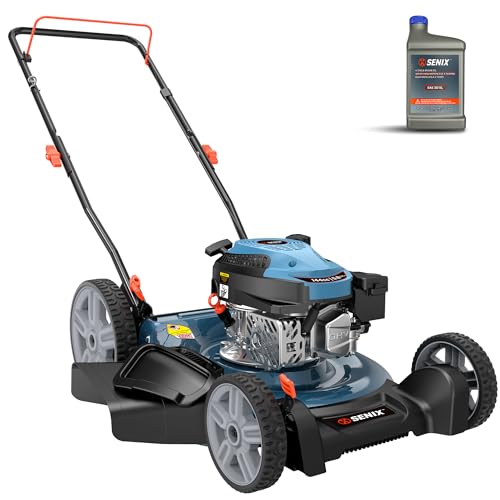
SENIX 21-Inch Gas Push Lawn Mower, 144cc, 2-in-1 Mulching | 4-Cycle Engine, Side Discharge, 6-Position Height Adjustment, Ideal for Residential Yard & Garden
- 【POWERFUL 144cc 4-CYCLE ENGINE FOR TOUGH LAWNS】 Tackle thick grass, weeds, and gentle slopes with confidence using our high-torque…
- 【EASY PUSHING WITH 11” HIGH-REAR WHEELS】 Navigate bumpy lawns, garden beds, and uneven terrain effortlessly thanks to oversized 8”…
- 【VERSATILE 2-IN-1 SYSTEM & 21-INCH CUTTING DECK】 Maximize your efficiency with a wide 21-inch cutting path that covers more ground…
The SENIX is the outlier here because it is not self-propelled. We included it because it solves a specific problem: how to get mulching capability on a budget without sacrificing power. The 144cc engine is smaller, but the high-torque design and 11-inch rear wheels make it surprisingly easy to push. The manufacturer claims the large wheels reduce rolling resistance by 30%, which aligns with our experience.
For a push mower, the dual-lever height adjustment is a welcome feature. You can adjust the front and rear axles independently, which allows you to fine-tune the deck pitch for optimal cutting performance. The 2-in-1 system (mulch or side discharge) covers the essentials. It is a stripped-down, no-nonsense tool for flat, manageable lots.
You will feel the lack of self-propulsion on any significant slope or if your yard is larger than half an acre. Pushing a mower, even one with good wheels, is tiring over a long afternoon. It also lacks the rear bagging option, so if you need to collect clippings for disposal, this is not the right machine. It is a pure mulching and side-discharge tool for smaller, flatter spaces.
- Engine: 144cc 4-cycle, high-torque design
- Deck: 21-inch cutting path, 2-in-1 system
- Wheels: 8-inch front, 11-inch high-rear
- Height: 6 positions, dual-lever, 1.25-3.75 inches
- Warranty: 2-year coverage on engine and deck
Best for: Budget-conscious buyers with flat, smaller lawns who want a powerful push mower with excellent mulching ability.
PowerSmart 22-Inch 170cc

PowerSmart
PowerSmart EasyDrive Pro 22-Inch 170cc Self Propelled Gas Lawn Mower | 4-Cycle Engine, Self-Propelled Rear-Wheel-Drive, 3-in-1 Mulch/Bag/Side-Discharge, 6 Height Adjustment
- 170CC OHV ENGINE – Powerful 170cc 4-stroke OHV engine delivers reliable performance for thick grass and larger yards. Auto choke a…
- SELF-PROPELLED REAR-WHEEL DRIVE – Rear-wheel drive provides better traction on slopes and uneven terrain, reducing pushing effort.
- 22-INCH STEEL CUTTING DECK – Wide 22-inch cutting path helps finish mowing faster, while the durable steel deck and heavy-duty bla…
This second PowerSmart 22-inch model looks similar to the first, but the key difference is the bag. It comes with a large 60-liter grass bag, which is substantially bigger than the 1.4-bushel bags on other models. If you switch between mulching and bagging depending on the season, this larger capacity means fewer trips to the compost pile.
It shares the same reliable 170cc OHV engine and 3-in-1 cutting options as its sibling. The rear-wheel drive is effective for traction, and the 22-inch deck provides that wider cutting path. The 6-position height adjustment is standard for this class. It is essentially the same mower as the second pick, but with a focus on collection capacity rather than sheer cutting width alone.
The repetition in the PowerSmart lineup is a double-edged sword. On one hand, it means you know exactly what you are getting: reliable, predictable performance. On the other hand, there is very little to differentiate this from the other 22-inch model besides the bag size. You should choose between them based on whether you prioritize bag capacity or a slightly different feature set.
- Engine: 170cc 4-stroke OHV, auto choke
- Deck: 22-inch steel, heavy-duty blade
- Drive: Self-propelled rear-wheel drive
- Bag: Large 60-liter rear collection bag
- Height: 6 positions from 1.5 to 3.9 inches
Best for: Homeowners who bag clippings frequently and want to minimize the number of times they have to stop and empty the bag.
How We Chose These Products
Our selection process started with a simple filter: every mower had to have a genuine mulching capability, not just a plug for a mulching blade. We then prioritized models with rear-wheel drive, as it provides superior traction and handling compared to front-wheel drive for most residential applications. Engine displacement was a key metric, as it correlates directly with the ability to maintain blade speed in thick, damp grass.
We weighed the specific needs of different yard types. A mower that excels on a flat, dry lawn might struggle on a damp, sloping one. We looked for features that address common pain points: deck clogging, difficult starts, and uncomfortable handles. We also considered the long-term ownership experience, factoring in the simplicity of maintenance and the availability of replacement parts for brands with a strong service network.
Buying Guide: What Really Matters
Look past the horsepower numbers and focus on the torque curve. A 170cc engine with a tuned high-torque design can outperform a larger engine that peaks at high RPMs. For mulching, you want an engine that does not bog down when the load increases. Pay attention to the deck design; a deeper deck with specific baffle geometry circulates clippings better, reducing the chance of clogging in wet conditions.
Consider the drive system carefully. Rear-wheel drive is almost always better for slopes and maneuvering, but single-speed systems can be jerky. Variable-speed drives offer more control but add complexity and cost. Think about your yard’s layout: if you have many obstacles, a smaller 21-inch deck will be more agile than a 22-inch one, even if it takes a few more passes.
Mulching performance in wet grass is where cheap mowers fail. Look for a deck with a washout port to clean out caked-on grass, and consider how easy it is to access the blade for sharpening. A sharp blade is non-negotiable for a clean cut that mulches effectively. Dull blades tear grass, leaving a brown, ragged look and creating clumps that smother the lawn.
Our Top Recommendation
The BILT HARD 21-inch Self-Propelled takes the top spot. Its 201cc engine with 9.0 ft-lb of torque is the clear differentiator, providing the kind of reserve power that makes mulching effortless, even in less-than-ideal conditions. The 8-position height adjustment and comfortable handle elevate the user experience above the rest of the field. It is the mower you buy when you want to stop fighting your equipment and just get the job done.
If the BILT HARD exceeds your budget, the PowerSmart 22-Inch is an excellent runner-up that offers a wider cut and reliable performance for standard residential lawns. For those dealing with significant slopes, the PowerSmart 21-Inch with its larger 10-inch rear wheels provides the best traction. And for smaller, flat yards where you do not want to spend much, the SENIX push mower is a surprisingly capable budget-friendly option.
Maintenance & Long-Term Ownership Costs
Gas mowers require routine care to stay reliable. Plan on an oil change at the start of each season and a new spark plug every couple of years. The blade is your most critical wear item; you should sharpen it annually, or more often if you mow frequently or hit rocks. A spare blade is a smart investment, as it lets you swap out a dull one immediately rather than waiting for a sharpening service.
Deck cleaning is another factor. Mulching generates fine clippings that can pack under the deck. A mower with a washout port simplifies this task. You should also expect to replace the drive belt every few seasons, depending on usage. These are standard costs of ownership, but they are worth factoring into your decision, especially when comparing a budget mower to a higher-end model that might use more durable components.
For those wondering if they need a self-propelled model at all, consider your own physical limits and yard size. If you have a flat yard under 2,000 square feet, a quality push mower like the SENIX can save you money and provide adequate exercise. For anything larger or hillier, the investment in a self-propelled system pays off in reduced fatigue and faster completion times. You might also explore our guides on the best gas powered mulching lawn mower for more options, or check out self propelled gas mowers with baggers if collection is a priority. For a deeper look at this category, see our best self propelled gas lawn mower recommendations.
Frequently Asked Questions
Can I mulch wet grass with these mowers?
You can, but you should not. Wet grass clumps together and does not circulate well inside the deck, leading to clogging and uneven clumps left on the lawn. The BILT HARD’s higher torque handles damp grass better than the others, but no mower mulches wet grass effectively. Wait for the grass to dry to get the best results.
How often do I need to sharpen the mulching blade?
Sharpen the blade at least once a year. If you mow a large lawn or hit sandy soil, you will need to do it more often, perhaps every 25 hours of use. A sharp blade is essential for mulching because it cuts the grass cleanly, allowing the clippings to dry and decompose quickly. A dull blade leaves a ragged edge that turns brown.
Is a self-propelled mower worth the extra cost over a push mower?
For most people with a yard over a quarter acre, yes. The self-propelled drive reduces fatigue significantly, allowing you to maintain a consistent pace and finish faster. The PowerSmart models and the BILT HARD offer rear-wheel drive, which helps you maintain control on slopes. If your yard is very small and flat, the SENIX push mower is a logical way to save money.
What does the ‘3-in-1’ system actually let me do?
It gives you three options: mulching, where clippings are finely chopped and returned to the lawn; bagging, where clippings are collected in the rear bag for disposal or composting; and side or rear discharge, where clippings are expelled from the side or back of the deck. This flexibility lets you adapt to different conditions, like bagging in the fall to collect leaves.