
You’ve bought the seed. You’ve picked the weekend. Then you drag a rake across the lawn and hit a crust so hard the tines just skid over the top. That’s the moment most people realize grass seed doesn’t fail because of bad seed. It fails because the soil underneath never got opened up.


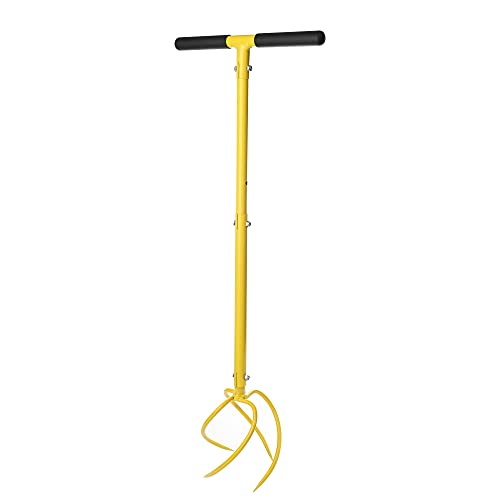
A tiller for planting grass seed has one job: break the top few inches of soil so seed can make contact, roots can push down, and water can soak in instead of running off. Manual twist tillers work for small patches and raised beds. Electric cultivators handle bigger lawns and tougher ground. The trick is matching the tool to your soil and your square footage, not just buying the biggest machine you can find.
We looked at five options that cover the full range, from a lightweight hand cultivator to a corded electric rototiller, plus a seed mix worth pairing with any of them. Here’s how they compare, who each one suits, and where each falls short.
Here’s a quick spec comparison to help you see the differences at a glance.
| Features | Kinedoo Rotary Cultivator | Qsxou Hand Tiller | MZK Electric Tiller | Scotts Turf Builder Seed | BARAYSTUS Hand Tiller |
|---|---|---|---|---|---|
| Power Source | Manual rotary tines | Manual spike action | 10.5A corded electric | Not applicable (seed) | Manual twist tines |
| Working Width | Not specified | Compact hand-held | 12 inches | 745 sq ft new lawn | Not specified |
| Digging Depth | Surface crust only | Spike depth | 8 inches | Surface application | Deeper curve tines |
| Best Use Case | Raised beds, light soil | Tight spots, aeration | Large lawns, tough soil | Overseeding, new lawns | Soil loosening, weeding |
| Handle Type | 4-section adjustable pole | One-handed grip | Standard walk-behind | Not applicable | 2-step height adjustable |
Kinedoo Garden Rotary Cultivator
The Kinedoo rotary cultivator is a manual tool built for light-duty soil prep. You push it into the ground and twist, and the rotating tines break up the top layer of compacted soil. It suits homeowners with small lawns, raised beds, or garden patches where the ground is already reasonably soft. If you’re overseeding a few bare spots or prepping a bed for grass seed, this tool gets the job done without gas, cords, or noise.
What stands out is the handle design. It comes in four sections, so you can set the working length to whatever feels comfortable. That matters more than it sounds. A fixed-length handle forces you to stoop or overreach, and after twenty minutes your back lets you know. The rotary action also does a better job than a basic rake at breaking through that crusty layer of dead grass and compacted soil. Users report the loosened soil holds water better, which is exactly what new grass seed needs to germinate.
The trade-off is clear: this is not a heavy-duty tool. Hard, rocky, or clay-heavy dirt will fight back, and the tines won’t win. It’s also manual, so a large lawn will take real effort and time. Think of it as a precision tool for small areas, not a lawn-wide solution.
- Rotary tines break up surface crust and compacted soil
- Four-section handle adjusts to your preferred working height
- Disassembles for easy storage and transport
- Works best in soft, loamy soil and raised beds
- Not built for rocky or hard-packed ground
Best for: Homeowners with small lawns, raised beds, or soft soil who want a no-power, low-cost way to prep seed beds.
Qsxou Hand Tiller Garden Tool
The Qsxou hand tiller is a manual spike aerator and soil loosener. It’s designed for one-handed use, which makes it handy for tight spots where a full-size tiller can’t reach. Flower beds, around shrubs, and small lawn patches are its natural territory. If you’re planting grass seed in a confined area or overseeding a thin patch near landscaping, this tool lets you work precisely without tearing up surrounding plants.
The high-carbon steel spikes are treated for rust resistance, so they hold up to repeated use. Multiple sharp tines mean each push covers more ground than a single-spike tool, which saves time on small jobs. The spikes also loosen soil and help with weeding, so it’s a multi-purpose hand tool rather than a one-trick aerator. Air, water, and nutrients reach deeper into the root zone after use, which is the whole point of prepping for seed.
Here’s the honest limitation: this is a hand tool for small areas. A full lawn will wear you out before you finish. The one-handed design is great for control but limits how much force you can apply in hard soil. And it’s not a true tiller in the sense of turning over soil, it’s more of an aerator and loosener. For serious soil turning, you’ll want an electric or gas machine.
- High-carbon steel spikes with rust-resistant treatment
- One-handed operation for tight spots and precision work
- Doubles as an aerator, soil loosener, and weeding tool
- Compact size fits flower beds and around shrubs
- Manual operation limits it to small areas
Best for: Gardeners who need a compact, hand-held tool for aerating and loosening soil in tight spots before seeding.
MZK 12-Inch 10.5A Electric Tiller

MZK
MZK 12-Inch 10.5A Electric Tiller Cultivator,Garden Rototiller 8-Inch Depth | Lightweight corded rototiller for soil digging, garden beds, lawns, and yard cultivation.
- [Efficient Digging Power]:With a 12-inch cutting width and 8-inch digging depth, MZK electric tiller is perfect for breaking up so…
- [Strong Motor and High-Speed Efficiency]:Featuring a powerful 10-amp pure copper motor and 430 RPM, MZK tiller for gardening deliv…
- [Low Maintenance, High Efficiency]:The MZK electric tiller is incredibly easy to use—just plug it in and get started. No need for…
The MZK electric tiller is the serious machine in this group. A 10.5-amp pure copper motor drives four rust-resistant steel blades at 430 RPM, cutting a 12-inch swath up to 8 inches deep. That’s real digging power for a corded electric unit. If you’re prepping a full lawn for grass seed, turning over a vegetable bed, or breaking up soil that’s been untouched for years, this is the tool that won’t quit on you.
No gas, no oil, no pull cords. You plug it in and squeeze the trigger. That simplicity matters for anyone who’s tired of small-engine maintenance. The 12-inch width and 8-inch depth mean fewer passes to cover a lawn, and the 430 RPM speed chews through soil fast. It handles a range of soil conditions, from loose loam to firmer ground, though extremely rocky or root-filled soil will still slow it down. For most residential lawns, it’s more than enough machine.
The catch with any corded tiller is the cord itself. You’ll need an outdoor extension cord long enough to reach your work area, and you’ll manage that cord as you go. It’s also heavier than a hand tool, so maneuvering around tight landscaping takes some effort. And it’s corded, not battery, so you’re tethered to an outlet. For large properties far from power, a gas tiller might make more sense.
- 10.5-amp pure copper motor with 430 RPM blade speed
- 12-inch cutting width and 8-inch digging depth
- Four rust-resistant steel blades for efficient tilling
- No gas or oil required, just plug in and go
- Corded design requires an outdoor extension cord
Best for: Homeowners with medium to large lawns who want fast, powerful soil prep without gas-engine maintenance.
Scotts Turf Builder Grass Seed
Scotts Turf Builder Sun & Shade Mix isn’t a tiller, but it belongs in this conversation because the best tiller in the world won’t help if you plant the wrong seed for your conditions. This mix is built for lawns that get full sun in some areas and moderate shade in others, which describes most residential yards. It combines grass seed, fertilizer, and a soil improver in one bag, so you’re not buying three separate products.
The Root-Building Nutrition formula is designed to help grass establish deep roots, which is what you want when you’re starting a new lawn or overseeding a thin one. Apply it in spring or fall when soil temperatures sit between 55°F and 70°F, or air temps between 60°F and 80°F. A 5.6-pound bag covers 745 square feet for a new lawn or 2,240 square feet for overseeding. That’s a useful number to know when you’re calculating how much you need.
One limitation: this mix has medium drought resistance. If you live in a hot, dry climate with water restrictions, you might want a more drought-tolerant blend. It’s also not a repair product for deep shade, it handles moderate shade, not heavy shade. And like any seed, it needs consistent moisture to germinate, so pair it with a reliable watering routine.
- Combines grass seed, fertilizer, and soil improver in one bag
- Designed for full sun and moderate shade conditions
- Root-Building Nutrition supports deep root establishment
- Covers 745 sq ft new lawn or 2,240 sq ft overseeding
- Medium drought resistance, not ideal for arid climates
Best for: Homeowners seeding a new lawn or overseeding an existing one in mixed sun and shade conditions.
BARAYSTUS Hand Tiller Twist Claw
The BARAYSTUS hand tiller is a twist claw cultivator with longer, wider curved tines than most competitors. You push it into the ground and twist, and the sharp tines slice through soil and shift it easily. It’s built for loosening soil, weeding, and prepping small beds for seed. Gardeners who want a manual tool with more digging power than a standard hand cultivator will appreciate the deeper, wider tine design.
The height-adjustable handle sets at 39 inches or 35.4 inches, so you can work without stooping. That’s a genuine comfort feature, not a gimmick. The longer 16-inch handle gives you leverage to save power on each twist. Assembly takes three steps with the included manual, so you’ll be using it within minutes of opening the box. The arrow-sharp tines rotate at an angle that makes turning and shifting dirt faster than straight-tine tools.
Sharp tines are a double-edged sword. They bite into soil aggressively, which is great for loosening, but you need to be careful around shallow roots and irrigation lines. The tool is also manual, so large areas will take time and effort. It’s not a replacement for an electric tiller on a big lawn, but for small beds and patches, it’s a strong manual option.
- Longer, wider curved tines dig deeper and wider than standard tools
- Sharp angled tines slice through soil and shift dirt easily
- Two-step height adjustment at 39 or 35.4 inches
- 16-inch handle provides leverage and reduces strain
- Three-step assembly with included instructions
Best for: Gardeners who want a manual twist tiller with extra digging depth for small beds, weeding, and seed prep.
How We Chose These Products
We started with the job itself: planting grass seed. That means the tool has to open soil, not just scratch the surface. We looked at how each option handles different soil types, how much area it can cover, and whether it’s realistic for the average homeowner to use without a steep learning curve.
We also weighed the trade-offs honestly. Manual tools are affordable and precise but slow on large lawns. Electric tillers are fast and powerful but need a cord and a power source. Seed selection matters as much as soil prep, which is why we included a proven seed mix alongside the tillers. No product made the list without a clear reason to exist and a clear type of buyer it serves.
Buying Guide: What Really Matters
Soil type drives everything. Soft, loamy soil opens up with a manual twist tiller. Hard clay or rocky ground needs an electric cultivator with enough torque to bite in. If you’re not sure what you have, push a screwdriver into the ground. If it goes in easily, manual tools will work. If it takes real force, go electric. For clay-heavy lawns, a dedicated small tiller for clay makes a bigger difference than any seed choice.
Area size decides whether manual or powered makes sense. A few hundred square feet of overseeding is manageable with a hand tool. A full lawn renovation of several thousand square feet will wear you out with a manual tiller, and an electric model becomes the practical choice. Match the tool to the square footage, not the other way around.
Depth matters for seed contact. Grass seed needs to sit in the top quarter-inch to half-inch of soil. You don’t need to till eight inches deep for seeding, but you do need to break the surface crust so seed can make contact. A tiller that only scratches the top inch leaves compacted soil underneath, and roots will struggle. Pair your tilling with a proper dethatcher and aerator routine for the best germination results.
Our Top Recommendation
The MZK 12-Inch 10.5A Electric Tiller is our top pick for most homeowners planting grass seed. It has the power to break real soil, the width to cover a lawn efficiently, and the depth to give seed a proper bed. No gas, no oil, no maintenance headaches. Plug it in and work. For medium to large lawns, it’s the tool that turns a back-breaking weekend into a manageable afternoon.
If your lawn is small or your soil is already soft, the Kinedoo rotary cultivator or the BARAYSTUS twist claw will save you money and storage space. For tight spots around landscaping, the Qsxou hand tiller is the precision option. And whatever tiller you choose, pair it with Scotts Turf Builder Sun & Shade Mix for reliable germination in mixed conditions. One more thing worth planning: new seed needs consistent moisture, so a sprinkler for new seed keeps germination on track.
Frequently Asked Questions
Do I really need to till before planting grass seed?
Not always, but it helps in most cases. If your soil is compacted or has a thick thatch layer, seed sitting on top won’t make good contact and germination will be spotty. Tilling the top few inches opens the soil so seed can settle in and roots can push down. For overseeding a healthy lawn, a light dethatching and aeration may be enough.
Can I use a hand tiller for a whole lawn?
You can, but it will take a long time and a lot of effort. Hand tillers work well for patches, beds, and areas under a few hundred square feet. For a full lawn, an electric or gas tiller will save you hours and spare your back.
How deep should I till for grass seed?
You don’t need to go deep. Grass seed germinates best when it sits in the top quarter-inch to half-inch of soil. Tilling two to four inches deep is plenty to relieve compaction and create a seed bed. Going deeper than that mainly helps if you’re mixing in amendments or correcting serious soil problems.
What’s the best time to till and seed?
Early fall is ideal for most cool-season grasses, with early spring as a second option. Soil temperatures between 55°F and 70°F give seed the best chance to germinate before heat or cold stress sets in. Till right before you seed, so the soil is still loose and receptive when the seed goes down.


