
The Best Sprinkler for a Vegetable Garden: A Grower’s Guide to Even Watering
Contents
You’ve spent weeks nurturing seedlings into sturdy transplants. Then a July heatwave hits, and you realize hand-watering with a can takes 45 minutes you don’t have. A sprinkler solves the labor problem, but the wrong one creates new headaches: dry spots, soaked foliage, and clogged nozzles by August.
A great vegetable garden sprinkler hits three marks. It delivers even water without blasting seedlings into the soil. It works with your actual household water pressure, not some ideal number on a spec sheet. And it survives a full season of sun, hard water, and being dragged across the yard.
We sorted through the current options and found five that solve different problems. The Joeys Garden rotating sprinkler wins for most gardeners who want broad, even coverage. The Acostop four-pack suits raised-bed layouts. The Orbit wheeled model works for large plots you move around. Below, you’ll find honest trade-offs for each, plus a buying guide and watering schedule that no spec sheet covers.
Here’s a quick comparison of the key specs that separate these five models.
| Features | Joeys Garden 360 | NexLogi 18 Brass | SYOOY Metal Spot | Acostop 4-Pack | Orbit Wheeled |
|---|---|---|---|---|---|
| Material & Build | ABS plastic, weighted base | Heavy weighted base, brass nozzles | Heavy-duty polished metal | Aluminum alloy spike base | Corrosion-resistant coated metal |
| Coverage Type | 360° rotating arms | Oscillating, up to 3,600 sq ft | 360° spot, up to 30 ft | 360° spray, daisy-chain to 2,800 sq ft | Full-circle, up to 50 ft diameter |
| Spray Adjustment | Adjustable arms | Sliding range adjusters | Pressure-dependent distance | Twist nozzle: fan, cone, stream | Adjustable flow and diameter |
| Key Feature | Daisy-chain multiple units | Built-in cleaning needle | Compact, leak-free design | Four units for custom layouts | Wheeled base for mobility |
| Best Use Case | Round or irregular yards | Large lawns and gardens | Small beds and patios | Medium gardens, raised beds | Large plots needing repositioning |
Joeys Garden 360 Sprinkler
1st Pick
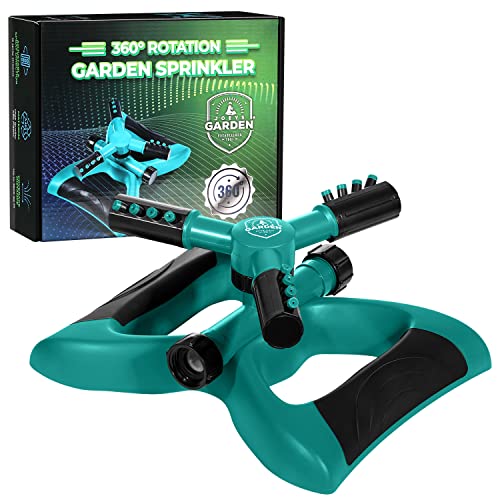
Joeys Garden
Sprinklers for Yard - 360° Rotating Lawn Sprinkler, Heavy Duty Weighted
- MADE FOR FAMILIES & LAWNS: From a kids' backyard water day to evenly watering large lawns and gardens, this rotating sprinkler cov…
- TRUE 360° ROTATION, NOT OSCILLATING: 3 adjustable arms spin in a full circle for even coverage, unlike back-and-forth oscillating…
- BUILT TO STAY PUT, ANY YARD SIZE: Durable ABS plastic body with a weighted base holds steady on grass, patio, or gravel even at hi…
You have a yard with curves, or a garden that isn’t a perfect rectangle. The Joeys Garden 360 suits you. Its three arms spin in a full circle, so it waters round beds and odd-shaped plots without leaving the dry strips an oscillating sprinkler creates at the edges. Parents who want a quick backyard water day for the kids will also appreciate how fast it covers ground.
The weighted base is the standout feature. At higher water pressure, cheaper sprinklers tend to walk across the lawn or tip over. This one stays put on grass, patio, or gravel. The screw-on hose connection takes seconds and needs no tools, which matters when you’re swapping between zones. And you can daisy-chain several units together if your garden is bigger than one sprinkler can reach.
Here’s the trade-off. It needs steady household water pressure to throw water far. If your well pump runs weak or your hose run is long, the spray distance shrinks. It’s also plastic, so it won’t feel as hefty as a metal model. Store it out of direct sun in winter and it should last several seasons.
- Three rotating arms spin a full 360 degrees, unlike back-and-forth oscillating models
- Weighted base holds position on grass, patio, or gravel even at higher pressure
- Connects to any standard garden hose with no tools required
- Daisy-chain multiple units to cover larger yards or multiple zones
- Adjustable spray works for small patios and larger lawns alike
Best for: Gardeners with round or irregular beds who want even coverage without repositioning a sprinkler every 20 minutes.
NexLogi 18 Brass Nozzles
2nd Pick

NexLogi
Lawn Sprinkler, 18 Brass Nozzles Garden Water Oscillating Sprinkler for Yard Covers up to 3,600 sq.ft, Heavy Weight Base, Built-in Spray Jet Cleaning Needle, Green, Yellow
- 【18 PRECISION NOZZLES】Equipped with Upgraded 18 clog-resistant and durable brass nozzles, provide maximum coverage of large lawns…
- 【EASY TO USE】Adjustable spray angle set the sprinkler water angle easily to determine the area of water coverage, the sliding rang…
- 【WEIGHTED BASE】Our extra-large heavy weighted base can increase the stability and durability of the sprinkler, ensuring efficient…
Large vegetable plots need volume. The NexLogi oscillating sprinkler covers up to 3,600 square feet, which makes it a fit for someone watering a big in-ground garden, a small orchard, or a half-acre lawn with a vegetable patch. The 18 brass nozzles resist clogging better than plastic ones, especially if your water runs hard or mineral-heavy.
Two features earn their keep. The sliding range adjusters let you set the spray width so water lands on the garden, not the driveway. And the built-in cleaning needle sits at the end of the chassis, so when a nozzle does clog, you clear it without hunting for a paperclip. The metal sieve in the hose adapter filters dirt before it reaches the nozzles, which cuts down on maintenance over the season.
It’s not perfect. Oscillating sprinklers water in a rectangular pattern, so they leave corners dry on irregular beds. The heavy base helps stability in wind, but this is a sprinkler you set and leave rather than move constantly. If your garden is a long, narrow strip, a rotating model may suit you better.
- 18 brass nozzles resist clogging and cover up to 3,600 square feet
- Sliding range adjusters control spray width for precise coverage
- Built-in cleaning needle clears clogged nozzles without tools
- Metal sieve in the hose adapter filters dirt before it reaches nozzles
- Heavy weighted base keeps it stable in wind and bad weather
Best for: Owners of large, rectangular garden plots who want wide coverage and low clog risk from hard water.
SYOOY Metal Spot Sprinkler
3rd Pick

SYOOY
360 Degree Metal Spot Sprinkler,Small Sprinkler Garden for Small Areas
- 360 Degree Metal Spot Sprinkler: Small sprinkler is made of heavy-duty metal with bright colors, the surface of the garden sprinkl…
- 30FT Coverage Watering: Sprinklers for yard the distance of water jet is related to the size of water pressure. Small water pressu…
- Easy to Use: The lawn sprinkler circular pattern design enables 360-degree spray without leaks. Even spray, water-saving design, e…
Small gardens don’t need a 3,600-square-foot sprinkler. The SYOOY spot sprinkler is a compact metal unit built for tight spaces: a few raised beds, a patio container garden, or a small flower border. It sprays in a 360-degree circle and covers a diameter up to about 8 meters depending on your water pressure.
The metal body sets it apart from the plastic competition. It’s polished, heavier, and more durable than typical plastic heads. The circular pattern sprays evenly without leaks, and the water-saving design means less runoff. It handles up to 5 kg of pressure, which covers most household setups. The standard garden hose thread fits without adapters.
The obvious limitation is coverage. This is a spot sprinkler, not a whole-yard solution. If your garden spans more than a small area, you’ll need several units or a different style. Spray distance also depends entirely on your water pressure. Low pressure means a small circle; high pressure throws farther. It’s a simple tool with a narrow job.
- Heavy-duty polished metal body outlasts plastic sprinkler heads
- 360-degree circular spray pattern with no leaks
- Covers a diameter of 0 to 8 meters depending on water pressure
- Withstands up to 5 kg of water pressure
- Fits standard garden hose threads without adapters
Best for: Gardeners with small beds, patio containers, or a few raised boxes who need a durable, compact spot sprinkler.
Acostop 4-Piece Sprinkler Set
4th Pick

Acostop
Acostop 4pcs 360° Spray Sturdy Metal Sprinklers for Yard Lawn Medium Garden
- Daisy Chain to Expand the Coverage Area: Connect the 4 sprinklers in a series to the same water source to expand its coverage area…
- Adjustable Twist Irrigation Nozzle: Under normal 50-60psi water pressure, the twisting barrel on the brass nozzle adjusts water fr…
- Aluminum Alloy Spike Base: Different from ordinary plastic and zinc alloy spike bases, our sprinklers for the yard are made of a s…
Raised beds and greenhouse rows are awkward for a single sprinkler. The Acostop four-pack solves this with four individual spike sprinklers you place wherever you need water. Connect them in a series to one hose, and they cover up to 2,800 square feet combined. That makes them a natural fit for medium gardens with separate beds or a vegetable plot with distinct zones.
The twist nozzle is the feature you’ll use most. Under normal 50-60 psi pressure, you rotate the brass barrel to switch between a fan spray, a cone, and a powerful stream. Seedlings get the gentle fan. Established tomatoes get the stream. The aluminum alloy spike base is stronger than the plastic or zinc alloy bases on cheaper sets, so it holds up to water pressure and weather without bending.
Setup is simple: push the spike into soil or turf, connect your 3/4-inch hose, and adjust the nozzle. The catch is that four sprinklers won’t cover a huge area. For a large plot, you may need to daisy-chain more units or run two zones. And each sprinkler’s coverage depends on your water pressure, so test one before committing to a layout.
- Four sprinklers daisy-chain to cover up to 2,800 square feet
- Twist nozzle adjusts from fan to cone to stream spray
- Aluminum alloy spike base resists bending and weather damage
- Works with standard 3/4-inch garden hoses
- Ideal for irrigating lawns, vegetable plots, greenhouses, and flower beds
Best for: Gardeners with raised beds or separate planting zones who want to customize coverage with multiple units.
Orbit 58257N Wheeled Sprinkler
5th Pick

Orbit
Orbit 58257N Lawn and Garden 3-Arm Metal Sprinkler with Wheel Base
- EVEN WATER DISTRIBUTION - Rotating sprinkler head provides a full-circle coverage of up to 50 ft. diameter for uniform lawn and ga…
- GENTLE AND EFFECTIVE - Adjustable lawn sprinkler delivers a steady and gentle stream without harming plants, making it perfect for…
- CUSTOMIZABLE WATER FLOW - Control the flow and diameter of water with the adjustable spray nozzles, ensuring precise and efficient…
Some gardens need a sprinkler you can roll from one spot to another. The Orbit 58257N has a wheeled base that makes repositioning easy, which suits large plots where one location can’t reach everything. It throws a full-circle pattern up to 50 feet in diameter, so a single position covers a wide area before you move it.
The adjustable nozzles let you control both flow and diameter. That’s useful for vegetables because you can dial down the spray for young plants and open it up for established rows. The stream is steady and gentle, so it won’t beat down seedlings or damage flowers and shrubs. The corrosion-resistant coated finish holds up season after season, which is more than you can say for bargain plastic models.
Moving it does take a moment. The wheeled base rolls, but you still need to drag the hose along. And like any full-circle sprinkler, it waters in a circle, so square or rectangular beds will have dry corners unless you overlap passes. It’s a solid choice for big, open gardens, less so for tight raised-bed setups.
- Full-circle coverage up to 50 feet in diameter
- Adjustable nozzles control flow and spray diameter
- Gentle stream won’t harm plants, shrubs, or flowers
- Wheeled base makes repositioning easy across large lawns
- Corrosion-resistant coated finish for multi-season durability
Best for: Owners of large, open vegetable plots who need to move one sprinkler to different spots throughout the season.
How We Chose These Products
We started with the problems vegetable gardeners actually face: uneven coverage, clogged nozzles, sprinklers that tip over, and spray patterns that soak foliage instead of roots. Each product had to solve at least one of those problems well. We favored models with adjustable spray, because fixed patterns rarely match a real garden layout. We also looked for materials that survive sun and hard water: brass nozzles, metal bodies, weighted bases.
Coverage claims got scrutiny. A sprinkler rated for 3,600 square feet only hits that number under ideal pressure. We noted which models depend on strong household pressure and which work across a range. Ease of maintenance mattered too. Built-in cleaning tools and filter sieves reduce the seasonal frustration of disassembling a sprinkler to clear a clog. Finally, we weighed versatility. A model that handles seedlings and mature plants, or one you can daisy-chain, earns a higher spot than a one-trick unit.
Buying Guide: What Really Matters
Water pressure compatibility comes first. Most household setups run 40 to 60 psi. If yours is lower, a sprinkler rated for high pressure will disappoint you with short throws. Check the product specs for a pressure range, and if none is listed, read buyer feedback about low-pressure performance. Rotating and spot sprinklers tend to handle lower pressure better than large oscillating models.
Coverage area should match your garden’s shape, not just its size. Oscillating sprinklers water rectangles. Rotating sprinklers water circles. Spot sprinklers water small circles you place individually. A 200-square-foot L-shaped bed is better served by two spot sprinklers than one oscillating model that soaks the path. Measure your beds before you buy, and sketch where water needs to land.
Material and maintenance decide how long the sprinkler lasts. Brass nozzles resist mineral buildup better than plastic. Metal bodies survive UV exposure that makes plastic brittle. A built-in cleaning needle or removable filter saves you from soaking nozzles in vinegar every few weeks. If you garden in a cold climate, plan to drain and store the sprinkler indoors before the first freeze. Trapped water expands and cracks plastic and metal alike.
For a deeper look at soil conditions that affect how often you water, a reliable soil tester for vegetables takes the guesswork out of scheduling. And if you’re still building out your tool collection, a good garden trowel for beds pairs well with any watering setup.
How to Water Vegetables Correctly
Most gardeners overwater. A tuna-can test tells you exactly how much your sprinkler delivers. Place several empty tuna cans around the garden, run the sprinkler for 15 minutes, then measure the depth in each can. If you collect half an inch, you know 15 minutes gives you half an inch of water. Vegetables typically need one to two inches per week, including rainfall. Adjust your runtime based on what the cans tell you, not a guess.
Watering needs change with growth stage. Seeds and seedlings need shallow, frequent watering to keep the top inch of soil moist. Once plants establish roots, switch to deeper, less frequent soakings that encourage roots to grow downward. During fruiting, consistent moisture prevents blossom end rot in tomatoes and peppers. Mulch around plants to slow evaporation and keep soil moisture steady between waterings.
Timing matters for disease prevention. Water early in the morning so foliage dries before evening. Wet leaves overnight invite powdery mildew and other fungal problems. If you must water in the evening, aim the spray at the soil, not the leaves. A drip irrigation system or soaker hose avoids wet foliage entirely, which is worth considering if disease has been an issue in your garden.
Pairing a sprinkler with a timer and rain sensor automates the schedule and prevents overwatering after a storm. A pressure regulator helps if your household pressure runs high and blasts seedlings. These add-ons cost little and save a lot of hand-wringing. For more on organizing hoses and tools so setup is quick, see this guide to garden hose organizers.
Sprinkler vs Drip Irrigation for Vegetables
Sprinklers win on cost and simplicity. A good one costs less than a drip system, sets up in minutes, and covers a wide area fast. They work well for leafy greens, root crops, and any plant that benefits from overhead watering. The downside is wet foliage, which raises disease risk for tomatoes, squash, and other susceptible crops. Sprinklers also lose water to evaporation and wind drift.
Drip irrigation delivers water directly to the root zone. Foliage stays dry, so fungal diseases drop dramatically. Water efficiency is higher because nothing evaporates or blows away. The trade-offs are cost, setup time, and clogging risk from hard water. Drip lines also need winterizing in cold climates. For a small raised-bed garden, a soaker hose paired with a timer gives you most of the drip benefits at a lower price.
Many gardeners use both. Drip lines handle the tomatoes and peppers, while a sprinkler waters the salad greens and root vegetables. That split approach reduces disease pressure on sensitive crops without giving up the convenience of a sprinkler for everything else.
Maintenance and Troubleshooting
Hard water leaves mineral deposits that clog nozzles over time. Soak removable nozzles in white vinegar overnight, then scrub with a small brush. Sprinklers with built-in cleaning needles, like the NexLogi, make this easier because you can clear a clog on the spot. If your water is very hard, a filter sieve in the hose adapter, like the one on the NexLogi and Acostop, catches debris before it reaches the nozzles.
Winterizing takes five minutes and saves you a replacement purchase. Drain all water from the sprinkler, hose, and any connected fittings. Store the sprinkler indoors or in a shed where it won’t freeze. Plastic cracks and metal valves seize when trapped water expands. If you use a timer, remove the batteries and store it inside too.
If coverage drops suddenly, check three things: a kink in the hose, a clogged nozzle, or a drop in household water pressure. Kinks are the most common culprit. Straighten the hose and test again. If the spray pattern is uneven, remove and clean the nozzles. If the whole sprinkler seems weak, test your water pressure at an outdoor spigot with an inexpensive gauge.
Frequently Asked Questions
Can I use a sprinkler on seedlings without washing them out?
Yes, if you choose the right spray setting. Use a gentle fan or mist pattern and keep the sprinkler far enough away that the water lands softly. The Acostop’s twist nozzle lets you dial down to a fan spray, and the Orbit’s adjustable flow works for young plants. Water in short bursts until seedlings establish roots.
How do I know if my water pressure is enough for a sprinkler?
Buy an inexpensive pressure gauge that screws onto your outdoor spigot. Most household systems run 40 to 60 psi. If you’re below 40, choose a rotating or spot sprinkler rather than a large oscillating model. Those handle lower pressure better and still throw water far enough to be useful.
Should I water my vegetable garden with a sprinkler or by hand?
Hand-watering works for small gardens but takes time and often delivers uneven water. A sprinkler covers more ground in less time and frees you to do other chores. For a garden larger than about 100 square feet, a sprinkler or drip system saves significant time and usually waters more evenly.
Will a sprinkler cause disease in my tomatoes?
It can, if you water in the evening and leave foliage wet overnight. Water early in the morning so leaves dry during the day. Or switch tomatoes to drip irrigation and use the sprinkler for crops that tolerate overhead water, like lettuce, carrots, and beans.
Our Top Recommendation
The Joeys Garden 360 sprinkler earns our top spot for most vegetable gardeners. Its rotating arms cover round and irregular beds evenly, the weighted base stays put, and daisy-chaining lets you expand coverage without buying a second hose. It handles the widest range of garden layouts for the money.
If your garden is large and rectangular, the NexLogi 18 Brass Nozzles is the better pick. Its 3,600-square-foot coverage and clog-resistant brass nozzles suit big plots and hard water. For raised beds and separate planting zones, the Acostop four-pack gives you the flexibility a single sprinkler can’t. And if your priority is a durable, compact spot sprinkler for a small garden, the SYOOY metal model is the one to get.
Whichever you choose, pair it with a timer and a rain sensor to automate watering. Run the tuna-can test to dial in your runtime. Your vegetables will thank you with steady growth and fewer disease problems.