You’ve killed a plant by watering it too much. Or maybe you let one dry out completely because the top inch of soil felt fine. Either way, the surface lied to you.


A good soil tester with a depth gauge reaches down into the root zone where the real story lives. The best ones give you fast readings on moisture, and some add pH, temperature, or compaction data. You don’t need every feature. You need the right one for your soil type, your plants, and how much fuss you’ll tolerate.
Below are five testers that cover very different jobs — from a battery-free moisture probe for houseplants to a 24-inch compaction tool for lawns and beds. I’ll tell you who each one suits, where it falls short, and which one most people should start with.
Here’s a quick side-by-side of the key specs before we dig into each pick.
| Features | YAMRON 4-in-1 | AgraTronix 8180 | XLUX Long Probe 2-Pack | XLUX Plant Moisture | LAWNFUL Digital pH |
|---|---|---|---|---|---|
| Probe Depth | About 4 inches | 24 inches | 5.5 inches | Standard length | Not specified |
| Power Source | 4 AAA batteries | Mechanical dial | Battery-free | Battery-free | 3 AA batteries |
| What It Measures | Moisture, pH, temp, light | Soil compaction (PSI) | Moisture only | Moisture only | pH only |
| Display Type | Backlit LCD | Liquid-filled dial | Large analog dial | Color-coded dial | LCD screen |
| Best Use Case | All-around plant care | Lawns and large beds | Deep pots and planters | Everyday houseplants | pH troubleshooting |
YAMRON 4-in-1 Soil Moisture Meter

YAMRON
4-in-1 Soil Moisture Meter Digital Plant Temperature/Soil Moisture/PH Meter/Sunlight Intensity Backlight LCD Display Soil Test Meter for Gardening, Farming and Outdoor Plants
- 【4 in 1 function】This is a 4-in-1 multifunctional soil tester.Our soil tester fastly to measure soil moisture, pH, temperature and…
- 【Large Screen & Backlight LCD Display】The Soil Tester uses a large LCD screen and white backlight to conveniently display and read…
- 【Quick Accurate measurement】The latest probe detection technology in 2026 can quickly and accurately measure the pH, moisture and…
This is the pick for the gardener who wants one tool to answer four questions at once. Moisture, pH, temperature, and light intensity all show up on a single backlit screen. If you keep a mix of indoor plants and outdoor beds and you’re tired of guessing why a plant looks unhappy, this covers most of the diagnostic ground.
The rotating head is the detail I keep coming back to. It bends from 0 to 45 degrees, so you can read the screen without crouching or kneeling. That sounds minor until you’re testing twelve pots in a row. The LCD uses visual icons alongside numbers, which helps if you’ve never worked with pH values before. Readings come back in about ten seconds after you push the probe roughly four inches into the soil.
There are real limits here. You must water dry, hard soil before testing or you risk damaging the probe. The manual also asks you to take readings from at least five spots and average them for pH and moisture. That’s more work than a single-stab analog meter. And it runs on four AAA batteries, which aren’t included. If you want a zero-maintenance tool you can leave in a drawer for a year, this isn’t it.
- Four measurements in one unit: moisture, pH, temperature, and sunlight
- 45-degree rotating head for comfortable reading angles
- Backlit LCD works in low light or shade
- Needs four AAA batteries (not included) and low-battery alerts
- Requires averaging multiple readings for accurate pH results
Best for: Plant parents who want broad diagnostic data from one device and don’t mind a small learning curve.
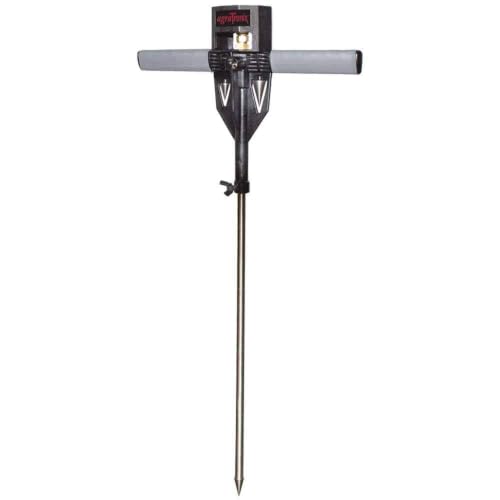
AgraTronix 8180 Soil Compaction Tester
AgraTronix
AgraTronix 8180 Soil Compaction Tester - 24 in. Probe, 300 PSI, Rubber Grip Handles, Water Filled Stainless Dial | Agricultural Supplies
- Soil Testing Equipment: Designed to accurately test soil compaction, this soil tester lets you determine the ideal state of soil f…
- Portable Device: The electronic tester features double molded rubber handles, hanger hole with nails and a lightweight body. Its e…
- Durable Construction: Made from high-grade stainless steel, the 24-inch probe of the portable soil tester with adjustable shock co…
This one belongs to a different crowd entirely. The AgraTronix 8180 measures soil compaction in PSI, not moisture. If you manage a lawn, a pasture, or a large vegetable bed and you’ve noticed water pooling or roots refusing to spread, compaction is likely your problem. This tool tells you exactly how hard your soil is at depth.
The 24-inch stainless probe pushes deep enough to find hardpan layers that shallow testers miss. A liquid-filled dial absorbs shock and keeps the needle steady while you push. The color-coded face splits results into green, yellow, and red zones, so you don’t need a soil science degree to interpret a reading. Two interchangeable tips — a half-inch and a three-quarter-inch — let you match the probe to different soil conditions. Rubber grips make the push comfortable even in clay.
Fair warning: this is a specialized instrument. It won’t tell you anything about moisture or pH. It’s also bulky compared to pocket meters, and availability tends to be limited because it’s aimed at agricultural users. Home gardeners with a single raised bed probably don’t need this level of data.
- Measures compaction up to 300 PSI on a color-coded dial
- 24-inch probe reaches deep hardpan layers
- Two tip sizes: 1/2 inch and 3/4 inch diameter
- Liquid-filled gauge resists shock damage
- Double molded rubber handles for a firm grip
Best for: Lawn owners, market gardeners, and anyone diagnosing drainage or root-penetration problems across a large area.
XLUX 2 Pack Long Probe Plant Soil Moisture Meter
Two meters, one purchase. That’s the pitch, and it’s a practical one if you keep several large planters. Each probe runs 5.5 inches — noticeably longer than standard models — so you can check moisture near the bottom of deep pots instead of just the surface layer.
No batteries, no buttons, no waiting. Push the probe in and the dial moves immediately. The large face uses three zones and ten scales, which makes the dry-moist-wet distinction obvious at a glance. A single slim probe causes less root damage than dual-probe designs and pulls out cleanly without dragging up half your potting mix. For anyone who’s snapped a cheap two-prong meter in a ficus pot, that matters.
The catch: you can’t leave it in the soil. The metal tip corrodes if left longer than five minutes, so this is a test-and-remove tool. It also won’t work in very hard, dry ground. Wipe the probe after each use and it’ll last. Skip that step and you’ll be replacing it sooner than you’d like.
- 5.5-inch probe reaches deeper than most analog meters
- Battery-free operation with instant dial response
- Two meters included for multiple pots or rooms
- Single slim probe minimizes root disturbance
- Must be removed within five minutes to prevent corrosion
Best for: Container gardeners with several large pots who want a simple, no-power moisture check in two places at once.
XLUX Plant Soil Moisture Meter
This is the meter that’s been sitting in American garden sheds since 2026. The design hasn’t changed much because it doesn’t need to. It reads moisture only, runs without batteries, and gives you a clear answer in about two seconds. For a beginner with a handful of houseplants, that’s plenty.
The color-coded dial splits into dry, moist, and wet zones across ten scales. You don’t need to memorize numbers. Look at where the needle lands and water accordingly. The slim 304 stainless steel probe slides into potting mix without tearing through fine roots, and it comes with a protective sleeve to prevent scratches in storage. That sleeve is a small touch, but it keeps the probe accurate longer.
It won’t test pH, light, or temperature. It also can’t stay in the soil — five minutes max, same as its long-probe sibling. And it’s not built for rocky or compacted ground. If your garden is mostly in-ground clay, you’ll want something with a sturdier shaft.
- Battery-free, instant-read analog dial
- Color-coded dry/moist/wet zones with ten scales
- Slim single probe protects delicate root systems
- Includes anti-abrasion protective sleeve
- Moisture measurement only — no pH or light data
Best for: Beginners and casual houseplant owners who want a reliable, no-fuss moisture check without spending much.
LAWNFUL Digital Soil pH Meter
Some gardeners don’t need moisture data at all. They need to know why their hydrangeas are the wrong color or why tomatoes keep cracking. That’s a pH question, and the LAWNFUL meter answers it with a digital readout and dual stainless steel probes.
The build quality leans industrial. It weighs about 160 grams, fits in a hand easily, and the double-needle probe design is both sensitive and corrosion-resistant. Calibration isn’t required out of the box, which removes the most annoying step in pH testing. Three AA batteries are included, and the low power draw means you likely won’t replace them for years. A one-year warranty covers defects.
What it doesn’t do is measure moisture, light, or temperature. It’s a single-purpose instrument, and the accuracy depends on proper soil contact — you’ll want to test multiple spots and clean the probes between uses. For a home gardener, the precision is more than adequate. For lab-grade work, you’d want something with documented calibration standards.
- Digital LCD display with calibration-free setup
- Dual stainless steel probes resist corrosion
- Lightweight at roughly 160 grams
- Three AA batteries included, rated for years of use
- One-year warranty against quality defects
Best for: Gardeners troubleshooting nutrient lockout, blossom end rot, or color changes tied to soil acidity.
How We Chose These Products
I started by sorting testers by what they actually measure. Moisture, pH, temperature, light, and compaction are five different jobs, and no single tool does all of them well. Grouping by function made it clear which products compete with each other and which ones serve entirely different buyers.
From there, I weighed probe depth, power source, build materials, and real-world usability details like reading angle and root damage. Products with documented limitations got credit for honesty — a tester that tells you not to use it in dry soil is more trustworthy than one that claims universal application. Availability and brand track record also factored in, since a great tool you can’t buy is useless.
Buying Guide: What Really Matters
Probe depth is the first thing to check. A four-inch probe reads the top layer of soil. A 5.5-inch probe reaches deeper into the root zone where moisture actually matters for most potted plants. If you grow in tall containers or raised beds, depth should drive your decision more than any other spec.
Next, decide whether you want batteries. Analog meters never need power and never die mid-season. Digital meters give you precise numbers and extra measurements like pH and temperature, but they add a maintenance step. Neither is better — it depends on whether you’d rather interpret a needle or replace AAAs.
Finally, think about what you’ll do with the data. Moisture readings help you water correctly. pH readings help you fix nutrient problems. Compaction readings help you plan aeration. Buying a four-in-one tool when you only need moisture means paying for features you’ll ignore. If you want more digital options, a digital soil tester guide covers that category in more depth.
Our Top Recommendation
For most people, the YAMRON 4-in-1 is the best starting point. It covers moisture, pH, temperature, and light in one device, and the rotating backlit screen makes it genuinely pleasant to use. You’ll need to learn its quirks — averaging readings, watering dry soil first — but the payoff is a complete picture of your soil health.
If you only care about watering, the XLUX Plant Soil Moisture Meter is the simpler, cheaper answer. It’s been trusted for nearly a decade and does one job without batteries or buttons. For deep containers, the two-pack long-probe version solves the same problem at greater depth. And if compaction or pH is your specific issue, the AgraTronix 8180 and LAWNFUL meter each handle their niche better than any all-in-one could.
Frequently Asked Questions
Can I leave a soil tester in the ground permanently?
No. Analog moisture meters corrode if left in soil beyond a few minutes. Digital models should also be removed after testing and wiped clean. Leaving any probe buried accelerates tip degradation and skews future readings.
Why do I get different pH readings from the same pot?
Soil pH varies by location, even within one container. Moisture levels, fertilizer pockets, and organic matter all shift the reading. Take at least five samples from different spots and average them, as YAMRON recommends, for a representative number.
Do I need a compaction tester for a home garden?
Only if you have drainage problems, standing water, or roots that won’t spread. A standard raised bed rarely needs one. Lawns and large in-ground beds benefit most from compaction data, since it guides aeration and tilling decisions.
How deep should a soil tester probe go for houseplants?
Aim for the middle of the root zone. For most 6 to 10-inch pots, that’s 3 to 5 inches down. Long-probe models like the XLUX 2-pack reach 5.5 inches, which suits larger planters. Shorter probes work fine for small pots but miss the moisture sitting near the bottom.