Your soil thermometer reads 34°F at 7am and 118°F by 2pm. That’s not a rare scenario in high-desert gardens, mountain plots, or greenhouse beds. Most soil meters on the market were designed for a comfortable 70°F afternoon and quietly fail outside that window.
Extreme temperatures break soil testers in three predictable ways. Cold drains alkaline batteries and stiffens probe seals. Heat warps plastic housings and fogs LCD screens. Rapid temperature swings between morning frost and afternoon sun cause reading drift on cheaper sensors. A tester built for these conditions needs a stable voltage circuit, a probe that won’t bend, and a display you can actually read when it’s 15°F outside.
We looked at five meters with different strengths for cold climates, hot climates, and everything in between. The YAMRON 4-in-1 handles the widest everyday range for most gardeners. The Jxikatx 7-in-1 is the data-hungry pick. The AgraTronix 8180 is a different animal entirely — a compaction tool for serious growers. Here’s how they stack up.
Here’s a quick spec comparison of the five testers before we get into the details.
| Features | YAMRON 4-in-1 | Jxikatx 7-in-1 | Tarocat 6-in-1 | AgraTronix 8180 | EDGEVEIL 4-in-1 |
|---|---|---|---|---|---|
| Measurement Type | 4-in-1 digital | 7-in-1 dual display | 6-in-1 digital | Compaction only, analog | 4-in-1 wireless TDR |
| Probe Design | Standard metal probe | Corrosion-resistant metal | Stable sensor circuit | 24-inch stainless steel | Triple-probe TDR sensor |
| Display | LCD with backlight | Dual dial + LCD | Color-coded digital | Liquid-filled dial | Large wireless screen |
| Reading Depth | 4 inches | 5+ inches | Standard depth | 24 inches | Standard depth |
| Best Climate Use | Mixed cold/hot | Variable outdoor | Steady indoor/outdoor | Field and farm | Remote monitoring |
YAMRON 4-in-1 Soil Moisture Meter

YAMRON
4-in-1 Soil Moisture Meter Digital Plant Temperature/Soil Moisture/PH Meter/Sunlight Intensity Backlight LCD Display Soil Test Meter for Gardening, Farming and Outdoor Plants
- 【4 in 1 function】This is a 4-in-1 multifunctional soil tester.Our soil tester fastly to measure soil moisture, pH, temperature and…
- 【Large Screen & Backlight LCD Display】The Soil Tester uses a large LCD screen and white backlight to conveniently display and read…
- 【Quick Accurate measurement】The latest probe detection technology in 2026 can quickly and accurately measure the pH, moisture and…
This is the meter for the gardener who checks plants before work in the cold and again after lunch in the sun. The YAMRON covers moisture, pH, temperature, and sunlight on one backlit screen. It’s a solid fit for raised beds, container gardens, and anyone dealing with 30°F mornings and 90°F afternoons in the same week.
The 45-degree rotating head is the standout feature. You don’t have to kneel in frozen mulch or crouch behind a tomato cage to read the display. That matters more than it sounds when the ground is cold and you want to get back inside. The backlight works in low winter light, and the visual screen design uses simple graphics alongside numbers, so you’re not squinting at raw figures. Ten seconds in the soil gives you a reading.
Here’s the honest part. The YAMRON cannot handle dry, hard soil. The manual warns against pushing the probe into frozen or compacted ground without watering first. That’s a real limitation in deep winter. You’ll also need four AAA batteries, which aren’t included, and cold weather drains them faster. The pH reading requires averaging at least five spots in the soil, which takes patience.
- Measures moisture, pH, temperature, and light in one pass
- 45-degree rotating head for comfortable reading angles
- Backlit LCD works in dark or overcast conditions
- Needs four AAA batteries (not included)
- Avoid inserting into frozen or bone-dry soil
Best for: Gardeners in mixed climates who check soil at different times of day and want one reliable meter for all four core readings.
Jxikatx 7-in-1 Soil Test Kit
The Jxikatx is built for the grower who wants every number. Seven readings in one device — soil moisture, pH, fertility, light intensity, soil temperature, air humidity, and ambient temperature. That last pair matters in extreme climates because soil and air can differ by 40°F or more. If you’re tracking how a heatwave affects both your beds and the air above them, this gives you both sides of the picture.
The dual display separates analog and digital data cleanly. The upper dial handles moisture, light, fertility, and pH. The lower LCD shows air humidity, air temperature, and soil temperature. You read everything at once instead of cycling through modes. The 90-degree rotating head with six hovering angles is genuinely useful for older gardeners or anyone who doesn’t want to bend over cold ground. Metal probes resist corrosion, which helps in wet winter soil where cheaper probes rust.
The trade-off is depth. You need to push the probe more than five inches into the soil for accurate readings. In rocky or shallow beds, that’s not always possible. The device also warns against loose sandy soils, which rules it out for some desert gardens. And seven readings means more to interpret — beginners might find it overwhelming at first.
- Seven measurements including air and soil temperature separately
- Dual display shows analog and digital data simultaneously
- 90-degree head with six viewing positions
- Requires 5+ inch insertion depth
- Not suitable for loose sandy or rocky soil
Best for: Data-driven gardeners in variable climates who want to compare soil conditions against air conditions in the same reading session.
6-in-1 Digital Soil Tester
Tarocat’s 6-in-1 targets the gardener who wants steadier readings without paying for extra features. It measures moisture, pH, soil temperature, fertility, environmental humidity, and sunlight. The headline feature is a voltage-stabilizing circuit that keeps power consistent as the battery drains. That’s a quiet but important detail in cold weather, where battery voltage drops and cheaper meters start drifting.
The color-coded pH and moisture scales make quick decisions easier. Green means good, red means adjust. You don’t need to remember ideal ranges for every plant. The 45-degree rotating head appears here too, which is becoming standard on mid-range digital meters. For indoor pots, raised beds, and greenhouse work, the Tarocat holds up well across temperature swings because the sensor circuit compensates for power fluctuation.
What it doesn’t do is reach deep. The probe length suits standard containers and garden beds but won’t help with compaction testing or deep-rooted perennials. The display is clear but not as large as the EDGEVEIL’s wireless screen. And fertility readings are a rough guide, not a lab-grade nutrient analysis — treat them as directional, not precise.
- Voltage-stabilizing circuit reduces reading drift
- Color-coded pH and moisture scales for quick interpretation
- Six measurements including fertility and environmental humidity
- 45-degree rotating head for easier viewing
- Fertility readings are approximate, not lab-precise
Best for: Gardeners in steady climates who want dependable readings without battery-related drift and don’t need deep-probe capability.
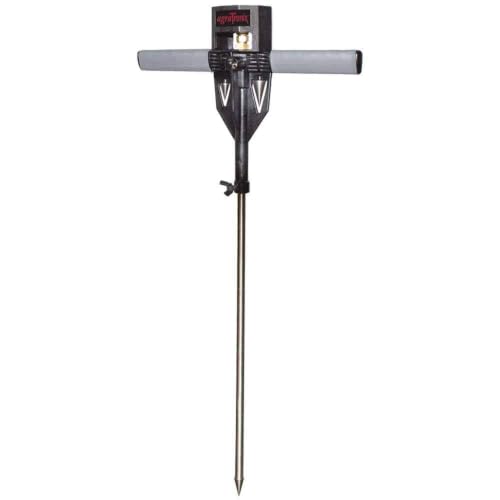
AgraTronix 8180 Soil Compaction Tester
AgraTronix
AgraTronix 8180 Soil Compaction Tester - 24 in. Probe, 300 PSI, Rubber Grip Handles, Water Filled Stainless Dial | Agricultural Supplies
- Soil Testing Equipment: Designed to accurately test soil compaction, this soil tester lets you determine the ideal state of soil f…
- Portable Device: The electronic tester features double molded rubber handles, hanger hole with nails and a lightweight body. Its e…
- Durable Construction: Made from high-grade stainless steel, the 24-inch probe of the portable soil tester with adjustable shock co…
This isn’t a moisture meter. The AgraTronix 8180 measures soil compaction with a 24-inch stainless steel probe and a 300 PSI liquid-filled dial. It’s a professional agricultural tool for farmers, orchard managers, and serious growers who need to know whether soil density is limiting root growth. If you’ve ever wondered why crops struggle in a field that looks fine on the surface, compaction is often the answer.
The three-way rating system — green, yellow, red — tells you immediately whether soil conditions support healthy growth. Green means good pore volume. Red means compacted and problematic. Two probe tips (1/2 inch and 3/4 inch) let you test different soil types. The double-molded rubber handles and lightweight body make it portable across large plots. The liquid-filled dial absorbs shock during transport, which matters when you’re hauling it through a field in freezing conditions.
This tool won’t tell you moisture, pH, or temperature. It does one job. It’s also the most expensive option here and availability is limited. For home gardeners with a few raised beds, it’s overkill. For anyone managing acreage or diagnosing why a section of field underperforms, it’s the right tool.
- 24-inch stainless steel probe for deep compaction testing
- 300 PSI liquid-filled dial resists shock damage
- Color-coded three-way rating system
- Two probe tips for different soil types
- Compaction only — no moisture, pH, or temperature
Best for: Farmers and large-scale growers who need to diagnose soil compaction across fields and can’t rely on surface-level readings.
4-in-1 Soil Moisture Meter for Plants

EDGEVEIL
4-in-1 Soil Moisture Meter for Plants ,Soil Temperature /Moisture /Sunlight Time, Large Screen, Garden Soil Tester for Lawn, Farm, Houseplants,Wireless Indoor/Outdoor Plant Water Meter (Dark Black)
- 【STOP GUESSING—WATER WITH CONFIDENCE】Know exactly when your plants need water. The EDGEVEIL soil moisture meter for plants shows r…
- 【CHECK PLANTS FROM ACROSS YOUR HOME & YARD】Monitor your plants without walking from pot to pot, bending down, or stepping outside…
- 【4-IN-1 INSIGHT—ONE SMARTER CARE DECISION】 See soil moisture, temperature, light level, and real-time clock together on one screen…
The EDGEVEIL solves a problem the others don’t: distance. With a wireless range up to 328 feet, you can check soil moisture, temperature, light, and time from inside your house while the probe sits in an outdoor bed. In extreme cold or pouring rain, that’s not a luxury — it’s the difference between monitoring your plants daily and skipping checks because you don’t want to go outside.
The triple-probe TDR sensor measures from multiple contact points, which gives more stable moisture readings than single-probe designs. A low-moisture alert flashes when soil needs water, so you’re not interpreting numbers — the meter tells you directly. The waterproof, corrosion-resistant probe is built for long-term outdoor use, and the large screen is easy to read from across a room. For anyone with mobility issues or a large property, this changes how you manage plant care.
The limitation is the probe itself. TDR sensors are accurate for moisture but this model doesn’t measure pH or fertility. If you need those readings, you’ll still want a second tool. The wireless signal can also weaken through thick walls or dense foliage, so the full 328-foot range isn’t guaranteed in every setup.
- Wireless range up to 328 feet for remote monitoring
- Triple-probe TDR sensor for stable moisture readings
- Low-moisture alert flashes automatically
- Waterproof, corrosion-resistant probe
- No pH or fertility measurement
Best for: Gardeners with large properties or mobility limitations who want to monitor outdoor soil conditions from inside the house.
How We Chose These Products
Temperature resilience drove every pick. We prioritized meters with design features that hold up outside a comfortable 70°F range — voltage stabilization, corrosion-resistant probes, sealed displays, and rotating heads that reduce exposure time. Products with known cold-weather battery issues or heat-sensitive LCD panels were flagged.
We also weighed practical factors: how deep the probe reaches, whether the display is readable in poor light, and how many readings the meter provides in one session. A tool that requires three separate insertions to get moisture, pH, and temperature is less useful in extreme conditions than one that reads everything in a single pass. Availability and build quality rounded out the evaluation.
Buying Guide: What Really Matters
Start with your climate zone. Arctic and high-altitude gardeners need meters with stable voltage circuits and probes that won’t crack in frozen ground. Desert gardeners need heat-resistant housings and displays that don’t fog in direct sun. Tropical growers deal with constant humidity, which corrodes cheap probes fast. Match the tool to your worst conditions, not your average ones.
Probe depth matters more than most buyers realize. A 4-inch probe works for containers and raised beds. A 5-inch or deeper probe reaches root zones in garden beds. A 24-inch probe is for compaction testing only. If you’re testing sandy soil, check whether the manufacturer recommends it — some meters explicitly warn against loose soils.
Battery behavior in cold is the most overlooked spec. Alkaline batteries lose voltage fast below 32°F. A meter with a voltage-stabilizing circuit compensates for this. Without one, your readings drift as the battery weakens. If you garden in cold conditions, this feature alone justifies the upgrade. For a broader look at what different test kits offer, expert-tested soil test kits cover similar ground from a different angle.
Our Top Recommendation
The YAMRON 4-in-1 is the best all-around pick for extreme temperatures. It reads four critical measurements in one pass, has a backlit display for low-light winter checks, and the rotating head keeps you from kneeling in frozen mulch. It’s not perfect in bone-dry or frozen soil, but no digital meter in this price range is.
For cold-climate growers who want remote monitoring, the EDGEVEIL 4-in-1 is the runner-up. The 328-foot wireless range means you never have to step outside in a blizzard to check soil moisture. For hot climates and variable conditions, the Jxikatx 7-in-1 gives you the most data per reading session. Budget-conscious buyers in steady climates will find the Tarocat 6-in-1 does everything they need without the extra cost.
Frequently Asked Questions
What temperature range do most soil testers actually handle?
Most consumer digital meters function between 32°F and 122°F. Below freezing, batteries weaken and probes can crack if forced into frozen ground. Above 122°F, LCD screens may fog or fail temporarily. Professional analog tools like the AgraTronix handle wider ranges because they have no electronics.
Can I leave a soil tester in the ground during winter?
No. Every manufacturer here warns against leaving probes in soil for extended periods. Frost heave can bend or crack probes, and moisture freezing around the sensor damages it. Store meters indoors during freezing months.
Why do my readings change between morning and afternoon?
Soil temperature shifts throughout the day, and cheap sensors don’t compensate. A meter with a voltage-stabilizing circuit or temperature-compensated sensor gives more consistent readings across temperature swings. Take readings at the same time each day for the most useful comparison.
Do I need a separate tool for pH and moisture?
Not necessarily. The YAMRON, Jxikatx, and Tarocat all measure pH and moisture together. The EDGEVEIL only measures moisture and temperature, and the AgraTronix only measures compaction. If you’re testing acidic soil for blueberries or azaleas, pick a multi-function meter with pH capability.
One last note: calibration matters more than brand. Test your meter in a known soil sample before trusting it in the field. Even good meters drift over time, and a $15 calibration check saves you from weeks of wrong watering decisions.