You’ve spent hours clearing the brush and picking the perfect seed blend. But if the soil is wrong, the deer will walk right past your plot to the neighbor’s field. Most food plot failures trace back to one thing: pH and nutrient levels you never checked.


A good soil tester for wildlife plots needs to do more than just spit out a number. It has to tell you how much lime to spread, when to plant, and whether you’re wasting money on fertilizer the soil can’t absorb. The best options give you clear recommendations, not just raw data.
We looked at five popular kits, from mail-in lab tests to instant pH strips. Here are the ones worth your time and money, starting with the top pick for serious hunters.
| Features | Whitetail Institute Lab | Rapitest Soil Kit | Antler King PH | Dewilde pH Strips | MySoil Test Kit |
|---|---|---|---|---|---|
| Testing Method | Mail-in lab analysis | DIY capsule system | DIY color chart | pH test strips | Mail-in lab analysis |
| Results Time | Under 1 week | Immediate | 20 minutes | 90 seconds | 6-8 days |
| Nutrients Tested | pH, P, K, Ca, Mg | pH, N, P, K | pH only | pH only | 13 nutrients |
| Consultation | Included | Plant list | Lime chart | Color chart | Custom recs |
| Best Use Case | Serious food plots | General gardening | Quick pH check | Budget monitoring | Lawn & garden |
Whitetail Institute Labor…
Whitetail Institute
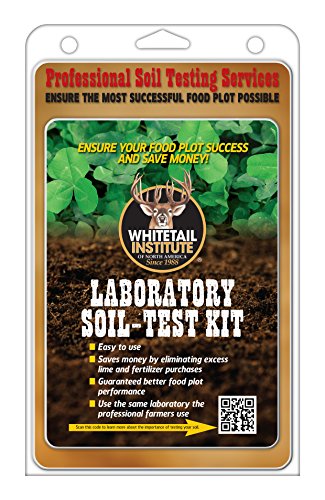
Whitetail Institute Laboratory Soil Test Kit, Ensures The Most Successful Deer Food Plot Possible, Professional Consultation Included, Receive Results Within One Week
- ENSURE the most SUCCESSFUL food plot possible
- SAVES YOU MONEY on fertilizer and lime
- VERY EASY TO USE - everything you need is included
This is the gold standard for hunters who treat their food plots like a serious investment. The Whitetail Institute kit takes the guesswork out of soil management. You collect samples, mail them in, and get a detailed report back within a week.
What sets this apart is the professional consultation. You don’t just get numbers; you get a specific lime and fertilizer prescription tailored to what you’re planting. That saves you from buying bags of lime you don’t need. The instructions are simple enough for a first-timer, but the results are what a pro would expect.
The trade-off is the wait. You won’t get instant gratification. Also, you need to plan ahead. If you’re planting in two weeks, this kit might not get you the results in time. It’s a tool for the prepared, not the procrastinator.
- Includes lab analysis and a personalized recommendation report
- Results delivered by mail or email in under seven days
- Covers pH, phosphorus, potassium, calcium, and magnesium
- Consultation helps you avoid overspending on soil amendments
- Requires mailing samples, so plan for a week of turnaround
Best for: The hunter who wants a professional-grade soil prescription without hiring an agronomist.
Rapitest Soil Test Kit fo…

Luster Leaf
Rapitest Soil Test Kit for Gardens, Vegetables, Flowers and Lawns. USA designed and assembled soil tester completely, quickly and accurately measures/analyzes soil pH acidity and garden nutrients.
- Quick, at home results for Soil pH, Nitrogen, Phosphorous and Potash Innovative and inexpensive soil test kit features an easy-to-…
- Contains all components needed for 20 tests. 5 for each of pH, N, P and K
- Contains all components needed to test all variables in several spots in the yard or garden
If you want answers today, the Luster Leaf Rapitest is a solid choice. It’s designed for gardeners who want to test multiple spots without waiting for the mail. You get 20 tests total, covering pH, nitrogen, phosphorus, and potassium.
The capsule system is clever. You mix soil with water, add a capsule, and compare the color to a chart. It’s not as precise as a lab, but it gives you a clear enough picture to make decisions. The included pH preference list for over 450 plants is a nice bonus for anyone planting diverse blends.
Color matching takes practice. The difference between two shades of green can be subtle, and lighting affects your reading. It’s not a perfect science, but for the price, it’s a practical way to monitor your plot’s health throughout the season.
- Provides 5 tests each for pH, N, P, and K
- Patented color comparators make reading results easier
- Includes a soil pH preference list for over 450 plants
- Works well for testing several spots in a small plot
- Color interpretation can be subjective in poor light
Best for: The hands-on gardener who wants immediate, affordable results for multiple test sites.
Antler King PH Soil Test…
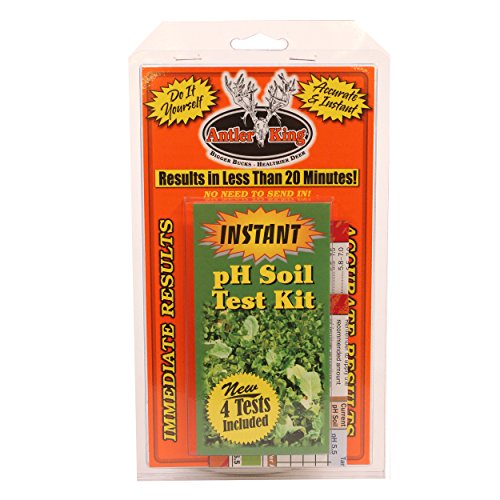
Antler King focuses on the one number that matters most for food plots: pH. This kit skips the nutrient analysis and gives you a fast pH reading in about 20 minutes. It’s a niche tool, but for a specific job, it works.
You get four separate tests, which is enough to check different zones of your plot. The included charts are straightforward. They tell you how much lime to apply based on your pH score. For a hunter who just wants to know if the soil is too acidic for clover or alfalfa, this is a quick and easy solution.
The limitation is obvious. You won’t learn anything about nitrogen or phosphorus levels. If your pH is perfect but your plants are still yellow, this kit won’t tell you why. It’s a starting point, not a complete soil management tool.
- Measures pH only, with results in about 20 minutes
- Includes four individual tests for multiple locations
- Easy-to-read charts recommend proper lime applications
- Very simple process with minimal supplies required
- Does not test for nitrogen, phosphorus, or potassium
Best for: The food plotter who only needs a fast pH check before spreading lime.
Soil Test Kit – 100 Soi…
The Dewilde Trading Co. kit is the budget option. You get 100 pH test strips for the price of a couple of bags of fertilizer. It’s not fancy, but it lets you monitor pH changes over time without spending much.
These strips measure a wide range from 3.5 to 9. The process is simple: mix soil with water, dip the strip, wait a minute, and match the color. It’s portable enough to carry in your pocket while you walk the plot. For a quick check on whether your lime application is working, it’s hard to beat the cost per test.
The precision isn’t great. You get a range, not an exact number. And the color chart requires good lighting to read accurately. It’s a screening tool, not a diagnostic lab. But for keeping a rough eye on things, it does the job.
- Includes 100 individual pH test strips
- Measures pH range from 3.5 to 9
- Very cost-effective for frequent monitoring
- Portable and easy to use in the field
- Provides a range, not a precise decimal reading
Best for: The budget-conscious landowner who wants to track pH trends over a season.
MySoil Soil Test Kit, Unl…
MySoil is the most comprehensive mail-in kit on this list. It analyzes 13 plant-available nutrients, including nitrogen and pH. The results come back in 6-8 days with custom recommendations for both organic and synthetic fertilizers.
This kit works for any growing scenario, from food plots to vegetable gardens. The recommendations are specific. They tell you what to apply, how much, and when. That level of detail helps you avoid wasting money on products your soil doesn’t need. It’s a favorite among serious gardeners and turf managers for a reason.
The main drawback is the same as any mail-in test: you have to wait. If you’re trying to fix a problem right now, this won’t help today. Also, the custom recommendations are tailored to general plant needs, so you may need to adjust them slightly for specific wildlife blends.
- Lab analysis measures 13 nutrients including nitrogen and pH
- Results returned in 6-8 days with custom recommendations
- Provides both organic and non-organic fertilizer suggestions
- Works for lawns, gardens, food plots, and hydroponics
- Mail-in process means you cannot get same-day results
Best for: The data-driven grower who wants a complete nutrient profile and a specific action plan.
How We Chose These Products
We focused on what actually helps you grow a better food plot. That means looking at the type of analysis, the turnaround time, and the clarity of the recommendations. A kit that gives you a number but no advice is only half useful.
We also weighed the trade-offs between speed and accuracy. Instant kits are great for quick checks, but lab tests provide the detailed data needed for long-term soil health. We picked options that serve different needs, from the hunter who wants a pro consultation to the budgeter who just needs a pH strip.
Buying Guide: What Really Matters
The first decision is lab versus DIY. Lab kits cost more per test but give you precise data and specific lime/fertilizer recommendations. DIY kits are cheaper and faster but less accurate. For a new food plot, a lab test is worth the investment. For monitoring an established plot, a DIY kit might be enough.
Next, look at what’s being tested. pH is critical, but so are phosphorus and potassium. If you’re planting brassicas or clover, you need to know your nutrient levels. A pH-only kit is a starting point, but it won’t tell the whole story. For more on specific soil challenges, see our guide to the best soil tester for acidic soil.
Finally, consider the recommendations. A good kit tells you how much lime to add. A great kit tells you when to add it and what fertilizer to use. If you’re managing a large plot, the cost of a lab test is easily offset by not buying unnecessary amendments. For those working on a smaller scale, like a raised bed soil tester might be more appropriate.
Our Top Recommendation
The Whitetail Institute Laboratory Soil Test Kit is our top pick for wildlife plots. It combines accurate lab analysis with a professional consultation that saves you money on lime and fertilizer. The one-week turnaround is reasonable if you plan ahead.
If you need results faster, the Rapitest kit is a solid runner-up for immediate feedback. And if you’re on a tight budget, the Dewilde pH strips offer a cheap way to monitor pH over time. But for a serious food plot, the Whitetail Institute kit delivers the most value.
Frequently Asked Questions
How often should I test my food plot soil?
Test every year or two, ideally in the spring or fall before you plant. If you’re making big changes like adding lime, test again after a few months to see how the soil responded.
Can I use a garden soil tester for a wildlife plot?
Yes, the science is the same. But food plot specific kits often provide recommendations tailored to crops like clover, brassicas, and corn. A general garden kit might need interpretation for those specific plants.
What if my soil pH is too low?
You’ll need to add lime. The amount depends on your soil type and current pH. A lab test will give you a specific recommendation. For more details, check out our guide to the best soil tester for turf management.
Are pH strips accurate enough for a food plot?
They give you a rough range, which is fine for monitoring trends. But for an initial assessment or a precise prescription, a lab test is much better. Strips are a screening tool, not a diagnostic one.