Seedlings in raised trays have a tiny margin for error. A few points off on pH and your tomatoes sulk. Too much moisture and damping-off wipes out a whole cell block overnight. You won’t see the damage until the leaves curl.
A good soil tester for raised seed trays tells you what’s happening below the surface before your plants do. The right tool depends on what you actually need to measure. Some growers want a quick pH read. Others want a full nutrient breakdown. A few want moisture and light data for indoor trays under grow lights.
We looked at five testers that cover the whole spectrum, from a capsule-based lab-style kit to a mail-in professional analysis and a digital 7-in-1 meter. The Rapitest kit wins for most seed-tray growers, but the SONKIR and Buladeke meters are strong alternatives depending on your setup. Here’s how they compare.
Here’s a quick side-by-side of the key specs so you can see which tester fits your raised tray setup.
| Features | Rapitest Soil Kit | SONKIR pH Meter | Dewilde pH Strips | MySoil Lab Kit | Buladeke 7-in-1 Meter |
|---|---|---|---|---|---|
| Testing Method | Capsule color comparator | Analog probe meter | Dip-and-compare pH strips | Mail-in lab analysis | Digital LCD probe |
| What It Measures | pH, N, P, K | Moisture, light, pH | pH only (3.5–9) | 13 nutrients plus pH | Moisture, pH, temp, light, EC, TDS |
| Power Source | None needed | No battery | None needed | None (mail-in) | 4 AAA batteries |
| Results Speed | Minutes per test | Minutes per reading | About 90 seconds | 6–8 days by mail | 10 seconds per reading |
| Best Use Case | Full nutrient check | Quick tray moisture | Budget pH screening | Precise lab-grade data | Indoor digital tracking |
Rapitest Soil Test Kit

Luster Leaf
Rapitest Soil Test Kit for Gardens, Vegetables, Flowers and Lawns. USA designed and assembled soil tester completely, quickly and accurately measures/analyzes soil pH acidity and garden nutrients.
- Quick, at home results for Soil pH, Nitrogen, Phosphorous and Potash Innovative and inexpensive soil test kit features an easy-to-…
- Contains all components needed for 20 tests. 5 for each of pH, N, P and K
- Contains all components needed to test all variables in several spots in the yard or garden
This is the pick for the grower who wants real numbers on soil chemistry without mailing anything off. The Rapitest kit uses a capsule system and patented color comparators to measure pH, nitrogen, phosphorus, and potassium. Each kit covers 20 tests total, split five ways across the four variables. That’s enough to sample several spots in your raised tray setup and still have refills left for next season.
What sets it apart is the breadth. Most cheap testers only read pH. This one gives you the full N-P-K picture, which matters when seedlings yellow despite looking watered. The included pH preference list covers over 450 plants, so you can check whether your tray mix suits tomatoes, peppers, or brassicas before you commit. The instructions are detailed enough for a first-timer but not padded for experienced gardeners.
The trade-off is speed and mess. Each test takes a few minutes, and you’re mixing soil with water and comparing colors against a chart. Lighting affects your color read, so do it in daylight. It’s not a tool you’ll use mid-week on a whim. For a full seasonal check, though, it’s hard to beat at the price. If you grow in raised planter boxes, this kit’s multi-spot testing really pays off.
- Measures pH, nitrogen, phosphorus, and potassium in one kit
- 20 tests total, five per variable
- No batteries or calibration required
- Includes pH preference list for 450+ plants
- Capsule refills available separately
Best for: The seed-tray grower who wants a complete nutrient snapshot and doesn’t mind a few minutes of hands-on testing.
SONKIR Soil pH Meter

SONKIR
SONKIR Soil pH Meter, MS02 3-in-1 Soil Moisture/Light/pH Tester Gardening Tool Kits for Plant Care, Great for Garden, Lawn, Farm, Indoor & Outdoor Use (Green)
- Kindly NOTE: This soil tester can not be applied to test pH value of any other liquid. If the soil is too dry the indicator will n…
- 3 METERS IN ONE: Soil moisture level, Soil pH value and Sunlight level could be tested easily according to your need by switching…
- NO BATTERY NEEDED: Simply insert the meter into soil, wait few minutes, accurate test results will be displayed on the readout pan…
Picture someone with a windowsill of seed trays who waters on instinct and keeps losing seedlings to rot. The SONKIR MS02 is built for that person. It’s a three-in-one analog meter that reads moisture, pH, and light with a simple function switch. No batteries, no calibration fluid, no waiting.
The moisture function is the real workhorse here. Seed trays dry unevenly, and the top inch can look damp while the root zone is bone dry. This meter tells you what’s happening two to three inches down, which is where germinating seeds actually sit. The light sensor is a nice bonus if you’re moving trays between a grow light and a south window. The pH reading is a rough guide, not a lab number, but it flags problems early.
Two things to know. First, it won’t read pH in liquids, so don’t try it on your watering can. Second, dry soil stops the needle cold. You need to water first and wait before testing. The probe also needs a wipe-down after each use to keep readings honest. It’s not perfect, but for the price it’s a genuinely useful tray-side tool.
- Three functions: moisture, pH, and light
- No batteries required
- Analog readout, no calibration
- Compact enough for indoor trays
- Needs moist soil for accurate readings
Best for: The hands-on grower who wants a fast moisture and light check without dealing with batteries or apps.
Dewilde pH Test Strips

Dewilde Trading Co
Soil Test Kit – 100 Soil pH Test Strips (3.5–9 Range) for Garden, Lawn & Indoor Plants – Easy At-Home Soil Testing
- Accurate Soil pH Testing: Dewildetradingco Soil pH Test Strips offer measurements of soil pH levels (pH 3.5-9). As an essential to…
- User-Friendly Testing Procedure: The testing process is simple and efficient. Mix the sample soil with water, let the solution sit…
- Cost-Effective and Versatile: With 100 Soil PH checker strips included in each package, Dewildetradingco provides a cost-effective…
Some growers just want to know if their mix is acidic or alkaline. That’s it. No nutrient panels, no digital readouts. The Dewilde Trading Co strip kit is for that grower, and it delivers 100 pH tests in a single bottle for less than the cost of a restaurant lunch.
The process is straightforward. Mix soil with water, let it sit 30 minutes, dip a strip for three seconds, wait a minute, then match the color against the bottle chart. The range covers pH 3.5 to 9, which handles everything from peat-based seed mixes to lime-heavy potting soil. If you’re running a greenhouse seedling tray operation, having 100 strips on hand means you can spot-check every batch without thinking about cost.
The honest limitation is precision. Color matching is subjective, and two people can read the same strip differently. It’s a screening tool, not a diagnostic one. If you need exact numbers for fertilizer dosing, step up to the Rapitest or MySoil. For a quick yes-or-no on pH, though, these strips are hard to argue with.
- 100 pH strips per bottle, range 3.5–9
- No batteries or probes to maintain
- Works for indoor and outdoor soil
- Color chart printed on the bottle
- Best for screening, not precise dosing
Best for: The budget-conscious grower who wants a fast pH sanity check across many trays.
MySoil Soil Test Kit

My Soil
MySoil Soil Test Kit, Unlock Your Lawn & Garden Potential, Complete & Accurate Nutrient and pH Analysis with Recommendations Tailored to Your Soil and Plant Needs
- KNOW BEFORE YOU GROW | Grow the healthiest, sustainable lawn and garden with the most accurate and easy to use professional soil t…
- FAST & ACCURATE | Unlike at-home pH meters and test strips, our mail-in professional lab analysis accurately measures 13 plant-ava…
- FOR ANY GROWING SCENARIO | Tests any soil type and growing condition - lawn & turf, vegetable gardening, flowers, compost, trees,…
Here’s the scenario: you’ve been guessing at fertilizer for two seasons and your seedlings still look mediocre. The MySoil kit skips the guesswork entirely. You collect a soil sample, mail it in, and a professional lab returns a full analysis of 13 plant-available nutrients plus pH.
That nutrient count is the headline. Most home testers read three or four variables. This one covers the full panel, including nitrogen, and reports results in 6–8 days. The report comes with custom recommendations: what to apply, how much, and when. Both organic and non-organic options are included, which matters if you’re growing food and want to stay within certain inputs.
The catch is the wait. You won’t get an answer today, and if you’re mid-season with struggling seedlings, that delay hurts. The kit also costs more per test than strips or capsules, though you’re paying for lab-grade accuracy. It works for any growing scenario, from raised trays to compost piles to hydroponic media. Check availability before ordering, since stock on this one fluctuates.
- Lab analysis of 13 nutrients plus pH
- Results in 6–8 days by mail
- Custom organic and non-organic recommendations
- Works for soil, compost, and soil-less media
- Higher cost per test than home kits
Best for: The serious grower who wants lab-accurate data and a precise amendment plan, not a rough estimate.
Buladeke 7-in-1 Digital Meter
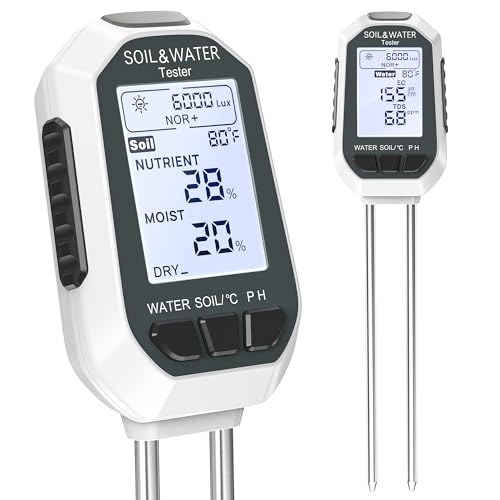
Indoor seed starting under grow lights creates variables a simple probe can’t track. The Buladeke 7-in-1 is aimed at that grower: someone running trays on a shelf who wants moisture, pH, temperature, light, EC, and TDS in one device with a backlit screen.
The large LCD is the standout feature. White backlight means you can read it in a dim germination closet without dragging the tray into the kitchen. Readings come in about 10 seconds after inserting the probe roughly 10 cm deep. The EC and TDS functions are unusual at this price point and useful if you’re mixing nutrient solutions for seedlings. Temperature matters too, since cold tray soil stalls germination.
It runs on four AAA batteries, which aren’t included, so factor that in. The probe shouldn’t be forced into dry, compacted soil, and it can’t be used in liquids. Moisten the test area first if the mix is crusty. It’s a more complex tool than the analog meters, and the learning curve is real, but the data density is unmatched for the price.
- Seven functions including EC and TDS
- Backlit LCD for low-light reading
- 10-second readings at 10 cm depth
- Runs on 4 AAA batteries (not included)
- Not for liquid testing; moisten dry soil first
Best for: The indoor grower under lights who wants digital tracking of moisture, temp, light, and nutrients in one handheld unit.
How We Chose These Products
We started with what actually matters for raised seed trays: pH accuracy, moisture sensitivity at shallow depths, and whether the tool gives you actionable information before seedlings suffer. Nutrient measurement was weighted heavily because seed-starting mixes vary widely and N-P-K imbalances show up fast in young plants.
We also weighed real-world friction. A tester you won’t use is worthless. So we favored tools with simple workflows, clear readouts, and no proprietary refills that lock you in. Lab-based options got credit for accuracy but were penalized for turnaround time. Digital meters earned points for data density but lost some for battery dependence and probe care requirements.
Buying Guide: What Really Matters
Match the tester to your actual question. If you want to know whether your seed mix is too acidic, a strip or capsule kit is enough. If you’re troubleshooting yellowing leaves or stunted growth, you need nutrient data, and that means a kit or lab test. Moisture-only tools won’t tell you why plants are struggling, only whether they’re dry.
Depth matters more than most growers realize. Seed trays are shallow, often three to four inches deep. A probe designed for garden beds may not give accurate readings in that thin a soil column. Check the minimum insertion depth before buying. The Buladeke, for example, wants about 10 cm, which is deeper than some trays allow.
Think about frequency too. A one-time lab test is great for planning a season. A handheld meter is better for weekly checks. Strips sit in the middle: cheap enough to use often, but less precise than a meter. Most serious seed-tray growers end up with two tools, one for quick moisture checks and one for periodic pH or nutrient screening.
Our Top Recommendation
The Rapitest Soil Test Kit takes the top spot for most raised seed tray growers. It’s the only home kit in this lineup that reads pH, nitrogen, phosphorus, and potassium, and the 20-test supply covers multiple trays across a full season. The plant preference list is a genuinely useful reference, not filler.
If you want something faster and simpler, the SONKIR meter is the runner-up for moisture and light checks. For lab-grade accuracy and a custom amendment plan, the MySoil kit is worth the wait and the higher cost. And if you’re growing indoors under lights, the Buladeke 7-in-1 gives you the most data per reading. Budget growers who only need pH can grab the Dewilde strips and call it done.
Frequently Asked Questions
Can I use a garden soil tester in seed-starting mix?
Yes, but check the minimum probe depth. Seed mixes are shallower than garden beds, and some probes need 10 cm of soil to read accurately. Shallow trays may not give reliable results with deep-probe meters.
How often should I test soil in raised seed trays?
Once at the start of the season for pH and nutrients, then weekly for moisture. If seedlings show stress, test pH again. Nutrient levels in fresh seed mix usually hold for several weeks.
Do cheap pH strips give accurate readings for seedlings?
They give a ballpark range, which is often enough. Color matching is subjective, so two people may read the same strip differently. For precise dosing decisions, use a capsule kit or lab test instead.
Is a mail-in soil test worth it for a small seed tray setup?
It depends on how much you’re growing. For a few trays, a home kit is more practical. For a full season of starts or repeated problems, the lab report’s nutrient detail and custom recommendations can save money on unnecessary amendments.