
Best Soil Tester for Precision Farming: 5 Tools That Actually Deliver Data
Contents
You’ve probably watched a crop struggle in one corner of a field while the rest of it thrives. The problem usually isn’t the seed or the weather. It’s the soil, and you can’t fix what you can’t measure.
A good soil tester for precision farming needs to do three things well: give repeatable readings, survive real field conditions, and measure the variables that actually change your management decisions. Compaction, pH, moisture, and nutrient levels top that list. Cheap meters with analog dials drift. Lab tests are accurate but slow and expensive per sample.
Below are five testers that cover the full range of precision farming needs, from a dedicated compaction probe to a rechargeable 8-in-1 kit that logs data to a computer. The AgraTronix 8180 earns the top spot for its build quality and narrow focus. The rest fill specific gaps depending on what you grow and how you work.
Here’s a quick comparison of the key specs that separate these five products.
| Features | AgraTronix 8180 | LAWNFUL Digital pH | YINMIK Digital pH | Buladeke 4-in-1 | 8-in-1 Soil Tester |
|---|---|---|---|---|---|
| Primary Function | Soil compaction | Soil pH only | Soil and water pH | Moisture, pH, light, fertility | pH, NPK, EC, moisture, temp |
| Probe Build | 24 in. stainless, 2 tips | Double-needle stainless | Glass electrode with dibber | Single analog probe | 4 stainless 316 probes |
| Reading Type | Liquid-filled dial | LCD digital | App-connected digital | Analog dial | 2.8 in. LED digital |
| Power Source | None needed | 3 AA batteries | 3 LR44 batteries | Battery-free | 5000mAh rechargeable |
| Data Logging | No | No | App, 1000 points | No | USB export to computer |
AgraTronix 8180 Soil Comp…
1st Pick
AgraTronix
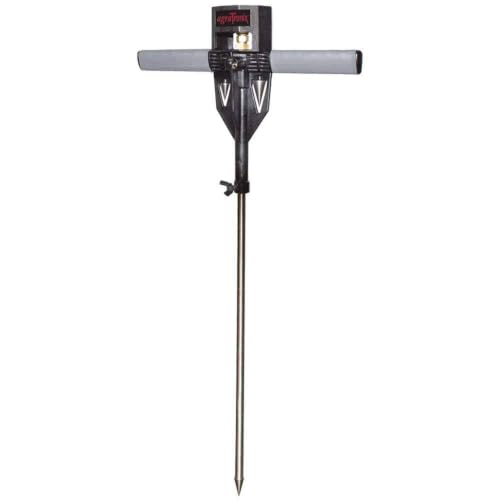
AgraTronix 8180 Soil Compaction Tester - 24 in. Probe, 300 PSI, Rubber Grip Handles, Water Filled Stainless Dial | Agricultural Supplies
- Soil Testing Equipment: Designed to accurately test soil compaction, this soil tester lets you determine the ideal state of soil f…
- Portable Device: The electronic tester features double molded rubber handles, hanger hole with nails and a lightweight body. Its e…
- Durable Construction: Made from high-grade stainless steel, the 24-inch probe of the portable soil tester with adjustable shock co…
The AgraTronix 8180 is a single-purpose instrument. It measures soil compaction, and nothing else. For precision farming, that focus matters. Compaction is the silent yield killer on most operations, and you can’t detect it by looking at the surface.
Two probe tips ship in the box: a 1/2-inch small tip and a 3/4-inch large tip. Switch between them depending on soil type and moisture. The 24-inch stainless probe reaches deep enough to find hardpan layers that form below the tillage zone. Readings show up on a liquid-filled dial with color-coded zones. Green means good growing conditions. Red means you have a problem. The liquid fill absorbs shock during transport, which is a small detail that separates field-grade tools from hobby meters.
The honest downside: this is a mechanical instrument. It won’t log data, sync to an app, or export a CSV. You read the dial and write the number down. For some farmers that’s fine. For others running variable-rate prescriptions, it’s a gap. It’s also listed as scarce stock on Amazon, so availability fluctuates.
- 24-inch stainless steel probe reaches below the tillage layer
- Two interchangeable tips for different soil conditions
- Color-coded dial shows good, marginal, and poor zones at a glance
- Rubber grip handles and hanger hole for field carry
- No batteries, no calibration, no electronics to fail
Best for: Farmers and agronomists who need reliable compaction data and don’t want to depend on batteries or apps.
LAWNFUL Digital Soil pH M…
LAWNFUL built this meter for people who want a pH number without mixing slurries or guessing at a needle. Stick the double-needle probe into moist soil, wait a moment, and read the LCD. It’s marketed as industrial grade, and the stainless probes hold up better than the thin brass pins on budget meters.
Battery life is the standout spec here. Three AA batteries supposedly last five years under normal use. That’s a big deal if you leave the meter in a shed or truck and only pull it out a few times a month. The 160-gram body is light enough to carry in a jacket pocket, and the one-year warranty covers replacement if something fails.
What it doesn’t do is measure anything besides pH. No moisture, no nutrients, no temperature. So if you’re building a full precision farming dataset, this is one piece of a larger kit. Accuracy also depends on soil moisture. Dry soil gives unreliable readings, so water the sample area first or test after rain.
- Double-needle stainless steel probes resist corrosion
- Calibration-free operation out of the box
- LCD display reads pH directly, no color interpretation needed
- Weighs 160 grams, fits in a pocket
- One-year warranty with replacement policy
Best for: Growers who need fast pH checks across many plots and want a meter that sits in the toolbox for years without battery swaps.
Digital pH Meter for Soil…
YINMIK’s pH pen takes a different approach. It uses a glass electrode protected by a tapered plastic dibber, which means you can push it into potting mixes, coco coir, sandy soil, or loam without damaging the sensor. That protection matters. Glass electrodes are more accurate than metal probes but fragile without a shield.
The app connection is the real differentiator. Pair the pen with the YINMIK app and it stores up to 1000 readings. You can tag each reading with a note about where the sample came from, then look back at the history to see if your pH adjustments are working. It also tests water, which helps if you’re mixing nutrient solutions for hydroponics or checking irrigation sources.
Here’s the trade-off: the app adds a step to every test. You have to pull out your phone, open the app, and wait for the Bluetooth connection. For quick spot checks, that’s slower than a standalone meter. The LR44 batteries also drain faster than AA cells, though three spares are included. And glass electrodes need careful handling in rocky or frozen ground.
- Glass pH electrode with protective plastic dibber
- Tests both soil and water samples
- App stores 1000 data points with location notes
- Includes calibration buffer powder and cleaning brush
- Works with coco coir, potting mix, sandy soil, and loam
Best for: Greenhouse growers, hydroponic setups, and small farms that want pH history without paying for a lab service.
Buladeke 4-in-1 Soil Mois…
4th Pick

Buladeke
Buladeke 4-in-1 Soil Moisture Meter
- Four-in-One Functionality: This soil tester features four detection modes—moisture, pH, fertility, and light intensity. A simple s…
- Operation: Insert the probe into the soil, and the dial instantly displays data like soil moisture. You can determine what your pl…
- Easy Reading: The 45° rotating head allows you to bend the meter to different angles for a comfortable reading position. No need t…
Buladeke packed four functions into one analog meter: moisture, pH, fertility, and light intensity. A slide switch on the face changes modes. The 45-degree rotating head lets you bend the display toward your eyes, so you don’t have to crouch down to read it. That’s a small ergonomic win most competitors skip.
No batteries are required. The meter generates its own current from the soil, which means it never dies in the field. For quick scouting walks across a farm, that’s convenient. You can check moisture in one row, flip to pH in the next, and get a rough fertility reading without carrying anything else.
Accuracy is where this meter shows its limits. Analog dials drift, and the fertility reading is a rough indicator rather than a precise NPK measurement. The manufacturer warns against forcing the probe into hard soil and against leaving it in the ground for long periods. So it’s a scouting tool, not a data collection instrument. If you need numbers you can build a nutrient plan around, look elsewhere.
- Four modes: moisture, pH, fertility, and light
- Rotating head adjusts to a comfortable viewing angle
- No batteries needed, works on soil-generated current
- Single probe design for quick insertion
- Suited to indoor pots, lawns, farms, and greenhouses
Best for: Gardeners and small-scale growers who want a general soil health snapshot without spending much or dealing with batteries.
8-in-1 Soil Tester, Soil…
5th Pick

Generic
8-in-1 Soil Tester, Soil Moisture Meter with Digital PH, NPK, EC, Salt, Temp, Rechargeable Portable Soil Test Kit for Gardening, Farming and Outdoor Plants
- 【7-in-1 Complete Analysis】Go beyond basic pH and moisture. This professional tool measures pH, Moisture, Temperature, EC (salt lev…
- 【Ultra-High Precision & Fast Response】Advanced sensor technology with 4 stainless steel 316 anti-corrosion probes delivers >99% ac…
- 【Massive Data Storage & Export】Built-in massive storage saves every test. Review real-time and historical data anytime. Connect to…
This generic 8-in-1 kit covers the widest range of measurements on this list: pH, moisture, temperature, EC, NPK, and salinity. Four stainless steel 316 probes resist corrosion, and the manufacturer claims readings in under five seconds with better than 99 percent accuracy. The 2.8-inch LED display shows all values clearly, even in bright sunlight.
The data storage and USB export set it apart. Every test gets saved. Connect to a computer and you can export report tables to track soil changes over weeks or seasons. For precision farming, that’s the difference between guessing and knowing. The 5000mAh rechargeable battery runs eight hours or more on a charge, and the included carry case protects the investment during transport.
Two things to weigh before buying. First, the listing shows an availability date rather than immediate stock, so shipping may take longer than usual. Second, this is a generic-brand product. There’s no established track record to lean on, and long-term sensor durability is unknown. The feature set is impressive on paper, but you’re taking a chance on a newer brand.
- Measures pH, moisture, temperature, EC, NPK, and salinity
- Four stainless steel 316 anti-corrosion probes
- USB export for data tracking and report tables
- 5000mAh rechargeable battery, 8+ hours of use
- Includes dedicated carry case for field transport
Best for: Farmers and researchers who want a full soil profile with exportable data and don’t mind waiting for stock.
How We Chose These Products
We started by filtering out meters that can’t survive field conditions. Anything with a plastic body, thin brass probes, or a reputation for drifting after a few months got cut. Precision farming demands tools that hold calibration and take abuse.
From there, we looked at what each product measures and who it serves. A compaction tester solves a different problem than a pH pen. A 4-in-1 analog meter serves a different buyer than an 8-in-1 digital kit with USB export. We ranked each product on build quality, measurement range, data handling, and honest limitations. Products with unclear specs or no warranty information ranked lower.
Buying Guide: What Really Matters
Match the tool to the decision you need to make. Compaction limits root growth and water infiltration. pH controls nutrient availability. Moisture drives irrigation timing. EC and salinity matter in greenhouse and fertigation systems. NPK tells you whether your fertilizer program is working. Buy the tester that measures the variable you’re actually managing.
Probe material matters more than display type. Stainless steel and glass electrodes last longer than brass or coated metal. If you test rocky or dry soil, look for a protected electrode or a sturdy metal probe. Analog dials work fine for rough scouting, but digital readouts give you numbers you can compare over time.
Data logging changes how you farm. A meter that stores readings lets you track trends across seasons. That’s the core of precision agriculture. If you’re just checking a few pots on a patio, skip the logging feature and save money. If you’re managing acres, logging pays for itself.
Our Top Recommendation
The AgraTronix 8180 wins because it does one job extremely well. Compaction is the most underdiagnosed problem in precision farming, and this tool finds it at depths other meters can’t reach. The build quality is field-grade. No batteries, no calibration, no app to fumble with. It just works.
If you need pH data, the LAWNFUL meter is the best budget pick for straightforward soil pH checks. The YINMIK pen suits greenhouse and hydroponic growers who want app-based history. The 8-in-1 kit is the most complete option if you can wait for availability and want exportable data. The Buladeke works as a low-cost scouting tool for smaller operations.
Frequently Asked Questions
Can I use a soil pH meter in dry soil?
Most meters need moist soil to give accurate readings. Dry soil doesn’t conduct electricity well, which throws off both analog and digital meters. Water the test area lightly and wait a few minutes before inserting the probe.
How often should I test soil compaction?
Test at least once per season, ideally after harvest and before tillage. Test again after any heavy equipment traffic or rainfall event that could cause settling. Consistent testing spots give you comparable data year over year.
Do I need to calibrate a digital soil pH meter?
Some meters ship pre-calibrated and stay accurate for months. Others need periodic calibration with buffer solutions. The YINMIK pen includes buffer powder for this purpose. Check your manual for the recommended schedule.
What’s the difference between EC and salinity readings?
EC measures electrical conductivity, which indicates the total dissolved salts in soil solution. Salinity is a related measurement expressed in different units. High EC or salinity readings mean salt buildup, which can burn roots and block nutrient uptake.