Your driveway disappears under wet oak leaves every November. The rake handle blisters your palms, the tarp keeps slipping, and the leaf pile scatters before you get it to the curb. A portable leaf blower fixes this in about ten minutes — if you buy the right one.


A good cordless leaf blower balances three things: real airflow (CFM), airspeed (MPH), and runtime per battery charge. Weight matters more than most shoppers expect. So does the battery platform, because replacement packs cost almost as much as the blower itself. Noise matters too, especially if your city has an ordinance or your neighbor works night shifts.
Below you’ll find five portable leaf blowers organized by who they actually suit — the small-yard homeowner, the car-drying detailer, the large-lot cleaner, the budget buyer. We cover the trade-offs nobody puts in the bullet points. Read the comparison table first, then jump to the section that matches your yard.
Here’s a quick side-by-side of the specs that actually drive the buying decision.
| Features | VIBOGEN Electric Blower | SUNCHERS Cordless Blower | YUQUESEN Cordless Blower | laapee Handheld Blower | JAGROM Cordless Blower |
|---|---|---|---|---|---|
| Airflow (CFM) | 420 CFM | 500 CFM | Not listed | Not listed | 180 CFM |
| Airspeed (MPH) | 150 MPH | 200 MPH | 110+ MPH | 145 MPH (65 m/s) | 130 MPH |
| Battery Setup | 2x 4.0Ah (21V) | 2x 2.0Ah | 2x lithium packs | 2x 4.0Ah | 2x 2.0Ah |
| Runtime | Extended, dual-battery | ~80 min total | ~26 min total | ~30 min per pack | 30+ min total |
| Weight | Not listed | 4.6 lbs | 2.8 lbs | 1.12 lbs | 2.6 lbs |
| Best Use Case | Patios and driveways | Mixed indoor/outdoor | Rooftops and gutters | Car drying, tight spaces | Small yards, budget |
VIBOGEN Electric Leaf Blower
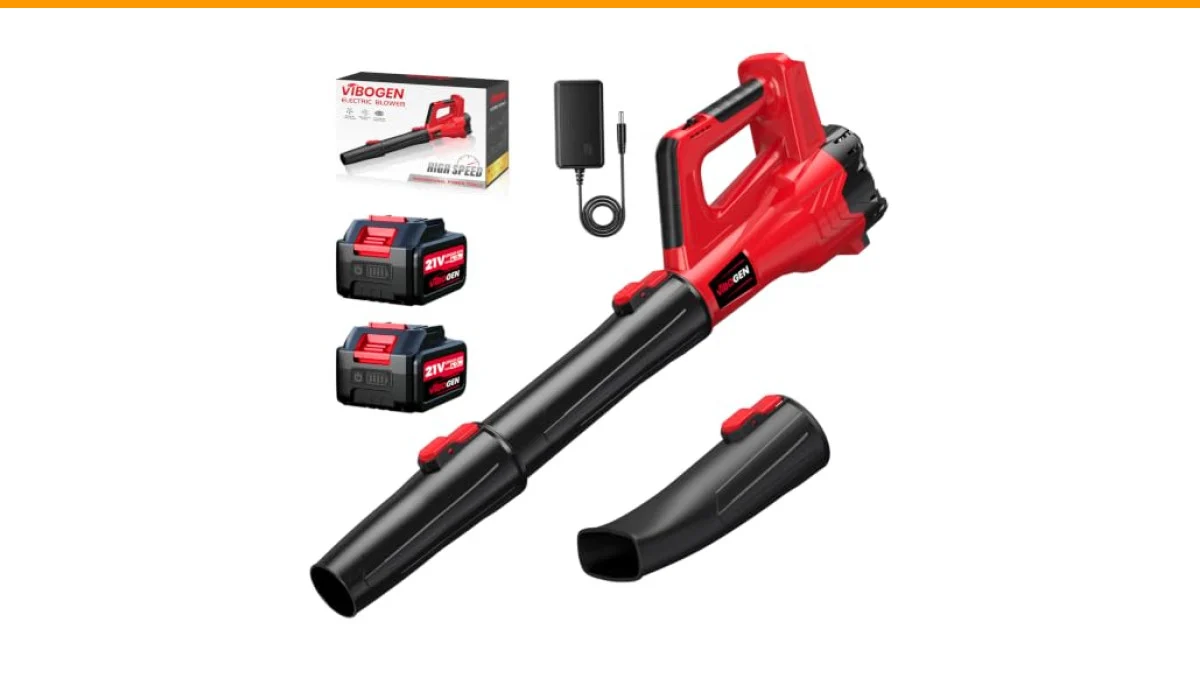
This one is for the suburban homeowner with a driveway, a patio, a garage floor, and a sidewalk — a mix of hard surfaces where leaves collect but never pile up deep. You want airflow that moves dry debris fast without dragging a cord across the yard. The 420 CFM figure puts it in the mid-tier of handheld blowers, and 150 MPH is enough to push grass clippings off pavement.
What stands out is the dual 4.0Ah battery setup. Two packs at 21V each means you can swap mid-job and keep going. The onboard battery level indicators save you the guessing game — you’ll know when a pack is at 30 percent before it dies on you. Two speed settings cover the range: low for dust and pollen on the porch, high for leaf piles and clippings. There’s no variable trigger here, so you get two discrete power levels rather than a smooth ramp.
The trade-off: no weight is listed in the spec sheet, and 4.0Ah packs add heft. If you have shoulder problems or plan to blow overhead for long stretches, test the balance before committing. The two-speed design also limits fine control — you can’t feather the airflow for delicate surfaces like mulch beds or flower pots.
- 420 CFM / 150 MPH — solid mid-range output for hard surfaces
- Two 21V 4.0Ah batteries with level indicators on each pack
- Two-speed selector instead of a variable trigger
- Cordless design removes extension cord hassle
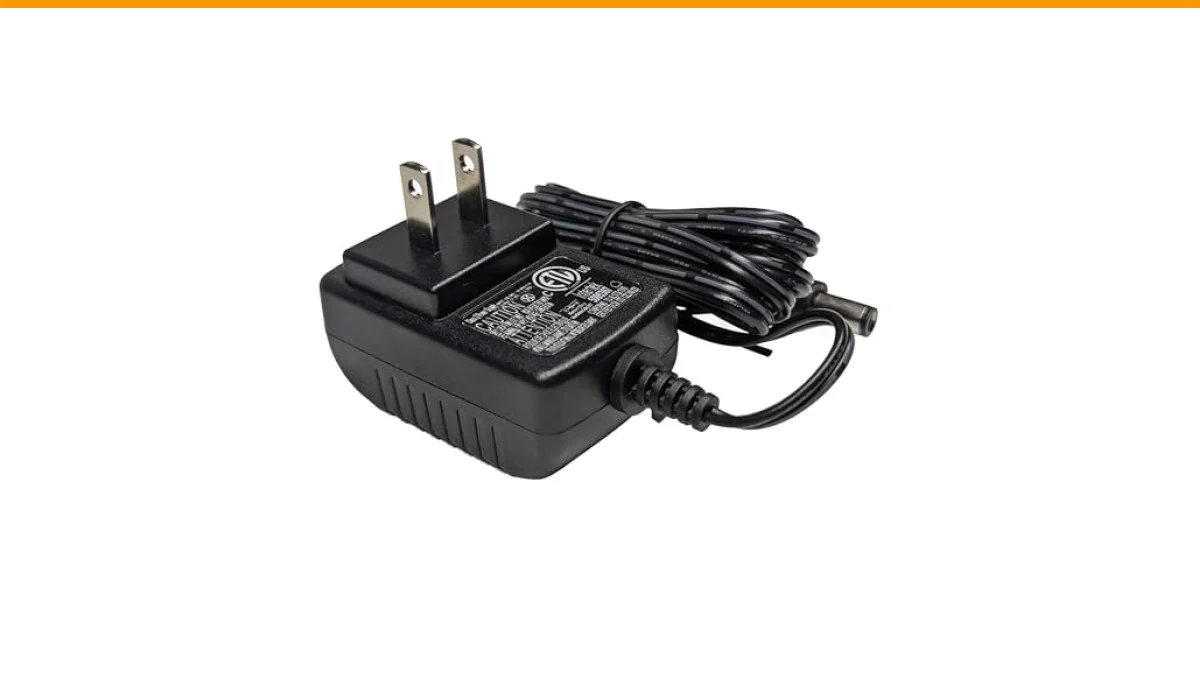
- Charger included in the box
Best for: Homeowners with a mix of patios, driveways, and garage floors who want longer runtime without buying extra batteries.
SUNCHERS Cordless Leaf Blower
Picture a homeowner who needs one tool for the garage, the car interior, the back patio, and the garden beds. That’s the SUNCHERS buyer. At 500 CFM and 200 MPH, this blower sits at the top of this group on raw airflow numbers. Two adjustable speed settings let you dial back for indoor work and open up for yard debris.
The dual-tube design is the real differentiator. A quick-release latch swaps between a wider nozzle for bulk leaves and a concentrated tube for tight gaps and stubborn residue. That flexibility matters if you’re cleaning out gutters, car floor mats, or the space between patio pavers. The claimed total runtime of about 80 minutes across two 2.0Ah packs is generous for a handheld — though expect that figure at the lower speed setting, not full throttle.
Here’s the honest caveat. Two 2.0Ah batteries at 80 minutes total means each pack delivers roughly 40 minutes at low speed. Run it on high with the wide tube and you’ll see that number drop significantly. Also, 4.6 lbs is manageable but not featherweight — after 30 minutes of continuous overhead work, your forearm will feel it.
- 500 CFM and 200 MPH — highest airflow in this lineup
- Dual-tube design with quick-release latch for nozzle swaps
- Two 2.0Ah batteries, roughly 80 minutes combined runtime
- Built-in power indicator on the battery
- 4.6 lbs with a textured, balanced grip
Best for: Buyers who want one blower for yard cleanup, garage floors, and car interiors — and don’t mind a slightly heavier tool.
YUQUESEN Cordless Leaf Blower
Some jobs happen on a ladder. Rooftop gutters, second-story window ledges, the top of a garage — these spots are miserable with a heavy blower in one hand. The YUQUESEN targets that buyer specifically. At 2.8 lbs, it’s light enough for single-hand operation at height, and the vibration-suppressed grip reduces fatigue during extended reach work.
The turbine motor pushes airspeed over 50 m/s (110+ MPH), which is enough for wet leaves and grass clippings — a real advantage over weaker blowers that stall on damp debris. The concentrated narrow nozzle adds precision for flower beds and uneven terrain. Two batteries give roughly 26 minutes of combined runtime, which is modest but workable for spot cleanup rather than whole-yard clearing.
What you give up: raw CFM isn’t published, so you’re trusting the MPH figure without knowing total air volume. That matters for moving big piles — high airspeed with low volume pushes leaves far but doesn’t move as many at once. And 26 minutes total runtime is the shortest in this group. For a half-acre lot, you’ll be reaching for the charger before you’re done.
- 2.8 lbs — lightest full-featured option here
- 110+ MPH airspeed from a turbine motor
- Two lithium batteries, roughly 26 minutes combined runtime
- Narrow concentrated nozzle for precise airflow
- Intelligent battery management with charge indicator
Best for: Homeowners who need to clean gutters, rooftops, and tight outdoor spaces where a heavy blower is a liability.
laapee Handheld Leaf Blower

laapee
Leaf Blower Cordless Handheld Blower 2x4.0Ah Batteries & Charger,Green | Small Lightweight Blowers for Lawn Care,Leaves ,Dust,Patio,Car Cleaning,Battery Powered Snow Blower 2 Extended Nozzles
- 【Powerful & Efficient Turbine Motor】The leaf blower cordless is equipped with high-efficiency turbo motor deliver up to a wind spe…
- 【Upgraded 2 x 4.0Ah Batteries & Fast Charger】Power through bigger jobs with our electric leaf blower,now including two 4.0Ah high…
- 【Stepless Speed Adjustment & Safety Lock Design】our blowers for lawn care easy wind power adjustment. By simply pressing the switc…
Car guys, boat owners, and anyone who dries vehicles with forced air — this is your tool. At 1.12 lbs, the laapee is the lightest blower in this roundup by a wide margin. You can hold it one-handed at arm’s length for minutes without cramping. That matters when you’re chasing water droplets off a curved fender or blowing dust out of a truck bed.
The stepless speed adjustment is the standout feature. Instead of two or three fixed settings, you press the trigger and airflow scales with pressure. That gives you fine control for delicate work — drying a motorcycle, clearing sawdust off a workbench, blowing light snow off a walkway. Two 4.0Ah batteries each deliver up to 30 minutes at low speed, and the fast charger gets you back to work quickly. A shoulder strap is included, which reduces arm fatigue on longer jobs.
The limitation: 65 m/s (about 145 MPH) is respectable airspeed, but CFM isn’t published. For dry leaves on a driveway, it works. For wet, matted leaf piles in a big yard, you’ll want more air volume. Also, the safety lock button is a nice touch for storage, but it takes a day or two to build the muscle memory to disengage it quickly.
- 1.12 lbs — lightest blower in this comparison
- Stepless trigger for pressure-based airflow control
- Two 4.0Ah batteries, ~30 min per pack at low speed
- Fast charger and shoulder strap included
- Two detachable tubes for different reach needs
Best for: Car detailers, boat owners, and small-space cleaners who need precise, lightweight airflow — not maximum leaf-moving power.
JAGROM Cordless Leaf Blower

JAGROM
Leaf Blower Cordless with 2.0Ah Battery & Charger, 130MPH 180CFM High Speed | Blowers for Lawn Care, 20V Electric Leaf Cleaner, Leaf Blower with 2 Tubes, Lightweight Handheld, Patio, Garden, House, Depot
- [Extensive and Effective Work] JAGROM electric leaf blower equips with powerful motor, 130MPH and 180CFM will provide you with eas…
- [2 Batteries for Long Working Time] JAGROM cordless leaf blower packs with two 2.0Ah batteries and charger. You can totally get mo…
- [2 Tubes for Different High of Use] There are two tubes in the package, they can easily install or disassemble. With 2 tubes set u…
The JAGROM fits the buyer who wants a cordless blower for light, everyday cleanup without spending much. Small patio, front walkway, garage floor, a few garden beds — that’s the workload. At 130 MPH and 180 CFM, it’s the least powerful option here, but for dry leaves and dust on hard surfaces, it gets the job done.
Two 2.0Ah batteries give you 30+ minutes of combined runtime, and the alternating charge strategy means one pack charges while you use the other. The two-tube design is genuinely useful: use both tubes for floor-level work so you don’t bend over, or drop to one tube for tabletops, railings, and higher surfaces. Assembly takes seconds — plug the tube in and go. At 2.6 lbs, it’s easy to carry one-handed.
Where it falls short: 180 CFM won’t move wet leaves or heavy debris. If your yard has mature trees dropping soggy leaves, you’ll be disappointed. This is a maintenance blower, not a fall cleanup machine. Also, the 2.0Ah packs are small, so high-speed use drains them faster than the 30-minute claim suggests.
- 130 MPH / 180 CFM — suited to light, dry debris
- Two 2.0Ah batteries with alternating charge workflow
- Two tube lengths for floor and tabletop cleaning
- 2.6 lbs with quick plug-in assembly
- 7×24 after-sale support and spare parts availability
Best for: Budget-conscious buyers with small yards and light cleanup needs — dry leaves, dust, and garage floors.
How We Chose These Products
We started with the specs that matter for real-world use: CFM, MPH, battery capacity, runtime, and weight. Then we filtered out models with vague or missing data — if a manufacturer won’t publish airflow numbers, that’s a red flag. Every blower here has published specs for at least two of the three core performance metrics.
We also weighed the buyer’s actual situation. A blower that’s perfect for car drying is wrong for a half-acre lot. A budget model that handles dry leaves fine becomes frustrating with wet debris. So we organized by use case rather than pretending one blower wins for everyone. For independent test data on airflow and noise, Consumer Reports publishes measured cordless blower results that are worth checking before you buy.
Buying Guide: What Really Matters
CFM and MPH measure different things. CFM (cubic feet per minute) is air volume — how much air moves. MPH is airspeed — how fast it moves. High CFM with low MPH moves big piles of leaves slowly. High MPH with low CFM pushes small debris fast and far. For most yard cleanup, you want a balance: 400+ CFM and 130+ MPH handles dry leaves well. Wet leaves need more of both.
Battery platform lock-in is the hidden cost. Every brand uses proprietary batteries. A replacement 4.0Ah pack can cost nearly as much as the blower itself. If you already own tools from a specific brand, check whether the blower uses the same battery system. If not, factor in the cost of spare packs — or buy a kit that includes two batteries, like all five blowers here.
Noise matters more than the spec sheet suggests. Most cordless handheld blowers run 65–75 decibels at operator ear. That’s roughly vacuum-cleaner loud. Some cities restrict gas blowers but allow electric ones — check your local ordinance before buying. For a deeper look at tested noise and performance data, Popular Mechanics tests cordless blowers and publishes decibel readings alongside airflow numbers.
Gas vs. battery vs. corded comes down to your lot size and patience. Gas wins on raw power and runtime but adds maintenance, fumes, and noise. Corded never runs out of power but limits you to 100 feet of extension cord. Battery offers the best balance for most homeowners — enough power for typical yards, no fumes, no cords, and instant start. For lots over half an acre with heavy leaf fall, a backpack blower makes more sense than any handheld.
Our Top Recommendation
The SUNCHERS Cordless Leaf Blower wins for most buyers. It leads this group on airflow at 500 CFM and 200 MPH, offers the longest combined runtime at roughly 80 minutes, and the dual-tube design adds real versatility for car interiors and tight gaps. At 4.6 lbs it’s not the lightest, but the balance is good and the textured grip helps. If you want one blower that handles yard, garage, and vehicle cleanup without compromise, this is it.
For a different priority, the VIBOGEN is the better pick if you want dual 4.0Ah batteries with level indicators and a simpler two-speed design — ideal for driveway and patio work. The laapee is the clear choice for car drying and delicate tasks, thanks to its 1.12 lb weight and stepless trigger. And the JAGROM remains the budget-friendly option for small yards and light debris. The YUQUESEN fills the niche for rooftop and gutter work where 2.8 lbs makes a real difference.
Frequently Asked Questions
Can a cordless leaf blower handle wet leaves?
Some can, but not all. Wet leaves are heavier and stick together. You need higher CFM — 400+ is a good target — and enough airspeed to break the mat apart. The SUNCHERS and VIBOGEN are better suited to damp debris. The JAGROM at 180 CFM will struggle with wet leaves.
How long do the batteries actually last before needing replacement?
Lithium-ion packs typically hold useful capacity for 300–500 charge cycles. If you run a blower twice a week during leaf season, expect two to three years before runtime drops noticeably. Store packs in a cool, dry place and recharge every three months during long idle periods to extend life.
Is a backpack blower better than a handheld?
For lots over half an acre with heavy leaf fall, yes. Backpack blowers carry the weight on your shoulders and deliver more CFM for longer. For smaller yards, patios, and car drying, a handheld is more maneuverable and easier to store. None of the blowers in this roundup are backpack models.
What’s the real cost of ownership beyond the purchase price?
Replacement batteries are the main expense. A single 4.0Ah pack can run 40–60 percent of the blower’s original price. If you buy a blower with two batteries included, you delay that cost. Charger replacement is rare unless it fails. There’s no fuel, oil, or spark plug cost with electric, which saves money over gas models within the first year or two.