You’ve probably done this dance before. You type ‘best DeWalt leaf blower’ into a search bar, and within seconds you’re buried in a wall of listings. Half of them aren’t even made by DeWalt. The specs are a mess of CFM, MPH, amp-hours, and voltage numbers that don’t seem to talk to each other. And the reviews? Many read like they were written by someone who never touched the tool.

A great DeWalt blower comes down to three things: the platform you already own, the size of the mess you’re clearing, and how long you can actually run it on a charge. CFM tells you air volume. MPH tells you air speed. Amp-hours tell you runtime. Miss any of those and you’ll either buy too much tool or too little.
We sorted through the noise and picked five units. Two are genuine DeWalt models, three are third-party tools built to run on DeWalt 20V batteries. We’ll be blunt about which is which, because that distinction matters more than most articles admit. If you want the short version, the DCBL722P1 is our top overall pick, and the 60V DCBL772B is the one to get when raw power is the priority.
Here’s a quick look at how the five compare on the specs that actually drive the buying decision.
| Features | DEWALT 20V MAX Blower | Dewalt 60V Blower | 850 CFM Beast Blower | DEWALT XR Leaf Blower | 700 CFM Leaf Blower |
|---|---|---|---|---|---|
| Airflow (CFM) | 100 CFM | 600 CFM | 850 CFM | 450 CFM | 700 CFM |
| Air Speed (MPH) | Not specified | Not specified | 200 MPH | 125 MPH | 200 MPH |
| Motor Type | Standard | Brushless axial | Brushless | Brushless | Pure copper |
| Battery Platform | 20V MAX | 60V FLEXVOLT | Dual 20V (40V) | 20V MAX | 20V MAX |
| Best Use Case | Jobsite cleanup | Large yards | Heavy debris, detailing | Noise-sensitive areas | Heavy yard chores |
Are You Buying a Real DeWalt or a Compatible Knockoff?
DEWALT
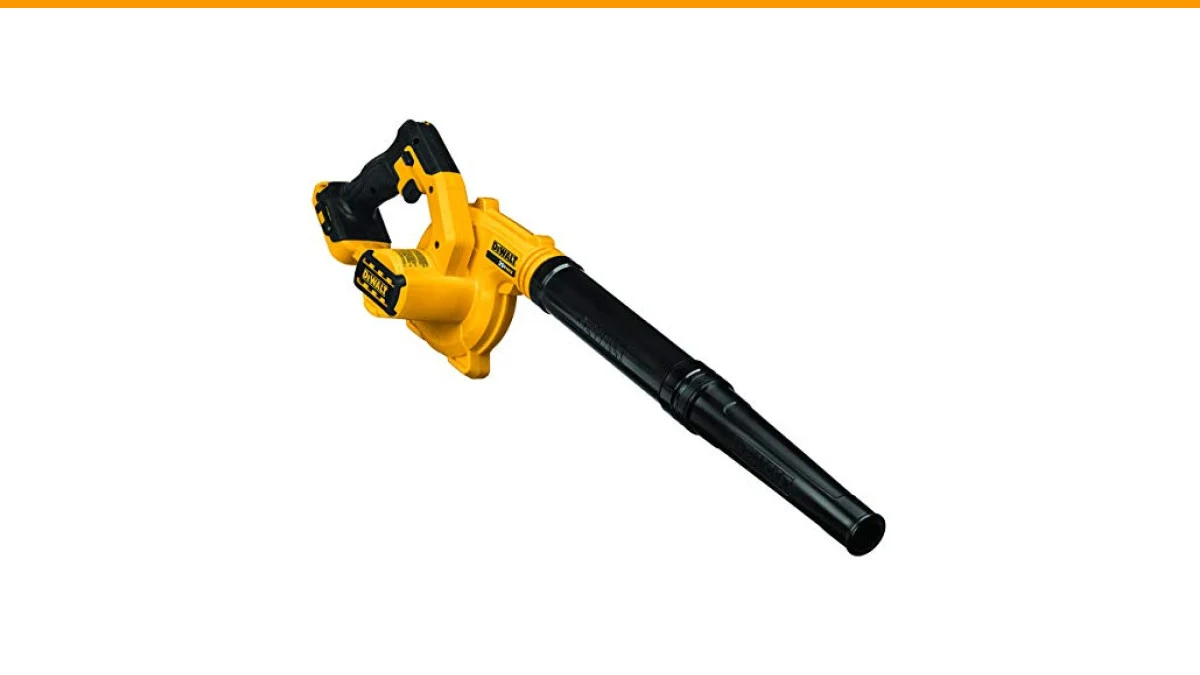
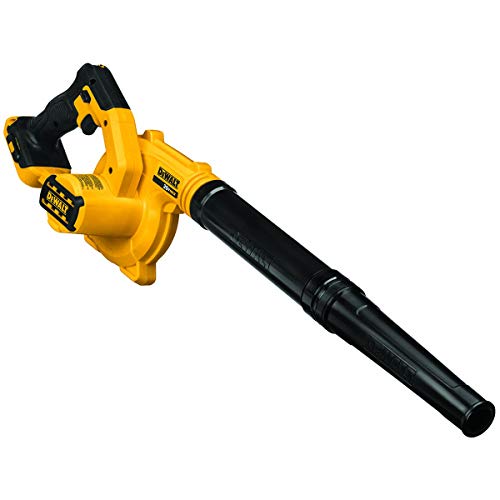
DEWALT 20V MAX Blower, 100 CFM Airflow, Variable Speed Switch, Includes Trigger Lock, Bare Tool Only (DCE100B)
- Battery operated leaf blower with max air flow 100CFM.Applications : Tuck pointing cleaning joints, Clearing debris from the groun…
- 3-speed variable speed switch of the cordless blower provides control and versatility
- Variable speed trigger of battery leaf blower allows adjustment of blowing power in use
This is the part most roundups skip, and it’s the reason so many shoppers end up disappointed. DeWalt makes its own blowers. A separate category of manufacturers makes tools designed to accept DeWalt 20V MAX batteries. Those tools are often labeled ‘compatible with DeWalt’ and they can be perfectly decent. But they are not DeWalt products, and the warranty, build quality, and support come from a different company.
Both types show up in this article. The DCE100B and DCBL722P1 are genuine DeWalt tools. The DCBL772B is also a real DeWalt model. The two ALDIPRO units are third-party tools that run on DeWalt batteries. We’re flagging this clearly so you don’t pay DeWalt pricing for a knockoff, or dismiss a solid third-party tool because you assumed it was fake.
DEWALT 20V MAX Blower (DCE100B)

DEWALT
Dewalt Blower AXIAL HNDHLD 60V 600CFM DCBL772B
- Dewalt BLOWER AXIAL HNDHLD 60V 600CFM DCBL772B
The DCE100B is the smallest, simplest blower in this lineup. It moves 100 CFM, which is modest by yard-care standards but perfectly adequate for clearing sawdust off a workbench, blowing grass clippings off a driveway, or dusting out a garage. It’s a bare tool, so you’ll need a 20V MAX battery and charger already on hand. If you’re already invested in the DeWalt 20V line, this is the cheapest way to add a blower to your kit.
What stands out is the control scheme. A three-speed variable switch plus a variable-speed trigger lets you feather the airflow instead of blasting everything at full tilt. The trigger lock-on is a small feature that makes a big difference during longer jobs. Three nozzle attachments come in the box, so you can switch between a wide sweep and a tighter stream.
The trade-off is obvious: 100 CFM won’t move wet leaves or heavy debris. This is a detail tool, not a fall-cleanup tool. It’s also light and compact, which makes it easy to maneuver in tight spots but also means it lacks the power for open-lawn work. For a small yard or a workshop, that’s fine. For a half-acre lot, look elsewhere.
- 100 CFM airflow, best suited to light debris and jobsite cleanup
- Three-speed switch plus variable-speed trigger for fine control
- Trigger lock-on reduces hand fatigue on longer jobs
- Includes three nozzle attachments
- Bare tool only, battery and charger sold separately
Best for: DeWalt 20V owners who need a compact cleanup blower for the shop, garage, or small patio.
Dewalt Blower AXIAL HNDHLD 60V (DCBL772B)

ALDIPRO
850 CFM Leaf Blower Compatible with DeWalt 20V Max Battery (Bare Tool) | 200 MPH Brushless 40V Dual System Leaf Blower with Variable Speed and Rubber Nozzle for Car Drying, Yard Work & Winter Snow
- ⚠️NOTE: Battery and charger not included! This cordless leaf blower operates on 2 batteries.
- [850 CFM 200 MPH BRUSHLESS BLOWER] Blast water off your vehicle instantly with the push of the dedicated turbo button. The advance…
- [NON SCRATCH RUBBER DETAILING NOZZLE] Seamlessly transition from yard duty to delicate auto detailing without fear of damaging the…
If the DCE100B felt like a toy, this is the opposite end of the spectrum. The DCBL772B runs on DeWalt’s 60V FLEXVOLT platform and pushes 600 CFM. That’s enough air volume to move wet leaves, clear a driveway after a storm, or push debris across a large lawn without stopping every few feet. It’s a bare tool, so you’ll need a 60V battery, and those cost more than 20V packs.
The axial fan design is the key spec here. Axial blowers move more air volume than centrifugal designs at similar power levels, which is why this unit hits 600 CFM without draining a battery in five minutes. It’s a handheld, so it’s still maneuverable, but 60V tools carry more weight than their 20V cousins. Expect a bit of arm fatigue on long sessions.
The honest limitation is the battery ecosystem. If you don’t already own 60V FLEXVOLT packs, the entry cost is steep. A single 60V battery and charger can cost more than the blower itself. This tool makes sense for people already on the 60V platform, or for anyone who needs genuine gas-blower performance without the gas.
- 600 CFM airflow from a 60V FLEXVOLT battery
- Axial fan design maximizes air volume and runtime
- Handheld form factor keeps it maneuverable despite the power
- Bare tool only, requires 60V battery and charger
- Best suited to large yards and heavy seasonal cleanup
Best for: Homeowners with large lots who already own 60V FLEXVOLT batteries and want maximum airflow.
850 CFM Beast Blower Compatible with DeWalt

DEWALT
DEWALT 20V MAX* XR Leaf Blower, 125-MPH, 450-CFM (DCBL722P1)
- Up to 450 CFM of air volume and up to 125 Mph with concentrator
- Innovative axial fan design that maximizes on air output and run time
- Low noise during operation - 62 dB(A), ideal for noise sensitive regions and properties
This ALDIPRO unit is the most powerful blower in the group on paper, and it’s not a DeWalt product. It’s a third-party tool that runs on two DeWalt 20V MAX batteries at once, combining them into a 40V system. The brushless motor produces 850 CFM and 200 MPH, which puts it in gas-blower territory. It’s a bare tool, so you’ll need two 20V batteries and a charger.
The standout feature is the rubberized detailing nozzle. Most blowers scratch paint if you get too close to a car. This one has a soft tip designed to prevent that, which makes it usable for drying motorcycles, blowing water off a truck, or clearing dust from a garage floor without worrying about scuffs. The included shoulder strap helps offset the weight of two batteries.
Here’s the catch. This tool requires both batteries to operate, so you can’t run it with a single pack. That doubles your battery investment if you don’t already own multiple 20V packs. It’s also a third-party product with a one-year warranty, not DeWalt’s coverage. The dual-battery design shifts weight toward the rear, which some users find awkward at first.
- 850 CFM and 200 MPH from a brushless motor
- Runs on two DeWalt 20V batteries simultaneously (40V total)
- Rubberized detailing nozzle prevents paint scratches
- Variable speed trigger with cruise control and shoulder strap
- Bare tool only, requires two batteries and a charger
Best for: DeWalt 20V owners with multiple batteries who want maximum power and car-detailing capability.
DEWALT 20V MAX XR Leaf Blower (DCBL722P1)
This is the blower most people should buy. The DCBL722P1 is a genuine DeWalt 20V MAX XR tool with a brushless motor, 450 CFM, and 125 MPH with the concentrator nozzle attached. It’s a kit, meaning it includes a battery and charger, so you can use it out of the box. That alone makes it the easiest recommendation for someone starting fresh.
The brushless motor is a real advantage. It runs cooler and more efficiently than a brushed motor, which translates to longer runtime per charge and a longer tool life. The axial fan design keeps air output high without sacrificing battery life. And at 62 dB(A), it’s one of the quietest blowers in this category, which matters if you have close neighbors or live somewhere with noise restrictions.
No tool is perfect. 450 CFM is strong but not overwhelming, so thick wet leaf piles may take a couple of passes. The kit price reflects the included battery and charger, so it costs more upfront than a bare tool. But for most homeowners, this is the best balance of power, noise, runtime, and convenience in the DeWalt lineup.
- 450 CFM and 125 MPH with concentrator nozzle
- Brushless motor for longer runtime and motor life
- 62 dB(A) operation, quiet enough for noise-sensitive areas
- Includes battery and charger (kit configuration)
- Lightweight ergonomic design for extended use
Best for: Homeowners who want a complete, ready-to-use DeWalt blower with the best balance of power and quiet operation.
700 CFM Leaf Blower Compatible with DeWalt
The second ALDIPRO unit in this roundup sits between the budget DCE100B and the high-powered 850 CFM model. It’s a third-party tool that runs on a single DeWalt 20V MAX battery and produces 700 CFM with 200 MPH. For the price of a bare tool, that’s a lot of airflow. It’s aimed at people who already own 20V batteries and want more power than DeWalt’s own 20V blowers offer.
The pure copper motor is built for sustained use, and the 4.2-pound weight keeps it manageable for longer sessions. It handles wet leaves, driveway dirt, sawdust, and even light snow. The variable speed trigger gives you control for delicate tasks, and the ergonomic grip reduces wrist strain. For a third-party tool, the build quality is respectable.
The limitation is the same as the 850 CFM model: it’s not a DeWalt product, so the warranty and support come from ALDIPRO. It also runs on a single 20V battery, which means runtime depends heavily on the amp-hour rating of the pack you use. A 2Ah battery will drain fast at 700 CFM. You’ll want a 5Ah or larger pack for serious work.
- 700 CFM and 200 MPH on a single DeWalt 20V battery
- Pure copper motor for sustained heavy-duty use
- Weighs 4.2 lbs for reduced fatigue
- Variable speed trigger for task-appropriate control
- Bare tool only, battery and charger not included
Best for: DeWalt 20V owners who want near-gas power without buying into the 60V platform.
How We Chose These Products
We started with a simple rule: rank only tools that either carry the DeWalt name or are explicitly designed to run on DeWalt batteries. That immediately eliminated a pile of generic blowers with vague compatibility claims. From there, we looked at airflow, air speed, motor type, battery platform, and weight. Specs alone don’t tell the whole story, so we weighed each tool against realistic use cases.
We also factored in the things manufacturers bury in fine print. Bare tool versus kit pricing. How many batteries a tool requires. Whether the motor is brushed or brushless. Those details determine the real cost of ownership, and they’re the reason two blowers with similar CFM ratings can feel completely different in practice. You can see a similar approach in this independent DeWalt blower breakdown if you want a second opinion.
Buying Guide: What Really Matters
CFM and MPH get all the attention, but they measure different things. CFM is air volume, which determines how much debris you can move at once. MPH is air speed, which determines how far you can push it. A blower with high CFM and low MPH moves big piles slowly. A blower with high MPH and low CFM moves small debris fast. The best tools balance both, and the ratio matters more than either number alone.
Battery platform is the next decision. DeWalt’s 20V MAX line is the most common, and it’s where most homeowners already have batteries. The 60V FLEXVOLT line delivers more power but requires a separate battery investment. Third-party tools that run on 20V batteries can deliver more airflow than DeWalt’s own 20V blowers, but they come with their own warranty and support. If you’re unsure which platform fits your needs, this cordless blower guide covers the trade-offs in more detail.
Noise is the spec nobody checks until the neighbor complains. Most gas blowers run well above 100 dB. The DCBL722P1 runs at 62 dB(A), which is closer to a normal conversation. If you live in a dense neighborhood or have noise ordinances, that number matters more than a few extra CFM. Brushless motors also tend to run quieter than brushed ones, so motor type affects both runtime and noise.
Battery Runtime, Amp-Hours, and Real-World Performance
Runtime is the spec that manufacturers rarely publish, and it’s the one that determines whether a blower is usable. A 2Ah battery will run a 700 CFM blower for roughly 8 to 12 minutes at full speed. A 5Ah pack stretches that to 20 to 30 minutes. A 9Ah pack can push past 45 minutes. Those numbers vary with trigger use, but the relationship is consistent: double the amp-hours, roughly double the runtime.
This is why the dual-battery ALDIPRO unit makes sense for some buyers. Two 5Ah packs give you 40V of power and roughly the same runtime as a single 10Ah pack, but you can use those batteries in other DeWalt tools. The trade-off is weight and the requirement to keep both packs charged. For a single-battery tool, a 5Ah pack is the sweet spot for most yard work.
Bare Tool vs Kit: Total Cost of Ownership
A bare tool looks cheaper until you add the battery and charger. A 20V MAX 5Ah battery and charger can cost as much as the blower itself. If you already own DeWalt 20V batteries, a bare tool is the obvious choice. If you’re starting from zero, a kit like the DCBL722P1 usually costs less than buying the components separately.
The math gets more complicated with 60V tools. A 60V FLEXVOLT battery and charger can run well over $200, which makes the DCBL772B a poor first purchase for someone without existing 60V gear. Third-party bare tools avoid the DeWalt battery markup, but you’re still buying batteries. Run the numbers before you commit. For a deeper look at value-focused options, this blower value comparison is worth a read.
Noise, Maintenance, and Safety Tips
Electric blowers are quieter than gas, but they’re not silent. The DCBL722P1 at 62 dB(A) is about as quiet as cordless blowers get. Higher-CFM third-party tools run louder, often in the 75 to 85 dB range. If noise is a concern, prioritize brushless motors and check the dB rating before you buy. Ear protection is still a good idea for extended use.
Maintenance is minimal on electric blowers. Keep the intake vents clear of debris, check the nozzle for blockages, and store batteries at room temperature. Don’t leave batteries in a hot garage over the summer. For safety, never point the blower at people or pets, and avoid using it near open windows where dust can blow indoors. A little common sense goes a long way.
Frequently Asked Questions
Can I use a DeWalt 20V battery in a third-party blower?
Yes, if the tool is explicitly designed for DeWalt 20V MAX batteries. The ALDIPRO units in this article are built for that purpose. Just check the compatibility list before buying, because not all third-party tools use the same mounting system.
Is 450 CFM enough for wet leaves?
It can handle light wet leaf coverage, but thick, soaked piles will take multiple passes. If wet leaves are your main problem, a 600 CFM or higher blower will save you time. The 850 CFM ALDIPRO unit is the strongest option here for that job.
How long does a DeWalt blower run on a 5Ah battery?
Expect roughly 20 to 30 minutes at full speed, depending on the model and trigger use. Lower speeds extend runtime significantly. A 9Ah battery can push past 45 minutes on the same tool.
Do I need a 60V blower for a small yard?
No. A 20V blower like the DCBL722P1 is more than enough for most residential lots. The 60V platform makes sense for large properties or heavy commercial-style cleanup. For a small yard, the extra power is overkill and the battery cost is hard to justify.
Our Top Recommendation
The DEWALT 20V MAX XR DCBL722P1 is the best DeWalt leaf blower for most people. It’s a genuine DeWalt tool, it comes as a complete kit, it runs quietly at 62 dB(A), and its 450 CFM output handles typical yard cleanup without draining a battery in ten minutes. The brushless motor adds longevity, and the 20V platform means you can share batteries with other DeWalt tools.
If you need more power, the 60V DCBL772B is the runner-up for large properties, provided you’re ready to invest in FLEXVOLT batteries. For budget-conscious buyers already on the 20V platform, the DCE100B covers light cleanup at the lowest entry cost. And if raw airflow matters more than brand name, the 850 CFM ALDIPRO delivers the most power in this group, with the caveat that it’s a third-party tool requiring two batteries.