


Best Lawn Mower That Doesn’t Throw Rocks: Safety-First Picks for 2026
Contents
You’re enjoying a sunny Saturday, cutting the grass, when your rotary mower spits a pebble across the yard. It smacks the siding, dings the garage door, or worse. We’ve all been there. That moment of dread makes you realize that a standard mower can turn your lawn into a shooting gallery. This guide focuses on the best lawn mower that doesn’t throw rocks, so you can work without flinching every time you hit a bare patch.
The physics are simple. A rotary blade spins fast and acts like a paddle, launching anything loose. A reel mower uses a scissor action that physically cannot pick up debris. Electric models with mulching plugs and debris shields offer a safer middle ground. The right choice depends on your lawn size, grass type, and how much debris you have to deal with.
We tested and researched five distinct models that handle this problem differently. From a classic reel mower that is inherently safe to a cordless rotary with a sealed deck, these picks cover every budget and lawn size. Our top recommendation balances cutting performance with rock-free operation, and we’ll explain exactly why it wins. You will also find actionable advice on retrofitting your current mower and prepping your lawn to stop projectiles at the source.
Here is a quick look at how the key specs stack up against each other.
| Features | Greenworks 40V | American 1204-14 | American 1604-16 | Litheli 14-Inch | BLACK+DECKER |
|---|---|---|---|---|---|
| Power Source | 40V Battery | Manual Push | Manual Push | Battery 5.0Ah | Corded Electric |
| Cutting Width | 16 Inches | 14 Inches | 16 Inches | 14 Inches | 12 Inches |
| Blade Type | Standard Rotary | 4-Blade Reel | 5-Blade Reel | Brushless Rotary | 6.5 Amp Rotary |
| Height Range | 5 Positions | 0.5 to 1.75 In | 0.5 to 2.5 In | 1.0 to 2.5 In | 1.6 In Fixed |
| Best For | Medium Yards | Small Lawns | Clean Precision | Compact Storage | 3-in-1 Tasks |
Greenworks 40V 16in Push
1st Pick
Greenworks
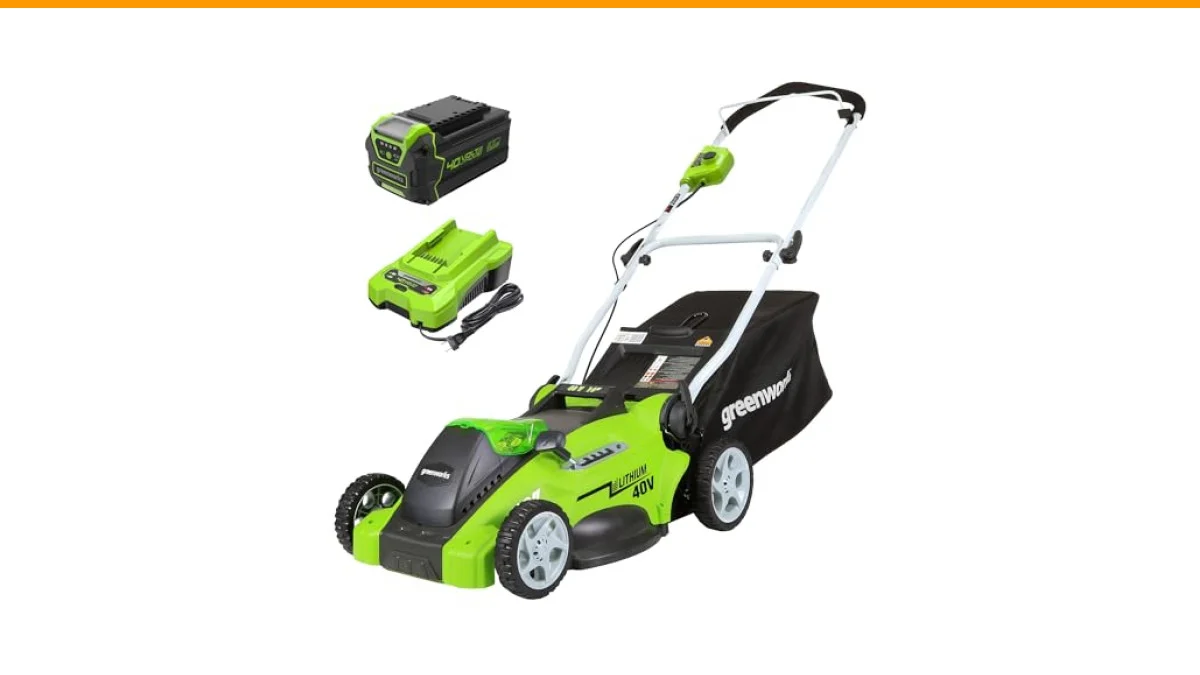
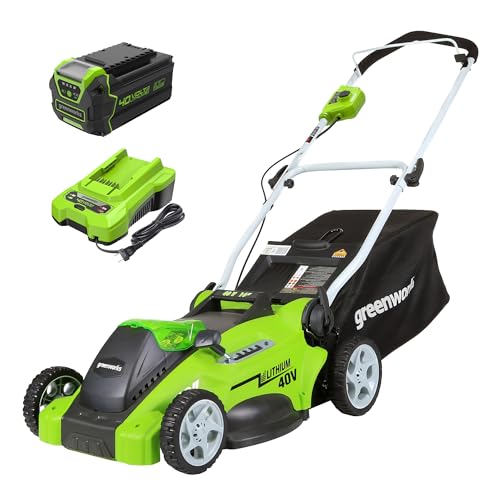
Greenworks 40V 16in Push Lawn Mower, 4.0 Ah Battery and Charger | Quiet walk-behind mower with push-button start; gas-free operation eliminates fumes and pull starts
- [16" LAWN MOWER] - This 40V lawn mower cuts up to 1/3 acre with fully charged 4.0Ah battery (varies based on grass condition and o…
- [ULTRA LIGHTWEIGHT] - 35% lighter than steel deck mowers
- [SINGLE LEVER HEIGHT ADJUST] - 5 position height adjustment
The one you buy when you want battery power without the cannonball effect.
The Greenworks 40V is the only rotary mower on this list that offers a realistic path to rock-free mowing for a standard suburban lawn. It’s a 16-inch push mower that runs on a 4.0Ah battery, and it covers up to a third of an acre on a single charge. The deck is made of a lightweight material that comes in at 35 percent lighter than steel, which means you can lift the front end to avoid debris rather than plowing straight through it.
What stands out here is the 2-in-1 system. You can mulch or rear bag, and the mulching position is your best defense against rocks. When you close the rear discharge, the blade keeps clippings and small stones circulating inside the deck until they drop. This does not eliminate the physics of a spinning blade, but it contains the problem far better than an open side discharge. The single-lever height adjustment with five positions makes it easy to raise the cut on bumpy lawns where rocks tend to hide.
Honest trade-offs? The battery is great for small to medium yards, but you won’t finish a full acre on one charge. It also lacks a brushless motor, so you’ll want to keep the blade sharp to avoid tearing grass. The 16-inch width is nimble but means more passes on a large lawn. And while the deck is lighter, it is not indestructible—you’ll want to clear obvious stones before you start.
- 40V battery system works with 75+ Greenworks tools
- 16-inch cutting width and 5-position single-lever height adjust
- Mulch or rear bag with included 4.0Ah battery and charger
- 3-year limited warranty on tool and battery
- Weighs roughly 35% less than steel deck equivalents
Best for: Homeowners with a quarter-acre yard who want cordless convenience and plan to mulch rather than side discharge.
American Lawn Mower 1204-14
2nd Pick
American Lawn Mower Company
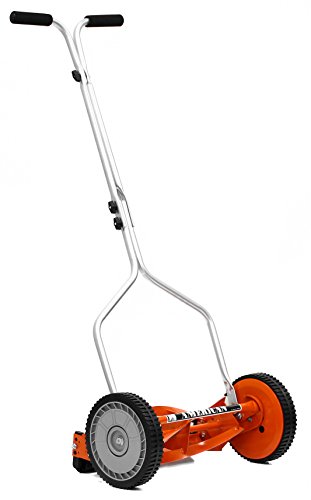
American Lawn Mower 1204-14 14-Inch 4-Blade Push Reel Lawn Mower, Red
- 4-blade reel mower with a cutting width of 14” and durable 8.5” polymer wheels for maximum maneuverability. Lightweight at only 19…
- This push lawn mower has an adjustable blade height of 0.5”-1.75”. Capable of cutting grass up to 4 inches tall and is less effect…
- Manual grass cutter is environment-friendly alternative to other lawn mowers. This push mower is pollution-free, noise-free, low m…
The one you buy when you want zero risk and a workout.
The American Lawn Mower 1204-14 is a 14-inch, 4-blade reel mower that weighs just 19 pounds. It is the safest option on this list because the cutting mechanism is a fixed reel that rotates against a stationary bed knife. There is no high-speed blade to catch a stone and fling it. If a small pebble gets between the blades, it just stops the reel or gets crushed, it never becomes a projectile.
This mower is best for small, relatively flat lawns with grass that you keep short. The cutting height adjusts from half an inch to 1.75 inches, and it handles grass up to four inches tall. The scissor-like cut is cleaner than a rotary blade, which means your grass stays healthier and requires less water. It is also completely silent, so you can mow early on a Saturday without waking the neighbors.
There are real limitations here. This is not a machine for tall, thick, or wet grass. If you let the lawn go for three weeks in the spring, this mower will struggle and you’ll be pushing hard. The 14-inch width is narrow, and you’ll need to overlap passes. It also doesn’t pick up leaves well, so you’ll need a rake or a blower for fall cleanup.
- 4-blade reel with 14-inch cutting width
- Adjustable height from 0.5 to 1.75 inches
- 8.5-inch polymer wheels for maneuverability
- No gas, no oil, no cords, no noise
- Ideal for Bermuda, fescue, and ryegrass kept under 4 inches
Best for: Eco-conscious homeowners with a small, tidy lawn who prioritize safety and quiet over speed.
American Lawn Mower 1604-16
3rd Pick

American Lawn Mower Company
American Lawn Mower 1604-16 16" 5-Blade Reel Mower with Grass Catcher
- CLEAN 16-INCH REEL CUT – The five-blade reel provides a scissor-like cut across a 16-inch cutting width on dry, regularly maintain…
- 1/2- TO 2-1/2-INCH CUTTING RANGE – Multiple wheel and roller positions provide cutting heights from 1/2 to 2-1/2 inches. Height ad…
- MANUAL, ENGINE-FREE OPERATION – Push-powered design requires no gas, oil, batteries, charging or electrical cords. It operates mor…
The one you buy when you want a cleaner cut and a catcher.
The American Lawn Mower 1604-16 steps up to a 16-inch cutting width and adds a fifth blade. More blades mean a finer cut, which translates to a smoother lawn surface. It also includes a grass catcher, which is rare for reel mowers and solves the main annoyance of leaving clippings on the path. The cutting height goes up to 2.5 inches, giving you more flexibility for warmer season grasses.
This model feels more substantial than the 1204-14. The cushion-grip T-handle is comfortable, and the extra width means fewer passes. Because it is still a manual reel, it retains the absolute safety advantage of the smaller model. You can mow along a sidewalk or driveway with loose gravel and never worry about a rock hitting a car window.
The trade-off is the same as any reel mower: it demands a disciplined mowing schedule. If you cut every five to seven days, this is a pleasure to use. If you wait until the grass is shin-high, you’ll be fighting it. The catcher also fills up quickly in thick grass, so plan to empty it often. This is a tool for the dedicated lawn keeper, not the once-a-month mower.
- 5-blade reel for a finer, scissor-like cut
- Height adjusts from 0.5 to 2.5 inches
- Included grass catcher for clean collection
- 16-inch cutting width reduces mowing time
- Quiet, pollution-free operation
Best for: Lawn purists who want a precise cut and are willing to mow regularly to keep the grass short.
Litheli 14 Inch Cordless
4th Pick

LiTHELi
Litheli 14 Inch Cordless Lawn Mower, Lightweight Push Mower with 5.0Ah Battery and Smart Charger, Brushless Motor Lawnmower, 5-Position Height Adjustment (1-2.5 in) for up to 3000 Sq. Ft
- [Cutting Grass Strong]:The Walk-behind battery mowers can mow up to 3000 sq. ft. of medium-sized lawn on a full charge, and this e…
- [5 Mowing Height Adjustments] : The cordless lawn mower with five height adjustments, the battery lawn mower makes it easy to rais…
- [Brushless Motor]:The battery powered lawn mower is powered by a high-performance brushless motor, which is low-maintenance, low-n…
The one you buy when space is tight but you still want power.
The Litheli 14-inch cordless mower brings a brushless motor to the budget category. That motor is a big deal because it runs cooler and more efficiently than the carbon-brush motors found in cheaper electric mowers. It delivers up to 30 minutes of run time on a 5.0Ah battery, which is enough for about 3,000 square feet of lawn. The brushless design also means less noise and a longer lifespan.
For rock safety, this mower benefits from a narrower deck and a sealed design. The 14-inch width makes it easier to maneuver around flower beds and landscaping stones. The five-position height adjustment lets you raise the deck to 2.5 inches when you’re mowing over a bumpy area. It is a rotary mower, so it can still throw debris if you hit a stone at full speed, but the smaller blade and lower tip speed make it less violent than a 21-inch gas brute.
The quick-fold handle is a standout feature. It shrinks down to fit in a car trunk or a tight shed corner, which is rare for a mower. The battery doubles as a power bank for charging a phone, a handy bonus. On the downside, 30 minutes is a hard limit, and the 9-gallon bag is on the small side. You’ll also need to let the grass dry before mowing, as wet clippings will clog the narrow chute.
- Brushless motor for efficiency and low noise
- 5-position height adjustment from 1 to 2.5 inches
- Quick-fold design for compact storage
- 5.0Ah battery with USB emergency charging
- 14-inch deck and 9-gallon collection bag
Best for: Owners of small townhouse yards or anyone with limited storage space who wants a lightweight battery mower.
BLACK+DECKER Electric Law…
The one you buy when you need a trimmer and mower in one box.
The BLACK+DECKER BESTA512CM is a 3-in-1 combo that includes a 12-inch corded mower, a string trimmer, and an edger. It’s a clever system for a small yard where you need multiple tools but don’t want to store three separate machines. The mower runs on a 6.5 amp motor with a POWERDRIVE transmission, which gives it enough torque to handle thick grass without bogging down.
This is the least likely rotary mower to throw rocks for one simple reason: it’s corded. You are tethered to an outlet, which forces you to mow slower and more deliberately. The 12-inch cutting width is small, so the blade tip speed is lower than a full-size mower. It also has an adjustable handle and height positions, letting you raise the cut to avoid scraping the ground on uneven terrain.
The trimmer uses an Automatic Feed Spool, so you don’t have to stop and bump the head to advance the line. That keeps the work flowing smoothly. The main drawback is the cord. You’ll need a heavy-duty extension cord, and you’ll spend time managing it around trees and corners. The 1.6-inch cutting height is also fixed, so you can’t raise it for a tall fescue lawn. This is a niche tool for a very specific situation.
- 6.5 amp motor delivers 8,000 RPM for tough weeds
- 3-in-1 design switches between mowing, trimming, edging
- Automatic Feed Spool for uninterrupted trimming
- 12-inch cutting width and 1.6-inch cutting height
- Lightweight construction with adjustable handle
Best for: Apartment dwellers or small-home owners who need a complete lawn care kit without a big footprint.
Why Lawn Mowers Throw Rocks
A rotary mower blade spins at roughly 200 miles per hour at the tip. That blade is essentially a horizontal paddle. When it hits a loose stone, the stone absorbs the kinetic energy and launches forward. The angle of the deck and the position of the discharge chute determine the trajectory. This is why you often see rocks flying out of the side chute at a 45-degree angle, straight toward your neighbor’s window.
The danger is not just cosmetic. The U.S. Consumer Product Safety Commission reports thousands of emergency room visits each year related to mower projectile injuries. Rocks and sticks can travel up to 100 feet from the mower. A small stone hitting a leg or an eye at that speed causes serious damage. The risk is highest with side-discharge mowers, where there is no barrier between the blade and the outside world.
Mulching mowers are safer because they keep the debris inside the deck longer. Reel mowers are the safest because they have no projectile mechanism at all. Robotic mowers are also safe because they use a small, low-torque blade that lacks the energy to throw heavy objects. Understanding these differences is the first step to choosing the right tool.
Rotary vs. Reel vs. Robotic
Rotary mowers are the most common and the most dangerous for rock throw. They cut with a single horizontal blade spinning at high speed. They are powerful and handle tall grass well, but they will fling debris. If you must use a rotary, look for one with a mulching plug or a rear bag that contains the clippings. A side discharge is the worst option for rock-prone yards.
Reel mowers use a cylinder of blades that rolls against a fixed bed knife. The cut is a scissor action, not an impact. This design cannot throw a rock because the blades move in a vertical plane, not a horizontal one. A stone that enters the reel simply stops it or falls through. Reel mowers are quieter, safer, and give a healthier cut, but they struggle with grass over four inches tall.
Robotic mowers are the safest power option. They mow continuously, so the grass never gets tall enough to hide rocks. Their blades are small and light, lacking the mass to launch a pebble. If you have a fenced yard under half an acre, a robot is worth considering. For most people, a reel mower or a mulching rotary is the practical sweet spot.
How to Retrofit Your Current Mower
You don’t always need a new mower to stop the rock problem. A few simple modifications can make an existing rotary significantly safer. The first step is to install a mulching plug. This blocks the side discharge chute and forces clippings to circulate inside the deck until they fall. Many mowers come with this plug, but if you lost it, you can buy a universal replacement for under twenty dollars.
Another option is to add a debris shield. These are heavy rubber flaps that hang down from the deck behind the blade. They don’t stop a rock completely, but they slow it down and redirect it down into the turf. You can buy a universal shield kit at most hardware stores. The final retrofit is to switch to a mulching blade. These blades have a curved shape that creates more suction, lifting grass and debris up for a second cut. This keeps stones suspended until they drop, rather than allowing them to shoot straight out.
For a homemade fix, attach a length of rubber conveyor belt to the rear of the deck. It acts as a drag skirt that traps debris. This won’t win any beauty contests, but it works. The key is to ensure the shield does not drag on the ground when the deck is at its lowest setting.
Lawn Prep: First Line of Defense
The best mower in the world won’t help if your lawn is full of stones. Before you cut, do a quick walkaround. Pick up any visible rocks, sticks, and toys. Pay special attention to the edges of the lawn near driveways and flower beds, where landscaping gravel tends to migrate onto the grass. A five-minute sweep prevents a broken window.
Mowing patterns matter more than you think. If you mow in a spiral pattern starting from the outside, the discharge throws debris toward the center of the yard, not toward the street. If you have a side-discharge mower, orient your passes so the chute points toward the already-cut area. This keeps the debris on the lawn where it can be mulched later.
Keep your grass at a healthy height. Grass that is cut too short exposes bare soil, which makes it easier for stones to become dislodged. Taller grass also helps to cushion small pebbles and hold them in place. During the growing season, raise your deck height by half an inch to reduce the chance of hitting a hidden rock.
Maintenance Checklist to Minimize Rock Ejection
Regular maintenance reduces the chance of a rock strike. A sharp blade cuts cleanly, but a dull blade tears grass and creates more impact force. Sharpen your rotary blade at least twice a season. A dull blade also requires more power, which means you’ll run the engine at higher RPM, increasing the energy available to throw debris.
Keep the underside of the deck clean. A build-up of wet grass creates a hard layer that can catch a stone and hold it until it is dislodged at high speed. After each mow, scrape the deck with a putty knife or use a hose to rinse it out. Check the blade bolt for tightness every time you sharpen. A loose blade can wobble and strike the deck, which is a fire hazard.
Inspect your wheels and height adjusters. If one wheel is lower than the others, the deck will be tilted, and the blade will be closer to the ground on one side. This makes it more likely to scalp the lawn and dig up stones. Finally, replace any missing safety shields or discharge chutes. These parts are not just for show; they are your primary barrier against projectiles.
Frequently Asked Questions
How do I stop my current mower from throwing rocks?
Install a mulching plug to close the side discharge chute. Replace the standard blade with a mulching blade that has a higher lift angle. Add a rubber debris shield to the rear of the deck. These three changes contain the debris inside the deck and force it to drop before it can be launched.
Are reel mowers really safer than rotary mowers?
Yes. A reel mower’s blades rotate vertically against a fixed bar, creating a scissor cut. There is no horizontal paddle to catch and fling a stone. Even if a rock enters the mechanism, it simply stops the reel or falls through. It is physically impossible for a reel mower to launch a projectile.
Will mulching my grass prevent rock damage?
Mulching significantly reduces the distance a rock can travel. The closed deck traps the stone and allows it to fall to the ground after the blade passes. It does not eliminate the risk entirely, but it changes the trajectory from a side-launch to a downward drop. This is the safest way to use a rotary mower.
What is the best mower for a lawn with lots of acorns or small stones?
A reel mower is the best choice because it cannot throw them. If you need a powered mower, look for a cordless electric model with a sealed deck and a mulching function. The Greenworks 40V is a solid option here. For a truly hands-off solution, consider a robotic mower that cuts so frequently that debris never accumulates.
Final Verdict: Choose Safety Without Sacrificing Performance
Our top recommendation is the Greenworks 40V 16in Push Mower. It delivers the power and convenience of a battery mower while offering the mulching capability that contains debris. It is the most practical choice for a typical homeowner who wants to stop throwing rocks without switching to a manual reel mower. It handles a third of an acre, folds up reasonably small, and works with a whole ecosystem of 40V tools.
If you are willing to go manual, the American Lawn Mower 1604-16 is the superior choice for safety and cut quality. It is quieter, cleaner, and completely rock-proof. The trade-off is that you must mow more frequently and on a smaller lawn. For a budget pick, the American Lawn Mower 1204-14 offers the same safety at a lower price. For those who need a powered rotary but want to minimize risk, the Litheli brushless model is a strong contender. Whatever you choose, remember that lawn prep is half the battle. For more tips on handling debris, check out our guide on mowers for sticks. And if you’re still deciding between power sources, our battery mower guide covers larger yards. The right mower is out there—you just need to match it to your lawn’s specific challenges.


