Your neighbor’s lawn looks like a golf course fairway. Yours has more dandelions than grass, and the bare patches keep getting bigger every spring. You’ve tried a bag of fertilizer from the hardware store, but the results faded in three weeks. What gives?
Pennsylvania is a tricky state for turf. The same fertilizer strategy that works in Florida or Arizona will waste money here. PA lawns are mostly cool-season grasses — tall fescue, Kentucky bluegrass, and perennial ryegrass — and they need nitrogen timed to our actual growing seasons, not some generic national schedule. Soil type matters too, from the acidic shale pockets in the Poconos to the heavy clay around Pittsburgh.
Below are five fertilizers that actually fit Pennsylvania conditions, matched to specific buyer situations. You’ll also find a PA seasonal calendar, a soil-test decision guide, and cost-per-1,000-sq-ft comparisons you won’t find on most roundup pages.
Quick comparison of the key specs before we get into the details:
| Features | Scotts Turf Builder Food | Pennington PA Smart Seed | Scotts WinterGuard 10 lb | Scotts Starter Fertilizer | Scotts WinterGuard 32 lb |
|---|---|---|---|---|---|
| Primary use | General feeding | Overseeding + feeding | Fall root building | New grass start | Fall root building |
| Season | Spring/summer/fall | Spring or fall | Fall only | Planting time | Fall only |
| Coverage | Not stated | 1,000 sq ft | 4,000 sq ft | 5,000 sq ft | 12,000 sq ft |
| Grass types | All types | Sun 4-6 hours | All types | All types | All types |
| Best for | Routine feeding | Patch repair | Small yards | New lawns | Large yards |
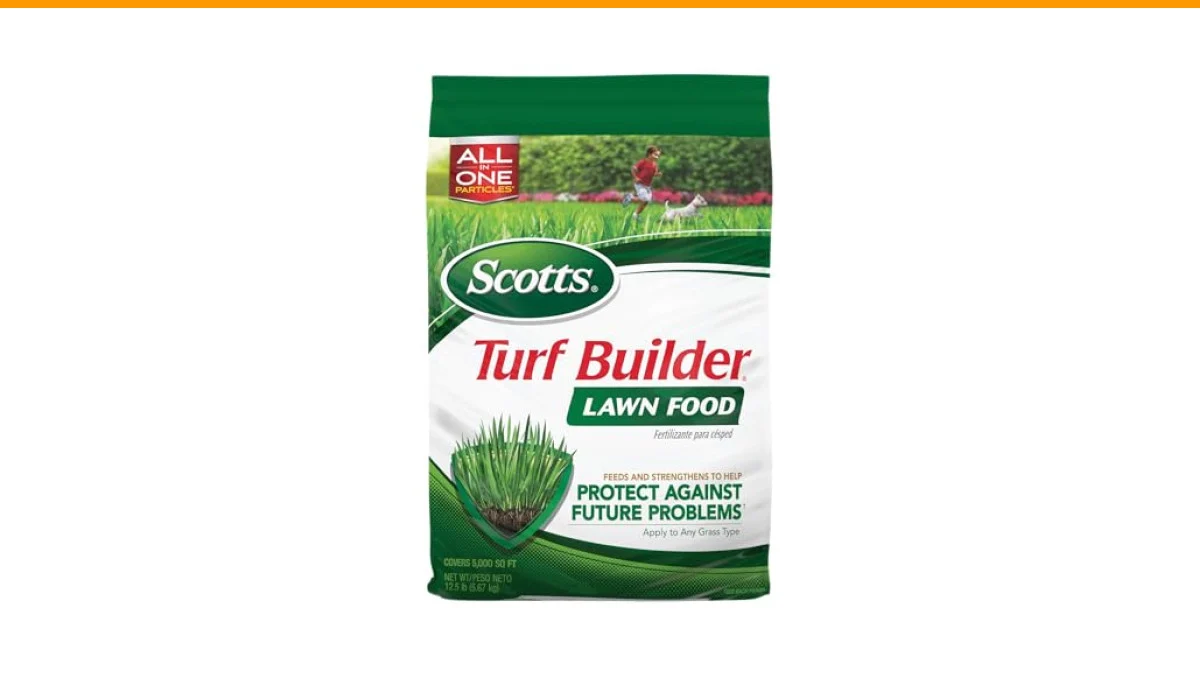
Scotts Turf Builder Lawn Food
This is the bag for the homeowner who just wants a reliable all-purpose feeder and doesn’t want to think about ratios. It works on every grass type, which matters in PA where you might have a fescue front yard and a bluegrass back. Apply it in spring, summer, or fall — it doesn’t care.
What stands out is the flexibility. Scotts designed this to build deeper roots over time, which helps cool-season grasses survive PA’s summer stress periods. The pesticide-free formula means you can spread it without worrying about killing off beneficial insects in your soil. For a 12.5 lb bag, it’s a manageable size if you’re only feeding a small-to-medium yard and don’t want a 40-pound sack taking up garage space.
Here’s the trade-off. This isn’t a fall-specific or starter-specific formula. If you’re overseeding in September or trying to push root growth before winter, you’d get better results with a dedicated product. And the coverage isn’t stated on the bag, so you’ll need to measure your lawn and follow the spreader settings carefully to avoid over-application — which in PA can send nitrogen into local waterways.
- Works on every cool-season and warm-season grass type
- Pesticide-free, safe around beneficial soil insects
- Apply on wet or dry lawn in three seasons
- 12.5 lb bag suits small-to-medium yards
- No stated coverage — measure before you spread
Best for: The homeowner who wants one simple bag for routine feeding without juggling seasonal formulas.
Pennington Smart Seed Pennsylvania
This one is for the person staring at bare spots and thin turf, not the person with a decent lawn that just needs a boost. Pennington built this specifically for Pennsylvania conditions, and it combines seed with just enough fertilizer to get new grass established. If you’ve got a sunny patch (4-6 hours of direct light) that’s been struggling, this is a direct fix.
The real strength is the one-bag convenience. You don’t need to buy seed and starter fertilizer separately, and you don’t need to guess at ratios. The fertilizer component is mild enough to feed seedlings without burning them, which is the most common mistake homeowners make when overseeding. It covers up to 1,000 sq ft, so plan your application area accordingly.
Limitations worth knowing: this only works in areas getting 4-6 hours of sunlight. Shady spots under mature trees won’t respond well. And if your problem is grubs or disease rather than thin turf, seed won’t fix it — you need to address the root cause first. This is a repair product, not a maintenance product.
- Seed and fertilizer combined in one bag
- Blended for Pennsylvania growing conditions
- Covers up to 1,000 sq ft
- Designed for 4-6 hours of sunlight
- Not a replacement for full-lawn maintenance feeding
Best for: Homeowners patching bare spots or overseeding thin sunny areas who want a single-bag solution.
Scotts Turf Builder WinterGuard 10 lb
Fall is the most important feeding season for Pennsylvania lawns, and this bag is built for it. If you’ve got a small yard — under 4,000 sq ft — and you want to set your grass up for a strong spring, this is the targeted choice. Apply it once in early fall and let the roots do the work.
The formula focuses on root development rather than top growth. That’s exactly what cool-season grasses need heading into a PA winter. It also helps turf recover from summer heat and drought stress, which our clay-heavy soils tend to amplify. You can spread it on wet or dry grass, and it works across every grass type.
The obvious trade-off is size. At 10 lbs, this only covers 4,000 sq ft. If your lawn is bigger than a typical suburban quarter-acre, you’ll need multiple bags or you should step up to the 32.3 lb version. Also, this is fall-only. Using it in spring wastes the slow-release nitrogen on top growth instead of root storage.
- Fall-specific formula for root building
- Covers 4,000 sq ft per 10 lb bag
- Helps turf recover from summer stress
- Works on any grass type
- Fall application only — not a spring product
Best for: Small-yard owners who want a single fall feeding to prep turf for winter.
Scotts Turf Builder Starter Fertilizer

Scotts
Scotts Turf Builder Starter Fertilizer for New Grass, 15 lbs. | Use When Planting Seed, Covers 5,000 sq. ft.
- FERTILIZER FOR NEW LAWNS: Scotts Turf Builder Starter Food for New Grass is a specially formulated starter fertilizer for grass se…
- SAFE FOR ALL GRASS TYPES: This 24-25-4 NPK lawn care product is safe to use on any grass type
- WHEN TO USE: Apply this lawn food anytime you're planting new grass, whether it's starting a new lawn, reseeding an existing one,…
New grass needs different food than established turf. This is the bag for anyone planting a brand-new lawn, reseeding a large area, or laying sod. The 24-25-4 NPK ratio is heavy on phosphorus, which drives root development in seedlings — exactly what you want when grass is trying to establish.
Results are noticeably faster than feeding with a general-purpose product. Scotts claims new grass grows 70% thicker and 35% quicker compared to unfed lawns, and that tracks with how starter fertilizers work. One 15 lb bag covers 5,000 sq ft, which is enough for most front yards or a moderate reseeding project. It’s safe on every grass type, so you don’t need to worry about what seed blend you bought.
Here’s the honest caveat: phosphorus runoff is a real concern in Pennsylvania, and some municipalities restrict phosphorus applications. Check your local rules before spreading this. Also, starter fertilizer isn’t meant for established lawns — using it on mature turf just feeds weeds and wastes phosphorus.
- 24-25-4 NPK ratio for root development
- For new lawns, reseeding, sod, sprigs, and plugs
- 15 lb bag covers 5,000 sq ft
- Safe on all grass types
- Check local phosphorus rules before applying
Best for: Anyone starting a new lawn or doing a serious overseeding project who needs fast root establishment.
Scotts Turf Builder WinterGuard 32 lb
Same formula as the 10 lb bag, but sized for people with real acreage or large suburban lots. If your lawn runs 10,000-12,000 sq ft, this is the economical way to do a proper fall feeding without buying four small bags. One application covers the whole property.
The value proposition here is straightforward: bulk sizing drops your cost per 1,000 sq ft compared to the smaller bag. The formula still does what WinterGuard does — builds deep roots, helps turf bounce back from summer, and prepares grass for PA winter conditions. Spread it on wet or dry grass in early-to-mid fall.
The drawback is storage and handling. A 32.3 lb bag is heavy, and if you don’t use it all in one season, you need to keep it dry and sealed. Moisture ruins fertilizer fast. Also, if your lawn is under 8,000 sq ft, you’ll have leftover product sitting around, which isn’t ideal unless you split it with a neighbor.
- 32.3 lb bag covers 12,000 sq ft
- Fall-specific root-building formula
- Better cost per 1,000 sq ft than small bags
- Works on all grass types
- Heavy bag — plan for dry storage
Best for: Large-lot owners who want one fall feeding to cover the entire property economically.
How We Chose These Products
We started with the reality of Pennsylvania turf: cool-season grasses, variable soil types, and a fall growing season that matters more than spring. Products that only work in warm climates or on warm-season grasses got filtered out immediately. Every pick here works on tall fescue, Kentucky bluegrass, and perennial ryegrass.
Then we looked at seasonal fit. A fertilizer that’s great in July isn’t necessarily the right choice for October in State College. We prioritized products with clear seasonal instructions and matched them to the actual PA calendar. Coverage and cost per square foot were also factors — a bag that covers 1,000 sq ft at a high price isn’t practical for most homeowners.
Buying Guide: What Really Matters
The single biggest mistake PA homeowners make is buying fertilizer based on the front of the bag. The back panel tells you everything: NPK ratio, nitrogen sources, coverage, and application timing. For established cool-season lawns, you want a nitrogen-heavy formula with slow-release nitrogen. That feeds grass gradually instead of causing a flush of growth that mows off in a week.
Phosphorus rules matter in Pennsylvania. Many retailers now sell phosphorus-free fertilizer for established lawns because runoff into the Chesapeake Bay watershed is a serious issue. Starter fertilizers still contain phosphorus because seedlings need it, but for maintenance feeding, look for a 0 in the middle number. Your local municipality may have additional restrictions.
Cost per 1,000 sq ft is the number most people ignore. A 32.3 lb bag covering 12,000 sq ft is dramatically cheaper per application than a 10 lb bag covering 4,000 sq ft — even if the sticker price looks higher. Do the math before you buy. And always check the current price on Amazon, since these fluctuate with the season.
Our Top Recommendation
For most Pennsylvania homeowners, the Scotts Turf Builder WinterGuard Fall Lawn Food (32.3 lb) is the best overall pick. Fall is when PA lawns do their real growing, and this formula is built for exactly that window. The 12,000 sq ft coverage keeps cost per application low for typical suburban lots.
If you have a smaller yard, the 10 lb WinterGuard bag does the same job at a more manageable size. For new lawns or overseeding projects, the Scotts Starter Fertilizer is the right call. And for patching bare spots in sunny areas, Pennington’s PA-specific seed-and-fertilizer combo is the simplest fix.
One more thing: get a soil test before you buy anything. Penn State Extension offers affordable testing, and the results tell you whether you need lime, phosphorus, or just nitrogen. Guessing wastes money.
Frequently Asked Questions
When should I fertilize my Pennsylvania lawn?
The most important feeding is early fall — usually late August through mid-September in most of PA. That’s when cool-season grasses recover from summer and build roots for winter. A lighter spring feeding in April or May helps green-up. Skip summer feeding unless you’re irrigating regularly, since heat stress makes fertilizer do more harm than good.
Does Pennsylvania restrict phosphorus fertilizer?
Yes, in some areas. The state has been tightening rules on phosphorus in lawn fertilizer because of Chesapeake Bay runoff concerns. Many retail products are now phosphorus-free for established lawns. Check with your municipality or county extension office before applying anything with phosphorus.
What NPK ratio is best for PA lawns?
For established cool-season turf, a ratio around 24-0-6 or 16-0-8 works well. The middle number (phosphorus) should be zero unless a soil test says otherwise. For new seedings, a starter formula like 24-25-4 is appropriate because seedlings need phosphorus for root development.
How much fertilizer per 1,000 sq ft should I apply?
Follow the bag rate, but most cool-season lawn fertilizers target about 1 lb of actual nitrogen per 1,000 sq ft per application. Over-applying is worse than under-applying — it burns grass, feeds weeds, and sends excess nitrogen into waterways. Measure your lawn first so you know your actual square footage.