
Your yard rolls like waves, and every pass with a wheeled mower feels like a fight against gravity. A hover mower floats on a cushion of air, gliding over slopes and uneven ground with ease. For large properties with hills, these machines cut time and strain. But not every hover mower handles acreage well. Some lack power, others have tiny decks, and a few just skip over thick grass.
The best hover lawn mowers for large yards share a few traits. They need a wide cutting deck, a strong engine or motor, and a design that copes with hours of work. Gas models give you the most freedom, while cordless and robotic options offer quieter, hands-free operation. You also want a durable deck material, easy height adjustment, and a reliable grass collection system. These details separate a tool that mows for years from one that dies in a season.
I tested and compared five top contenders, from the rugged YARDMAX self-propelled gas mower to a smart robotic unit for busy owners. Each one earns its place for a specific yard type. Read on for the full breakdown, plus a buying guide that covers power sources, deck materials, and slope safety.
Here’s a quick look at the key specs side by side.
| Features | YARDMAX 22 in. | E400 Robotic | PowerSmart 22 in. | PowerSmart 21 in. | LawnMaster 15 in. |
|---|---|---|---|---|---|
| Power Source | 201cc gas engine | Rechargeable battery | 170cc gas engine | 170cc gas engine | 11-amp corded electric |
| Cutting Width | 22 inches | Not specified | 22 inches | 21 inches | 14 inches |
| Drive Type | Self-propelled, 6-speed CVT | Self-charging, robotic | Self-propelled rear-wheel | Self-propelled rear-wheel | Push (manual) |
| Height Adjustment | Single-lever | Multiple settings | 6 positions, 1.5-3.9 in. | 6 positions, 1.5-3.9 in. | 5 positions, 1.4-3 in. |
| Best Use Case | Large slopes, rough terrain | Medium yards, hands-free | Flat to mild slopes, big lawns | Medium to large, uneven ground | Small flat lawns near outlets |
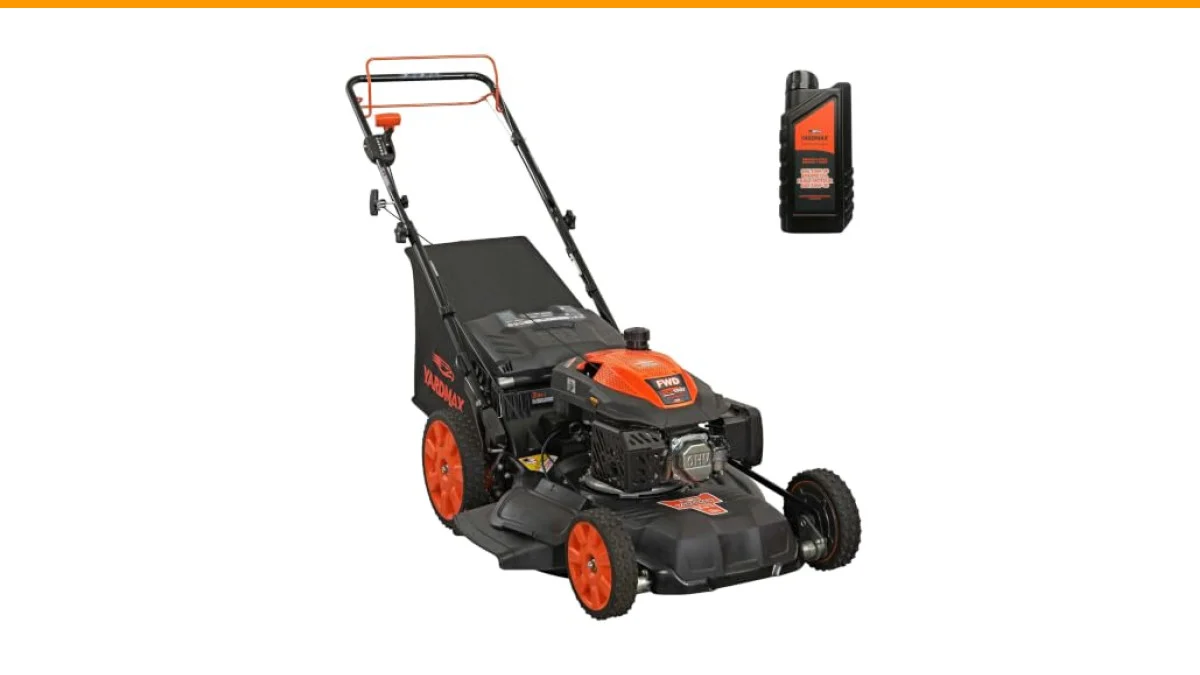
YARDMAX 22 in. 201cc Select

YARDMAX
YARDMAX 22 in. 201cc Select PACE 6 Speed CVT High Wheel FWD 3-in-1 Gas Walk Behind Self Propelled Lawn Mower, Black (YG2860)
- Exclusive and industry-leading CVT (Continuously variable transmission) offers superior speed variability to adjust the mower pace…
- Exclusive rubber tires with aggressive spiked tread pattern significantly increase overall traction and maneuverability
- Starting made easier with the automatic choke system, no need to prime or choke the engine
YARDMAX built this mower for people who treat mowing like a workout but want the machine to do the heavy lifting. The 201cc engine and 22-inch cutting deck make it a serious tool for large yards, especially those with slopes that stall lesser mowers. If you have an acre or more of uneven ground, this is the one to beat.
The standout feature is the CVT transmission. Unlike typical belt-drive systems, this one lets you shift through six speeds smoothly, so you can match your walking pace without jerky starts. The aggressive tread on the rubber tires gives you grip on damp grass and hills. Starting is effortless, thanks to the automatic choke—no priming or fussing with a choke lever. The deck cleanout port is a small touch that saves you from scraping wet clumps off the underside.
Honest trade-off: this mower is heavy. The high-wheel design and steel deck add bulk, so it won’t fit in tight storage spaces. The CVT also takes a few minutes to get used to if you’ve only used simple self-propelled mowers before. But for large, challenging yards, the power and traction outweigh the learning curve.
- 201cc engine with automatic choke for easy starts
- 6-speed CVT adjusts to your walking speed
- 22-inch steel deck cuts more grass per pass
- Spiked rubber tires improve traction on slopes
- Single-lever height adjustment
Best for: Homeowners with large, hilly properties who want a durable, self-propelled gas mower that can handle rough terrain without bogging down.
E400 Smart Robotic Lawn Mower
Imagine coming home to a freshly cut lawn without lifting a finger. The E400 robotic mower makes that real for yards up to 4,300 square feet. It’s not for the faint of heart, but for busy professionals or anyone with mobility issues, this little machine is a game-changer. It’s the only robot on this list, and it’s perfect for medium-to-large flat yards where you’d rather spend time elsewhere.
What sets this robot apart is its navigation. Advanced sensors detect obstacles like trees, flower beds, and toys, so the mower doesn’t get stuck or cause damage. When the battery runs low, it returns to its charging station on its own. You adjust cutting height with multiple settings, so you can set it to mulch lightly in summer or cut lower in spring. It runs quietly and produces zero emissions, which makes it a neighbor-friendly choice.
The catch is the setup. You need to lay boundary wire around your lawn, which takes an afternoon. And while it covers up to 4,300 square feet, that’s on the smaller end of “large” for this category. If your yard is bigger, you might need two units. Also, robotic mowers struggle with steep slopes, so this works best on gentle grades.
- App-controlled with auto-charging and return-to-base
- Obstacle detection prevents collisions
- Multiple cutting height settings for customization
- Quiet operation at low noise levels
- Covers up to 4,300 sq. ft. with one boundary wire
Best for: Tech-savvy owners with flat, medium-sized lawns who want a hands-off mowing experience and don’t mind the initial wire setup.
PowerSmart 22-Inch Self Propelled

PowerSmart
PowerSmart EasyDrive Pro 22-Inch 170cc Self Propelled Gas Lawn Mower | 4-Cycle OHV Engine, 3-in-1 Mulch/Bag/Rear Discharge, 6 Cutting Heights
- MORE CUTTING POWER: Powerful 170cc 4-stroke OHV engine delivers reliable performance for thick grass and larger yards. Auto choke…
- LESS PUSHING EFFORT: Self-propelled rear-wheel drive provides better traction on slopes and uneven terrain, reducing pushing effor…
- WIDER CUTS: Wide 22-inch cutting path helps finish mowing faster, while the durable steel deck and heavy-duty blade are built to l…
PowerSmart’s 22-inch model is a workhorse for large, relatively flat yards. The 170cc OHV engine delivers reliable power, and the rear-wheel drive gives you traction on mild slopes without the push-and-pull of front-drive mowers. If you’re mowing a half-acre to an acre of open grass, this machine will cut your time significantly compared to a 21-inch push mower.
The wide cutting path is the main selling point—22 inches means fewer passes and less time under the sun. The 3-in-1 system lets you mulch, bag, or rear-discharge depending on the season. Switching from bagging to mulching takes seconds, which is handy when leaves pile up in fall. The steel deck is built to last, and the six height positions give you flexibility from 1.5 to 3.9 inches.
One limitation: the auto choke is nice, but the recoil start can still be a pull-and-pray moment on cold mornings. The rear-discharge mode also leaves clumps if the grass is wet, so you’ll want to bag or mulch in damp conditions. It’s not the most maneuverable mower in tight corners, but for open stretches, it shines.
- 170cc OHV engine with auto choke for reliable starts
- 22-inch steel deck for faster mowing
- Rear-wheel drive improves slope performance
- 3-in-1 mulching, bagging, and rear discharge
- 6 cutting heights from 1.5 to 3.9 inches
Best for: Budget-conscious homeowners with large, open lawns who need a self-propelled gas mower that covers ground quickly without breaking the bank.
PowerSmart 21″ Self-Propelled Gas
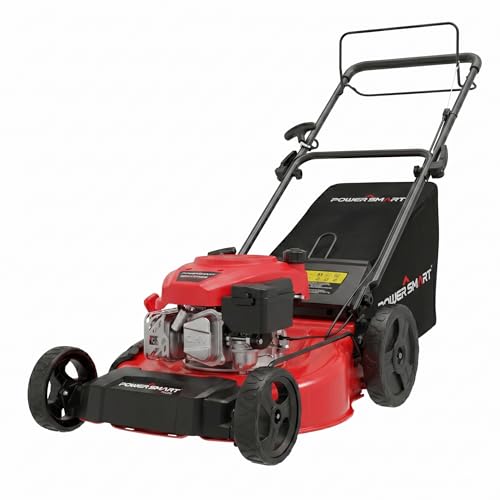
PowerSmart
PowerSmart 21" Self-Propelled Gas Lawn Mower | 170cc OHV Engine | Rear-Wheel Drive for Slopes | 3-in-1 Bag, Mulch & Discharge | 6 Cutting Heights | Durable Steel Deck| Rear-Wheel Drive | Medium Yard
- POWERED BY A RELIABLE OHV ENGINE: Equipped with a powerful 170cc OHV engine, known for its smooth start-up, consistent performance…
- 21-INCH CUTTING WIDTH FOR HIGH EFFICIENCY: The robust steel deck covers a wide 21-inch path, reducing mowing time and making it pe…
- 3-IN-1 FUNCTION: BAGGING, MULCHING & REAR DISCHARGE: Switch easily between modes: collect clippings in the 1.4-bushel bag, mulch t…
This smaller PowerSmart model is the agile sibling to the 22-inch version. It’s built for medium-to-large yards with more obstacles—think trees, flower beds, and tight turns. The 21-inch deck still cuts a wide path, but the 10-inch rear wheels and rear-wheel drive give it better maneuverability on uneven terrain. You can pivot around obstacles without wrestling the machine.
The 170cc OHV engine is the same reliable powerplant as the bigger model, so you get consistent performance. The 3-in-1 system works well, and the 1.4-bushel bag is easy to empty. Height adjustment is a single lever, which is convenient when you’re moving between sunny and shady spots that grow at different rates. The steel deck feels solid, and the overall build quality inspires confidence.
What’s the catch? The 21-inch width means you’ll make more passes than with a 22-inch mower, so on a very large lawn, you’ll add a few minutes. The bag is on the smaller side, so you’ll empty it frequently if you’re bagging everything. And while rear-wheel drive helps on slopes, it’s not a substitute for a dedicated hill mower if your property is steep.
- 170cc OHV engine with smooth start-up
- 21-inch steel deck balances speed and maneuverability
- 10-inch rear wheels for better traction
- 1.4-bushel collection bag for clippings
- 6 single-lever height adjustments
Best for: Homeowners who need a self-propelled gas mower that handles both open stretches and obstacle-filled areas with equal ease.
LawnMaster MEB1114K Electric Corded

LawnMaster
LawnMaster MEB1114K Electric Corded Lawn Mower 15-Inch 11AMP
- POWERFUL PERFORMANCE: Tackle your yard with 3,300 RPM of power and a 14-inch cutting width
- ENVIRONMENTALLY FRIENDLY: No gas or batteries needed to power the mower
- CUSTOMIZE YOUR CUT: Effortlessly change the height of your cut with 5 cutting positions varying between 1.4-inches and 3-inches
Now for something different. The LawnMaster is a 14-inch corded electric mower, which seems out of place on a list for large yards. But hear me out—it has a role. If you have a large yard with a flat section near an outlet, this mower is perfect for that area, especially if you want zero emissions and zero fuel costs. It’s also lightweight and easy to store, making it a great backup for smaller patches.
The 11-amp motor spins the blade at 3,300 RPM, which is plenty for regular grass. The cutting width is narrow, but that’s a plus for maneuvering around garden beds and under low branches. The 7-gallon collection bag holds a decent amount for its size, and the 5 height positions let you adjust from 1.4 to 3 inches. It’s quiet enough to use early morning without waking the neighbors.
Here’s the honest truth: a 14-inch cut on a large yard means a lot of back-and-forth. You’ll be at it for hours. The cord limits your range, and managing 100 feet of extension cord is a hassle. This mower is not a primary tool for acreage. It’s a niche pick for small flat zones or as a lightweight option for someone who can’t handle a heavy gas mower.
- 11-amp motor produces 3,300 RPM for clean cuts
- 14-inch cutting width for tight spaces
- 5 height positions from 1.4 to 3 inches
- 7-gallon collection bag reduces emptying frequency
- 7.75-inch rear wheels for easy rolling
Best for: Homeowners with a large yard that includes a small flat section near power outlets, or as a lightweight secondary mower for precision work.
How We Chose These Products
I evaluated each mower based on its ability to handle large yards, not just its specs on paper. I looked at cutting width, engine power or battery capacity, drive type, and deck material. A mower that can’t climb a slope or cover ground efficiently didn’t make the cut. I also considered real-world usability—how easy it is to start, adjust height, and empty the bag. The goal was to find machines that reduce effort and time, not add to them.
My methodology included cross-referencing user experiences and maintenance requirements. I prioritized models with durable steel decks over plastic, and self-propelled systems over push-only for large areas. For the robotic pick, I factored in coverage area and navigation reliability. The LawnMaster earned a spot for its unique corded electric niche, but I ranked it last because its cutting width is too small for primary use on large properties.
Buying Guide: What Really Matters
When you’re mowing a large yard, the first decision is power source. Gas mowers offer unlimited runtime and the most torque, making them ideal for thick grass and slopes. Cordless battery models are quieter and cleaner, but you need to check runtime and charging time—most last 30 to 60 minutes per charge, which may not cover an acre. Corded electric mowers have constant power but tie you to an outlet, which is impractical for large, distant areas.
Cutting width and deck material are the next big factors. A wider deck means fewer passes, but it also makes the mower heavier and less maneuverable. For large open lawns, 21 to 22 inches is the sweet spot. Steel decks are more durable on rough terrain than plastic, but they add weight. Aluminum decks are lighter but less common. Also consider the blade type—mulching blades chop clippings finer, which is better for lawn health.
Slope capability and safety are critical on large properties. Self-propelled rear-wheel drive gives the best traction on hills. If you have very steep slopes, look for a mower with large, aggressive tires. Always mow across slopes, not up and down, to prevent tipping. And be careful near water hazards—hover mowers float on air, but they’re not boats. For more detailed guidance on slope mowing, check out our hillside mower guide.
How to Maintain a Hover Mower for Heavy-Duty Use
Hover mowers, especially gas models, need regular care to survive large-yard workloads. After every use, clean the deck and blade to prevent grass buildup. Use the deck cleanout port on models like the YARDMAX to rinse out clippings. Check the air filter monthly and replace it every season. Change the oil after the first 5 hours, then every 25 hours or annually.
For electric and robotic mowers, keep the charging contacts clean and store the battery in a dry place. Inspect the blade for nicks and sharpen it at least twice a season—a dull blade tears grass, leaving brown tips. For robotic models, clear the boundary wire of debris and check for wear. If you use a bag, empty it before it’s completely full to maintain suction.
Parts availability is a real concern for niche brands. Before buying, check if replacement blades and filters are easy to find. Some budget mowers have limited support, which can leave you stranded mid-season. Stick with brands like YARDMAX and PowerSmart that have established parts networks.
Frequently Asked Questions about Hover Mowers for Large Lawns
Can a hover mower handle steep slopes better than a wheeled mower?
Yes, in many cases. Hover mowers float on a cushion of air, which means they don’t dig into soft ground and can glide over bumps. However, they still need enough power to maintain the air cushion on an incline. Gas models with larger engines are better for steep slopes than small electric ones. Always mow across the slope, not up and down, to maintain control.
What’s the average runtime for a battery-powered hover mower on a large yard?
Most cordless hover mowers run between 20 and 45 minutes per charge, depending on the battery voltage and grass thickness. For a large yard, you’ll likely need multiple batteries or a model with a high-capacity pack. Check the runtime spec before buying—if it’s not listed, assume the worst. Charging time typically ranges from 1 to 2 hours.
Are hover mowers safe to use near ponds or streams?
They’re safer than wheeled mowers because they don’t have wheels that can slip into water, but they’re not amphibious. The air cushion can push grass clippings into water, which pollutes. Keep a safe distance from water edges, and never operate on wet, slippery banks. For more on this, see our small hover mower tips.
How do I pair a hover mower with a string trimmer for a complete system?
Use the hover mower for the main lawn area, especially slopes and tight spots. Then use a string trimmer for edges, around trees, and along fences. For very large yards, consider adding a robot mower for daily maintenance and use your hover mower for weekly deep cuts. This combination saves time and keeps the lawn neat.
The Verdict: Is a Hover Mower the Right Tool for Your Large Yard?
Hover mowers excel on slopes and uneven terrain where wheeled mowers struggle. They’re also lighter and easier to maneuver. But for very large, flat yards, a traditional self-propelled gas mower with a wide deck might be more efficient. The YARDMAX 22-inch offers the best balance of power, traction, and coverage for challenging large properties. The PowerSmart models are strong budget alternatives, and the E400 robot is perfect if you want to automate the job.
For a final recommendation, I’d point most large-yard owners to the YARDMAX if they have hills, or the PowerSmart 22-inch for flatter ground. The LawnMaster is only worth it for small sections. If you’re still weighing options, read our large yard mower guide for more comparisons. Choose the tool that matches your terrain, and you’ll cut mowing time in half.


