You stick a probe in the dirt, wait ten seconds, and the screen says your soil is bone dry. You watered yesterday. What gives?
Handheld soil testers solve that problem fast, but only if you pick the right one and understand what it can actually measure. This guide covers five testers that work for different jobs, plus the soil-type quirks and maintenance habits that keep readings honest.
Short version: the Buladeke 7-in-1 is the best all-rounder for most home gardeners. The AgraTronix 8180 is the serious tool for compacted beds, and the SONKIR MS02 is the no-battery budget pick. Read on for the details.
Here is a quick spec comparison to help you narrow down your options before diving into the full reviews.
| Features | Buladeke 7-in-1 | AgraTronix 8180 | SONKIR MS02 | METINFUS pH Meter | YAMRON 4-in-1 |
|---|---|---|---|---|---|
| Measurement Type | Digital 7-in-1 | Analog compaction dial | Analog 3-in-1 | Analog pH only | Digital 4-in-1 |
| Power Source | 4 AAA batteries | No battery needed | No battery needed | No battery needed | 4 AAA batteries |
| Probe Length | Standard (approx. 10 cm) | 24 inches | Standard | Long cable probe | Standard (approx. 10 cm) |
| Key Metric | Moisture, pH, temp, light, EC, TDS, fertility | Compaction PSI | Moisture, pH, light | Soil pH | Moisture, pH, temp, light |
| Best Use Case | All-purpose indoor/outdoor | Lawns, farms, compaction | Budget houseplants | pH-focused gardening | Everyday plant care |
Buladeke 7-in-1 Soil Tester
Buladeke
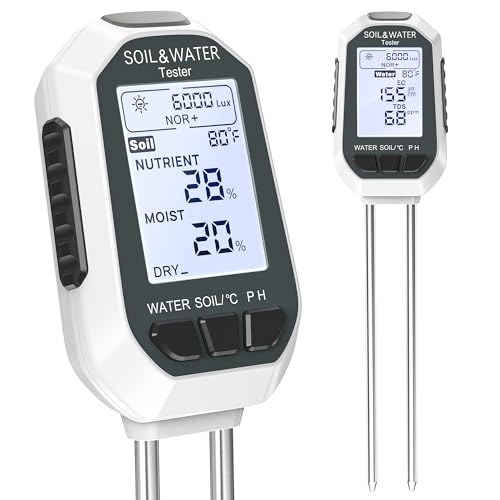
Buladeke Moisture Meter for Plants,7-in-1 Digital Soil Tester Kit | Soil pH Tester with LCD - Measures pH, EC, TDS, Fertility, Temp, Moisture & Sunlight, Garden Tools for Indoor & Outdoor
- 【7-in-1 Features】This is a 7-in-1 multi-function soil tester. Our soil tester quickly measures soil moisture, pH, temperature and…
- 【Large Screen & LCD Backlight】The Soil Moisture Meter has a large LCD display with white backlight that clearly shows the numerica…
- 【Fast and accurate measurement】With the latest 2025 probe technology, it can quickly and accurately measure soil pH, moisture, tem…
The Buladeke 7-in-1 is a digital meter for gardeners who want one device to cover almost every soil question. It reads moisture, pH, temperature, light intensity, EC, TDS, and fertility. That range makes it a strong fit for indoor plant parents, raised-bed growers, and anyone who wants data without buying three separate tools.
The large backlit LCD is the standout feature. You can read it in bright sun or at dusk without squinting, which matters more than you’d think when you’re crouched over a tomato bed. The 2026 probe technology updates readings in about ten seconds, and the display uses clear numbers plus symbols so beginners can interpret the minimum values without a manual.
It runs on four AAA batteries, which are not included. That’s a small annoyance. The bigger trade-off is that the probe needs soft, moist soil to work well. If your ground is dry or hard, you have to water the test spot and wait ten minutes before inserting the probe. Push it into crusty clay and you risk damaging the sensor.
- Measures seven parameters including EC, TDS, and fertility
- Large white backlight LCD readable in daylight and darkness
- Low-battery warning built into the display
- Requires 4 AAA batteries (not included)
- Probe should not be used in liquids or forced into hard soil
Best for: Gardeners who want a single digital meter for moisture, pH, temperature, light, and nutrient-related readings.
AgraTronix 8180 Compaction Tester
AgraTronix
AgraTronix 8180 Soil Compaction Tester - 24 in. Probe, 300 PSI, Rubber Grip Handles, Water Filled Stainless Dial | Agricultural Supplies
- Soil Testing Equipment: Designed to accurately test soil compaction, this soil tester lets you determine the ideal state of soil f…
- Portable Device: The electronic tester features double molded rubber handles, hanger hole with nails and a lightweight body. Its e…
- Durable Construction: Made from high-grade stainless steel, the 24-inch probe of the portable soil tester with adjustable shock co…
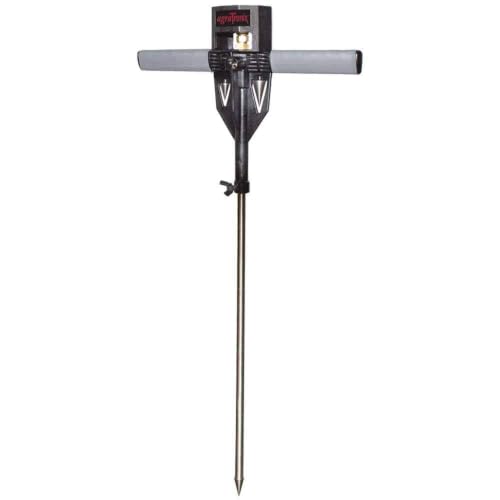
The AgraTronix 8180 is not a moisture or pH meter. It measures soil compaction in PSI, which is a different job entirely. If your plants wilt despite regular watering, compaction might be the culprit. This tool tells you whether roots can actually push through the soil.
Two things stand out. First, the 24-inch stainless steel probe reaches deep enough to test subsoil layers where hardpan forms. Second, the liquid-filled dial absorbs shock, so it survives being tossed in a truck bed or storage shed. The double-molded rubber handles give you a solid grip when you’re pushing through tough ground.
The trade-off is obvious. This is a single-purpose tool with a narrow audience. It won’t tell you when to water or whether your soil is acidic. It also requires physical effort to push the probe down, and the reading only makes sense if you understand the 3-way color rating system. The small and large tips (1/2 inch and 3/4 inch) add versatility, but you still need to know what you’re looking for.
- Measures compaction on a 300 PSI dial
- 24-inch stainless steel probe with adjustable shock collar
- Liquid-filled dial reduces shock damage
- Includes small and large tester tips
- Color-coded red, yellow, green rating system
Best for: Lawn care professionals, farmers, and serious growers dealing with compacted soil or poor drainage.
SONKIR MS02 3-in-1 Tester

SONKIR
SONKIR Soil pH Meter, MS02 3-in-1 Soil Moisture/Light/pH Tester Gardening Tool Kits for Plant Care, Great for Garden, Lawn, Farm, Indoor & Outdoor Use (Green)
- Kindly NOTE: This soil tester can not be applied to test pH value of any other liquid. If the soil is too dry the indicator will n…
- 3 METERS IN ONE: Soil moisture level, Soil pH value and Sunlight level could be tested easily according to your need by switching…
- NO BATTERY NEEDED: Simply insert the meter into soil, wait few minutes, accurate test results will be displayed on the readout pan…
The SONKIR MS02 is the classic analog soil meter you’ve probably seen at a garden center. It reads moisture, pH, and light with a simple switch on the front. No batteries, no calibration, no learning curve. For houseplant owners and casual gardeners, that simplicity is the whole point.
What makes it useful is the zero-maintenance design. You stick it in the soil, wait a few minutes, and read the needle. It works for indoor pots, outdoor beds, lawns, and farms. The compact size means it fits in a kitchen drawer or a tool bag without taking up space.
Accuracy is the weak spot. Analog meters like this give you a range, not a precise number. The needle can stick if the soil is too dry, and the pH reading is more of a rough guide than a lab-grade measurement. It also can’t test liquids, so don’t try to check your watering can. For quick checks, it’s fine. For precision work, look elsewhere.
- 3-in-1 function: moisture, pH, and light
- No batteries required
- Simple switch to change measurement mode
- Compact and portable for indoor or outdoor use
- Not suitable for testing liquids
Best for: Budget-conscious gardeners and houseplant owners who want a simple, battery-free tool for quick checks.
METINFUS Handheld pH Meter

METINFUS
METINFUS Handheld pH Soil Tester Meter, Soil pH Meter, pH Soil Meter Sensor with Long Cord Probe, pH Tester for Home, Garden, Lawn, Agriculture, Indoor & Outdoor Plants, Battery-free
- **About Readings & Troubleshooting** Most home garden soil is pH 6.5–7.5. A steady reading does not always mean the meter is fault…
- **Ready-to-use** METINFUS pH meter is only used to test the soil pH. Easy to unpack and use, designed for beginners, plug and play…
- **Upgraded design** the handheld design and large display are convenient to read. The cable probe makes it easy to handle and read…
The METINFUS pH meter does one thing: it measures soil pH. That focus makes it a good choice for growers who already have a moisture meter and just need to track acidity. Blueberry bushes, azaleas, and hydrangeas all care deeply about pH, and this tool helps you stay on top of it.
The long cable probe is the feature that sets it apart. You insert the probe into the ground and hold the dial in your hand, which means less bending and less awkward crouching. The large display is easy to read, and the whole thing runs without batteries. No charging, no replacements, no dead-meter surprises in the middle of a growing season.
It’s not a multi-tool. You won’t get moisture or light readings from this device. The probe also needs careful handling. Don’t leave it in the ground for long periods, don’t use it in mud or hard ground, and wipe it clean after every use. Skip those steps and the sensor loses sensitivity fast.
- Measures soil pH only
- Long cable probe for comfortable handheld reading
- No batteries or charging required
- Large analog display
- Must be wiped clean after each use
Best for: Gardeners focused on soil acidity who want a dedicated, battery-free pH tool with a comfortable long-probe design.
YAMRON 4-in-1 Soil Meter

YAMRON
4-in-1 Soil Moisture Meter Digital Plant Temperature/Soil Moisture/PH Meter/Sunlight Intensity Backlight LCD Display Soil Test Meter for Gardening, Farming and Outdoor Plants
- 【4 in 1 function】This is a 4-in-1 multifunctional soil tester.Our soil tester fastly to measure soil moisture, pH, temperature and…
- 【Large Screen & Backlight LCD Display】The Soil Tester uses a large LCD screen and white backlight to conveniently display and read…
- 【Quick Accurate measurement】The latest probe detection technology in 2026 can quickly and accurately measure the pH, moisture and…
The YAMRON 4-in-1 covers moisture, pH, temperature, and sunlight. It’s a digital meter aimed at indoor and outdoor plant care, and the 45-degree rotating head is a genuinely useful design choice. You can tilt the screen toward you without bending over, which makes checking pots at floor level much easier.
The large LCD with white backlight works well in low light. Readings come in about ten seconds, and the visual content design uses graphics alongside numbers, so beginners can interpret the data without guessing. The 2026 probe technology is fast, and the four-in-one range covers the basics most home gardeners need.
Like the Buladeke, this meter needs four AAA batteries that aren’t included. It also requires moist soil to read accurately. Dry, hard ground can damage the probe, so you need to water the test area and wait before inserting it. For pH and moisture, you should take readings from at least five spots and average them, which adds time to every test session.
- Measures moisture, pH, temperature, and sunlight
- 45-degree rotating head for easy viewing
- Large backlit LCD display
- Requires 4 AAA batteries (not included)
- Needs multiple readings for accurate pH and moisture averages
Best for: Home gardeners who want a digital 4-in-1 meter with a screen that’s easy to read without bending over.
How We Chose These Products
We evaluated each tester on accuracy, build quality, ease of use, and the specific problems it solves. A meter that reads seven parameters but breaks after a season is less useful than a simple analog tool that lasts for years. We weighed the trade-offs honestly.
Soil type also played a role in our rankings. A probe that works well in loam may struggle in clay or sandy soil. We noted those limitations for each product so you can match the tool to your ground conditions. You can also check our guide to the best soil tester for sandy soil if your garden drains fast.
Buying Guide: What Really Matters
Probe material and length matter more than the number of features. Stainless steel resists corrosion better than coated metal, and a longer probe reaches deeper soil layers where moisture and compaction tell a different story than the surface. For raised beds and containers, a standard probe works fine. For lawns and fields, you need more reach.
Calibration is another factor. Digital meters usually hold their accuracy better than analog needles, but they need batteries and occasional checks. Analog meters drift over time and can stick if they get dirty. Neither type is perfect, but digital tends to be more consistent for repeated measurements.
Think about your soil type before you buy. Clay holds moisture and nutrients differently than sand or loam, and that changes how a probe reads. If you’re dealing with acidic soil, a dedicated pH meter like the METINFUS makes more sense than a multi-tool. For alkaline conditions, a meter with a wide pH range is a better fit.
Our Top Recommendation
The Buladeke 7-in-1 is the best handheld soil tester for most gardeners. It covers the widest range of measurements, the backlit display is genuinely easy to read, and the ten-second read time keeps testing quick. The battery requirement and moist-soil limitation are real drawbacks, but they don’t outweigh the versatility.
If you need a budget option, the SONKIR MS02 works without batteries and handles basic moisture, pH, and light checks. For compaction problems, the AgraTronix 8180 is the only tool here that measures PSI, and it’s built to last. And if pH is your main concern, the METINFUS long-probe meter gives you a dedicated tool with a comfortable design.
Frequently Asked Questions
How does soil type affect my tester’s readings?
Clay soil holds moisture tightly, so a moisture meter may read wet even when plants are struggling. Sandy soil drains fast and can read dry just hours after watering. Loam gives the most consistent readings. You’ll get better results if you test the same spot at the same depth each time.
How often should I clean the probe?
Wipe the probe after every use with a dry cloth. For sticky clay, a damp cloth followed by a dry one works. Skip cleaning and soil residue builds up, which throws off pH and moisture readings. Most probes last longer with this one habit.
Why do I get different readings from the same spot?
Rocks, mulch, and air pockets create false readings. Push the probe in slowly and avoid forcing it. If a reading seems off, pull it out, clear the area, and try again a few inches away. Taking multiple readings and averaging them gives a more accurate picture.
Should I test after watering or when the soil is dry?
Wait at least an hour after watering for moisture readings to stabilize. For pH, test when the soil is moist but not soaked. Dry soil can give erratic pH readings, and soaking wet soil dilutes the measurement. Mid-morning is often the best time for consistent results.
For a deeper look at how analog and digital meters compare in real-world accuracy, the FarmstandApp handheld soil meter guide is worth a read. You can also explore our soil tester lab kit comparison if you need more precision than a handheld can offer.