You kneel down to pull one dandelion and the fork bends at the neck. Or the tines snap off in hard clay. It happens to almost every gardener who buys a cheap fork first.
A good hand fork solves three problems: it penetrates without bending, it releases soil instead of clogging, and it fits your hand well enough that you can work for an hour without cramping. The tricky part is that a fork built for fluffy loam will fail in clay, and a heavy forged tool feels clumsy in a raised bed.
Below are five forks worth considering, ranked by soil type, handle design and build quality. The Berry&Bird model takes the top spot for most gardeners, while the Haliaeetus and the long-handled Berry&Bird cover clay and border work respectively.
Here’s a quick side-by-side of the specs that matter most before you read the full reviews.
| Features | Berry&Bird Hand Fork | Haliaeetus Hand Fork | Garden Guru Fork | MECHEER Hand Rake | Berry&Bird Long Handle |
|---|---|---|---|---|---|
| Material & Build | Stainless steel, ash handle | Thicker stainless, seamless weld | Rust-resistant stainless steel | Thickened aluminum alloy | Stainless steel, ash handle |
| Key Specification | Standard short handle | 12.3 inch total length | Ergonomic grip, hang hole | 0.28 inch thick claws | 22.6 inch total length |
| Main Feature | Balanced, penetrates clay | Sharp 3-prong tines | Works around delicate stems | 3 deep curved claws | 12 inch reach handle |
| Performance | Reduces hand fatigue | Uproots large weeds | Resists warping | Breaks hard turf | Reaches without kneeling |
| Best Use Case | General potting and beds | Deep weeding, rocky soil | Transplanting, mulch | Cultivating, aerating | Borders, between plants |
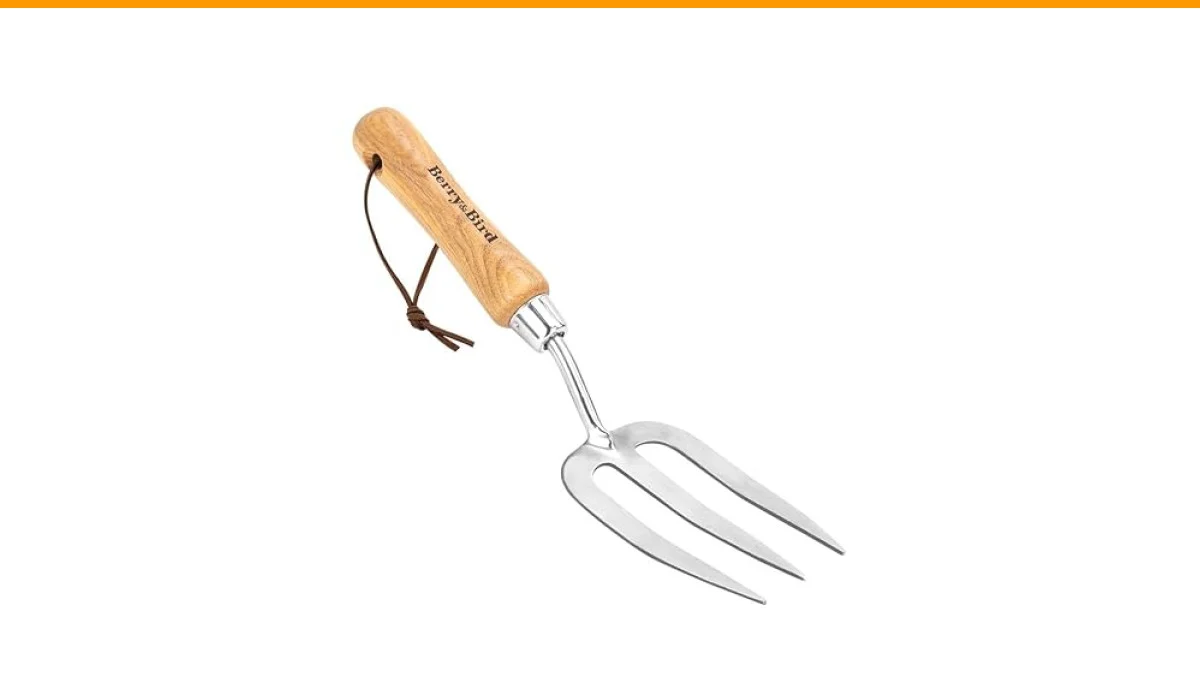
Berry&Bird Gardening Hand Fork

Berry&Bird
Berry&Bird Gardening Hand Fork, Stainless Steel Hand Weed Fork | Traditional Garden Hand Fork Tool with Ergonomic Ash Wood Handle, Garden Tool for Weeding, Digging, Planting and Cultivating
- WHAT YOU GET - 1 * Stainless Steel Hand Fork. Our garden forks are made by traditional manual process and can be used for more tha…
- ERGONOMIC DESIGN- Berry&Bird hand fork has good balance and comfortable proportion, which is very suitable for planting in small a…
- STRONG AND TOUGH - Ideal for aerated soil, it will not bend under the action of force when used for harder garden work. The sharp…
This is the fork most home gardeners should buy first. It’s a short-handled stainless steel tool with an ash wood grip, sized for pots, raised beds and border work where you’re already kneeling or crouching.
The head is made with a traditional manual process rather than stamped sheet metal, which shows in the balance. The fork sits evenly in the hand and the tines slide into damp clay without the twisting you get from lighter tools. Stainless steel also reduces soil adhesion, so a quick shake clears most of the dirt instead of leaving you scraping with a stick. The ash handle is FSC certified and smooths up over time rather than splintering.
The trade-off is length. At standard hand-fork size, you can’t reach into the middle of a dense border without stepping on something. It’s also not a heavy pry bar. If you regularly hit buried roots or rocks, the Haliaeetus below is a better fit.
- Stainless steel head with ash wood handle
- Balanced weight distribution for one-handed use
- Stainless tines shed wet soil easily
- FSC certified wood from managed forests
- Backed by a 2-year warranty and 30-day replacement
Best for: The everyday gardener working raised beds, pots and loose-to-medium soil who wants one fork to last a decade.
Haliaeetus Garden Hand Fork

Haliaeetus
Haliaeetus Garden Hand Fork, 12.3'' Hand Weeding Fork with Sharp Tine | for Easy Uprooting Large Weeds, Stainless Steel Garden Fork, Comfortable Wood Handle Hand Fork for Loosening Soil, Composting
- 【Great to Uproot Large Weeds】The gardening fork easily goes through the ground to digs deep under the weed and give more reach and…
- 【Loosens Soil Almost Effortlessly】With sharp and sturdy 3 prong tine that make it very easy to break through hard soil, even if yo…
- 【Comfortable Wooden Handle】Wood is a natural shock absorber and will not cause sore wrists even work for a few hours. The handle o…
The Haliaeetus is built for the gardener who fights clay, compacted beds and weeds with taproots. It measures 12.3 inches overall, so it’s longer than a standard hand fork but still short enough to control one-handed.
Three sharp tines do the heavy lifting here. They punch through crusted soil and slide under deep-rooted weeds like dock and dandelion, letting you lever the whole plant out instead of snapping the top off. The head uses thicker stainless steel with a seamless weld at the neck, which is where most cheap forks fail. Wooden handles absorb shock in a way plastic and metal don’t, and the streamlined shape sits naturally in the palm. If you’ve ever finished a weeding session with a sore wrist, that detail matters more than it sounds.
One honest note: the sharp tines work best in moist soil. After a dry spell, water the bed the night before or you’ll be fighting the ground instead of the weeds.
- 12.3 inch total length for extra leverage
- Three sharp tines for uprooting taproot weeds
- Seamless weld resists breaking at the neck
- Thicker stainless steel resists bending in heavy soil
- Lifetime warranty service
Best for: Gardeners dealing with clay, compacted ground or stubborn deep-rooted weeds who need real leverage.
Garden Guru Stainless Steel Fork

Garden Guru Lawn & Garden Tools
Garden Guru Stainless Steel Hand Weeder Fork Tool – Rust Resistant Stainless Steel – Ergonomic Handle – Great for Planting, Spreading Mulch, Weeding, Loosening & Transplanting Soil
- A must-have hand tool for every gardener. This hand rake is perfect for weeding, loosening and transplanting soil, turning, and sp…
- Stainless steel tines are rust resistant and sturdy, allowing easy penetration of soil. Fork also has the maneuverability to work…
- Ergonomic grip for comfort and control makes weeding and transplanting a breeze. Grip is designed to alleviate pressure on the pal…
Garden Guru’s fork targets precision work. It’s a stainless steel hand fork with an ergonomic grip, and the tines are narrow enough to work between young plants without slicing through stems.
What sets it apart is the grip design. The handle spreads pressure across the palm and fingers instead of concentrating it in one spot, which cuts down on the hand and wrist fatigue that builds up during long transplanting sessions. Stainless tines resist rust and hold their shape better than cheaper forks that warp after a season or two. There’s also a large hang hole at the top, so it stores on a pegboard without disappearing into the bottom of a bucket.
The fork is lighter than the Haliaeetus and Berry&Bird models. That’s fine for transplanting and spreading mulch, but it won’t pry out a stubborn shrub root. Treat it as a precision tool, not a demolition tool.
- Rust-resistant stainless steel tines
- Ergonomic grip reduces palm and finger pressure
- Narrow tines maneuver around delicate stems
- Large hang hole for storage
- Lifetime warranty plus 90-day satisfaction guarantee
Best for: Anyone transplanting seedlings, spreading mulch or weeding around established plants who wants less hand fatigue.
Hand Rake Garden Tool, Heavy Duty Cultivator

MECHEER
Hand Rake Garden Tool, Heavy Duty Hand Cultivators for Gardening Weed Rake | Small Garden Claw Tool, Ergonomic Handle, For Cultivating, Loosening, Weeding
- 3 Thick Claws Design: The hand cultivator garden tool is a practical gardening tool with 3 claws for loosening, cultivating, diggi…
- Thickened Aluminum Alloy Material: Our hand rake for gardening is made of high-quality aluminum alloy material, which allows the g…
- Ergonomic Design: The hand rake garden tool is designed with an ergonomic rubber grip handle that reduces hand and wrist fatigue w…
The MECHEER is technically a hand cultivator rather than a traditional fork, but it belongs on this list for anyone whose main job is breaking up soil. Three thick curved claws dig deep and pull loose turf apart with less effort than straight tines.
Aluminum alloy construction makes it the lightest tool here, and the 0.28 inch claw thickness gives it surprising rigidity for the weight. The curved shape is what makes the difference. Straight tines push soil forward, while curved claws hook under it and lift, which is exactly what you want for aerating around plant roots or turning over a small bed. The rubber TPR grip is non-slip even with sweaty hands, and the whole tool is compact enough to drop in a garden bag. A hanging hole at the end takes a loop of cord.
It’s not a weeding fork in the traditional sense. Deep taproots will slip past the curved claws. Use it for cultivation, aeration and loosening, and keep a straight-tine fork for pulling weeds.
- Three thick curved claws for deep soil penetration
- Aluminum alloy body keeps weight low
- 0.28 inch claw thickness for rigidity
- Non-slip TPR rubber grip
- Compact size with hanging hole
Best for: Gardeners who mainly aerate, cultivate and loosen soil in small beds and want a lightweight tool.
Berry&Bird Garden Hand Fork, Long Handle

Berry&Bird
Berry&Bird Garden Hand Fork, 22.6 In Long Handle Stainless Steel Weed Fork
- WHAT YOU GET - 1 * Long Handled Weed Fork. Our garden forks are made by traditional manual process and can be used for more than 1…
- WIDE APPLICATION - The traditional long handled stainless steel weed fork has a traditional style and weatherproof 12 inch handle…
- COMFORTABLE HANDLE - The 12 inch handle provides greater reach and leverage, making it easier to reach a corner of the garden. Str…
This is the same Berry&Bird build quality in a 22.6 inch package. The 12 inch handle gives you reach into borders and between established plants without kneeling or stepping on the bed.
Reach is the whole point. If you’ve ever tried to weed behind a row of peonies without crushing them, you know the problem. The longer handle also adds leverage, which makes it easier to work a fork into a corner of the garden where a short tool gives you no angle. The ash handle is streamlined and ergonomic, and the stainless head sheds soil the same way the short version does. Traditional styling, weatherproof handle, and it should outlast most plastic-handled forks by years.
The downside is control. A 22-inch handle gives you less precision than a hand fork, so it’s clumsy for fine work around seedlings. It’s also more tool than you need in a raised bed you can reach from both sides.
- 22.6 inch total length with 12 inch handle
- Stainless steel head, ash wood handle
- FSC certified wood construction
- Reaches borders without kneeling
- 2-year warranty and 30-day replacement
Best for: Border gardeners and anyone who wants to weed between plants without kneeling or compacting the bed.
How We Chose These Products
We started with the failure points. A hand fork fails in one of three places: the tines bend, the neck snaps at the weld, or the handle cracks. So we looked for tools that address those specific weak spots, whether through forged or manually worked heads, seamless welds, or shock-absorbing wood handles.
Soil type drove the second filter. A fork that shines in loam can be useless in clay, and vice versa. We grouped these five by the ground they’re built for, then checked tine count, spacing, handle length and grip design against the tasks each tool claims to handle. Warranty terms and material honesty (stainless vs. coated carbon steel, aluminum vs. steel) rounded out the comparison.
Buying Guide: What Really Matters
Stainless steel tines resist rust and shed soil better than carbon steel, but they’re slightly softer. Carbon steel holds an edge longer and is often forged, which makes it stronger. For a hand fork, stainless wins on maintenance and carbon wins on raw toughness. If you garden in rocky ground, lean toward forged carbon or thick stainless.
The head-to-handle joint is where cheap forks die. A welded joint can fail under lateral force, which is exactly what happens when you lever a weed out. Look for a seamless weld, a forged one-piece head, or a tang that runs deep into the handle. Tine count matters too: three tines penetrate hard soil with less effort, while four or more tines cover more ground in loose soil but clog faster in clay.
Handle material affects fatigue more than most people expect. Wood absorbs shock. Rubber and TPR grips add traction. Fiberglass handles are light and weatherproof but transfer more vibration to your hand. If you have arthritis or grip issues, a thicker handle with a shaped grip beats a thin round one every time. For more testing data on garden forks, the Bob Vila garden fork tests are worth a look.
Fork Type by Task: Weeding, Aerating, Transplanting
Weeding calls for sharp, narrow tines that slide under the root. Three-prong forks with tight spacing work best, especially in moist soil. Aerating and cultivating want curved claws or thicker tines that lift and turn soil rather than slicing through it. Transplanting needs a fork with narrow tines and a grip you can control precisely, so you don’t damage neighboring roots.
Border work is its own category. A long-handled fork like the 22.6 inch Berry&Bird lets you reach across a planted bed without kneeling. A standard hand fork can’t do that job, and a full-size digging fork is overkill for it. Match the tool to the task and you’ll use it far more often.
Maintenance and Rust Prevention
Wipe the head dry after every use, especially if you garden in wet soil. Stainless steel resists rust but doesn’t ignore it. A light coat of oil on carbon steel tines at the end of the season prevents pitting over winter. Store forks hanging rather than in a bucket of damp soil, and keep wood handles out of prolonged water exposure so they don’t crack.
Sharpening is simple. A few passes with a flat file on the inner edge of each tine restores the bite. Don’t sharpen the outer curve, or you’ll weaken the tine. Once a year is plenty for most home gardens.
Our Top Recommendation
The Berry&Bird Gardening Hand Fork (B08C4MVCST) is the best all-around pick. It balances well, penetrates clay, sheds soil, and comes with a 2-year warranty. For most raised-bed and container gardeners, it’s the last hand fork they’ll need to buy for a while.
If your soil is heavy clay or full of rocks, step up to the Haliaeetus for its thicker stainless and sharp three-prong tines. If hand fatigue is your main problem, the Garden Guru’s ergonomic grip is the better choice. And if you work borders you can’t easily kneel in, the long-handled Berry&Bird earns its place. Budget-minded gardeners who mainly loosen soil should look at the MECHEER cultivator instead.
Frequently Asked Questions
Do I need a hand fork or a hand trowel?
A trowel moves soil. A fork breaks it up and lifts weeds. Most gardeners end up owning both, but if you weed more than you plant, start with the fork.
How many tines should a hand fork have?
Three tines penetrate hard soil with less resistance. Four or more cover more ground in loose soil but clog faster in clay. For heavy ground, three is the practical choice.
Can I use a hand fork in rocky soil?
Yes, but only if the head is thick stainless or forged. Thin stamped tines bend on the first rock. The Haliaeetus and the short Berry&Bird handle rocky ground better than most.
How do I stop my fork from rusting?
Dry it after every use and store it indoors or under cover. A yearly wipe of light oil on carbon steel tines adds another layer of protection. Stainless needs less care but still benefits from the same routine.