You push a fork into the soil beside your prize tomato plant, and it stops dead. The ground is compacted, water pools on the surface after rain, and the roots are suffocating in soil that has turned to brick. A full-size broadfork is too big for the gap between plants. A trowel just makes a hole. What you need is the right hand fork.
A good hand fork for root aeration does three jobs: it slips between established plants without slicing roots, it breaks up compacted soil so oxygen and water can reach the root zone, and it survives clay without bending its tines. The differences between a $12 fork and a $30 fork come down to tine thickness, how the head attaches to the handle, and whether the grip fits your hand after an hour of work.
Below you’ll find five forks that cover the main buyer types: the heavy-clay gardener, the arthritis sufferer who needs a fat grip, the raised-bed hobbyist, and the budget buyer who still wants stainless steel. Each pick includes an honest trade-off. The Haliaeetus and Berry&Bird models lead the pack for most home gardens, but the Fiskars Ergo wins on pure ergonomics for anyone with hand pain.
Here’s a quick spec comparison to help you narrow the field before reading the full reviews.
| Features | Haliaeetus Hand Fork | Berry&Bird Hand Fork | Fiskars Ergo Cultivator | MECHEER Hand Rake | Garden Guru Fork |
|---|---|---|---|---|---|
| Material & Build | Thick stainless steel, seamless weld | Stainless steel, FSC ash handle | Cast aluminum, rust-resistant | Aluminum alloy, TPR rubber grip | Stainless steel, ergonomic grip |
| Tine Design | 3 sharp prongs, deep reach | Sharp stainless pins, low soil stick | Polished aluminum tines, stay sharp | 3 thick curved claws, deep penetration | Stainless tines, delicate-stem friendly |
| Handle Type | Streamlined wood, shock absorbing | Ergonomic ash, balanced proportion | Ergonomic molded grip | Non-slip rubber grip | Ergonomic pressure-relief grip |
| Best Soil Type | Heavy clay, rocky ground | Clay, loam, pots and borders | Tough compacted soil | Hard turf, compacted beds | Loam, mulch, delicate roots |
| Warranty | Lifetime | 2-year | Lifetime | Not stated | Lifetime plus 90-day guarantee |
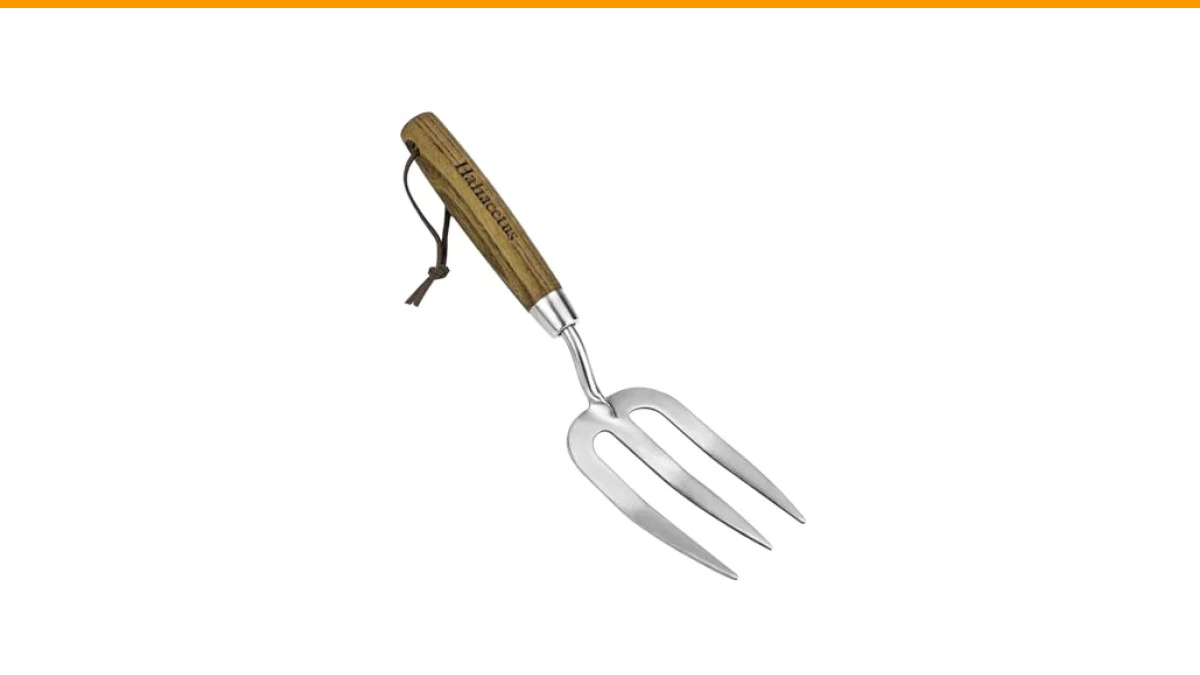
Haliaeetus Garden Hand Fo…

Haliaeetus
Haliaeetus Garden Hand Fork, 12.3'' Hand Weeding Fork with Sharp Tine | for Easy Uprooting Large Weeds, Stainless Steel Garden Fork, Comfortable Wood Handle Hand Fork for Loosening Soil, Composting
- 【Great to Uproot Large Weeds】The gardening fork easily goes through the ground to digs deep under the weed and give more reach and…
- 【Loosens Soil Almost Effortlessly】With sharp and sturdy 3 prong tine that make it very easy to break through hard soil, even if yo…
- 【Comfortable Wooden Handle】Wood is a natural shock absorber and will not cause sore wrists even work for a few hours. The handle o…
This is the fork for the gardener who has given up on light tools. If your beds are heavy clay, or you regularly hit roots and rocks while digging, the Haliaeetus is built to take that abuse. It suits in-ground vegetable growers and anyone aerating around established perennials in soil that fights back.
The standout feature is the 12.3-inch overall length combined with thick stainless tines. That extra reach gives you real leverage when you lever up a deep taproot or a stubborn clump of compacted clay. The seamless welding at the head is the detail that matters most. Most cheap forks fail at the ferrule where the tines meet the neck, and this one removes that weak point entirely. The wooden handle absorbs shock, so a full afternoon of prying doesn’t leave your wrist throbbing.
The trade-off is weight and bulk. This fork is heavier than a stamped aluminum cultivator, and the 12.3-inch length won’t fit neatly in a small tool bag or a tight raised-bed corner. It’s also overkill for loose potting soil. You’ll be fine with it unless you only garden in containers or light loam, where a smaller fork feels less clumsy.
- 12.3-inch length gives extra leverage on deep roots
- Thick stainless steel resists bending in clay
- Seamless weld at the head reduces the most common failure point
- Wood handle dampens shock during long sessions
- Lifetime warranty covers defects
Best for: The clay-soil gardener who needs a fork strong enough to pry up deep roots without bending.
Berry&Bird Gardening Hand…

Berry&Bird
Berry&Bird Gardening Hand Fork, Stainless Steel Hand Weed Fork | Traditional Garden Hand Fork Tool with Ergonomic Ash Wood Handle, Garden Tool for Weeding, Digging, Planting and Cultivating
- WHAT YOU GET - 1 * Stainless Steel Hand Fork. Our garden forks are made by traditional manual process and can be used for more tha…
- ERGONOMIC DESIGN- Berry&Bird hand fork has good balance and comfortable proportion, which is very suitable for planting in small a…
- STRONG AND TOUGH - Ideal for aerated soil, it will not bend under the action of force when used for harder garden work. The sharp…
Berry&Bird targets the gardener who wants a tool to last a decade and looks good hanging on the shed wall. The traditional manual build and FSC-certified ash handle appeal to people who garden in raised beds, pots, and mixed borders where a smaller, balanced fork works better than a long pry bar.
Two things set this fork apart. First, the stainless steel pins shed soil instead of collecting it, which matters when you’re working sticky clay loam and don’t want to stop every few minutes to scrape the tines. Second, the ash handle is proportioned for balance rather than raw length, so it feels controlled when you’re working around small stems and seedlings. The wood and steel both smooth out with use, which is a genuine long-term benefit rather than a marketing line.
Here’s the honest limitation: this fork is not the one to grab if your soil is rock-hard or full of buried rubble. The stainless pins are sharp and strong, but the head is designed for cultivated ground, not demolition. If you routinely fight compacted unbroken clay, the Haliaeetus is the better match.
- Stainless pins release soil instead of clinging to it
- FSC-certified ash handle, balanced for control
- Sharp tines penetrate established beds with light pressure
- 2-year warranty with 30-day replacement
- Suits pots, borders, and raised beds
Best for: The raised-bed and border gardener who wants a balanced, soil-shedding fork for cultivated ground.
Fiskars Ergo Garden Culti…

Fiskars
Fiskars Ergo Garden Cultivator, Hand Tool for Digging, Aerating & Weeding | Heavy-Duty Cast Aluminum Tines, Rust Resistant, Ergonomic Handle, Hang Hole Storage, Loosens Soil in Garden Beds & Pots
- GARDENING ESSENTIAL: Heavy duty, ergonomic hand cultivator with sharp tines ideal for a variety of gardening tasks like digging in…
- MAXIMUM POWER AND PRECISION: Cast-aluminum head and tines boost power for digging in tough soil and enhance rust resistance; Ergon…
- LONG-LASTING AND RELIABLE: Polished aluminum tines stay sharp through heavy use and provide excellent durability for lasting value…
Fiskars built this cultivator for hands that hurt. The molded ergonomic handle and cast-aluminum head make it the pick for anyone with arthritis, carpal tunnel, or a grip that tires fast. It also works well for older gardeners who want a lightweight tool they can use for an hour without stopping.
The cast-aluminum tines are the reason this tool stays light while still digging into tough soil. Aluminum doesn’t rust, and the polished finish keeps the tines sharp through heavy use. The ergonomic handle spreads pressure across the palm instead of concentrating it on the fingers, which is the specific design detail that separates this from a plain wooden handle. For aeration around shallow-rooted plants, the lighter weight gives you more control and less fatigue.
Aluminum has one real weakness: it’s softer than steel. If you routinely pry against buried rocks or use the fork as a lever in dense clay, cast aluminum can bend where stainless steel wouldn’t. It’s not the tool for brute-force digging. It’s the tool for comfortable, repeated, moderate work.
- Cast-aluminum head resists rust and stays light
- Polished tines hold their edge through heavy use
- Ergonomic handle reduces hand and wrist fatigue
- Hang hole for easy storage
- Lifetime warranty
Best for: The gardener with hand or wrist pain who needs a light, comfortable fork for regular aeration.
Hand Rake Garden Tool, He…

MECHEER
Hand Rake Garden Tool, Heavy Duty Hand Cultivators for Gardening Weed Rake | Small Garden Claw Tool, Ergonomic Handle, For Cultivating, Loosening, Weeding
- 3 Thick Claws Design: The hand cultivator garden tool is a practical gardening tool with 3 claws for loosening, cultivating, diggi…
- Thickened Aluminum Alloy Material: Our hand rake for gardening is made of high-quality aluminum alloy material, which allows the g…
- Ergonomic Design: The hand rake garden tool is designed with an ergonomic rubber grip handle that reduces hand and wrist fatigue w…
MECHEER’s three-claw cultivator is the budget-friendly option for someone breaking in a new bed or tackling hard turf. The thick 0.28-inch aluminum alloy claws are built to dig deep, and the rubber grip keeps the tool from slipping when your hands are muddy. It’s a sensible first hand fork for a new gardener or a spare to keep in the garage.
The curved claw design is the practical highlight. Those deep bends grip soil and roots rather than sliding over them, which makes loosening compacted turf noticeably easier than a straight-tined fork. The lightweight build and hanging hole mean it stows easily in a garden bag or on a hook. For the price point, the claw thickness is genuinely impressive and resists the bending you’d expect from cheap stamped metal.
What you give up is refinement. The rubber grip is comfortable but not molded to hand shape like the Fiskars, so long sessions may still tire your wrist. And the aluminum alloy, while thick, won’t outlast stainless steel in rocky ground. It’s a solid budget tool, not a lifetime investment.
- 0.28-inch thick aluminum alloy claws resist bending
- Curved tines grip soil and roots for easier loosening
- Non-slip TPR rubber grip for muddy hands
- Lightweight with hanging hole for storage
- Works for digging, weeding, loosening, and aerating
Best for: The budget-conscious gardener or beginner who wants a capable fork without spending much.
Garden Guru Stainless Ste…

Garden Guru Lawn & Garden Tools
Garden Guru Stainless Steel Hand Weeder Fork Tool – Rust Resistant Stainless Steel – Ergonomic Handle – Great for Planting, Spreading Mulch, Weeding, Loosening & Transplanting Soil
- A must-have hand tool for every gardener. This hand rake is perfect for weeding, loosening and transplanting soil, turning, and sp…
- Stainless steel tines are rust resistant and sturdy, allowing easy penetration of soil. Fork also has the maneuverability to work…
- Ergonomic grip for comfort and control makes weeding and transplanting a breeze. Grip is designed to alleviate pressure on the pal…
Garden Guru designed this fork for precision work around delicate plants. The stainless tines are narrow enough to slip between small stems without slicing them, which makes it the right choice for transplanting, spreading mulch, and aerating around established flowers and vegetables.
The rust-resistant stainless steel is the main selling point, and it delivers. These tines penetrate soil easily and resist warping better than cheaper forks, so the tool keeps its shape season after season. The ergonomic grip is shaped to relieve pressure on the palm and fingers, which helps during extended weeding and transplanting sessions. The large hang hole is a small detail, but it makes storage simple.
The limitation is scale. This fork is maneuverable and precise, but it’s not built for heavy prying in dense clay or rocky ground. If your main task is breaking up compacted subsoil, you want a longer, heavier fork. This one shines in cultivated beds where finesse beats force.
- Stainless steel tines resist rust and warping
- Narrow profile works around small stems and delicate plants
- Ergonomic grip reduces palm and finger pressure
- Large hang hole for easy storage
- Lifetime warranty plus 90-day satisfaction guarantee
Best for: The precision gardener aerating around delicate plants, seedlings, and transplants.
How We Chose These Products
We evaluated each fork against the specific demands of root aeration rather than general digging. That means tine strength under lateral load, how the head attaches to the handle, and whether the grip holds up over an hour of repeated use. A fork that bends at the ferrule or slips in wet hands fails the core job, no matter how good it looks.
We also weighed soil type against design. A stainless steel pry bar and a lightweight aluminum cultivator solve different problems, so ranking them on one scale would be misleading. Each pick above is matched to the buyer and soil condition it serves best. For more independent testing perspectives, the Gardening Scoop roundup of hand forks covers similar ground.
Buying Guide: What Really Matters
Tine spacing and bend angle decide how well a fork aerates. Wide, straight tines slice through soil but leave it compacted between the gaps. Narrow, curved tines lift and fracture soil, which is what actually creates air pockets around roots. For clay, look for curved tines with tight spacing. For loam, straight tines work fine.
Handle diameter matters more than most buyers realize, especially for anyone with arthritis. A grip that’s too thin forces your fingers to close tightly, which strains joints. A fatter, molded grip like the Fiskars spreads pressure across the palm. If you have hand pain, prioritize grip shape over tine material.
Forged heads outlast stamped ones, and a seamless weld at the ferrule beats a riveted joint. Stainless steel resists rust and soil adhesion; aluminum stays light but bends more easily. Match the material to your soil, not to the price tag. And check the warranty, because a lifetime guarantee signals the maker expects the tool to survive real work.
Our Top Recommendation
The Haliaeetus Garden Hand Fork takes the top spot for root aeration in real-world garden soil. Its thick stainless tines, seamless weld, and 12.3-inch length give you the leverage to loosen compacted ground around established roots without bending the tool. The lifetime warranty backs up the build. If your soil is heavy clay or full of roots and rocks, this is the fork to buy.
For a lighter, more balanced option in cultivated beds, the Berry&Bird is the runner-up. Gardeners with hand pain should choose the Fiskars Ergo for its molded grip. Budget buyers get solid value from the MECHEER, and anyone working around delicate plants will appreciate the Garden Guru’s precision.
Frequently Asked Questions
Can I aerate clay soil by hand, and how deep should I go? Yes, but work when the soil is moist, not soaked. Push the fork in 4 to 6 inches and lever gently to fracture the soil without turning it over. Deeper than 6 inches risks damaging deeper roots.
Will a hand fork damage roots around established plants? It can if you stab straight down into the root ball. Work 6 to 8 inches out from the stem, angle the tines away from the plant, and lever rather than chop. Stop if you feel solid resistance from a thick root.
When should I avoid aerating my soil? Skip it when soil is waterlogged, because you’ll compact it further instead of loosening it. Also avoid aerating during dormancy or right after transplanting, when roots are most fragile.
Is a hand fork better than a broadfork for a small garden? For raised beds and tight planting gaps, yes. A broadfork needs open ground and two hands on long handles. A hand fork fits between plants and gives you control a broadfork can’t. For a full-size in-ground bed, the broadfork wins on coverage.