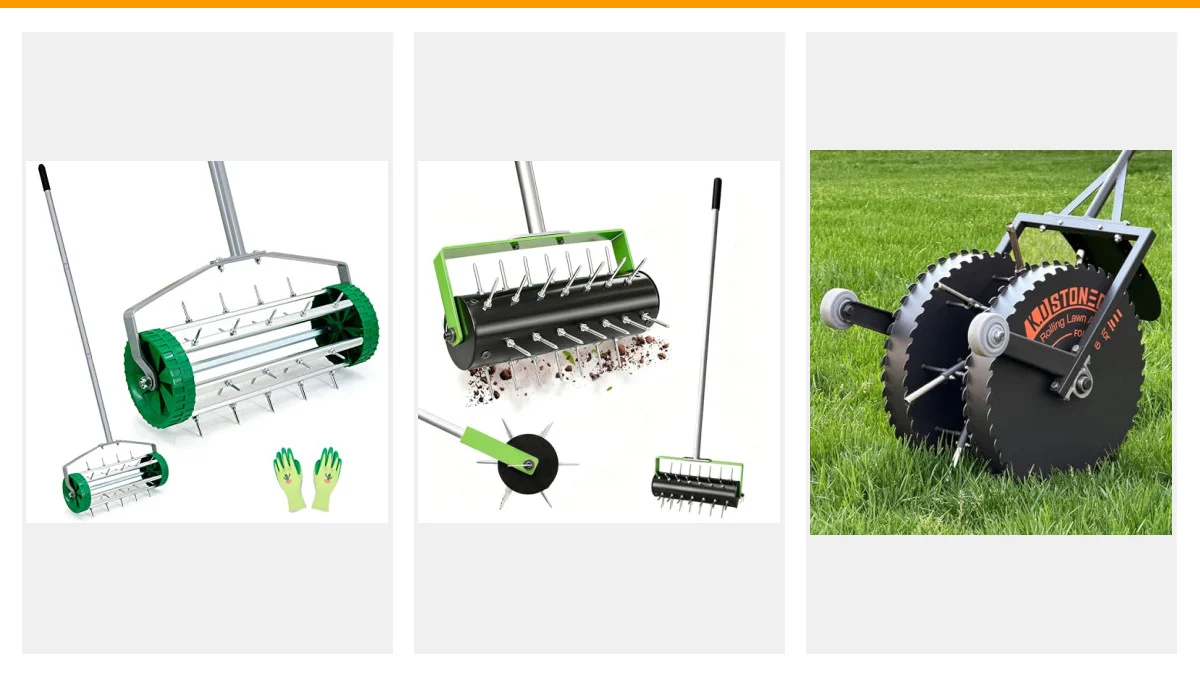
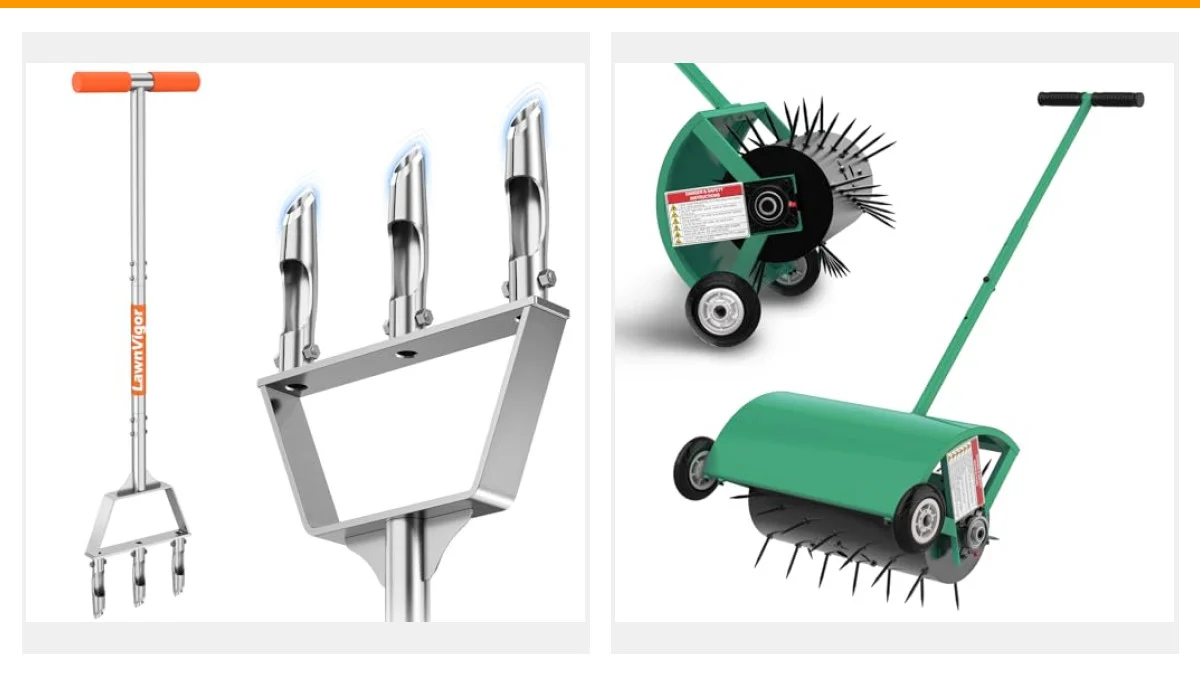
Thatch is the silent killer of healthy turf. It builds up just above the soil line, choking out water, air, and fertilizer before they ever reach the roots. You water, you feed, you mow—yet the grass stays thin and patchy. A dethatcher cuts through that debris layer and gives your lawn a fighting chance.
For big yards, a manual rake is a punishment. An electric model with a wide working width and a collection bag turns a weekend-long chore into a single afternoon. The right machine pulls up dead grass and moss while slicing the soil just enough to let your lawn breathe again.
We tested three very different approaches to lawn renovation: a powerful corded scarifier, a weighted push aerator, and a fillable rolling spike tool. Each one solves a specific problem, and none of them are interchangeable. Here is what we found.
Below is a quick comparison of the key specs that separate these three tools.
| Features | DEKOPRO Dethatcher | Lawnira Push Aerator | FULUPET Roller |
|---|---|---|---|
| Power Source | 15 Amp corded electric | Manual push | Manual push |
| Working Width | 15 inches | Roller width | 23 inches |
| Depth Adjustment | 5 positions (-11mm to +10mm) | Fixed 2.2-inch tines | Fixed 1.5-inch spikes |
| Debris Collection | 40L collection bag | None (leave cores) | None (leave cores) |
| Best Use Case | Heavy thatch, large lawns | Compacted soil, small-medium | Large areas, adjustable weight |

DEKOPRO 15-Inch Electric Dethatcher

DEKOPRO
Electric Lawn Dethatcher Scarifier 15 Amp: DEKOPRO 15-inch Lawn Dethatcher and Aerator with 5-Position Depth Adjustment, 40L Collection Bag, 2-in-1 Corded Scarifier for Yard, Spring & Fall Lawn Care
- [POWERFUL PERFORMANCE MAXLANDER] This electric lawn dethatcher features a 15 Amp copper motor delivering up to 3500 RPM for fast a…
- [2-in-1 MULTIPURPOSE:] This 2-in-1 lawn scarifier and dethatcher allows easy switching between aeration and scarification, removin…
- [5-POSITION HEIGHT ADJUSTMENT] With adjustable depth control ranging from -11mm to +10mm, this dethatcher suits various grass thic…
This is the only true powered dethatcher in the group, and it shows. The DEKOPRO runs on a 15-amp copper motor that spins the tines at up to 3,500 RPM. It is built for the person whose lawn actually needs rescuing—not just a cosmetic touch-up. If your grass feels spongy underfoot or you can see a thick brown layer between the green blades and the soil, this machine will fix it.
The 15-inch working width is the sweet spot for large lawns. It covers ground fast enough to finish a half-acre yard in a reasonable time, but it is still narrow enough to maneuver around trees and flower beds. The 40L collection bag is genuinely useful. It catches the pulled-up thatch, roots, and moss as you go, so you do not have to rake afterward. That alone saves an hour of manual labor on a big yard.
Honest trade-off: it is corded. You will need a heavy-duty extension cord and a strategy for moving it across your yard. The dual safety switches are a nice touch—both handles must be squeezed for the motor to run—but they take a moment to get used to. The foldable handle makes storage easy, though the machine itself is not light.
- 15-amp copper motor delivers up to 3,500 RPM for aggressive dethatching
- 5-position depth adjustment ranges from -11mm to +10mm for seasonal flexibility
- 2-in-1 design switches between scarifying and aeration modes
- 40L collection bag catches debris so you do not have to rake
- Dual safety switches prevent accidental starts
Best for: Homeowners with large, heavily thatched lawns who want a real power tool to do the heavy lifting in spring and fall.
Lawnira Heavy-Duty Push Aerator

Lawnira
Heavy-Duty Push Lawn Aerator Roller with Steel Spikes for Compacted Soil | Rolling Lawn Aerator,Sand-Fillable Drum, 30 Steel Spikes, Floor-Safe Wheels & 59" Ergonomic T-Handle, Easy Assemble, Orange
- JUST PUSH & WALK – This rolling lawn aerator features two smooth‑swivel wheels for effortless turns and directional changes. Simpl…
- 30 WIDER HEAT-TREATED TINES – The roller is equipped with 30 strategically spaced tines that ensure complete coverage. Each 2.2-in…
- PROPER ROLLING WEIGHT FOR EFFICIENT SOIL PENETRATION – Weighing 30 pounds, this manual aerator for lawn allows steel tines to pene…
The Lawnira takes a completely different approach. It is a manual push aerator with 30 heat-treated steel tines that punch holes into compacted soil. There is no motor, no cord, and no bag. You push it across the yard, and the spikes do the work. It is best for people whose primary problem is soil compaction rather than thatch buildup.
What stands out here is the build quality. The tines are industrially stamped and heat-treated, so they resist bending even in hard, dry ground. The 30-pound frame provides enough weight for the 2.2-inch tines to penetrate most turf conditions. If your soil is especially tough, you can add sand to the frame for extra force. The swivel wheels make turning at the end of each row feel smooth, and the cushioned T-handle extends to 59 inches to keep your back straight.
The honest downside is that this tool does not remove thatch. It opens the soil so water and air can reach the roots, but the dead grass layer stays put. You will still need to dethatch separately if that is your issue. Also, on a truly large lawn, pushing a manual aerator across every square foot is a solid workout. It is not lazy work, but it is effective.
- 30 heat-treated steel tines penetrate up to 2.2 inches deep
- 30-pound frame provides consistent rolling weight
- Fillable frame accepts sand for tougher soil conditions
- Swivel wheels allow easy turns and mower-like control
- Powder-coated steel resists rust and outdoor wear
Best for: Gardeners with compacted soil who want a durable, no-fuel, no-cord tool for targeted aeration on medium-sized lawns.
FULUPET 23 Inch Rolling Aerator

FULUPET
FULUPET 23 Inch Rolling Lawn Aerator - Upgraded Heavy Duty Lawn Aerator Tool with Adjustable Handle Heights, Manual Soil Spike Aerator for Yard and Garden, Water or Sand Fillable for Soil Penetration
- REINFORCED WEIGHT CAPACITY:Designed with a 1.2-inch side opening, this 23-inch rolling aerator can be filled with sand or water. T…
- ADJUSTABLE HEIGHT AND COMFORT:The handle features 3 adjustable sections, allowing you to find the perfect working height. Combined…
- HEAVY-DUTY GRADE CONSTRUCTION:Our lawn aerator uses high-strength density alloy and reinforced tripod connections. The surface is…
The FULUPET is the wide-body option in this lineup. Its 23-inch roller covers significantly more ground per pass than the Lawnira, which makes it the better pick for genuinely large properties. The key difference is that the drum is fillable—you add water or sand to increase the weight and drive the 1.5-inch spikes deeper into the soil.
The adjustable handle is a thoughtful feature. It has three height settings, so you can dial in a comfortable pushing position whether you are tall or short. The non-slip padded grip reduces hand fatigue during long sessions. Assembly is quick, with the spikes arriving pre-attached to the drum. You only need to put the handle together, which takes about five minutes.
Here is the catch: the spikes are shorter than the Lawnira’s. At 1.5 inches, they will penetrate soft, moist soil well, but they struggle in hard, dry clay. The instructions recommend watering the lawn 12 to 24 hours before use, which is practical advice, not a suggestion. Also, the frame feels sturdy, but the fillable design means you have to haul it to a water source or lug bags of sand to fill it up.
- 23-inch wide roller covers large areas quickly
- Fillable drum accepts water or sand for adjustable weight
- 3-position adjustable handle reduces back strain
- 1.5-inch spikes break up compaction and improve drainage
- Anti-rust finish on high-strength alloy frame
Best for: Owners of expansive lawns who want to cover ground fast and do not mind adding weight for better soil penetration.
How We Chose These Products
We focused on tools that actually solve the problem of large-lawn maintenance. That meant prioritizing working width, depth control, and the ability to handle significant thatch or compaction. We also considered how each tool fits into a seasonal lawn care routine—some yards need a heavy scarify in spring and a lighter pass in fall.
Durability played a major role in the selection. A manual aerator with thin, bendable spikes is worthless after one season. We looked for heat-treated steel, powder-coated frames, and motors with enough copper to run cool under load. Every product here has a specific strength, and we ranked them based on how well they match the needs of a homeowner with a big yard.
Buying Guide: What Really Matters
Before you buy, figure out what your lawn actually needs. Thatch is a layer of dead organic matter sitting on top of the soil. A dethatcher or scarifier physically cuts and pulls it out. Compaction is dense, hard soil that prevents roots from growing deep. An aerator punches holes to relieve that pressure. Many lawns have both problems, but most tools only address one.
Power source matters more than you think. Corded electric tools give you unlimited runtime but tether you to an outlet. Manual tools are quiet and maintenance-free but require physical effort. For a large lawn, a corded machine like the DEKOPRO is the most efficient way to remove heavy thatch. For ongoing maintenance aeration, a manual roller might be all you need.
Depth adjustment is another critical feature. Grass types and soil conditions vary wildly across a single yard. A tool with fixed tines will either dig too deep in soft spots or skip over hard patches entirely. Look for adjustable settings so you can fine-tune the cut. And do not ignore the collection bag—raking up pulled thatch by hand defeats the purpose of a powered tool.
Our Top Recommendation
The DEKOPRO 15-Inch Electric Dethatcher is the clear winner for large lawns. It is the only tool here that combines aggressive dethatching power with a wide working width and a collection system. If your lawn is suffocating under a layer of thatch, this machine will restore it faster than any manual tool. The 5-position depth adjustment gives you control across different grass types and seasons.
For those who prefer not to deal with cords, the FULUPET rolling aerator is a strong runner-up. Its wide 23-inch drum covers ground efficiently, and the fillable weight system lets you adapt to soil conditions. If your main issue is compaction on a smaller property, the Lawnira push aerator offers superior tine strength and a more manageable footprint.
Check the current price of each option on Amazon before making your final call.
Frequently Asked Questions
Can I use a dethatcher on wet grass?
No. Running a powered dethatcher on wet soil will pull up chunks of turf and leave ruts. The tines need firm ground to cut cleanly. Wait until the grass is dry and the soil is slightly moist—not soaked—for the best results.
How often should I dethatch a large lawn?
Most lawns need it once a year, ideally in early spring or early fall. If your lawn gets heavy foot traffic or you notice more than half an inch of thatch, a second pass might be necessary. Overdoing it can stress the grass, so stick to once per season unless conditions are severe.
Is a spike aerator as good as a plug aerator?
Spike aerators punch holes and push soil down, which can actually increase compaction around the holes in heavy clay. Plug aerators remove cores of soil, creating space for roots to expand. For seriously compacted soil, plug aeration is more effective. Spike aerators work fine for routine maintenance on healthy lawns.
Do I need to rake after using an electric dethatcher?
It depends on the machine. The DEKOPRO has a 40L collection bag that catches most debris as you go. Manual aerators leave the pulled material on the surface. Whatever is left behind should be raked and composted—leaving it on the lawn will just contribute to future thatch buildup. For more insights, check out this dethatcher buying guide or our review of the best dethatchers for thick grass. If you are weighing manual versus powered options, our dethatcher and aerator comparison covers the trade-offs in detail.