

Best Compost Bins with Wheels for Effortless Turning
Contents
Your back aches just thinking about it. That pile of grass clippings and kitchen scraps sits in the far corner of the yard, and every time you want to turn it, you grab a pitchfork and spend twenty minutes heaving half-rotted material around. The neighbors have a tidy tumbler they spin with one hand. You want that. You want compost without the workout.
A wheeled compost bin solves the two biggest complaints about backyard composting: the effort of turning and the hassle of moving the bin to where you need the finished product. The best designs combine a rotating drum with a sturdy frame on wheels, so you can spin the chamber a few times every couple of days and roll the whole unit over to your garden beds when harvest time comes. You get aeration, mixing, and mobility in one package.
I tested and compared five of the most popular wheeled composters on the market. The list includes the MAZE Two Stage 65-gallon system, the FCMP Outdoor HOTFROG dual-chamber tumbler, the VIVOSUN 43-gallon twin-bin model, the Mantis Back Porch ComposTumbler, and the Good Ideas Compost Wizard Jr. Each one suits a different gardener, and I’ll break down exactly who should buy which.
Here is a quick look at how the five models compare on the specs that matter most:
| Features | MAZE Two Stage | FCMP HOTFROG | VIVOSUN Tumbler | Mantis ComposTumbler | Good Ideas Wizard Jr. |
|---|---|---|---|---|---|
| Total Capacity | 65 gallons | 37 gallons | 43 gallons | Not specified | 50 gallons |
| Chambers | Single large drum | Dual chambers | Dual chambers | Single chamber | Single chamber |
| Frame Material | Rust-resistant framework | Galvanized steel | Premium metal frame | Not specified | Wheeled plastic base |
| Turning Mechanism | Geared handle | Crank handle | 360-degree tumbling | Rotating barrel | Molded handholds |
| Best For | Large families | Continuous composting | Serious gardeners | Small urban yards | Budget buyers |
MAZE Two Stage 65 gal
1st Pick

Maze
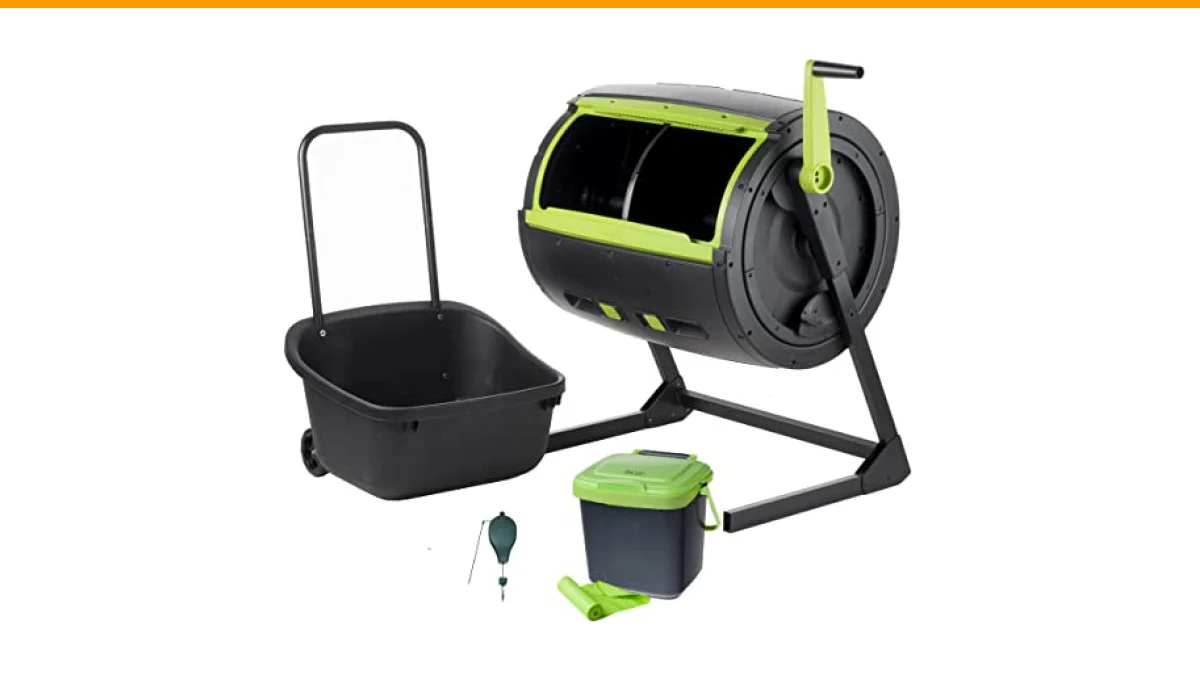
MAZE Two Stage 65 gal Compost Tumbler with Large Double Doors and Open Frame and Comes with Maze Compost Cart, 1.85 Gal Kitchen Caddie Compost Bin, 3 Rolls of Corn Bags and a Retractable Plant Caddie
- Composter: 65 gallon capacity drum; Extra Large double doors, Made from UV high impact plastic; Large open frame underneath to all…
- Cart: 12 gallon capacity; Made from UV high impact plastic Low profile makes it easier to collect and transport compost; Strong an…
- Kitchen Caddie: 1. 85 Gallon Capacity; Made from UV high impact plastic; Wide opening; Lid cover to retain moisture and avoid odor…
This is the complete package for someone who wants to process a serious volume of kitchen and garden waste without buying separate equipment. The MAZE system bundles a 65-gallon tumbler, a 12-gallon wheeled cart, a 1.85-gallon kitchen caddie, 60 compostable corn bags, and a retractable plant caddie. You could start your entire composting operation from one box.
The main drum uses extra-large double doors for loading and unloading, which matters more than you might think. Many tumblers have small hatches that force you to wrestle finished compost out in awkward chunks. The MAZE’s sliding doors open wide enough that you can shovel out the finished product. The geared handle is the standout feature here. It reduces the force needed to rotate the drum, even when it’s packed full of heavy, wet material. Most tumblers get harder to turn as they fill; the gear mechanism keeps the effort manageable.
You’ll need space for this unit. The frame measures 41.3 inches wide by 44.5 inches tall, and the open frame underneath gives you room to position the included cart for unloading. The open design also means you can see when the compost is ready to drop. The included cart is low-profile and rolls easily, so moving finished compost to your garden beds is a one-person job.
The trade-offs are the price and the footprint. This is the most expensive and largest option on this list. If you only generate a small amount of kitchen scraps, a 65-gallon drum will take a long time to fill, and the composting process works best when you add material in batches. You’ll also need a level, open area in your yard to accommodate the wide frame.
- 65-gallon single drum with geared handle for easier turning
- Includes 12-gallon wheeled cart and 1.85-gallon kitchen caddie
- Extra-large double doors with sliding mechanism for access
- Comes with 60 compostable corn bags and a retractable plant caddie
- UV-stabilized plastic body and rust-resistant frame
Best for: A household with a large garden and lots of organic waste that wants a complete, turnkey system with minimal physical effort.
FCMP Outdoor HOTFROG Mobile
2nd Pick
FCMP Outdoor
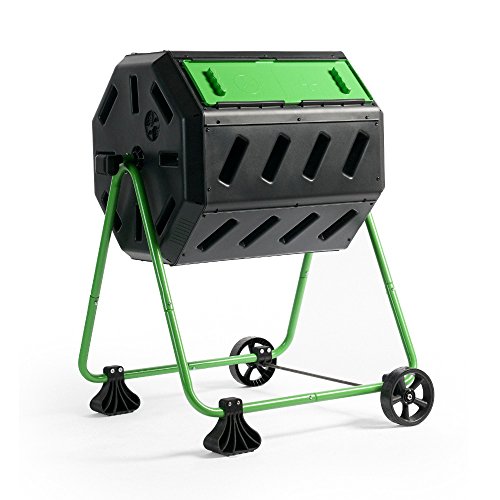
FCMP Outdoor HOTFROG Mobile Dual Chamber Tumbling Composter with Wheels - Outdoor Rotating Garden Compost Bin (HF-IM4000-WK) Black & Green (37-Gallon)
- Tumbling Composter – Avoid digging and mixing your compost pile by hand. The tumbling design makes mixing easy and efficient. Just…
- Easy To Use – Fantastic for beginners! The large openings and removable door make it easy to add scraps/clippings and remove finis…
- Two Composter Chambers Are Better Than One – Two separate sides allow the first side to finish while leaving the second side avail…
The FCMP HOTFROG is the workhorse of the group. This dual-chamber tumbler gives you 37 gallons of total capacity split into two separate sides, which solves the classic problem of a single-bin composter: you can’t add fresh scraps while the current batch is still cooking. With two chambers, you fill one side, let it finish, and start filling the other side. By the time the second side is ready, the first side is done and harvested. The cycle never stops.
The wheel kit is a genuine upgrade over the stationary version of this composter. The frame sits on two wheels with a handle, so you can tip it back and roll it across the yard. That might sound like a small thing, but when you need to move finished compost from the side of the house to the vegetable garden, it saves you from hauling buckets. The wheels are solid plastic, not pneumatic, so they handle firm ground well but will bounce a bit on rough gravel.
The deep fins inside each chamber do double duty. They break up clumps as the drum rotates, and they provide ergonomic handholds on the outside. The door is large and removable, which makes filling and emptying noticeably easier than many competitors. The frame is painted galvanized steel, and the drum is made from 100% post-consumer recycled polypropylene that’s BPA-free and UV-inhibited. It’s built in Canada, and the quality shows in the fit and finish.
You’ll need to be patient with the turning. The instructions recommend 5-6 rotations every 2-3 days, and in hot, sunny conditions with the right mix of greens and browns, compost can finish in as little as two weeks. In cooler weather, expect it to take longer. The 37-gallon total capacity means each chamber holds roughly 18.5 gallons, which is fine for a couple but might feel small for a large family with a big garden.
- Dual 18.5-gallon chambers for continuous batch composting
- Wheel kit with handle and stability feet for mobility
- Deep internal fins break up clumps and improve aeration
- Made from recycled polypropylene with galvanized steel frame
- Large removable door on each chamber for easy access
Best for: Gardeners who want a steady supply of compost and appreciate the convenience of two chambers plus the ability to roll the bin where it’s needed.
VIVOSUN Outdoor Tumbling
3rd Pick

VIVOSUN
VIVOSUN Outdoor Tumbling Composter Dual Rotating Batch Compost Bin, 43 Gallon Black Door
- Twin chambers: Two separate chambers allow one side to finish composting while leaving the other side available to add fresh waste…
- 360⁰ Tumbling Design: The rotating design prevents you from digging or mixing the pile by hand; And the deep fins on eight panels…
- Excellent Aeration: Air vents can make the air fully circulate and will not cause an explosion due to excessive internal pressure;…
VIVOSUN is best known for grow tents and hydroponic gear, but they’ve brought the same engineering mindset to compost tumblers. This 43-gallon dual-chamber model is built for the gardener who wants robust construction and doesn’t mind paying a little more for it. The twin chambers give you the same continuous-composting benefit as the FCMP, but with a larger total volume.
The 360-degree tumbling design means the drum rotates fully around its axis, which mixes the contents more thoroughly than models that only rock back and forth. The eight panels each have deep fins that lift and drop the material as you turn, effectively folding air into the pile. Aeration is critical for aerobic decomposition, and this design does it well. The air vents on the panels also prevent pressure buildup, which can be an issue in sealed drums during hot weather.
The frame is a premium metal construction that’s corrosion-resistant and weather-resistant. This is a bin that should survive several seasons of rain, snow, and sun without rusting through. The plastic body is high-quality polypropylene that won’t warp or crack easily. VIVOSUN also throws in a pair of garden gloves with ABS plastic claws, which is a thoughtful bonus for handling the finished compost.
One limitation is the door design. The doors are functional but not as large as the FCMP’s removable panels, so harvesting can be a bit more tedious. You’ll be reaching in and scooping out compost rather than dumping it out in one go. The wheels are also on the smaller side, so this bin is better suited to flat patios or level lawn areas than bumpy terrain.
- Dual chambers totaling 43 gallons for larger batch capacity
- Full 360-degree rotation with eight finned panels
- Air vents prevent pressure buildup and improve airflow
- Corrosion-resistant metal frame and UV-resistant plastic
- Includes waterproof garden gloves with ABS claws
Best for: A dedicated composter who wants a larger dual-chamber system with a sturdy frame and doesn’t mind a slightly more involved harvest process.
Mantis Back Porch ComposTumbler
4th Pick
Mantis
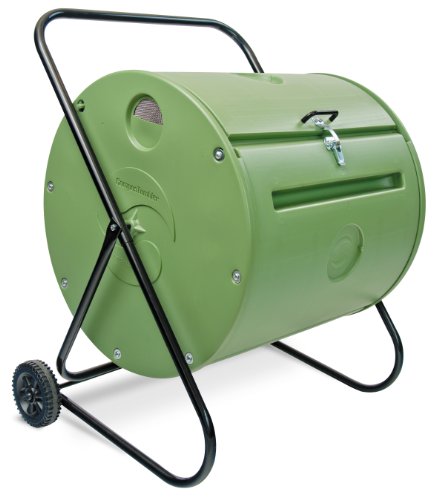
Mantis Back Porch ComposTumbler
- Perfect for Urban Spaces and Small Properties
- Fully Enclosed Composter Design Eliminates Odors and Keeps Animals Out
- ComposTumbler Barrel Features Removable Door for Easy Filling and Emptying
The Mantis ComposTumbler takes a completely different approach. It’s designed specifically for small spaces and urban settings, where a massive tumbling bin on a steel frame simply won’t fit. This is a compact, fully enclosed barrel that sits on a simple stand. The name says it all: it’s meant to live on a back porch or balcony, not in a sprawling backyard.
The fully enclosed design is the key selling point here. Because the barrel is sealed, odors are contained, and animals can’t get in. That’s a huge advantage if you live in an area with raccoons, rats, or curious dogs. The unit has a removable door for filling and emptying, and an air vent at the top allows a continuous flow of oxygen without letting smells escape. Drainage vents at the bottom let excess moisture exit, which prevents the contents from becoming a soggy, anaerobic mess.
Mantis is a respected brand in the gardening world, known for their tillers and cultivators. This composter carries that same reputation for solid, functional design. It’s not flashy, but it does the job without taking up much space. The turning mechanism is straightforward: you grab the barrel and rotate it. There’s no geared handle or complex crank, so you’re using your own muscle, but the compact size means the drum is never so full that it becomes unmanageable.
The main limitation is capacity. The product data doesn’t specify a gallon figure, but this is clearly a smaller unit designed for modest kitchen waste, not massive garden cleanups. If you have a large yard that produces lots of leaves and grass clippings, you’ll outgrow this quickly. It’s also not on wheels in the traditional sense, so moving it around requires lifting the whole unit.
- Compact, fully enclosed design eliminates odors and deters animals
- Removable door for easy filling and emptying
- Top air vent ensures continuous oxygen flow
- Drainage vents release excess moisture
- Ideal for patios, balconies, and small urban lots
Best for: Apartment dwellers and small-yard homeowners who need a discreet, odor-controlled composter that fits in a corner and keeps pests out.
Good Ideas Compost Wizard Jr.
5th Pick
Good Ideas
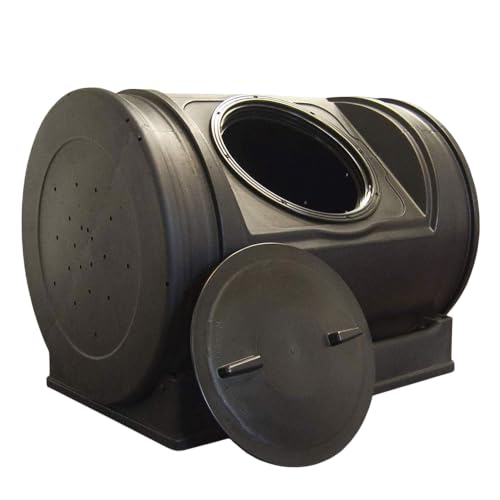
Good Ideas Compost Wizard Jr. Tumbler, 7 Cubic Foot Capacity
- Single Chamber Composter: 50-gallon tumbling chamber provides ample capacity in a compact footprint — simply add kitchen scraps an…
- Large 50-Gallon Capacity: Bin holds 7 cubic feet (50 gallons) total, giving you room to recycle organic food and yard waste effici…
- Convenient Features: Molded handholds allow for a secure grip, doubling as agitators inside the container; Wheeled base allows for…
The Good Ideas Compost Wizard Jr. is the budget-friendly pick that doesn’t skimp on capacity. This single-chamber tumbler holds 50 gallons, which is more than the dual-chamber FCMP and VIVOSUN models. The design is simple: one large black drum on a wheeled base that you rotate using molded handholds. The black exterior absorbs heat, which accelerates the composting process by keeping the interior warm.
The best part about this unit is that it arrives fully assembled. You pull it out of the box, wheel it to your spot, and start adding scraps. That’s a rare convenience in this category, where most tumblers require an afternoon of bolt-tightening and panel-snapping. The wheeled base makes it easy to reposition, and the low profile means you don’t need to reach high to turn it.
The 12-inch twist lids on the end seal securely, locking in heat and moisture. This is a low-maintenance plastic composter that’s safe for pets and children, according to the manufacturer. The molded handholds double as internal agitators, so every time you turn the drum, the fins inside break up clumps and mix oxygen into the pile.
The trade-off is the single-chamber design. You can’t start a new batch while the current one finishes. You’ll need to harvest the finished compost before adding fresh material, which means your composting cycle has natural pauses. The turning effort is also worth noting. With 50 gallons of material inside, the drum gets heavy. The handholds help, but there’s no geared mechanism to reduce the force needed. If you have wrist or back problems, this might be a struggle.
- 50-gallon single-chamber drum holds 7 cubic feet
- Heat-absorbing black exterior speeds up decomposition
- Arrives fully assembled, ready to use immediately
- Molded handholds double as internal agitators
- Wheeled base for easy placement and turning
Best for: Budget-conscious gardeners who want a large-capacity tumbler without assembly hassle and don’t mind managing a single batch at a time.
How We Chose These Products
I evaluated each composter on four criteria: turning effort, build quality, capacity versus physical footprint, and real-world usability. The turning effort is the biggest factor that separates a good tumbler from a frustrating one. A bin that’s impossible to rotate when full is useless, regardless of how well it composts. I looked for geared handles, ergonomic grips, and balanced drum designs that minimize strain.
Build quality matters because these bins live outside year-round. UV rays, rain, and freezing temperatures take a toll on cheap plastic. I prioritized units with UV-stabilized materials, galvanized or powder-coated steel frames, and corrosion-resistant hardware. Assembly complexity was also a factor. Some tumblers arrive in dozens of pieces with flimsy instructions; the Good Ideas model arrives ready to go, which is a genuine advantage.
I also considered the practical realities of using these bins over a full season. Door size affects how easily you can load and harvest. Wheel quality determines whether you can move the bin across grass or gravel. Aeration features influence how often you need to turn the pile and whether it starts to smell. These are the details that don’t show up in product photos but make a huge difference in daily use.
Buying Guide: What Really Matters
Capacity is the first thing to consider, but it needs context. A 65-gallon drum sounds impressive, but if you only produce a few gallons of kitchen waste per week, it will take months to fill, and the material at the bottom will be finished long before the top is ready. Dual-chamber models solve this by letting you fill one side while the other finishes. Think about how much organic waste your household generates and choose accordingly.
Wheel design and frame stability are more important than most people realize. Solid plastic wheels work fine on flat concrete or decking, but they sink into soft grass and get caught on gravel. Pneumatic tires handle rough terrain better but add cost and require maintenance. Look at where you’ll actually use the bin. If you plan to roll it across a lawn, pay attention to wheel diameter and tread. Also check the frame’s stability when the drum is full and unbalanced. A top-heavy bin can tip over when you’re turning it.
Door size and access are the most overlooked features. A small hatch forces you to scoop out finished compost in handfuls. A large door or removable panel lets you dump the contents directly into a wheelbarrow or garden cart. The MAZE system’s sliding doors and the FCMP’s removable panels are both excellent designs. If you have mobility issues or back problems, prioritize a bin with a large opening and a low loading height.
How to Use a Wheeled Composter for Fast, Odor-Free Compost
Start with a balanced mix of greens and browns. Greens include kitchen scraps, grass clippings, and coffee grounds. Browns include dried leaves, straw, and shredded cardboard. Aim for roughly two parts browns to one part greens by volume. Too many greens creates a wet, smelly mess. Too many browns slows the process to a crawl.
Chop your materials before adding them. Smaller pieces decompose faster because they have more surface area for microbes to attack. A 2-inch chunk of carrot takes weeks to break down; a grated carrot takes days. If you’re adding large branches or corn stalks, run them through a chipper or break them up by hand.
Turn the drum every two to three days. The exact frequency depends on the season and the moisture level. In summer, you might need to turn more often to keep the pile aerated. In winter, the process slows dramatically, and you can reduce turning to once a week. The compost is ready when it’s dark, crumbly, and smells like earth. This typically takes two to six months, depending on conditions.
Frequently Asked Questions
Do wheeled compost bins work in freezing winter temperatures?
Composting slows down significantly when the temperature drops below 50°F, and it nearly stops when the pile freezes solid. The black drum of the Good Ideas Compost Wizard helps absorb what little winter sun there is, but you shouldn’t expect finished compost in January. Keep adding materials through the winter, and the pile will resume breaking down in spring when temperatures rise. If you live in a cold climate, consider a model with good insulation or plan to pause your composting during the deepest winter months. For more details, check out our guide on compost bins for cold climates.
How much physical effort does turning a full tumbler actually require?
It varies dramatically by design. A geared handle like the one on the MAZE reduces the force needed by using mechanical advantage. A simple drum with handholds, like the Good Ideas model, requires more muscle, especially when the contents are wet and heavy. The rule of thumb is that a drum should never be filled more than 75% full. The extra space allows material to move and mix, which makes turning easier. If you have joint issues, look for a bin with a geared crank or a lower profile that doesn’t require lifting your arms above shoulder height.
Can I add weeds with seeds or diseased plants to a tumbler?
Most backyard tumblers don’t reach the sustained high temperatures needed to kill weed seeds and pathogens. A stationary pile can heat up to 140°F or more if built correctly, but a small tumbling bin often stays cooler. If you add weed seeds or diseased material, you risk spreading them when you use the finished compost. It’s safer to keep those materials out of your tumbler and dispose of them separately. Stick to kitchen scraps, grass clippings, and healthy garden waste.
Is a wheeled tumbler worth the extra cost compared to a stationary bin?
It depends on your physical situation and your garden layout. If you have mobility limitations or a large property where the compost pile is far from the garden beds, the wheels justify the price. You can roll the finished compost directly to where you need it. If you have a small yard and don’t mind using a wheelbarrow, a stationary bin or a simple compost pile works just as well for a fraction of the cost. The real value of a tumbler is the ease of turning. If you struggle with a pitchfork, the investment is worth it. For beginners, we also have a guide on compost bins for beginners that covers the basics.
Final Verdict: Is a Rolling Composter Worth It?
The short answer is yes, for most home gardeners. A wheeled composter removes the two biggest barriers to successful composting: the physical effort of turning and the inconvenience of moving finished material. The MAZE Two Stage system is the best overall choice if you want a complete package with a geared handle and all the accessories. The FCMP HOTFROG is the best dual-chamber option for continuous use, and the VIVOSUN is a solid alternative with a larger capacity.
For small spaces, the Mantis ComposTumbler is the clear winner, and the Good Ideas Compost Wizard Jr. is the best budget pick that arrives fully assembled. Each of these bins will produce rich, usable compost, but they serve different needs. Consider your waste volume, your physical limits, and your available space before making a decision. If you want a bin that’s easy to move around your yard, also look at our roundup of compost bins for backyard use. The right wheeled composter will pay for itself in reduced fertilizer costs and the satisfaction of turning your kitchen scraps into black gold.


