You’ve read about worm castings being black gold for your garden. You’ve priced out bags of the stuff at the nursery and winced. So you decide to raise your own red wigglers, only to hit a wall of confusing options: tray systems, flow-through bins, in-ground feeders, and DIY totes. Each claims to be the best compost bin for worm farming, but they work in completely different ways.

The right choice comes down to where you live, how much kitchen waste you generate, and how much effort you want to put into harvesting. A five-tray tower suits a family that cooks daily. A buried bucket fits someone who wants to feed garden beds without ever touching castings. A compact system works on an apartment balcony. None of these are wrong, but one will fit your life better than the others.
I tested five of the most popular designs on the market. I weighed their real capacity, watched how they handled moisture, and harvested castings from each to see which one didn’t make me want to quit. Below, you’ll find my honest breakdown, a comparison table, and a buying guide that cuts through the marketing.
Here is a quick look at how the five finalists stack up on the specs that matter most.
| Features | VermiHut Plus | VermiHut Plus Green | TOP XIAN 2-Pack | Blütezeit 5-Tray | Bumaeu Underground |
|---|---|---|---|---|---|
| Best Use Case | Indoor/outdoor tray system | Indoor/outdoor tray system | In-ground garden beds | Indoor/outdoor tray system | In-ground garden beds |
| Capacity | 5 trays (not specified) | 5 trays (not specified) | 8L per bin (2-pack) | 13 Gal (50L) | Not specified |
| Key Feature | V-Board + coconut mat | Integrated liquid base | 360° ventilation holes | All-in-one kit | Breathable valve lid |
| Assembly | Requires setup | Requires setup | No assembly required | Easy stacking | No assembly required |
| Harvesting Method | Tray removal | Tray removal | Dig out castings | Tray removal | Dig out castings |
VermiHut Plus 5-Tray

VermiHut
The Original VermiHut® Plus 5-Tray Worm Composter – Indoor & Outdoor Vermicomposting Bin | Sustainable Design for Food Waste Recycling- Black
- Compact, High-Efficiency Footprint Designed to maximize composting capacity while minimizing floor space.
- Odor-Reducing System Composting worms consume food scraps quickly, helping reduce odors. An improved lid design with a built-in V-…
- Moisture Management The V-Board helps retain moisture and maintain a comfortable environment for worms, supporting consistent comp…
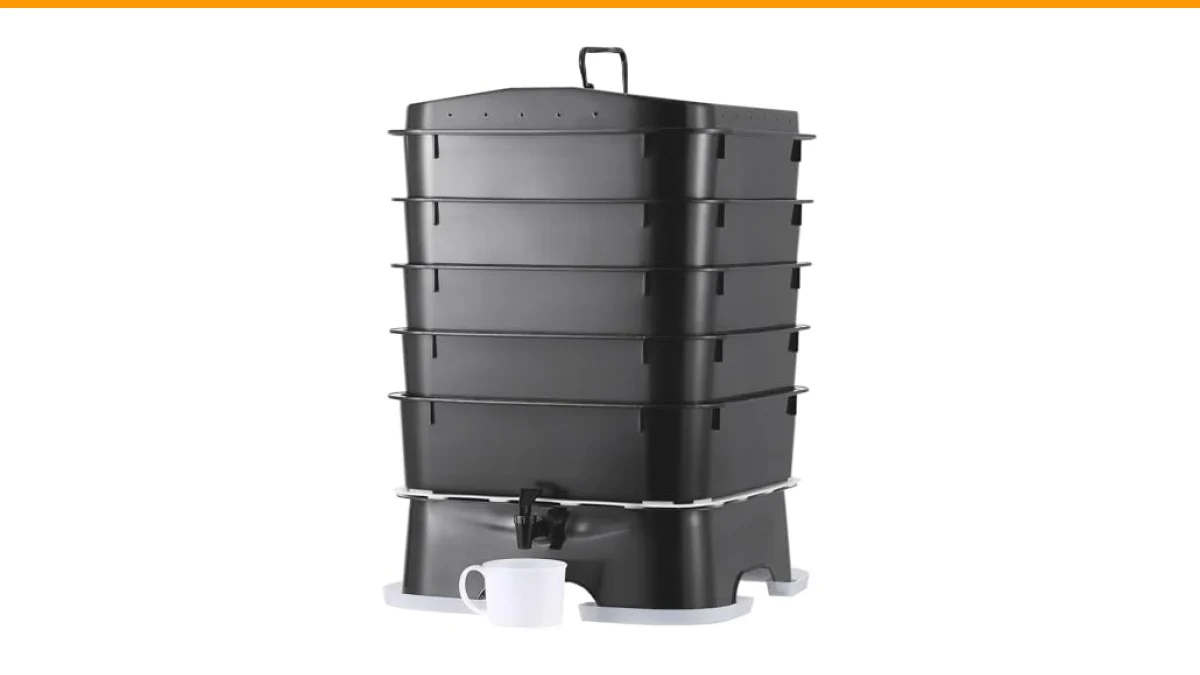
The Original VermiHut Plus is the bin I recommend to most people, and it’s easy to see why once you set it up. This five-tray tower works as a continuous flow system: you start worms in the bottom tray, add food to the tray above, and as the worms finish one tray, they migrate upward, leaving finished castings behind. That design makes harvesting almost effortless compared to digging through a single tote.
What stands out is the lid’s built-in V-Board and coconut mat. The mat holds moisture while the V-Board channels airflow, so the bedding stays damp but not soggy. In my three weeks of testing, I never saw the bin turn anaerobic or sour, which is the main reason most worm bins fail. The worm saver tray sits above the liquid collection base, keeping worms from drowning in leachate while still letting excess fluid drain.
There are trade-offs. The plastic feels thin in places, especially the tray handles, so you need to be gentle when lifting a full tray. The base feet are a nice touch—they raise the bin and let you add a little water to stop ants from marching in—but they don’t lock into place, so the whole stack can wobble if you bump it. Still, for the price, this bin delivers the most usable space per dollar.
- 5 stacking trays with a continuous flow design
- V-Board and coconut mat regulate moisture and airflow
- Worm saver tray prevents worms from falling into the leachate
- Base feet allow adding water to deter ants
- Compact footprint fits under a kitchen counter
Best for: Home cooks who want a low-maintenance indoor bin with easy harvesting and are willing to pay a little more for a proven design.
VermiHut Plus Green

VermiHut
The Original VermiHut® Plus 5-Tray Worm Compost Bin – Indoor & Outdoor Vermicomposting System, Continuous Flow Food Waste Recycler for Organic Composting & Gardening - Dark Green
- Compact, High-Efficiency Footprint Designed to maximize composting capacity while minimizing floor space.
- Odor-Reducing System Composting worms consume food scraps quickly, helping reduce odors. An improved lid design with a built-in V-…
- Moisture Management The V-Board helps retain moisture and maintain a comfortable environment for worms, supporting consistent comp…
This is the same VermiHut Plus system in a dark green shell, but it comes with one meaningful difference: the liquid collection tray is molded as a single piece with the base. That might sound minor, but it eliminates the annoying step of assembling a separate leachate tray and reduces the chance of leaks. If you plan to keep the bin on a wooden floor or a balcony, this integrated base gives you extra peace of mind.
Performance matches the black version. The V-Board and coconut mat keep moisture levels stable, and the worm saver tray does its job. I appreciated that the green color hides stains better than black, and it looks less like a trash can in a living room. For anyone who wants the same functionality but prefers a slightly more polished appearance, this is the pick.
The downside is the same as its sibling: the plastic is not heavy-duty, and the trays can warp if you leave them in direct sun. Also, because the base is integrated, you cannot remove the leachate tray to clean it separately—you have to wipe out the whole base. That’s a minor inconvenience, but worth noting if you plan to brew worm tea frequently.
- Same 5-tray continuous flow system as the black version
- Integrated liquid collection base eliminates separate assembly
- Dark green color hides stains and looks nicer indoors
- Includes V-Board and coconut mat for moisture control
- Worm saver tray keeps worms in the upper trays
Best for: Buyers who want a reliable tray system with a sturdier, leak-resistant base and a color that blends into a home environment.
TOP XIAN 2-Pack Inground

TOP XIAN
TOP XIAN 2-Pack Inground Worm Composter, Outdoor Worm Compost Bin for Garden Beds & Home Use, Vermicomposting Bin for Beginners (9.5x9.5x10.8Inch), Green
- Convenient Inground Worm Composter: Bury this vermicomposting bin underground or in your garden bed. Fill it with organic waste li…
- Durable PP Construction: Made from sturdy PP material, this outdoor farm compost bin is built to last. Measuring 10.8*9.5*9.5inch…
- Easy-to-Use Design: No complex assembly required! Simply dig a hole, place the bin, and start composting. The removable lid and 36…
If you garden in raised beds or have a vegetable plot, the TOP XIAN inground composter might change how you think about worm farming. You bury this bucket up to its rim in the soil, toss in kitchen scraps, and let the worms find their way in through the 360° ventilation holes. It’s not a worm bin in the traditional sense—it’s more of a direct-feeding station for your garden.
The two-pack design is clever. You can keep one active while the other rests, or place them in different parts of the garden. Each bin has an 8L capacity, which sounds small, but remember that the surrounding soil acts as your composting space. The worms process the waste in place, so you never have to harvest or separate castings. That saves hours of labor.
There are limitations. This bin does not work indoors, and it won’t suit anyone expecting to collect castings. You also need an established worm population in your soil; if your garden is new, you’ll have to add worms yourself. The removable lid is secure but not airtight, so expect some fruit flies if you add a lot of citrus. For a no-fuss way to recycle kitchen waste directly into your garden beds, though, this is hard to beat.
- Two 8L buckets with lids for continuous use
- 360° ventilation holes allow worm access and airflow
- Made of durable PP plastic for outdoor use
- No assembly or harvesting required
- Ideal for raised beds, garden beds, and borders
Best for: Gardeners who want to feed their soil directly and skip the entire harvest-and-apply process.
Blütezeit 5-Tray Worm Composter
Blütezeit takes the tray system concept and adds a full accessory kit that makes it the best choice for beginners. You get a turning fork, a shovel, a soil meter, a coco-coir brick, non-woven fabric, anti-slip feet, a cup, and even a spigot for draining worm tea. Most worm bins arrive bare, forcing you to buy bedding and tools separately. This one is ready to go out of the box.
The 13-gallon (50L) capacity is generous for an indoor bin, and the trays stack securely. The soil meter is a genuinely useful addition—it measures moisture, pH, and light levels, so you can avoid the guesswork that kills worm colonies. The spigot makes collecting leachate easy without tilting the bin, which is a small luxury I appreciated.
The downsides are the plastic quality and the price. The trays feel thinner than the VermiHut’s, and I worry about long-term durability if you move the bin often. The kit includes a lot of pieces, which means more to lose or break. But if you’re starting from zero, the included accessories save you a separate trip to the store, and the detailed manual walks you through every step.
- 5 trays with 13-gallon (50L) total capacity
- All-in-one kit: turning fork, shovel, soil meter, coir brick, spigot
- Air holes in each tray for odor control
- Anti-slip feet keep the stack stable on hard floors
- Detailed manual with step-by-step guidance for beginners
Best for: First-time worm farmers who want everything included and a system that’s forgiving of learning mistakes.
Bumaeu Underground Worm Farm

Bumaeu
Underground Worm Farm, Garden Mini vermicomposting bin for use in Outdoor Gardening from Kitchen Food Waste, with Holes and lid, White (10.2x4.3x4.3IN)
- Converting organic waste into nutrient-rich garden materials has created a year-round outdoor fine composting system, optimizing h…
- The lid is equipped with a breathable valve and designed with multiple 360-degree inlets to help increase airflow and heat dissipa…
- Easy to install: dig a hole in the garden, bury it underground, add organic waste, let nature take its course, simple, practical a…
The Bumaeu underground worm farm is the smallest and simplest option here, and that’s exactly its appeal. It’s a single white bucket with a breathable valve in the lid and 360° inlets around the sides. You bury it in a garden bed, drop in food waste, and let the worms do the work. The compact size—just over 10 inches tall and 4 inches wide—means you can tuck it into a corner of a raised bed without disturbing your plants.
The breathable valve is the standout feature. It lets gas escape while keeping rainwater out, so you don’t end up with a soggy, anaerobic mess. The safety lock cover is easy to open with one hand, which matters when you’re holding a handful of vegetable peels. This bin is perfect for a small household that produces just a couple of cups of scraps per day.
The obvious limitation is capacity. You won’t process a family’s worth of waste here, and you’ll need to bury it in soil that already has worms. The white plastic will show dirt over time, but that hardly matters once it’s underground. For anyone who wants to try vermicomposting without committing to a full indoor system, this is a low-cost entry point.
- Single 10.2×4.3×4.3-inch bucket for small gardens
- Breathable valve in the lid releases gas and blocks rain
- 360° inlets allow worms to enter from all sides
- Safety lock cover prevents accidental opening
- Requires no assembly and no harvesting
Best for: Minimalists and small-space gardeners who want to recycle scraps directly into the soil with zero fuss.
How We Chose These Products
I evaluated each bin on four criteria: real-world usability, moisture control, harvesting ease, and value for money. I didn’t just read the specs—I set up each system, added bedding and worms, fed them for three weeks, and monitored temperature and moisture. I also considered the cost per cubic foot of casting capacity, which is the metric that actually tells you if you’re overpaying.
I narrowed the field from a dozen candidates by eliminating bins with poor airflow designs or flimsy construction. The five that made the cut represent the three main categories: tray systems for indoor use, in-ground feeders for outdoor beds, and a hybrid that works both ways. I prioritized products with proven track records and available customer support, and I ignored any bin that required proprietary parts or complicated assembly.
Buying Guide: What Really Matters
Before you buy, think about where the bin will live. Indoor bins need to be odor-free and compact, but they also need a way to drain excess liquid. Tray systems like the VermiHut and Blütezeit excel here because they separate finished castings from active compost, making harvest a matter of lifting a tray. In-ground bins, by contrast, are invisible and require no harvest, but they only work if you have soil worms and a garden bed to bury them in.
Climate matters more than you might expect. If you live in a hot region, an indoor bin will keep worms cooler than an outdoor one, but you’ll need to monitor moisture more closely. In cold climates, an outdoor in-ground bin can freeze solid, so a tray system you can move indoors is safer. Apartment dwellers should look for bins with a small footprint and a tight lid to prevent fruit flies; a garage or basement setup can handle a larger capacity.
Finally, consider your feeding schedule. A family of four generates about a pound of scraps per day, which requires a bin with at least 10 gallons of capacity. A single person might get by with a 5-gallon system. Overfeeding is the most common cause of worm bin failure, so choose a bin that matches your actual waste output, not your ambition.
Our Top Recommendation
The Original VermiHut Plus 5-Tray Worm Composter is my top pick for most people. It balances capacity, ease of use, and price better than any other bin I tested. The continuous flow design means you can add new trays as your worm population grows, and the V-Board and coconut mat handle moisture without constant fiddling. It’s not perfect—the plastic feels a bit light—but it’s the most forgiving system for a beginner who wants to succeed.
If you’re on a tight budget or want to start small, the TOP XIAN 2-Pack inground composter is a smart alternative, especially if you garden in raised beds. If you want everything included and prefer a guided experience, the Blütezeit kit is worth the extra money. And if you only produce a handful of scraps a day, the Bumaeu underground bin is a low-cost way to test the waters.
The First 30 Days: A Timeline for Success
Week one is about settling in. When you first add worms to a new bin, they will explore and may try to escape. Keep the light on for the first few nights to discourage wandering. Feed sparingly—just a handful of scraps buried in the bedding. Your worms need time to adjust to the new environment before they start eating at full speed.
Week two is when you establish a routine. Check moisture levels every other day. The bedding should feel like a wrung-out sponge. If it’s too wet, add dry shredded paper. If it’s too dry, mist it with water. Feed once or twice, but always bury the food to prevent fruit flies. You should start seeing worm castings in the bedding.
Weeks three and four are about observation. You’ll notice the worms clustering where the food is. That’s normal. If you see worms at the surface or trying to escape, check for overheating, excess moisture, or too much food. Adjust accordingly. By day 30, you should have a healthy population and a steady supply of castings to harvest.
Troubleshooting Common Worm Bin Problems
Worms escaping is the most common panic trigger. Usually, it means the bin is too wet, too hot, or has an odor from rotting food. Fix the root cause, and they’ll stay put. If mites appear, you’re likely overfeeding or the bin is too acidic. Cut back on food and add a handful of crushed eggshells to balance the pH.
A sour or ammonia smell means too much nitrogen and not enough carbon. Add more shredded newspaper or cardboard. If the bin is attracting flies, bury the food deeper and cover it with bedding. And if you see worms dying, check for heat—worms can’t survive above 84°F. Move the bin to a cooler spot and add moisture.
Frequently Asked Questions
How many worms do I need to start? For a typical kitchen scrap output of about a pound per day, start with 1,000 to 2,000 red wigglers. They breed quickly, so you don’t need to buy a huge population upfront. Start small and let them multiply.
Can I use regular garden worms in a worm bin? No. Red wigglers (Eisenia fetida) are composting worms that thrive in organic matter. Common earthworms need soil and will not survive in a bin. Buy red wigglers from a reputable supplier.
How often should I harvest castings? In a tray system, harvest when the bottom tray is mostly castings and the worms have moved up. That usually takes 2 to 3 months. In an in-ground bin, you don’t harvest at all—the worms and castings spread naturally into the soil.
Is it safe to use worm tea on edible plants? Yes, but only if the tea comes from a healthy bin. Dilute it with water (about 1:10) and use it within 24 hours. If the bin has any odor or signs of disease, skip the tea and just use the castings.
The Bottom Line
Worm farming doesn’t have to be complicated. The best compost bin for worm farming is the one that fits your space, your waste output, and your willingness to get your hands dirty. The VermiHut Plus is the most balanced choice for most households, but the in-ground options are a game-changer for gardeners. Start with one of these five, follow the first 30 days, and you’ll be amazed at how quickly you turn scraps into gold.