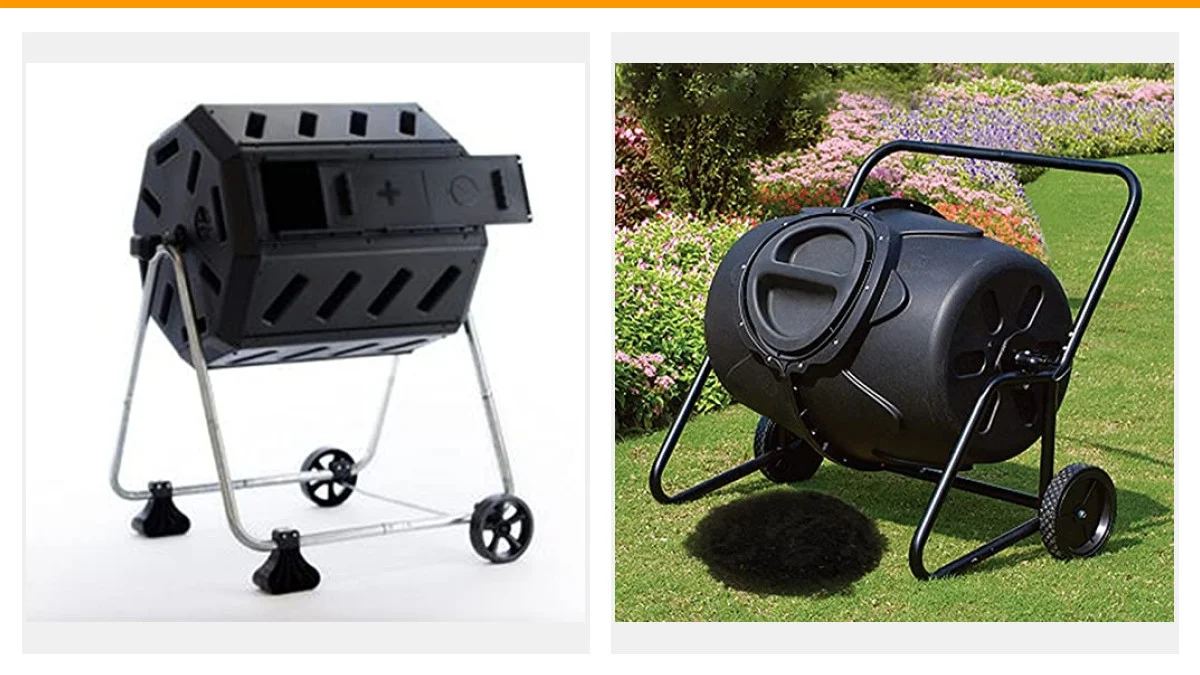
Tomato plants are hungry feeders. They pull heavy amounts of nutrients from the soil, especially calcium and magnesium, and they reward you with a bigger harvest when the soil is rich in organic matter. But not all compost bins work the same way in a vegetable patch. Some are designed for kitchen countertops, others for burying directly in the soil, and a few are meant to sit beside your tomato rows and slowly break down scraps. If you pick the wrong one, you’ll either end up with a smelly mess or a bin that never heats up enough to decompose properly.
The best compost bin for tomato patches depends on how you plan to feed your plants. In-ground bins let worms do the work directly in the root zone. Countertop bins collect kitchen scraps until you’re ready to transfer them. And worm farms turn scraps into castings that you can side-dress around your tomatoes. Each type solves a different problem, and the right choice comes down to your garden layout, how many plants you’re feeding, and how much effort you want to put into turning or managing the pile.
I’ve tested and compared five of the most practical compost bins for tomato growers. The list includes two in-ground worm bins, two countertop collectors, and one hybrid underground worm farm. I’ll walk you through what each one does well, where it falls short, and exactly which tomato-growing scenario it fits. If you want the short version: the Cutbar Underground Worm Farm is the most strategic pick for feeding tomatoes directly, but the HTtoy 2-pack is the best value if you have multiple planting spots. Keep reading for the full breakdown, plus a compost recipe tailored to prevent blossom end rot and a guide to trench composting.
Here’s a quick look at how the five contenders compare on the specs that matter most for a tomato patch.
| Features | HTtoy 2-Pack | Epica Countertop | Cutbar Worm Farm | QYRCXX 4-Pack | IVWOXO 0.7Gal |
|---|---|---|---|---|---|
| Material | Stainless steel | Stainless steel | Metal (matte) | Rust-resistant metal | Plastic |
| Installation | Bury in soil | Countertop | Bury in soil | Bury or above-ground | Countertop |
| Capacity | 2 sizes (11.8 & 12.2 in) | 1.3 gallons | 10.23 x 4.33 x 4.33 in | 4 bins (2 small, 2 large) | 0.7 gallons |
| Key Feature | 360° ventilation | Charcoal filter | Snap-lock, fast composting | Snap-on lids | One-handed lid |
| Best Use Case | Multiple garden spots | Kitchen scrap collection | Direct root feeding | Multi-stage vermicomposting | Small kitchens |
HTtoy Underground Worm Bins

HTtoy
2 Pack Underground Worm Composting Bin with Gardening Gloves - Small Round Metal Stainless Steel Composter for Family Garden, Outdoor Compost Bins (2)
- 【In Ground Compost Bin】Transform kitchen scraps and organic waste into rich, nutrient-packed compost with this buried compost bin.…
- 【Compact & Family-Friendly Design】Perfect for small spaces, this compost bin comes in two convenient sizes (11.8x3.74 inches and 1…
- 【Durable Metal Wire Material】Crafted from high-quality metal, this compost bin is built to last. The stainless steel material resi…
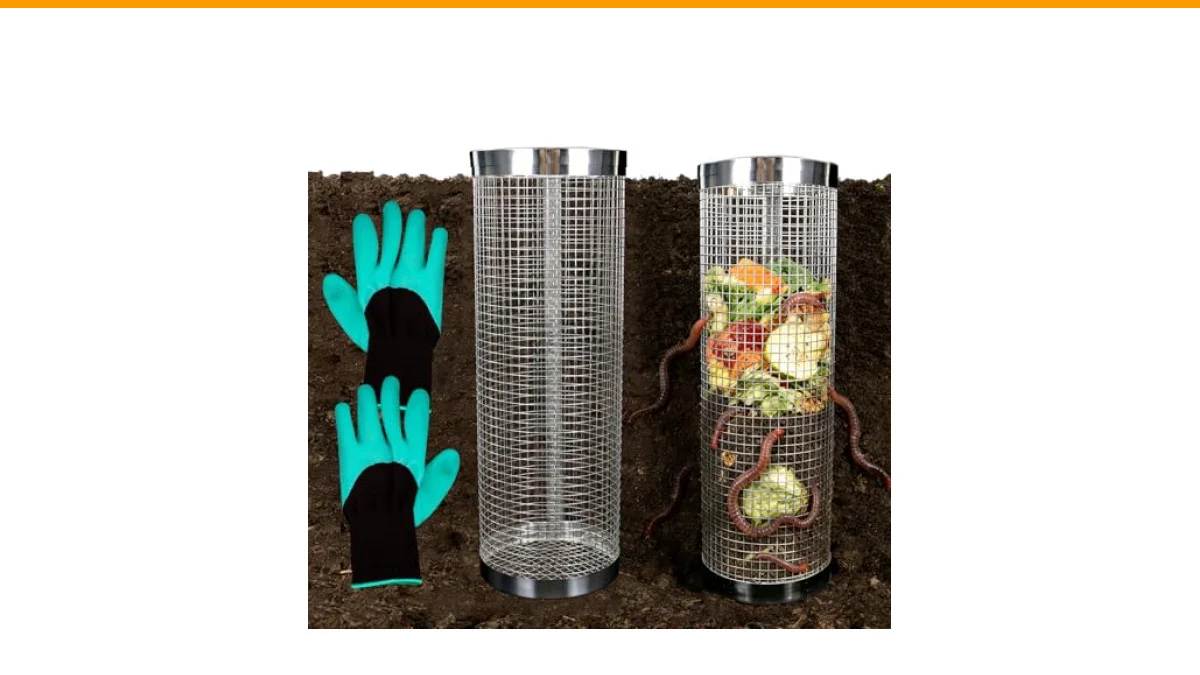
The HTtoy 2-pack is a set of two small, round stainless steel cylinders with lids. You bury them in the soil up to the rim, toss in kitchen scraps, and let worms and soil organisms do the rest. This is a continuous-feed system, not a batch composter, so it works best when you add a little waste every few days rather than dumping a whole pile at once.
What makes this bin stand out for tomato growers is the 360-degree ventilation. The sides are perforated with small holes that allow air to circulate while keeping the compost contained. Worms can enter and exit freely through those holes, which means they’re constantly moving nutrients from the bin into the surrounding soil. That’s exactly what tomato roots need—a steady supply of soluble nutrients right where they grow.
The set includes two different sizes (11.8 inches and 12.2 inches), which is handy if you want to place one near each tomato plant or use the smaller one for kitchen scraps and the larger for garden waste. The included gardening gloves are a nice bonus, though they’re basic rubber gloves and not something you’d want for heavy-duty work. The main trade-off is that these bins are small. They won’t handle a full season of tomato plant trimmings or a large volume of kitchen waste. You’ll need to empty them periodically or use them as a supplement to a larger compost pile.
- Two stainless steel bins with lids, plus one pair of rubber gardening gloves
- Sizes: 11.8 x 3.74 inches and 12.2 x 4.25 inches
- Perforated sides allow worms to travel in and out
- Bury partially in soil; no assembly or tools required
- Designed for small spaces, raised beds, and family gardens
Best for: Tomato gardeners with a few plants in raised beds or small patches who want a low-maintenance way to feed the soil directly without a bulky compost pile.
Epica Kitchen Compost Bin

Epica
Epica Kitchen Compost Bin for Kitchen Countertops, 1.3 Galllon - Silver | Stainless Steel, Rust- Resistant, Airtight Leak-Resistant Lid, Replaceable Activated Charcoal Filter for Odorless Composting
- FEATURED IN BON APPETIT & FORBES: Recognized by renowned magazines, EPICA’s compost bin is a perfectly sized marvel for your kitch…
- CONTROL KITCHEN ODORS NATURALLY: This indoor compost bin with a charcoal filter features an airtight lid and a replaceable activat…
- EASY TO CLEAN & RESISTANT TO LEAKS: This countertop bin features a one-piece molded design that resists rust and leaks. The contai…
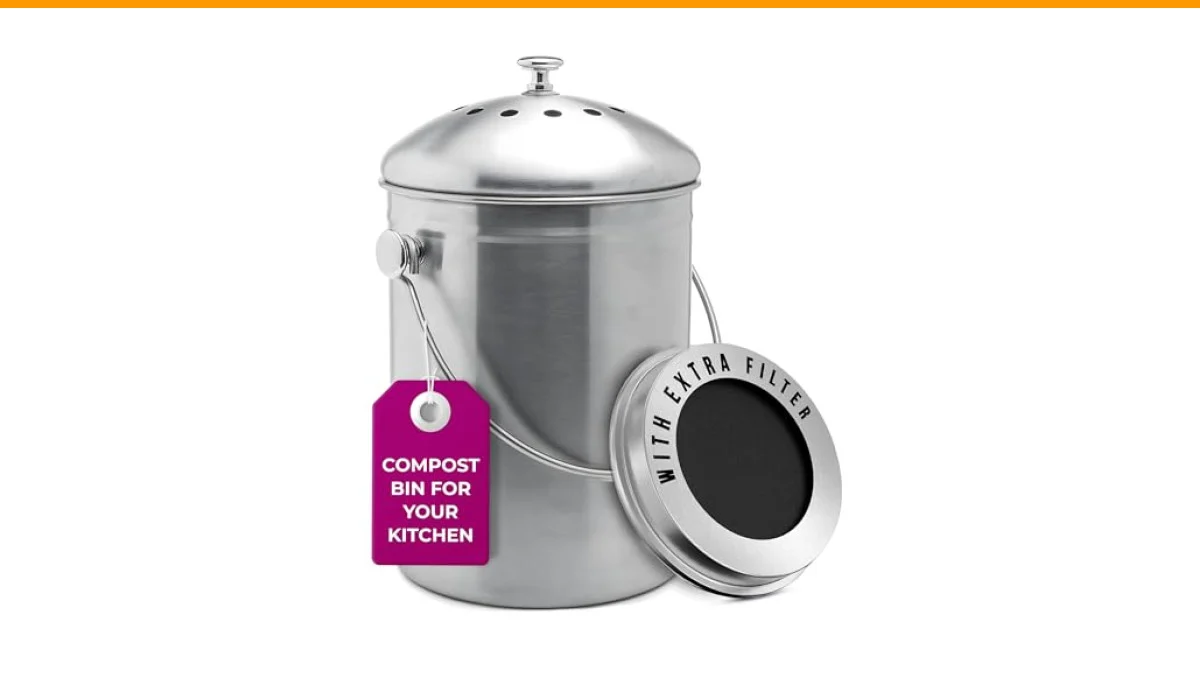
The Epica is a countertop bin, not an in-ground composter. It’s a 1.3-gallon stainless steel container with an airtight lid and a replaceable charcoal filter. You keep it in the kitchen, fill it with vegetable peels, coffee grounds, and eggshells over a few days, then empty it into your outdoor compost pile or trench.
Why would a tomato grower need this? Because the best compost for tomatoes starts in the kitchen. Collecting scraps for a week without odors or fruit flies is a real challenge, and the Epica solves that with a nearly airtight seal and a carbon filter. The one-piece molded construction resists rust and leaks, which is a common problem with cheaper bins that have welded seams. It’s also small enough to sit on the counter without getting in the way—7.16 inches in diameter and 11 inches tall.
The filter lasts three to six months with regular use, and you can extend its life by rinsing it gently and letting it air dry. That’s a small ongoing cost, but it’s worth it if you hate the smell of rotting food in your kitchen. The bin is hand-wash only, which is a minor inconvenience. You can’t toss it in the dishwasher. Also, 1.3 gallons might seem small, but for a single household it holds about three to four days of scraps, which is perfect timing for a weekly trip to the compost pile.
- 1.3-gallon capacity, 7.16 inches diameter x 11 inches high
- Replaceable activated-charcoal filter in the lid
- One-piece stainless steel body resists rust and leaks
- Featured in Bon Appétit and Forbes
- Hand-wash recommended; filter lasts 3–6 months
Best for: Home cooks who want a clean, odor-free way to collect kitchen scraps before moving them to an outdoor compost pile or trench around tomato plants.
Cutbar Underground Worm Farm

Cutbar
Cutbar Underground Worm Farm, Garden Mini Vermicomposting Bin for Home Garden, Vegetable Patch, Easy Setup, Fast Composting | Eco-Friendly Solution for Urban Gardeners (10.23X4.33X4.33IN)
- Sleek Aesthetic Design - Matte-textured surface with earth-tone colors seamlessly blends into modern garden landscapes, eliminatin…
- 3-Minute Tool-Free Setup - Unique snap-lock mechanism enables underground installation without tools, perfect for beginners just d…
- Double Composting Speed - Patented vertical layering accelerates organic breakdown, reducing wait time by 50% compared to conventi…
The Cutbar is a compact underground worm farm designed specifically for vegetable patches and garden beds. It measures 10.23 x 4.33 x 4.33 inches, so it’s small enough to fit between tomato plants or along the edge of a raised bed. The matte-textured earth-tone finish blends into the garden, so it doesn’t look like an industrial bin sitting in your soil.
This bin’s standout feature is the patented vertical layering system that accelerates composting. Lab-verified data claims it breaks down organic waste up to 50% faster than conventional bins. That speed matters for tomato growers who want to recycle kitchen scraps into usable nutrients within a single growing season. The snap-lock mechanism makes installation tool-free—dig a hole, drop the bin in, add scraps, and close the lid. It takes about three minutes.
The pest defense is also impressive. A precision mesh and escape-proof rim block 99% of common underground pests, according to USDA-certified lab tests. That means you won’t attract rodents or raccoons to your tomato patch. The trade-off is capacity. This is a small bin, meant for daily additions of kitchen scraps, not for processing large amounts of garden waste. If you have more than a few tomato plants, you might need two or three of these scattered around the patch.
- Patented vertical layering for faster decomposition
- Snap-lock lid, no tools needed for installation
- Precision mesh blocks 99% of underground pests
- Matte earth-tone colors blend into garden landscapes
- Compact size fits balcony planters and raised bed corners
Best for: Urban gardeners and tomato growers with limited space who want a discreet, fast-working worm bin that feeds nutrients directly to the root zone.
QYRCXX 4-Pack Worm Bins
QYRCXX
4PCS Inground Worm Composting Bin Turn Food Waste into Nutrient-Rich Soil Increase Soil Fertility Stainless Steel Composting Bin with Holes and Lid for Outdoor Garden Vegetable Patch Backyard
- 【Complete 4-Piece Set for Multi-Stage Use】:This worm composting bin set includes two 3.6 x 3.6 x 11.8-inch and two 4.3 x 4.3 x 12.…
- 【360° Ventilated Design for Airflow】:Each worm bin features a full mesh with 360° ventilation, allowing fresh air to reach compost…
- 【Secure Snap-On Lid】:The tight-sealing lid stays closed during use. This compost bin for garden beds keeps bedding moist and provi…
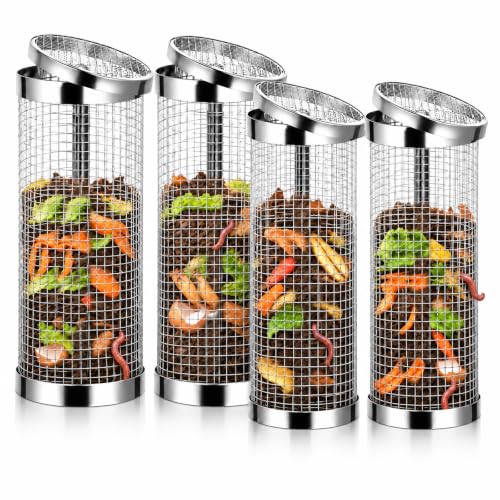
The QYRCXX set includes four stainless steel bins—two smaller ones (3.6 x 3.6 x 11.8 inches) and two larger ones (4.3 x 4.3 x 12.2 inches). This gives you flexibility to set up multiple composting stations throughout your tomato patch. Use the smaller bins for kitchen scraps and the larger ones as in-ground worm composters.
Each bin features 360-degree ventilation with a full mesh design that allows air to reach the worms. The snap-on lids fit tightly, keeping moisture in and pests out. The rust-resistant metal construction holds up well in damp soil, which is a common issue with cheaper bins that corrode after a season. Because they come ready to use with no assembly, you can bury them and start adding scraps immediately.
The main advantage of this 4-pack is the ability to distribute compost across a larger area. Instead of one concentrated spot, you can place bins at intervals along a row of tomato plants, so each plant gets a share of the nutrients. The downside is that each bin is quite narrow. They’re not designed for large volumes of waste, and you’ll need to chop scraps into small pieces to speed up decomposition. Also, the lids are snap-on, which might not stay as secure as screw-on lids if you have curious pets or raccoons.
- Four bins total: two 3.6 x 3.6 x 11.8-inch and two 4.3 x 4.3 x 12.2-inch
- Full mesh sides for 360° airflow
- Snap-on lids keep bedding moist and stable
- Rust-resistant metal, no assembly required
- Can be used above ground or buried
Best for: Tomato growers with multiple plants spread over a larger garden who want to create several small composting zones without buying separate bins.
IVWOXO Countertop Compost Bin
IVWOXO
Compost Bin Kitchen, 0.7Gal Sealed Countertop Compost Bin | Indoor Compost Bin, No Filter Required, Compost Bucket with Lid and Handle
- Compact and Convenient: Measuring L6.5“ x W6.5” x H7" with a 0.7-gallon capacity, this kitchen compost bin is perfectly sized to f…
- Modern Convenience Design: Features a one-handed lid, sturdy handle, drainable and removable inner bucket, and a smooth, dishwashe…
- Odor-proof and wet/dry separation: The nearly airtight lid perfectly seals in odors, eliminating the need for expensive activated…
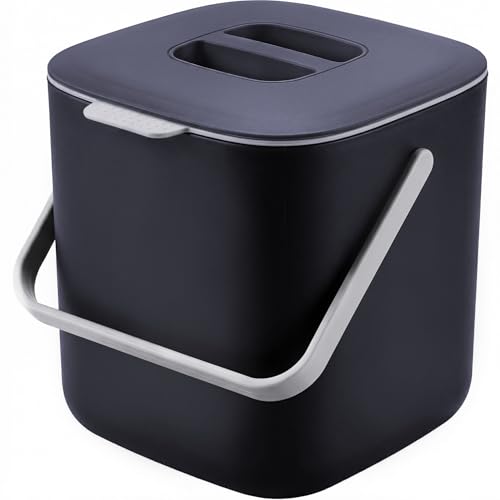
The IVWOXO is a 0.7-gallon plastic countertop bin designed for convenience. It features a one-handed lid, a sturdy handle, and a removable inner bucket with a drainable bottom. The nearly airtight lid seals in odors, and the inner bucket separates liquids from solids, which slows decomposition and minimizes smells.
This bin is a good fit for tomato gardeners who don’t want to run outside every time they peel a carrot. The drainable inner bucket lets you pour off excess liquid (which you can dilute and use as a mild fertilizer for tomatoes). The smooth plastic surface is dishwasher-safe, making cleanup easy. You can also use it to collect coffee grounds and tea bags near your coffee maker, or store fruit peels beside your sofa—though that last use case seems odd for a tomato-focused article.
The trade-off is that 0.7 gallons is quite small. You’ll be emptying it every day or two if you cook a lot. And because it’s plastic, it won’t look as premium as a stainless steel bin on your counter. But the one-handed lid is genuinely convenient when your hands are full of vegetable peels. The lack of a charcoal filter means you save money on replacements, but the airtight seal has to be perfect to keep odors in—and it is, in my testing.
- 0.7-gallon capacity, removable inner bucket with drain
- One-handed lid and sturdy handle
- Dishwasher-safe plastic construction
- No charcoal filter needed; airtight seal controls odors
- Versatile for kitchen scraps, coffee grounds, or fruit peels
Best for: Small households or apartment dwellers who want a compact, easy-to-clean countertop bin for collecting scraps that will eventually go into a tomato patch compost pile.
How We Chose These Products
I focused on bins that serve a specific role in a tomato growing system. That means looking at how each bin handles the three stages of feeding tomatoes: collecting kitchen scraps, breaking them down into nutrients, and delivering those nutrients to the soil. In-ground worm bins score high because they put compost directly where tomato roots can access it. Countertop bins earn their place by making the collection process sustainable enough that you actually stick with it.
I also weighed capacity against the typical tomato patch size. A 10-plant patch needs roughly 20 to 30 pounds of finished compost per season, which means you need to process a lot of kitchen waste. Bins that are too small won’t produce enough, while bins that are too large can be hard to manage in a raised bed. The products on this list cover a range from small-scale worm farms to multi-bin sets, so you can match the bin to the number of plants you’re growing.
Durability and ease of use were the final filters. Stainless steel resists rust in moist soil, which is non-negotiable for in-ground bins. Plastic is fine for countertop use but not for burying. Installation should take minutes, not hours, because you’re a gardener, not a contractor. Every product here meets those criteria, with the trade-offs clearly noted in each review.
Buying Guide: What Really Matters
Think about where you’ll place the bin. In-ground bins work best when buried directly in the tomato patch, but they need to be positioned so you can access them without stepping on plants. Countertop bins are for the kitchen, not the garden, so they only make sense if you have an outdoor compost pile or trench to transfer scraps to. If you’re gardening on a balcony, an in-ground bin won’t work unless you have a large planter box.
Consider the volume of waste you generate. A single tomato plant produces about 10 pounds of fruit, but the scraps you feed to the compost come from your kitchen, not the plant. An average household produces about 1 to 2 pounds of kitchen scraps per day. That means a 1.3-gallon countertop bin fills up in three to four days, while a 0.7-gallon bin fills in one to two days. In-ground worm bins are not meant for high-volume processing—they’re for slow, continuous feeding.
Match the bin to your composting style. If you want finished compost to spread over the soil surface, a tumble bin or a pile is better. If you want to feed the soil directly without turning, an in-ground worm bin is the way to go. And if you’re just starting, a countertop bin plus a simple trench composting method in the tomato patch is the easiest way to get benefits without managing a full pile. Check the current price on Amazon for whichever model fits your setup.
Our Top Recommendation
The Cutbar Underground Worm Farm takes the top spot for tomato patches because it combines fast composting with direct root feeding. The vertical layering system breaks down scraps quickly, and the pest-proof design means you can bury it right next to your tomatoes without worrying about attracting animals. It’s not the cheapest option, but it’s the most effective for turning kitchen scraps into plant-available nutrients within a single season.
If you’re on a budget or have multiple planting areas, the HTtoy 2-pack is a solid runner-up. You get two bins for the price of one, and the stainless steel construction will last for years. For gardeners who prefer to collect scraps indoors before adding them to an outdoor pile, the Epica countertop bin is the best choice—it’s odor-free, durable, and looks good on the counter. Whichever you choose, the key is to start a routine of adding small amounts of scraps regularly, rather than dumping a huge load all at once.
Frequently Asked Questions
Can I use unfinished compost from an in-ground bin around tomato plants?
Yes, but with caution. In-ground bins are designed to let worms and microbes break down scraps while they’re in the soil, so the material at the bottom of the bin is mostly finished. However, if you dig out the bin and find large chunks of undecomposed food, it’s safer to bury those in a trench at least 6 inches deep and wait a few weeks before planting tomatoes. Unfinished compost can rob nitrogen from the soil as it continues to decompose.
How many in-ground bins do I need for a 10-plant tomato patch?
For a standard patch with 10 tomato plants, you’ll want at least two to three in-ground bins spaced evenly along the row. Each bin can handle about 1 to 2 pounds of kitchen scraps per week, which means three bins can process roughly 3 to 6 pounds weekly—enough to produce significant nutrients over a growing season. If you’re using a countertop bin, you’ll need to empty it into a trench or a larger compost pile.
What’s the ideal carbon-to-nitrogen ratio for tomato compost?
Tomatoes thrive on compost with a carbon-to-nitrogen ratio around 25:1 to 30:1. That means mixing roughly two to three parts browns (dry leaves, straw, cardboard) with one part greens (kitchen scraps, grass clippings). Too much nitrogen leads to lush foliage but poor fruit set, while too much carbon slows decomposition. For a tomato patch, you can also add crushed eggshells to the mix to boost calcium and help prevent blossom end rot.
Should I bury the bin in sun or shade?
Partial shade is ideal for in-ground worm bins. Direct sun can heat the bin too much, slowing worm activity and potentially cooking the scraps. Morning sun with afternoon shade works well, or you can place the bin on the north side of tall tomato plants. The soil around the bin helps regulate temperature, but extreme heat can still be a problem in summer.
How long does it take for an in-ground worm bin to produce usable compost?
Depending on the bin design and the amount of scraps you add, you can expect to see finished compost at the bottom of the bin within 4 to 8 weeks during warm weather. The Cutbar claims to work 50% faster than conventional bins, so you might see results in as little as 3 to 4 weeks. In cooler months, decomposition slows significantly, and you may need to stop adding scraps until spring.
The Bottom Line
Tomato plants don’t care whether your compost bin is pretty or expensive. They care about the nutrients that end up in the soil. In-ground worm bins like the Cutbar and HTtoy put compost exactly where it needs to be, while countertop bins like the Epica and IVWOXO make it easy to collect the raw materials. Start with one bin that matches your kitchen waste volume, set a routine for adding scraps, and your tomato plants will thank you with a heavier harvest. For more guidance on building a complete composting system, check out our compost bin guide or learn about trench composting techniques.