
You deadhead the roses, snip the spent hydrangeas, and strip the lower leaves off every stem before arranging. Ten minutes later, your counter is buried in green debris, and you’re left wondering where it all goes. Tossing it in the trash feels wasteful, but dumping woody stems and diseased foliage into a backyard pile can create more problems than it solves.
Flower waste is different from kitchen scraps. Thick stems break down slowly, seed heads can sprout weeds, and mildew-covered leaves can infect next season’s crop if your compost never gets hot enough. The right bin manages those challenges. It holds enough volume, allows proper aeration, and either contains odors indoors or reaches temperatures outdoors that kill pathogens.
This guide covers five bins that handle flower arranging waste well, from a 1.3-gallon countertop bucket for daily deadheading to a 246-gallon outdoor composter for serious flower farmers. Each pick solves a specific problem. You’ll also find a comparison table, a buying guide, and answers to the questions florists actually ask.
Here is a quick comparison of the five products reviewed in this article:
| Features | Utopia Kitchen | OXO Easy-Clean | Epica Stainless | Geobin 246 | KIBAGA Beige |
|---|---|---|---|---|---|
| Material | Stainless steel | Plastic (charcoal) | Stainless steel | Flexible plastic | Powder-coated steel |
| Capacity | 1.3 gallons | 1.75 gallons | 1.3 gallons | Up to 246 gallons | 1.1 gallons |
| Odor Control | Charcoal filter | Soft-close lid | Airtight + charcoal | Open-air ventilation | Charcoal filter |
| Best Use Case | Indoor scraps | Busy kitchen | Indoor aesthetics | Large outdoor piles | Stylish countertop |
| Unique Feature | Compact cylinder | Stay-open lid | One-piece molded | Expandable, no tools | Wooden handle |
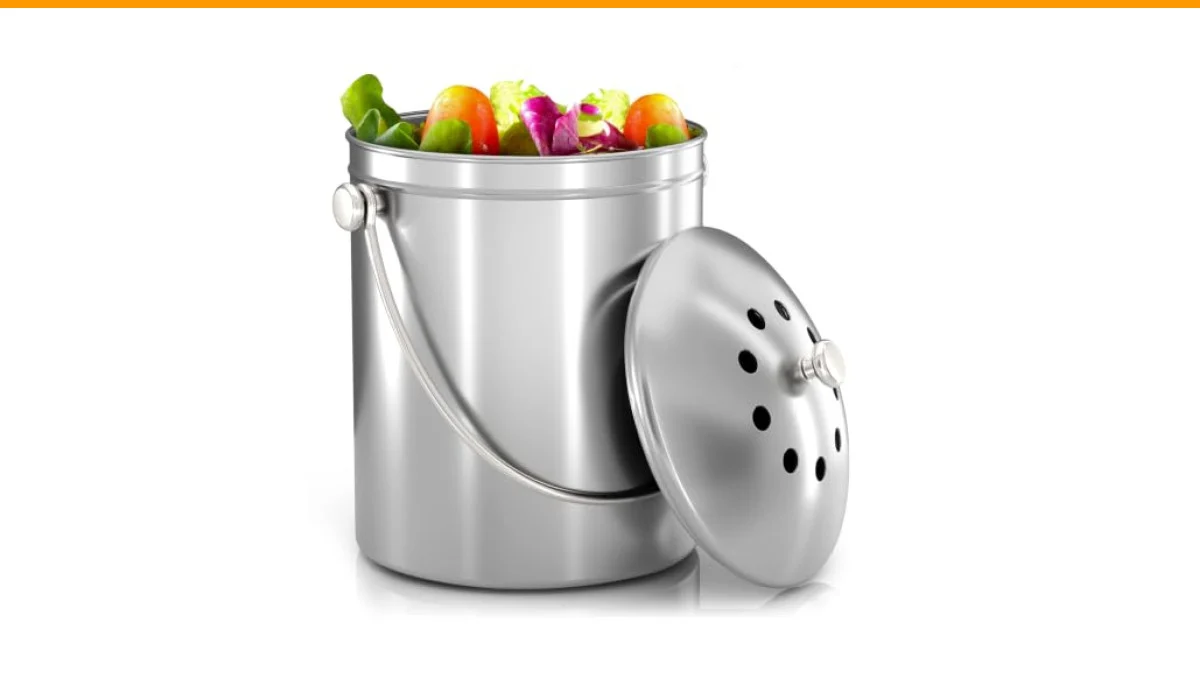
Utopia Kitchen Countertop
The Utopia Kitchen Countertop Compost Bin is a 1.3-gallon stainless steel cylinder that fits on a counter without dominating the space. It measures about 7.2 inches wide and 11.2 inches tall, so it slides under an upper cabinet or sits beside the sink without blocking your prep area. This is the bin for the home florist who processes a handful of stems and spent blooms each day, not a whole farm’s worth.
What stands out here is the build. Stainless steel resists the scratches and dents that plastic bins collect after months of tossing in rose prunings and wet foliage. The charcoal filter traps odors well enough that you can fill it for a week between trips to the outdoor pile. The clean, cylindrical design also looks intentional on a counter, which matters if your kitchen doubles as your design studio.
The trade-off is capacity and airflow. At 1.3 gallons, it fills quickly if you are stripping large bouquets or processing a full bucket of garden waste. You also need to line the bottom with newspaper or cardboard to absorb liquid, and a weekly rinse with soap or vinegar keeps it fresh. It is not a set-and-forget system.
- 1.3-gallon capacity with a compact 7.2 x 11.2-inch footprint
- Stainless steel body resists scratches, cracks, and chips
- Charcoal filter in the lid controls odors for up to a week
- Easy to clean with a quick rinse and mild soap
- Best for daily kitchen scraps and small-scale deadheading
Best for: Home gardeners who want a durable, good-looking countertop bin for daily flower and kitchen waste without taking up much space.
OXO Good Grips Easy-Clean

OXO
OXO Good Grips Easy-Clean Compost Bin, Charcoal, 1.75 Gal/6.62 L
- Unique design keeps bags tucked inside for a neat look
- 1. 75-Gallon/6. 62-Liter capacity perfect for busy kitchens
- Smooth interior makes Bin easy to clean
The OXO Good Grips Easy-Clean Compost Bin holds 1.75 gallons, making it the largest of the countertop options in this roundup. It is designed for busy kitchens where scraps accumulate fast. The charcoal-colored plastic body keeps a low profile, and the soft-close lid does more than prevent slamming—it allows oxygen to flow through, which reduces odor and keeps pests away.
The standout feature is the stay-open lid. When you are stripping stems and tossing leaves with both hands, you do not want to hold a lid open. This one clicks back and stays out of the way until you are done. The smooth interior is also genuinely easy to clean. No crevices trap wet debris, so a quick wipe handles most messes, and a deeper wash takes seconds.
There is a catch. The lid design keeps a bag tucked inside for a neat look, but that means you need to use bags or liners to get the full benefit. Without a liner, the smooth interior still works, but you will be rinsing it more often. The plastic body also stains over time if you compost deeply colored flowers or berries.
- 1.75-gallon capacity suits busier kitchens and larger arrangements
- Soft-close lid allows airflow while containing odors
- Stay-open lid keeps the bin accessible during food prep
- Smooth interior is easy to wipe or rinse clean
- Bag-tucking design keeps the exterior looking tidy
Best for: Cooks and flower arrangers who generate a steady stream of waste and want a hands-free lid plus easy cleanup.
Epica Kitchen Compost Bin

Epica
Epica Kitchen Compost Bin for Kitchen Countertops, 1.3 Galllon - Silver
- FEATURED IN BON APPETIT & FORBES: Recognized by renowned magazines, EPICA’s compost bin is a perfectly sized marvel for your kitch…
- CONTROL KITCHEN ODORS NATURALLY: This indoor compost bin with a charcoal filter features an airtight lid and a replaceable activat…
- EASY TO CLEAN & RESISTANT TO LEAKS: This countertop bin features a one-piece molded design that resists rust and leaks. The contai…
The Epica Kitchen Compost Bin has earned mentions in Bon Appetit and Forbes, and for good reason. It is a 1.3-gallon stainless steel bucket with an airtight lid and a replaceable activated-charcoal filter. The one-piece molded construction resists rust and leaks, which is a real advantage when you are composting wet flower stems that drip onto the counter.
This bin excels at odor control. The airtight seal combined with the charcoal filter means you can push it to a full week without the kitchen smelling like decaying vegetation. The filter lasts three to six months with regular use, and you can extend its life by rinsing it gently and letting it air dry. Do not saturate it—a light rinse is enough.
The main limitation is the same as any small countertop bin: volume. At 1.3 gallons, it is not built for processing large batches of garden waste. It is also a hand-wash-only container, so you cannot just toss it in the dishwasher after a heavy session. The stainless steel surface shows fingerprints, though that is a minor cosmetic issue.
- 1.3-gallon capacity with a 7.16-inch diameter and 11-inch height
- Airtight lid plus replaceable activated-charcoal filter
- One-piece molded stainless steel resists rust and leaks
- Filters last 3-6 months with proper care
- Hand-wash recommended for best results
Best for: Those who prioritize odor control and leak resistance in an attractive countertop bin for daily flower and kitchen scraps.
Geobin Compost Bin – 246
The Geobin Compost Bin is a completely different animal. It is a 246-gallon expandable outdoor composter that assembles in minutes without tools. If you are a flower farmer or a serious gardener producing buckets of stems, spent blooms, and prunings every week, this is the bin that keeps up. It is also one of the best value options per gallon on the market.
The design is simple: a flexible plastic cylinder that you expand to whatever diameter you need, up to about 3.75 feet. The closure keys hold it together, and the open top and bottom provide excellent ventilation. That airflow is critical for breaking down woody stems and fibrous material. You can also move it easily by lifting the sides and shifting it to a new spot, which is handy when you want to start a fresh pile.
The trade-offs are real. It is not a sealed bin, so it will attract flies and rodents if you add the wrong materials. It is also a cold-composting system unless you actively manage the pile. Flower waste with thick stems or diseased foliage will break down slowly without regular turning and the right carbon-to-nitrogen ratio. You need to be willing to put in the work.
- Expandable up to 246 gallons (3.75 feet in diameter)
- Tool-free assembly with closure keys
- Excellent ventilation for aerobic decomposition
- Easy to move and reassemble in a new location
- Best value for large-volume outdoor composting
Best for: Flower farmers and gardeners with high-volume waste who want an affordable, expandable outdoor bin and are willing to manage the pile.
Beautiful Kitchen Compost
The KIBAGA Beautiful Kitchen Compost Bin brings style to the category. It is a 1.1-gallon bin made from rust-free, powder-coated carbon steel in a timeless beige finish, with a wooden handle and knob that add a modern touch. This is the bin you leave on the counter because it looks like part of your kitchen decor, not a utility item.
It handles the basics well. The built-in charcoal filter compartment keeps odors in check, and small air holes in the lid provide the aeration that prevents anaerobic smells. The bin comes with two filters, so you have a spare ready when the first one wears out. The powder-coated steel resists rust, which is a genuine concern when you are adding wet flower stems daily.
The downside is capacity. At 1.1 gallons, it is the smallest bin in this roundup. It fills quickly if you are processing more than a few bouquets at a time. The wooden handle is attractive, but it is not something you want to soak in water, so hand-washing requires a little care.
- 1.1-gallon capacity with a 10.2 x 7-inch footprint
- Rust-free powder-coated carbon steel body
- Built-in charcoal filter compartment with two filters included
- Wooden handle and knob for a stylish, modern look
- Lid air holes provide necessary aeration
Best for: Eco-conscious decorators who want a compact, attractive countertop bin that does not look out of place in a stylish kitchen.
How We Chose These Products
We evaluated bins based on how well they handle the specific challenges of flower arranging waste. That means looking at capacity for stems and spent blooms, material durability against wet and woody debris, odor control for indoor use, and ventilation for outdoor piles. We also considered the workflow of different users, from casual home gardeners to small-scale flower farmers.
Each product was selected because it excels in a particular niche. The countertop bins serve daily kitchen and deadheading waste, while the Geobin handles large outdoor volumes. We prioritized honest trade-offs over perfect scores. A bin that works for one person may be wrong for another, and this list reflects that range.
Buying Guide: What Really Matters
Capacity is the first decision. A 1.3-gallon countertop bin holds a few days of kitchen scraps and light flower debris. If you are stripping dozens of stems for weekly arrangements, you need at least 1.75 gallons or a system for frequent emptying. For outdoor piles, think in terms of cubic feet, not gallons. A 246-gallon bin is a serious commitment that requires space and regular maintenance.
Material matters for both durability and cleaning. Stainless steel resists odors and stains but shows fingerprints. Plastic is lighter and easier to wash but can absorb smells over time. Powder-coated steel offers a middle ground with rust resistance. Consider what you will compost and how often you will clean the bin.
Think about your climate and composting style. Hot composting requires a bin that retains heat and allows turning, while cold composting is more forgiving but slower. If you deal with diseased plant material like powdery mildew or botrytis, you need a system that reaches high temperatures to kill pathogens. That usually means a larger, well-managed outdoor pile, not a countertop bucket.
Our Top Recommendation
For most home florists and gardeners, the Utopia Kitchen Countertop Compost Bin is the best all-around choice. It balances capacity, durability, and odor control at a price that makes sense for daily use. The stainless steel build handles wet stems without showing wear, and the charcoal filter keeps your kitchen fresh between trips to the outdoor pile.
If you need more volume and do not mind a larger footprint on your counter, the OXO Good Grips Easy-Clean Bin is a strong alternative with its stay-open lid and larger 1.75-gallon capacity. For serious outdoor composting, the Geobin is the clear winner. It is affordable, expandable, and handles the volume of a flower farmer’s waste stream.
For a deeper look at how these bins work in specific garden scenarios, check our compost bin for flower beds guide and our garden waste compost bin roundup.
Frequently Asked Questions
Can I compost diseased flower stems like those with powdery mildew?
Yes, but only if your pile reaches temperatures between 130-160°F for several days. Hot composting kills most pathogens. If you are cold composting, keep diseased material out of the pile to avoid spreading spores to next season’s plants.
What should I never put in my compost from flower arrangements?
Floral foam, wire stems, plastic ties, ribbon, and treated imported stems should never go in the compost. Floral foam does not break down and contains microplastics. Wire and plastic will contaminate your finished compost. Treated stems may carry pesticide residues that harm soil life.
How do I speed up the breakdown of woody stems and rose prunings?
Chop stems into smaller pieces before adding them to the pile. Mix them with high-nitrogen green waste like grass clippings or spent blooms. Maintain a carbon-to-nitrogen ratio of roughly 25-30 parts brown to 1 part green. Turn the pile regularly to keep it aerated and hot.
Is a countertop bin enough for flower arranging waste?
It depends on your volume. A countertop bin works well for daily deadheading and small bouquets. If you grow cut flowers for market or process large arrangements weekly, you will need an outdoor bin like the Geobin to handle the volume and allow proper decomposition.
Bottom Line: Matching the Bin to Your Flower Waste Volume
The right compost bin depends entirely on how much flower waste you generate. A casual gardener who deadheads a few plants each day will be happy with the Utopia Kitchen or Epica countertop bin. Someone who fills a bucket every time they process a bouquet needs the larger OXO bin. A flower farmer with continuous waste from cut flower production needs the Geobin’s massive capacity and ventilation.
Whatever you choose, remember that flower waste is a valuable resource. The finished compost adds nutrients and organic matter to your soil, improving stem strength and vase life for future arrangements. It is a closed loop that starts with your spent blooms and ends with healthier plants next season. For more on turning your waste into rich soil, see our guide to nutrient-rich compost bins.