You sold out of heirloom tomatoes by noon, but the crate of wilted kale and bruised peaches sitting under your table tells a different story. Every market day ends the same way: a pile of unsold produce that either goes to the landfill or becomes a logistical headache. Tossing it in the trash feels wrong, but hauling it home in a soggy cardboard box is worse.


A dedicated compost bin changes that end-of-day routine. The right system handles heavy wet scraps, keeps odors contained so neighboring vendors don’t glare at you, and fits the back of a truck or hatchback without a struggle. It also projects the right image to customers who care about sustainability.
We looked at five very different approaches to market waste. Some are countertop bins for prep scraps at home, and others are heavy-duty liners for collecting organics on the spot. Below is a direct comparison of the specs that matter, followed by a closer look at each product’s real-world strengths and weaknesses.
Here is a quick look at how the key specs stack up against each other.
| Features | Epica Countertop Bin | OrangeBio Bags | Utopia Kitchen Bin | KIBAGA Countertop Bin | BioBag Liners |
|---|---|---|---|---|---|
| Material & Build | Premium stainless steel | Compostable plastic film | Stainless steel | Powder-coated carbon steel | Compostable plant resin |
| Key Specification | 1.3 gallon capacity | 500 count, 0.8 mil | 1.3 gallon capacity | 1.1 gallon capacity | 600 count, 0.80 mil |
| Odor Control | Airtight lid + charcoal filter | Leak-resistant material | Charcoal filter included | Charcoal filter + air holes | Biodegradable material |
| Best Use Case | Kitchen prep scraps | Customer shopping bags | Home countertop daily use | Stylish kitchen display | High-volume market liners |
| Durability Focus | Rust and scratch resistant | Holds up to 18 lb | Resists chipping and cracking | Rust-free with wooden handle | Holds up to 10 lb |
Epica Kitchen Compost Bin
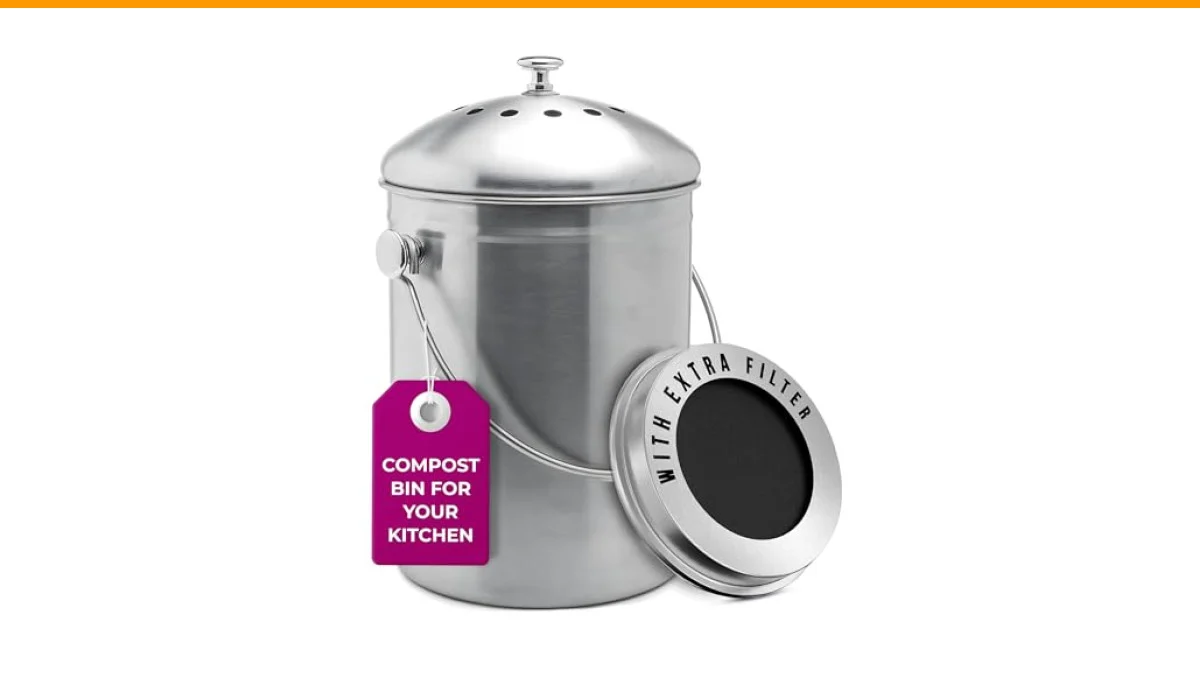
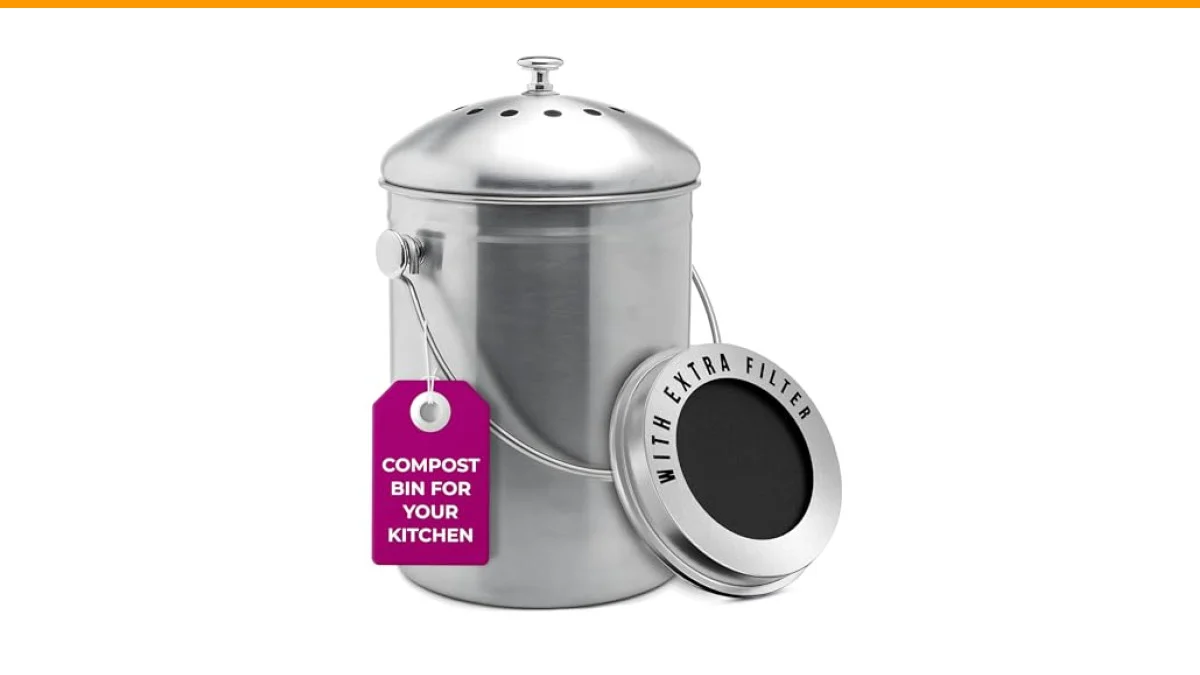
Epica’s 1.3-gallon bin is a countertop staple that handles the prep side of your market business. If you chop vegetables for salsa or wash greens at home before packing your stall, this keeps those scraps contained until you can get them to a pile. It has appeared in Bon Appetit and Forbes, which speaks to its design credibility rather than just its function.
The single-piece stainless steel body resists leaks and rust, so it won’t stain your counter or corrode after months of coffee grounds and onion skins. Its charcoal filter sits in the lid and genuinely neutralizes odors for about three to six months. You can rinse the filter gently and let it air dry to stretch its life, but you will eventually need replacements.
This bin is not built for hauling market waste. At 7.16 inches wide and 11 inches high, it holds a few days of household scraps, not a bushel of unsold produce. You will empty it weekly at minimum, and hand-washing is the recommended method. It is a tool for the kitchen, not the truck bed.
- 1.3-gallon capacity fits tight counter spaces
- Airtight lid with replaceable activated charcoal filter
- One-piece molded design resists rust and leaks
- Measures 7.16 inches in diameter by 11 inches high
- Recognized by Bon Appetit and Forbes for design
Best for: Farmers market vendors who prep produce at home and want a smell-free kitchen bin for daily scraps.
OrangeBio Medium Compostable Bags
OrangeBio sells a 500-count case of medium compostable shopping bags, and these are the workhorses of market day. They measure 10 by 6 by 20 inches and hold up to 18 pounds, which covers most grocery runs and produce purchases. You can hand these out to customers who forgot their own bags, then collect them back full of scraps next week.
These bags carry the BPI certification for both home and commercial composting. That certification matters because many municipal facilities reject compostable plastics that lack third-party verification. The 0.8-mil thickness gives them a sturdy feel without the crinkle of cheap film, and the T-shirt handles are comfortable even when the bag is loaded with heavy fruit.
Storage requires some care. Heat, humidity, and direct sunlight degrade the material over time, so keep the case in a cool, dry spot. They are food-contact compliant and free of BPA and BPS, but they are not meant for long-term liquid storage. Leak resistance has limits, so double-bag anything wet.
- BPI certified for home and commercial composting
- 500 bags per case for high-volume operations
- Each bag holds up to 18 lb of groceries
- Tear-resistant T-shirt handles for comfortable carrying
- Food-contact compliant and BPA-free
Best for: Market vendors who want a certified compostable bag to offer customers at the point of sale.
Utopia Kitchen Countertop Compost Bin
Utopia Kitchen offers a similar 1.3-gallon stainless steel bin that competes directly with Epica on price and function. It stands 11.2 inches tall with a 7.2-inch width, giving you a slightly larger footprint for roughly the same capacity. This one feels a bit more utilitarian, with clean lines that fit both modern and traditional kitchens.
The charcoal filter traps odors well enough that you can collect scraps for a full week without your kitchen smelling like a dumpster. Stainless steel resists scratching from abrasive items like eggshells and coffee grounds. The manufacturer suggests lining the bottom with newspaper or cardboard to absorb excess moisture, which is a practical tip for reducing cleanup frequency.
This bin has no special mounting hardware or locking mechanism. The lid sits securely but is not airtight, so it works best when you empty it regularly. Hand-washing with mild soap or vinegar is the recommended care routine. It is a straightforward, no-frills option that gets the job done.
- 1.3-gallon capacity in a compact cylindrical design
- Stainless steel resists scratching, cracking, and chipping
- Charcoal filters control odors for up to a week
- Measures 7.2 inches wide by 11.2 inches high
- Easy to rinse with water, mild soap, or vinegar
Best for: Vendors who want a budget-friendly countertop bin without sacrificing basic odor control.
Beautiful Kitchen Compost Bin
KIBAGA takes a different visual approach with a powder-coated carbon steel body in a warm beige tone, accented by a wooden handle and knob. This bin looks like it belongs on a kitchen counter as a design piece, not just a utility bucket. If your market brand emphasizes aesthetics and eco-chic style, this matches that image.
The 1.1-gallon capacity is slightly smaller than the steel options, but it compensates with a built-in charcoal filter compartment and lid air holes that promote aeration. Proper airflow reduces the anaerobic bacteria that cause foul smells. Two filters come included, so you have a spare ready when the first one wears out.
The wooden handle makes carrying easy, though it is not a heavy-duty hauling handle. Powder-coated carbon steel resists rust, but the coating can chip if you drop it. This bin is more about daily kitchen use than market transport. Its smaller size means more frequent emptying during heavy prep sessions.
- 1.1-gallon capacity with a 10.2 by 7-inch footprint
- Powder-coated carbon steel resists rust
- Wooden handle and knob for easy carrying
- Lid air holes provide necessary aeration
- Includes two charcoal filters
Best for: Style-conscious vendors who want a compost bin that looks good in a public-facing kitchen or demo space.
BioBag Original Compostable Bags
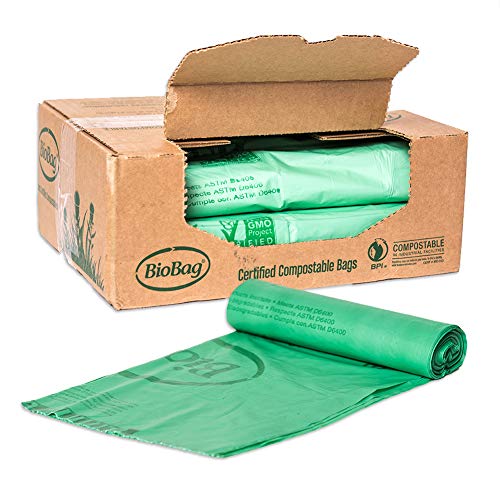
BioBag sells a case of 60 large liners that are 96 gallons each, but the product listing actually contains 600 smaller shopping bags with handles. These measure 15 by 17 inches and hold up to 10 pounds, making them ideal for customers taking home produce. The real value here is the closed-loop system: customers take produce home in a BioBag, then return it full of food scraps for composting.
These bags meet ASTM D6400 standards and carry BPI certification, which means they break down in properly managed commercial facilities. The resin is designed to be consumed by microorganisms in soil, so they do not leave behind microplastic fragments like conventional plastic bags. They work well for restaurant to-go orders, grocery stores, and farmers markets.
Strength is adequate for produce, but do not overload them with heavy canned goods or glass jars. The 0.80-mil thickness is standard for this category, and they will tear if you pack them too tightly. Store them away from heat sources to prevent premature degradation.
- 600 compostable shopping bags with handles per case
- Each bag measures 15 by 17 inches and holds 10 lb
- BPI certified to ASTM D6400 standards
- Multi-use design for shopping and organics collection
- Made from resin consumed by soil microorganisms
Best for: Markets that want to offer customers a compostable bag for produce that can later collect kitchen scraps.
How We Chose These Products
We evaluated each product against the specific demands of a farmers market operation, not a typical home garden. The core criteria were transport logistics, peak waste volume handling, public odor control, and regulatory compliance. A bin that works for a suburban backyard does not automatically work for a vendor packing up at 2 PM with a truck full of unsold greens.
We also weighed the difference between collecting waste and actually composting it. Countertop bins handle prep scraps but require a separate outdoor system. Compostable bags solve the collection problem but only work if your local facility or community partner accepts them. Both categories earned a place on this list because a complete market strategy often needs both.
Buying Guide: What Really Matters
Think about how you will move waste from your stall to your vehicle. A full bin of wet produce scraps is heavy, so consider a container with sturdy handles or a design that fits a milk crate. Tarping the load prevents spillage on the drive home, and a lid that locks or latches stops odors from filling your cab.
Peak waste volume happens in the last hour of market day. Customers pick through bins, and what remains is often bruised or wilted. Estimate your unsold produce volume from the last few weeks and choose a system that handles at least 25 percent more than that. It is better to have extra capacity than to scramble for trash bags at closing time.
Check your local health department rules before you start collecting scraps in a public space. Some jurisdictions restrict open compost containers near food stalls, while others require covered bins with rodent-proof lids. Municipal compost ordinances vary widely, so confirm whether your facility accepts compostable bags or only loose scraps.
Our Top Recommendation
For most market vendors, the OrangeBio compostable bags are the single most practical upgrade. They solve the dual problem of customer bagging and waste collection in one certified product. Hand them out at the register, encourage customers to bring them back full of scraps, and you have a visible sustainability loop that also reduces your waste haul.
The Epica countertop bin is the best runner-up for home prep scraps. It keeps your kitchen clean while you wash and chop produce for market, and its stainless steel build will outlast cheaper plastic alternatives. For a stylish option that looks good in a demo kitchen, the KIBAGA bin offers a more distinctive look with its wooden handle and beige finish.
Frequently Asked Questions
Can I compost directly at my market stall?
Most health departments restrict active composting in public food areas. You can collect scraps in a sealed bin, but the actual decomposition should happen off-site. Check with your local inspector about specific rules for covered collection containers.
How do I handle unsold produce at the end of market day?
Sort it quickly into three categories: edible for donation, compostable for your bin, and truly trash. Many vendors partner with local food banks for the first category. For compostable scraps, dump them into a lined tote that seals tightly before loading your vehicle.
What if I do not have space for a compost pile at home?
Find a community garden or urban farm that accepts food scraps. Several cities run drop-off programs at farmers markets themselves. You can also check if a local composting service offers pickup routes that include market locations.
Are compostable bags accepted at all facilities?
No. Only bags certified by BPI to ASTM D6400 standards are widely accepted in commercial composting. Even then, some municipal facilities exclude all compostable plastics. Call your local composter and ask specifically about their accepted materials list.
The Verdict: Matching the Bin to Your Market Size
A single vendor with a small stall needs less than a large farm operation. If you sell mostly whole produce and generate modest scraps, the Epica or Utopia Kitchen countertop bins cover your home prep needs. Pair either one with a small collection tote for market day, and you have a complete system.
High-volume vendors selling prepared food or bagged greens should prioritize the OrangeBio or BioBag liners. These handle the sheer quantity of organic waste generated by customers and unsold inventory. They also signal to your customers that you take waste seriously, which builds loyalty among eco-conscious shoppers.
Whatever you choose, plan your transport route before you buy. Measure your vehicle space, estimate your weekly waste volume, and confirm your composting endpoint. A bin that fits your workflow will become a habit. One that does not will end up in a shed, unused. For more guidance on specific setups, check our compost bin guide for nutrient-rich results or our tumbler recommendations for faster processing.