

Best Carburetor Cleaner for Lawn Mower: 2026 Buyer’s Guide
Contents
Your lawn mower sputters, stalls, or refuses to start after a long winter. You’ve checked the spark plug and the air filter looks fine. The real culprit is likely a gummed-up carburetor, clogged with varnish from stale fuel or the dreaded ethanol-blended gas. You could tear the carburetor apart, but most people just want a fix that works without a full teardown.
The challenge is that ‘carburetor cleaner’ covers a lot of ground. Some products are fuel additives you pour in the tank. Others are aerosol sprays for external cleaning, and some are professional dip buckets for soaking parts. Picking the wrong one for your specific symptom—hard start, rough idle, or no start—wastes time and money.
I sorted through the options to find the best carburetor cleaner for lawn mower use in 2026. The picks below cover fuel system treatments for preventative maintenance, precision tools for jet cleaning, and additive solutions for severe varnish. Here is the breakdown of what actually works, based on the symptoms you are facing.
Here is a quick comparison of the top products we reviewed to help you narrow down the choice.
| Features | STA-BIL Fast Fix | STA-BIL Small Engine Pro | Lovarisse Cleaning Kit | Zesllwid Cleaning Kit | CYUXING Cleaning Kit |
|---|---|---|---|---|---|
| Primary Type | Fuel Additive | Fuel Additive | Physical Tool Kit | Physical Tool Kit | Physical Tool Kit |
| Best Use Case | Quick no-disassembly fix | Preventative maintenance | Deep jet cleaning | Versatile clog removal | Professional servicing |
| Key Feature | Removes water & ethanol effects | Quiets noisy engines | Stainless steel & nylon build | 13 wires + 10 needles | 11-piece full set |
| Engine Compatibility | 2-cycle & 4-cycle | All gas small engines | Motorcycles & mowers | Cars & small engines | ATVs & chainsaws |
| Storage | N/A (liquid) | N/A (liquid) | Compact carrying case | Case with keychain | Aluminum box |
STA-BIL Fast Fix Small En…
1st Pick

STA-BIL
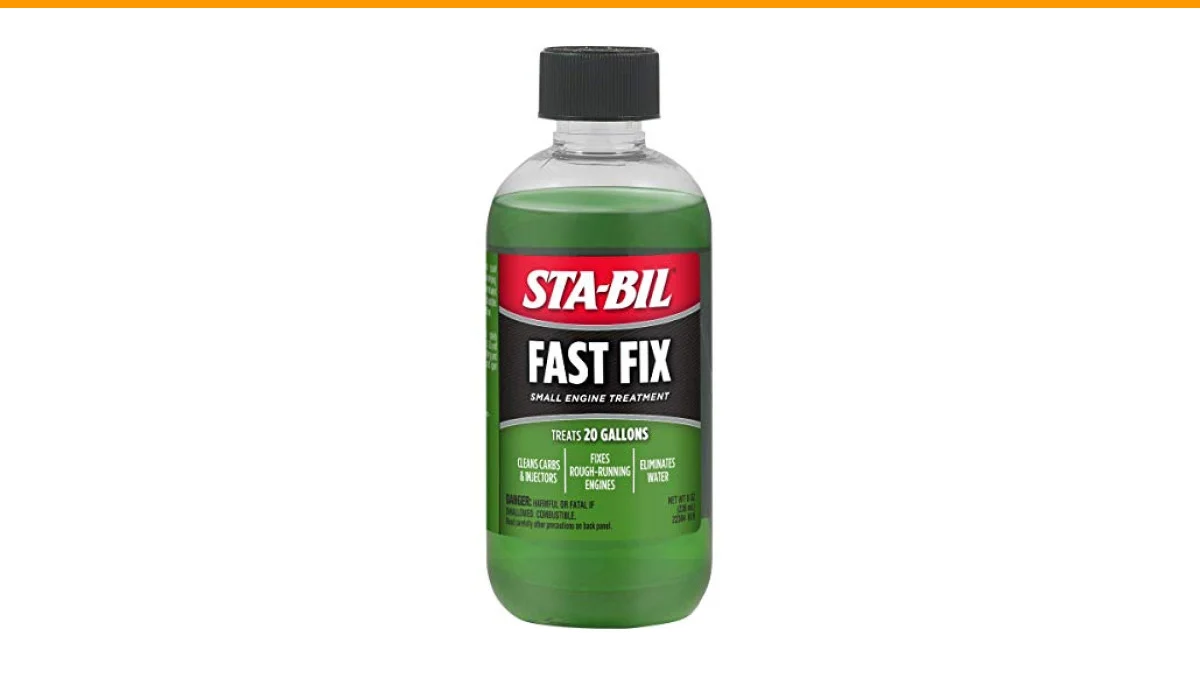
STA-BIL Fast Fix Small Engine Treatment, 8 oz
- Fixes rough running and hard-to-start engines: Breaks down gum and varnish that cause rough running, hard starts, sputtering, and…
- Cleans carburetors and fuel system: Works through the fuel system to clean carburetors, fuel injectors, and internal components, f…
- Removes water and combats ethanol fuel effects: Helps eliminate water in the fuel system and combats the effects of ethanol-blende…
This is the product you want when your mower is running rough but still fires up. It is a fuel additive engineered to dissolve gum and varnish deposits inside the carburetor without you touching a single screwdriver. It is the ideal first step for anyone who feels intimidated by carburetor disassembly.
The unique angle here is water removal. Ethanol-blended fuel attracts moisture, which leads to phase separation and corrosion. This treatment actively eliminates water from the system, addressing a root cause that many other cleaners ignore. It also handles the effects of E15 fuel, which is becoming more common at the pump.
The trade-off is that it is not a miracle worker for a completely clogged carburetor. If the mower has been sitting for two years with solidified varnish, an additive might not be enough to clear the main jet. You will likely need to follow up with a physical cleaning kit. Also, the 8-ounce bottle treats up to 20 gallons, which is a lot for a single mower, but you will use it consistently if you have multiple tools.
- Treats up to 20 gallons of fuel.
- Safe for 2-cycle and 4-cycle engines.
- Works through the fuel system without disassembly.
- Combats ethanol-related starting issues.
- Ideal for trimmers, chainsaws, and snow blowers.
Best for: The homeowner looking for a quick, no-tools fix for a rough-running mower caused by old gas.
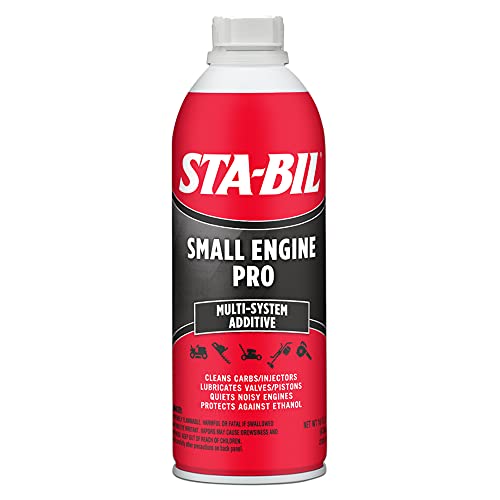
STA-BIL Small Engine Pro…
If the Fast Fix is the emergency responder, this 16-ounce formula is the daily vitamin. Small Engine Pro is a multi-system additive that focuses on cleaning and lubrication. It is designed for preventative maintenance to keep internal components from sticking in the first place.
The standout benefit is engine noise reduction. The formula lubricates the upper cylinder and valve train, which can quiet a clattering engine that has been running dry on varnish. This is a feature you do not see advertised often, but it makes a noticeable difference on older equipment. It also includes corrosion inhibitors for ethanol protection, which is critical if you leave fuel in the tank over the off-season.
It is not a dedicated cleaner for heavy carbon deposits. For a carburetor that is already clogged, you will still need a spray or dip cleaner to break down the hard varnish. This additive works best as a regular treatment with every fill-up. The larger bottle offers better value for users with a shed full of small engines.
- 16-ounce bottle for multiple treatments.
- Restores lost power by cleaning gum and varnish.
- Lubricates internal parts for longevity.
- Corrosion inhibitors protect against ethanol.
- Safe for pressure washers and edgers.
Best for: The owner who wants to prevent carburetor issues before they start and quiet a noisy engine.
Carburetor Cleaner Kit, w…
This kit from Lovarisse represents the physical approach to carburetor cleaning. It is a set of hooks, brushes, and precision needles designed to manually clear the tiny jets and passages that aerosol sprays cannot reach. This is the necessary step when an engine has a ‘no start’ condition due to a completely blocked jet.
The build quality stands out. The stainless steel needles are rigid enough to push through dried varnish without bending, and the nylon brushes are tough enough to scrub without scratching aluminum bodies. The kit consolidates everything into one organized case, which is a lifesaver when you are working in a garage and do not want to lose a tiny needle in the grass.
However, this is not a chemical cleaner. You cannot just pour this on the carburetor. It requires some mechanical aptitude to remove the carburetor bowl and access the jets. For a novice, this might be intimidating, but for a DIYer who wants a thorough clean, it is the right tool. It does not include any solvent, so you will need to pair it with a spray cleaner for the best results.
- Includes precision needles for jet cleaning.
- Durable stainless steel construction.
- Nylon brushes are safe for sensitive parts.
- Compact carrying case for storage.
- Works on motorcycles, ATVs, and chainsaws.
Best for: The hands-on DIYer ready to remove the carburetor and physically clear stubborn blockages.
Zesllwid Premium Carburet…
4th Pick
Zesllwid
Zesllwid Premium Carburetor Cleaning Kit, Stainless Steel Torch Tip Cleaner
- Versatile Cleaning Solution for Stubborn Clogs: Tackle clogging issues across multiple scenarios with one kit. Perfect for cleanin…
- Multi-Specification Tools for Diverse Cleaning Tasks: Includes a practical selection: 13 stainless steel cleaning wires (0.4-1.6mm…
- Durable Material Construction for Effective Cleaning: Crafted from deformation-resistant stainless steel and elastic, shed-resista…
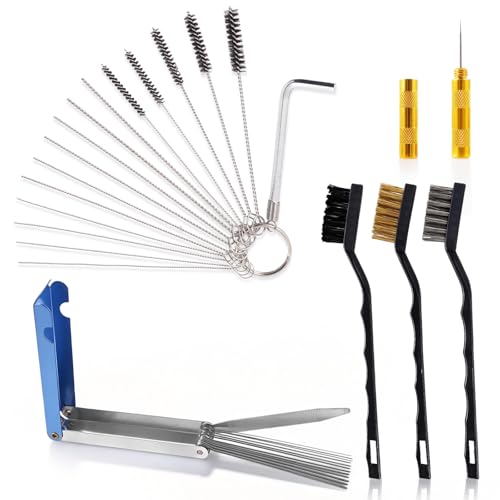
Zesllwid offers a broader toolset that goes beyond just lawn mower carburetors. This kit is a multi-specification cleaning solution, including 13 steel wires, 10 needles, and several brush styles. It is designed for anyone who maintains multiple types of equipment, from welding torches to camping stoves.
The versatility is the main selling point. The different wire diameters allow you to match the tool to the orifice size, which is crucial for clearing the emulsion tube on a lawn mower without damaging it. The inclusion of a sharp pick and wrench makes it a complete mini repair kit, not just a cleaner. It is built for the mechanic who likes to have options.
The limitation is that the case is small and lightweight. While it is portable, the hinges can feel flimsy if you throw it in a heavy toolbox. The tools themselves are solid, but the storage is not built for heavy abuse. It is also overkill if you only own one lawn mower and never plan to touch a motorcycle.
- 13 stainless steel wires ranging from 0.4-1.6mm.
- Includes 10 precision cleaning needles.
- Multiple brush types for different tasks.
- Detachable keychain for portability.
- Effective for spray gun tips and pneumatic tools.
Best for: The multi-equipment owner who needs one kit to handle carburetors, welders, and small engine jets.
CYUXING 11Pcs Carburetor…
5th Pick
CYUXING
CYUXING 11Pcs Carburetor Cleaning Tool, Carb Jet Cleaning Kit & Welding Tip Cleaner with Stainless Steel Needles, Brushes & Hooks for Motorcycle ATV Chainsaw & Welder Professional
- 【Material】 The stainless steel components offer reliable strength and are designed to maintain their integrity, while the nylon br…
- 【Precision Cleaning Performance】 The fine needles and bristles in this carb jet cleaning tool are engineered to access and clear t…
- 【All-in-One Maintenance Solution】Simplify your workflow and enhance your productivity with this multi-functional carburetor jet cl…
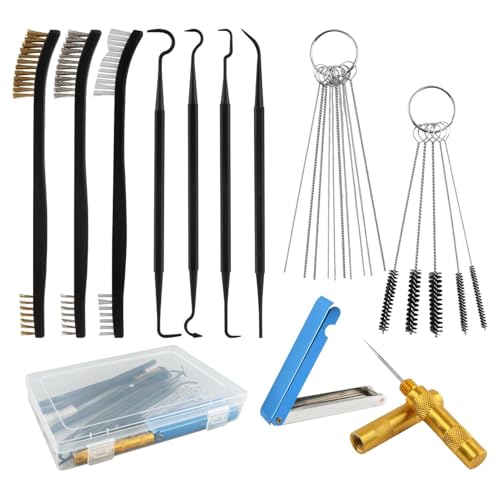
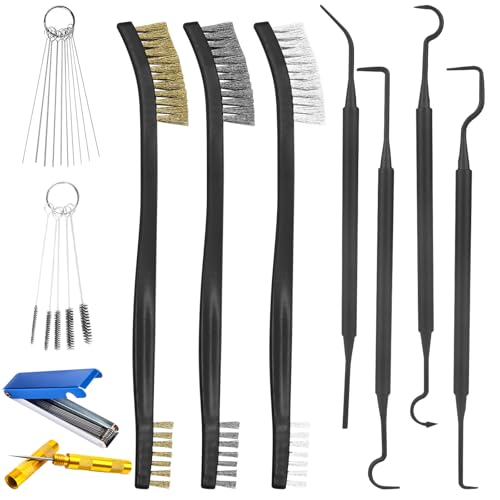
CYUXING rounds out the list with a professional-grade 11-piece kit that feels more substantial than the others. It comes with a dedicated aluminum box to keep everything organized, which immediately signals a higher level of quality. This is aimed at the serious hobbyist or small engine repair enthusiast.
What sets this apart is the combination of tools. You get 4 cleaning hooks, a scraper, and multiple brushes alongside the standard needles. The scraper is particularly useful for removing gasket residue from the carburetor body, a task that the other kits do not address. The nylon brushes are shed-resistant, so they do not leave bristles behind in the jets.
It is not a chemical cleaner, so you must supply your own solvent. The kit is also slightly more expensive than the other physical kits, reflecting the aluminum case and the wider variety of tools. For a single small engine job, it might be more than you need. But if you plan to service several machines, the durability justifies the cost.
- 11 pieces in a sturdy aluminum case.
- Includes 4 cleaning hooks and a scraper.
- High-grade stainless steel needles.
- Shed-resistant nylon brushes.
- Ideal for lawn mowers and chainsaws.
Best for: The professional or serious DIYer who wants a durable, all-in-one kit for frequent carburetor rebuilds.
How We Chose These Products
I evaluated these products based on the specific symptom they solve, not just their marketing claims. The first filter was type: chemical additive versus physical tool. Additives are excellent for preventative care and light varnish, while tools are necessary for severe clogs that stop fuel flow completely. A product that only does one job well is often more valuable than one that claims to do everything poorly.
I also looked at the material quality and safety. For tools, that meant checking for stainless steel construction that will not bend or break inside a jet. For additives, I considered the formula’s ability to handle ethanol, which is the leading cause of carburetor failure in modern small engines. The final list represents a balance of ease of use and effectiveness for the average homeowner.
Buying Guide: What Really Matters
Before you buy a carburetor cleaner for your lawn mower, you need to diagnose the problem. If the engine starts but runs rough, a fuel additive like STA-BIL Fast Fix is the easiest solution. If the engine cranks but will not start at all, you likely have a solid blockage in the main jet, and you will need a physical cleaning kit to poke through it. Spray cleaners are useful for cleaning the outside of the carburetor throat, but they rarely clear a completely clogged jet without disassembly.
Pay attention to the materials. Aerosol cleaners can damage plastic and rubber components on modern EPA-compliant engines. If you are using a spray, look for one that is safe for oxygen sensors and plastic. For physical tools, avoid cheap steel that snaps off inside a jet. A broken needle inside a carburetor is a nightmare to remove, so stick with reputable brands that use hardened steel.
Consider the cost per use. A bottle of fuel additive is cheap and treats multiple tanks of gas, making it the best value for regular maintenance. A physical cleaning kit is a one-time purchase that lasts for years if you do not lose the pieces. Dip cleaners are the most expensive but are only worth it if you are doing full rebuilds. Match the cost to the frequency of your repairs.
The 60-Second Fix: When to Use a Spray vs. Additive
Understanding the difference between a spray and an additive saves you from wasted effort. A spray cleaner, like an aerosol can, is designed for use on a disassembled carburetor or directly into the throttle body. It evaporates quickly and dissolves external grime. However, it cannot travel through the fuel lines to clean the internal float bowl or jets.
An additive is poured directly into the gas tank. It mixes with the fuel and travels through the entire fuel system as the engine runs. This is the correct choice for cleaning the internal passages without removing the carburetor. For a quick fix on a running engine, the additive is safer and more effective. Use a spray only when you have the carburetor off the engine and can physically rinse the parts.
Step-by-Step: Cleaning Without Full Disassembly
You do not need to remove the carburetor for every cleaning job. Start by removing the air filter and the air filter housing to expose the carburetor throat. Spray a carburetor cleaner directly into the throat while the engine is off. Let it sit for 15 minutes to soften the varnish.
Next, use a fuel additive in the gas tank to clean the internal jets. Run the engine for 5 minutes to circulate the treated fuel. If the engine idles smoother, you have cleared the light deposits. For a clogged main jet, you must remove the float bowl. You will see the main jet at the bottom; use a precision needle from a cleaning kit to gently push through the blockage. Do not use a drill bit, as this will enlarge the jet and ruin the fuel mixture.
Safety and Disposal: What the Manuals Don’t Tell You
Carburetor cleaners are flammable solvents. Work in a well-ventilated area, away from open flames or pilot lights. Wear nitrile gloves to protect your skin from the chemicals, as they can cause irritation. When you are done cleaning, do not pour the used cleaner down the drain or into the soil. It is hazardous waste.
Place used rags in a metal container with a tight lid. Soaked rags can spontaneously combust if left in a pile. Check with your local waste management facility for hazardous waste drop-off locations. Many auto parts stores accept used solvents for recycling. This is a step that is often skipped, but it is critical for safety and environmental responsibility.
Our Top Recommendation
For the majority of homeowners, the STA-BIL Fast Fix Small Engine Treatment is the best carburetor cleaner for lawn mower maintenance. It solves the most common problem—rough running from stale fuel—without requiring any mechanical skills. The water removal and ethanol protection address the root causes of future issues, making it a proactive solution as well as a reactive one.
If you are facing a ‘no start’ condition with a hard blockage, the CYUXING 11Pcs Carburetor Cleaning Tool is the runner-up. It offers the professional-grade durability needed to clear a main jet safely. For those who want to prevent issues entirely and quiet a noisy engine, the STA-BIL Small Engine Pro is the best additive for long-term engine health. For more insight on keeping your mower in top shape, check out this carb cleaner guide for additional context.
Frequently Asked Questions
Can I use regular automotive carburetor cleaner on my lawn mower?
Yes, but you must check the label for plastic-safe ratings. Automotive cleaners are often more aggressive and can degrade the plastic float or gaskets in a small engine carburetor. Look for a cleaner explicitly safe for oxygen sensors and plastic components to avoid damage.
How often should I use a fuel additive cleaner?
Use a fuel additive at the end of every season or every 3 months if you store gas longer than 30 days. If you use ethanol-free gas, you can extend this interval. The key is to treat the fuel before it has a chance to varnish, not after the engine starts running poorly.
Will a cleaner fix a mower that has been sitting for years?
Usually not. A cleaner can dissolve light film, but years of dried varnish will require physical removal. You will need to take the carburetor apart and soak it in a dip cleaner or manually clear the jets with a needle kit. Additives alone will likely leave you frustrated.
Is it better to use a spray or a dip cleaner for a full rebuild?
A dip cleaner is better for a full rebuild because it submerges the entire carburetor body and reaches internal passages that a spray cannot. A spray is better for a quick cleaning of the exterior and throat. For the best results on a rebuild, use a dip cleaner first, then blow out all passages with compressed air.
The Bottom Line
Matching the cleaner to the symptom is the only way to avoid wasting money. For a rough idle, pour in a fuel additive. For a hard start, use a spray on the throat. For a no-start condition, get a physical cleaning kit and clear the jets. The best carburetor cleaner for lawn mower use is the one that fits the specific problem you are trying to solve. If you are also looking for a new mower to avoid these issues, our battery mower review might help you ditch gas problems entirely. For those with steep terrain, consider reading about the best mower for slopes to ensure your equipment is up to the task.