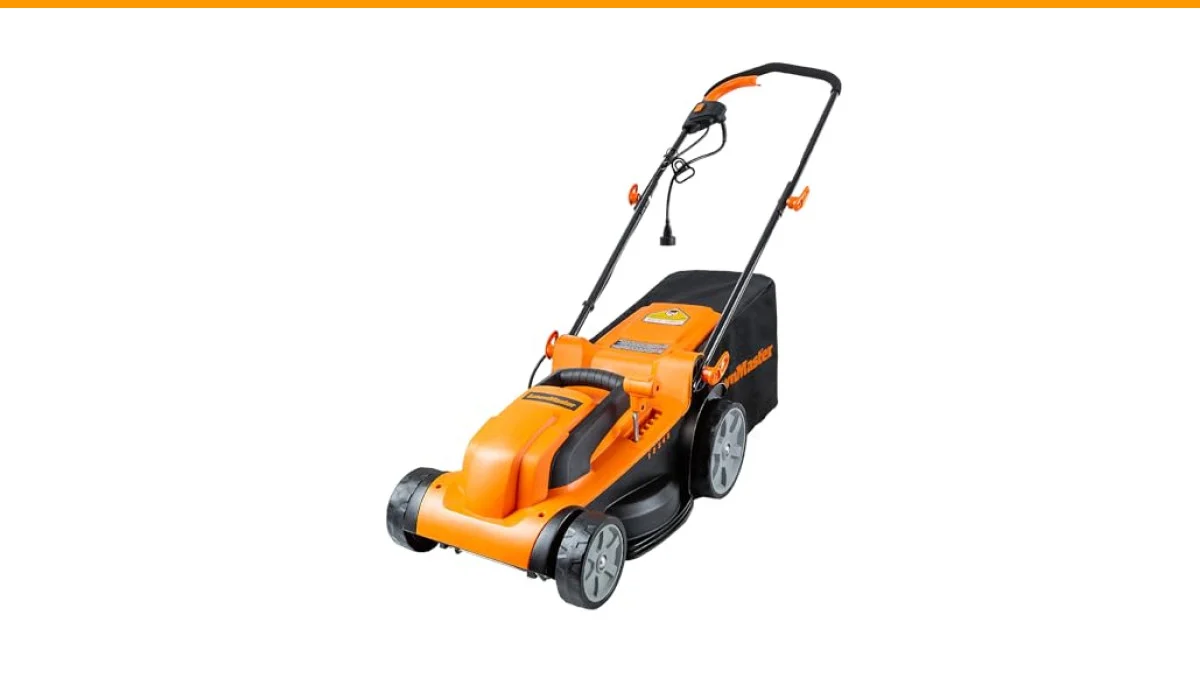
A crisp lawn edge changes everything. It separates a scruffy yard from a manicured one, and it takes far less effort than most homeowners expect. The problem is picking the right tool. Walk down any hardware aisle and you’ll see electric edgers, manual rotary cutters, mower attachments, and sprays all claiming to do the same job.
Each approach suits a different yard, budget, and level of patience. An electric edger powers through overgrown borders fast. A manual wheel edger costs less and never needs a cord. A mower attachment saves a second pass entirely. And a selective herbicide handles the weeds that creep back along walkways. Knowing which one fits your situation is the whole game.
Below are four tools that cover the realistic options, from a 12-amp WORX electric edger to a $30-style manual wheel cutter and a nutsedge spray for stubborn regrowth. The WORX takes the top spot for most lawns, but the right pick depends on how much edge you maintain and how often.
Here’s a quick spec comparison to help you match a tool to your yard before reading the full reviews.
| Features | WORX Electric Edger | TRIMYXS Mower Attachment | Ortho Nutsedge Killer | BARAYSTUS Wheel Edger |
|---|---|---|---|---|
| Power Source | 12-amp corded electric | 20V 4.0Ah battery | Hose-end sprayer | Manual push power |
| Cutting Depth | Three settings up to 1.5 inches | Not specified | Not applicable | Not applicable |
| Handle Height | Adjustable shaft and D-grip | Telescoping arm | Not applicable | Three heights to 58.3 inches |
| Coverage | Standard residential borders | Straight edges and fences | 5,000 square feet | Sidewalks and driveways |
| Best Use Case | Deep cuts on tough edges | Mow-and-trim in one pass | Killing nutsedge and broadleaf weeds | Budget upkeep on straight lines |
In this article
WORX Electric Lawn Edger
WORX
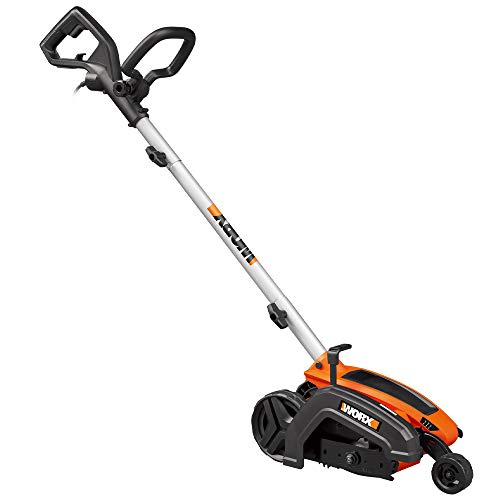
WORX Electric Lawn Edger, 12 Amp 7.5" Trencher for Lawn Landscaping, WG896 | 3-Position Adjustable Cutting Depth, Lawn Edging & Trenching Dual Use, Corded
- POWER LIKE THE PROS: The 12 Amp motor spins the 7.5” blade fast and deep at 4700 revolutions per minute, giving you professional-l…
- 3 DEPTH ADJUSTMENTS: Cut down at 1”, 1-1/4”, 1-1/2” depending on the task at hand.
- CUTTING LINE INDICATOR: Stay on the straight and narrow with the cutting line guide—you’ll notice a difference when you’re done.
The WG896 is a corded electric edger built for homeowners who want a deep, clean trench along sidewalks, driveways, and bed borders. It suits anyone with a standard suburban lot and access to an outdoor outlet. If your edges have gone a season or two without attention, this tool cuts through the mess instead of skating over it.
The 12-amp motor spins a 7.5-inch blade at 4,700 RPM, which is serious speed for a residential edger. Three depth settings (1 inch, 1-1/4 inch, 1-1/2 inch) let you match the cut to how established the grass is. A cutting line indicator keeps you tracking straight, and the adjustable shaft plus D-grip handle means a 5-foot-4 user and a 6-foot-2 user both find a comfortable stance. The blade sits forward of the motor, so you can see exactly where it’s biting.
The cord is the obvious trade-off. You’ll manage 50 to 100 feet of extension cord, and you need to keep it clear of the blade path. The unit is also heavier than a string trimmer, so long sessions wear on your arms. It’s not a tool for quick touch-ups; it’s for real edging work.
- 12-amp motor with 7.5-inch blade at 4,700 RPM
- Three depth settings from 1 to 1-1/2 inches
- Cutting line indicator for straight passes
- Adjustable shaft and D-grip for different heights
- Corded operation requires an outdoor outlet and extension cord
Best for: Homeowners with established edges who want a deep, professional-looking cut without gas or battery hassles.
TRIMYXS Lawn Mower Attachment

Trimyxs
Trimyxs Lawn Mower Attachment – Weed Wacker Arm for Hard-to-Reach Areas | Precision Edging & Trimming Tool | Extended Reach Design | 20V 4.0Ah Li-ion Battery & Charger Included
- ATTACHES DIRECTLY TO YOUR PUSH MOWER: This is a mower attachment, not a standalone trimmer it mounts onto your existing push mower…
- ADJUSTABLE, FITS MOST PUSH MOWERS: Telescoping arm adjusts in length to fit most standard walk-behind push mowers for a secure, cu…
- BEST FOR STRAIGHT EDGES, FENCES & SIDEWALKS: Built for clean trimming along fences, curbs, sidewalks, and straight garden borders…
The Trimyxs is not a standalone trimmer. It’s an arm that mounts to your existing push mower and turns it into a mow-and-trim combo. You get a 20V 4.0Ah battery and charger in the box. This is for the person who hates making a second pass around fences, curbs, and sidewalks after mowing. If your property has long straight runs along a fence line, this attachment eliminates the walk-behind trimmer step entirely.
The telescoping arm adjusts to fit most standard walk-behind mowers, and the trigger is hold-to-run rather than a lock switch. That’s a genuine safety feature: the line only spins while you’re actively gripping the trigger. Auto-feed line advances as you cut, so no bumping the head against concrete. For light-to-medium grass along straight edges, it does the job in one pass while you mow.
Curves are where it struggles. The product data is upfront about this: heavily curved beds and uneven lawns may need an extra manual pass. The cutting line is also designed for lighter grass, so thick fescue or wet spring growth will bog it down. Replacement spools cost extra, and mounting it to your mower takes a few minutes each time you switch tasks.
- Mounts to most standard push mowers via telescoping arm
- 20V 4.0Ah battery and charger included
- Trigger-controlled for active safety
- Auto-feed line, no bumping required
- Best on straight edges, fences, and sidewalks
Best for: Push-mower owners with long straight edges who want to skip the second trimmer pass.
Ortho Nutsedge Killer for Lawns
Ortho
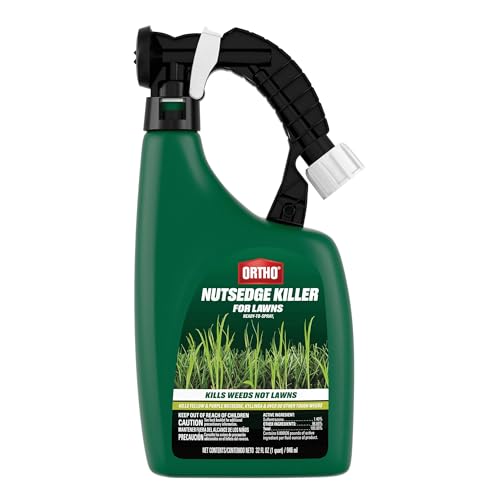
Ortho Nutsedge Killer for Lawns Ready-To-Spray, Controls Over 50 Listed Weeds, For Use on Northern and Southern Turf Grasses, 32 fl. oz
- HOW TO USE: To use this weed control product, connect your garden hose to the weed killer hose sprayer, turn on the water and spra…
- WHERE TO USE: This weed spray kills listed weeds not lawns, and may be used on well-established cool-season and warm-season turf g…
- LAWN WEED CONTROL: This lawn weed killer also controls wild violet and dollarweed, and selectively controls other listed sedge and…
Edging isn’t only about cutting. Weeds creep back along walkways and bed lines, and some, like nutsedge, survive a blade and return within weeks. Ortho Nutsedge Killer is a ready-to-spray selective herbicide for well-established cool- and warm-season turf. It targets nutsedge (nutgrass), kyllinga, wild violet, dollarweed, dandelion, purslane, and spurge, plus more than 50 other listed weeds. It covers 5,000 square feet per 32-ounce container.
The setup is straightforward: connect a garden hose to the sprayer, turn on the water, and apply evenly over the area. No mixing, no measuring. That matters when you’re spot-treating a 20-foot stretch of nutsedge along a driveway. It kills the listed weeds without harming the lawn grasses it’s labeled for, which is the whole point of a selective product.
It’s not a replacement for edging. It handles the weeds that edging can’t reach or that regrow after cutting. Timing matters too. Nutsedge is easiest to kill when it’s actively growing, and you’ll likely need a follow-up application for heavy infestations. Read the label for your grass type before spraying, because not every turf is listed.
- Ready-to-spray hose-end applicator, no mixing
- Controls nutsedge, kyllinga, and 50+ listed weeds
- Also targets wild violet, dollarweed, dandelion, and spurge
- Covers 5,000 square feet per 32-ounce bottle
- For use on well-established cool- and warm-season turf only
Best for: Lawn owners battling nutsedge or broadleaf weeds that keep returning along edges and beds.
BARAYSTUS Wheel Rotary Edger

BARAYSTUS
BARAYSTUS Wheel Rotary Edger Lawn Tool, Grass Edge Trimmer, Sidewalk Manual Lawn Edger, Strong 3 Sections Stainless Steel Handle with Cushion Grip, 58.3-Inch
- New Design: Wheeled Rotary Edger is designed to trim grass edger along sidewalks, driveways, and flower beds. The serrated blades…
- Sharp and Durable: The garden edger both blades with CNC grinding and cutter with sharp grinding to keep it working smoothly. Anti…
- Adjustable height: Rotary edger has three heights can be adjusted to different length: 30.7 INCH / 44.5 INCH / 58.3 INCH; This law…
The BARAYSTUS is a manual push edger with a serrated rotary blade and a weighted wheel. It’s for the homeowner who wants clean edges without cords, batteries, or fuel. Push it along sidewalks, driveways, and flower beds and the blades cut through grass and sod. It’s the cheapest way to maintain an edge you’ve already established, and it never runs out of power.
Two features stand out. The blades are self-sharpening and self-cleaning, so routine use keeps them working without maintenance. The three-section stainless steel handle adjusts to 30.7, 44.5, or 58.3 inches, which covers most users. The working parts are anti-rust plated, and the tube is thickened for durability. For straight lines along a concrete walk, it does a genuinely good job.
Manual means manual. You supply the pushing force, and the tool only works as well as your pace. It struggles with thick, overgrown edges that an electric edger would slice through in one pass. The wheel axle can also collect grass and debris, which adds resistance if you don’t clear it regularly. And you need to keep stones and sticks out of the path, or the blade will bind.
- Self-sharpening, self-cleaning serrated rotary blades
- Three handle heights: 30.7, 44.5, and 58.3 inches
- Stainless steel handle with cushion grip
- Anti-rust plated working parts
- Requires steady pushing and a debris-free path
Best for: Budget-minded homeowners maintaining straight edges along sidewalks and driveways.
How We Chose These Products
We looked at the four main ways homeowners actually edge a lawn: powered electric edging, mower-mounted trimming, manual wheel cutting, and chemical weed control. Each product here represents one of those approaches, so the list covers the full decision rather than four versions of the same tool. We weighed motor power, depth control, handle adjustability, coverage area, and how each tool performs on the edges most people have: straight runs along concrete.
We also considered the honest limitations. A corded edger needs an outlet. A mower attachment struggles on curves. A manual wheel edger needs your muscle. A herbicide only kills weeds. None of these tools is perfect for every yard, and pretending otherwise would make the list useless. The goal was to match each tool to the buyer it genuinely serves.
Buying Guide: What Really Matters
Start with how much edge you maintain. A few dozen feet along a front walk calls for a manual wheel edger or a string trimmer flipped sideways. A quarter-acre with long driveway runs justifies a powered edger or a mower attachment. Matching the tool to the workload prevents both overspending and frustration.
Cutting depth is the next factor. Edges that have gone untended for a season need a tool that bites deep, which is where the WORX’s three depth settings and 7.5-inch blade earn their keep. If you edge every two weeks, a shallower pass with a manual tool keeps things tidy. Overgrown edges and manual edgers don’t mix well.
Power source shapes the whole experience. Corded electric gives you unlimited runtime and consistent power, but you drag a cord. Battery tools cut the cord but add charge time and cost. Manual tools never need power but demand effort. Herbicides are a supplement, not a substitute, for cutting. And one more thing: check your grass type before spraying any selective herbicide, because the label lists which turf grasses are safe.
Our Top Recommendation
The WORX WG896 is the best all-around choice for most homeowners. The 12-amp motor, 4,700 RPM blade speed, three depth settings, and adjustable shaft cover the widest range of real edging jobs. It cuts deep enough to rescue neglected edges and precise enough to maintain a clean line. The cord is a minor annoyance compared to the results.
If you already own a push mower and want to eliminate a step, the Trimyxs attachment is the smarter buy for straight fence and curb lines. On a tight budget with light maintenance needs, the BARAYSTUS wheel edger does the job for a fraction of the cost. And if weeds keep winning the battle along your edges, add the Ortho Nutsedge Killer to your routine. For many yards, the best setup combines two: an edger for the cut and a selective spray for regrowth.
Frequently Asked Questions
Can I edge my lawn with a string trimmer instead of a dedicated edger?
Yes, and many people do. Flip the trimmer sideways and run the line along the edge. It works for light maintenance, but it doesn’t cut a defined trench the way a bladed edger does. Over time, a trimmer-only approach leaves a softer, less crisp line, and thick grass along concrete can stall the line.
How often should I edge my lawn?
Every two to three weeks during growing season keeps edges sharp with minimal effort. Once edges overgrow, you’ll need a deeper cut, which means a powered edger or several passes with a manual tool. Consistent light passes beat occasional heavy ones.
Will the Ortho spray kill my grass along the edge?
It’s a selective herbicide labeled for well-established cool- and warm-season turf grasses, so it targets listed weeds without killing those lawns. Check the label for your specific grass type before spraying. Newly seeded or stressed lawns are a different situation.
Do manual wheel edgers work on curved beds?
They handle gentle curves but struggle with tight, irregular shapes. The weighted wheel wants a predictable path. For heavily curved beds, a string trimmer or a powered edger gives you more control around the turns.