
Many homeowners face a tough decision when it comes to maintaining their lawns. Should you invest in a lawn mower for ownership or opt for rental services? Each option comes with its own set of advantages and drawbacks. Understanding these can help you make an informed choice that suits your budget, frequency of use, and specific lawn maintenance needs.
This article breaks down the key considerations surrounding lawn mower rental versus ownership. You’ll learn about cost implications, convenience factors, and the types of mowers available for both options. By the end, you’ll have a clearer picture of which choice aligns with your lawn care requirements.
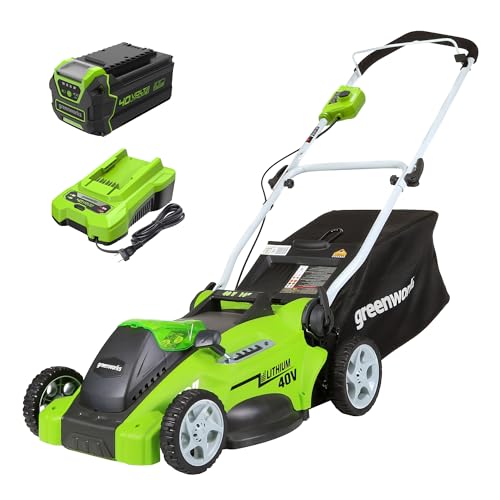
Greenworks
Greenworks 40V 16in Push Lawn Mower, 4.0 Ah Battery and Charger | Quiet walk-behind mower with push-button start; gas-free operation eliminates fumes and pull starts
- [16" LAWN MOWER] - This 40V lawn mower cuts up to 1/3 acre with fully charged 4.0Ah battery (varies based on grass condition and o…
- [ULTRA LIGHTWEIGHT] - 35% lighter than steel deck mowers
- [SINGLE LEVER HEIGHT ADJUST] - 5 position height adjustment
If you’re leaning towards ownership, consider the Greenworks 40V 16in Push Lawn Mower. This lightweight mower is easy to handle and can efficiently maintain lawns up to a third of an acre.

Understanding the Costs: Rental vs. Ownership
When pondering lawn mower rental versus ownership, the financial aspect is often the most significant factor. Renting can appear cheaper at first glance, especially if you only need a mower occasionally. However, costs can accumulate quickly if you rent frequently. Here’s a breakdown:
- Rental Costs: Typically, rental fees for lawn mowers can range from $30 to $100 per day, depending on the type and size of the mower. If you mow your lawn bi-weekly, the costs can add up to $780 to $2,600 annually.
- Ownership Costs: The initial purchase price for a decent mower can vary significantly. For instance, the Greenworks 40V Push Mower costs around $300. Over time, ownership may offer savings, especially if you maintain your mower properly.
Thus, if you plan to mow regularly, purchasing a mower may be more economical in the long run.
Convenience Factors: Weighing the Options
Convenience is another major consideration. Renting a lawn mower may seem convenient, but it can come with hidden hassles:
- Availability: You may not always find the specific mower you want available when you need it, especially during peak seasons.
- Transport: Renting means you’ll need a suitable vehicle to transport the mower. This can be a hassle if you don’t own a truck or trailer.
- Time Constraints: You’ll need to factor in the time spent picking up and returning the mower.
Owning a mower eliminates these inconveniences. You can mow whenever necessary, without worrying about availability or transportation.
Types of Mowers: What’s Available for Rental and Purchase?
When it comes to the types of lawn mowers available for rental and purchase, there are several options:
- Push Mowers: Manual and powered options are available. They’re ideal for small to medium lawns and easy to store.
- Self-Propelled Mowers: These are useful for larger properties, providing more power and less effort.
- Riding Mowers: Best for extensive lawns, these can be rented but are usually more expensive to own. They can cost upwards of $2,000.
Consider your lawn size and terrain when deciding. For example, if you have a small lawn, a push mower like the Greenworks model is perfect.
Pros and Cons: A Quick Comparison
| Criteria | Rental | Ownership |
|---|---|---|
| Cost | Higher long-term costs if mowed frequently | Lower long-term costs; initial investment required |
| Convenience | Dependent on availability and transportation | Always available; no transport needed |
| Maintenance | No responsibility for maintenance | Responsible for upkeep; may require repairs |
| Variety | Limited options based on rental availability | Wide variety of mowers to choose from |
| Flexibility | Less flexible; limited to rental hours | Complete flexibility; mow when you want |
What are the long-term savings of owning a lawn mower?
Owning a lawn mower can lead to significant long-term savings, especially if you mow regularly. Calculate your rental costs over a year; if you find that they exceed the purchase price of a mower, ownership becomes the better option.
How often should I mow my lawn?
Most lawns need mowing every 1-2 weeks during the growing season. If your lawn is larger or if you have a busy schedule, renting may become impractical.
Is it worth renting a mower for a one-time job?
If you only need to mow once or twice a year, renting could be a cost-effective solution. However, for regular maintenance, owning a mower is generally more beneficial.
What type of mower is best for small lawns?
For small lawns, a push mower like the Greenworks 40V model is ideal. It’s lightweight, easy to maneuver, and environmentally friendly.
Can I rent specialized mowers like robotic or riding mowers?
Yes, some rental companies offer specialized mowers, including robotic and riding mowers. However, availability may vary based on location.
Final Thoughts
- Evaluate how often you mow your lawn to determine your best option.
- Consider the initial investment versus long-term rental costs.
- Assess your storage capabilities; some mowers require more space.
- Check the availability of rental mowers in your area before deciding.
- Look into warranties and maintenance options if you choose ownership.
- Choose a mower that fits your lawn size and terrain for optimal results.



