In this article
Understanding Lawn Mower Productivity Calculations
When managing a lawn care business or simply maintaining your yard, knowing how to calculate lawn mower productivity can save you time and effort. Have you ever wondered how long it takes to mow your lawn? Or how to efficiently plan your mowing schedule? This guide will help you understand the formulas and factors involved in these calculations.
Whether you’re mowing a small yard or managing multiple properties, accurate productivity calculations allow for better scheduling and resource allocation. You’ll walk away with practical knowledge of how to assess your mower’s performance and more effective mowing strategies.
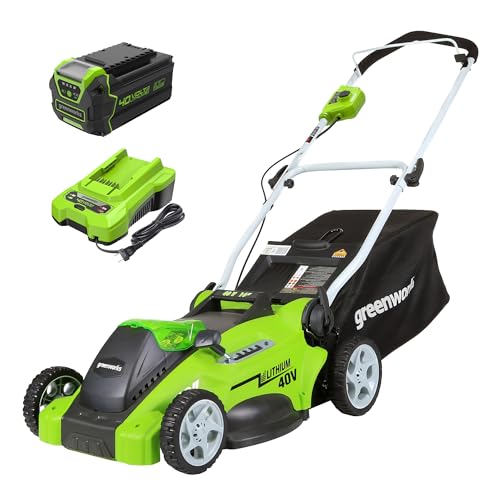
Greenworks
Greenworks 40V 16in Push Lawn Mower, 4.0 Ah Battery and Charger | Quiet walk-behind mower with push-button start; gas-free operation eliminates fumes and pull starts
- [16" LAWN MOWER] - This 40V lawn mower cuts up to 1/3 acre with fully charged 4.0Ah battery (varies based on grass condition and o…
- [ULTRA LIGHTWEIGHT] - 35% lighter than steel deck mowers
- [SINGLE LEVER HEIGHT ADJUST] - 5 position height adjustment
The Greenworks 40V 16in Push Lawn Mower is a great tool for homeowners looking to optimize their mowing efficiency. With its lightweight design and powerful battery, it cuts up to 1/3 acre, making it a solid choice for small to medium-sized lawns.
Factors Affecting Mower Productivity
Several factors influence lawn mower productivity, including:
- Lawn Size: The total area being mowed directly impacts how long it takes. Larger lawns require more time.
- Mower Type: Different mowers operate at different speeds. For instance, a riding mower covers more ground faster than a push mower.
- Grass Condition: Tall, thick grass can slow down mowing speed. Wet grass can also pose challenges.
- Operator Skill: An experienced operator can maneuver a mower more efficiently than a novice.
- Terrain: Hilly or uneven terrain can slow down mowing speed due to safety concerns.
Calculating Lawn Mower Productivity
To calculate mower productivity, you can use the following formula:
Productivity (acres per hour) = (Cutting Width x Speed x Efficiency) / 43,560
Here’s how it breaks down:
- Cutting Width: Measure the width of your mower’s cutting deck in inches.
- Speed: Estimate your mowing speed in miles per hour (mph).
- Efficiency: Factor in the efficiency rate (usually between 0.65 and 0.85). This accounts for turns, obstacles, and other interruptions.
For example, let’s say you have a 16-inch cutting width mower, operating at 3 mph, with an efficiency factor of 0.75:
- Convert the cutting width to feet: 16 inches = 1.33 feet.
- Calculate productivity: (1.33 x 3 x 0.75) / 43,560 = 0.000092 acres/hour.
This example illustrates the basic calculation, but adjustments may be needed based on actual conditions.
Common Misconceptions About Lawn Mower Productivity
No, More Power Doesn’t Always Mean More Productivity
Many believe that higher horsepower equals faster mowing. While power is essential, it’s not the only factor. Efficiency and mowing technique often play a larger role. A well-designed mower with lower horsepower can outperform a more powerful but inefficient model.
Not All Mowers Are Created Equal
Some users think all push mowers will have similar productivity. However, design features can heavily influence performance. For instance, the Greenworks 40V model is lightweight and designed for efficiency, making it suitable for various lawn sizes.
Comparative Table of Mower Options
| Mower Type | Cutting Width (inches) | Max Speed (mph) | Efficiency Factor | Approx. Productivity (acres/hour) |
|---|---|---|---|---|
| Push Mower | 16 | 3 | 0.75 | 0.000092 |
| Self-Propelled Mower | 21 | 4 | 0.80 | 0.00016 |
| Riding Mower | 42 | 5 | 0.85 | 0.00040 |
| Robotic Mower | 20 | 2 | 0.70 | 0.00010 |
Frequently Asked Questions
How do I determine my mower’s cutting width?
Cutting width is typically listed in the mower’s specifications. If you have a push mower, measure the distance across the blade’s edge.
What factors can affect my mowing speed?
Terrain, grass height, and mower type can significantly influence your mowing speed. Adjust your approach based on these factors for optimal results.
Is it worth investing in a more powerful mower?
It depends on your lawn size and terrain. For larger, uneven lawns, a more powerful mower may be beneficial. However, for small, flat yards, a less powerful mower can suffice.
How often should I mow to maintain my lawn’s health?
Regular mowing, typically once a week during growing season, is crucial. Adjust frequency based on grass growth rates and weather conditions.
Can I use a productivity calculator to estimate my mowing time?
Yes, many online tools can help estimate mowing time based on lawn size and mower specifications. Tools like the Mower Productivity Calculator are useful for this purpose.
Final Thoughts on Lawn Mower Productivity
- Understand the factors impacting your mower’s productivity.
- Use the productivity formula for accurate lawn care planning.
- Consider mower type and efficiency when making a purchase.
- Regular maintenance of your mower improves performance.
- Adjust mowing frequency based on grass growth and weather.
- Utilize online calculators for estimating mowing time.
- Explore various mower options to find the best fit for your needs.