You saw one at a garden center or in a neighbor’s yard, and now you’re picturing it on your patio. A wooden wheelbarrow planter has a way of making plants look intentional, like you planned that rustic corner for years. But once you start shopping, the options blur together. Cedar or pine? Metal wheels or wooden? Does drainage actually matter on a planter this size?
This guide covers what separates a planter that lasts from one that rots by season two. You’ll learn about wood treatments, wheel construction, drainage reality, and how to match a planter to your actual space. No fluff, just what matters when you’re spending money on something that sits outside in the weather.

Beeveer
In this article
- Beeveer Wooden Wagon Flower Planter Cart Garden Planter Box with Wagon Wheels Cart for Home Garden Outdoor Balcony Decorative, Patio Flowers Herbs Vegetables, Brown(Rustic)
- Myth One: All Cedar Is the Same
- Drainage Is Not Optional
- Wheels Matter More Than You Think
- Comparing Wooden Wheelbarrow Planters
- Myth Two: Bigger Is Always Better
- Real Questions People Ask
- What to Check Before You Click Buy
Beeveer Wooden Wagon Flower Planter Cart Garden Planter Box with Wagon Wheels Cart for Home Garden Outdoor Balcony Decorative, Patio Flowers Herbs Vegetables, Brown(Rustic)
- Classic Artisan Craftsmanship: the wooden flower pot features a unique, rustic design and antique look, adding an artistic touch t…
- Quality Material: this garden wheelbarrow cart is made of quality cedar, which has been calcined for high weather resistance; The…
- Thoughtful Drainage Design: the bottom of our balcony garden planter has a drainage hole design, which not only helps drain excess…
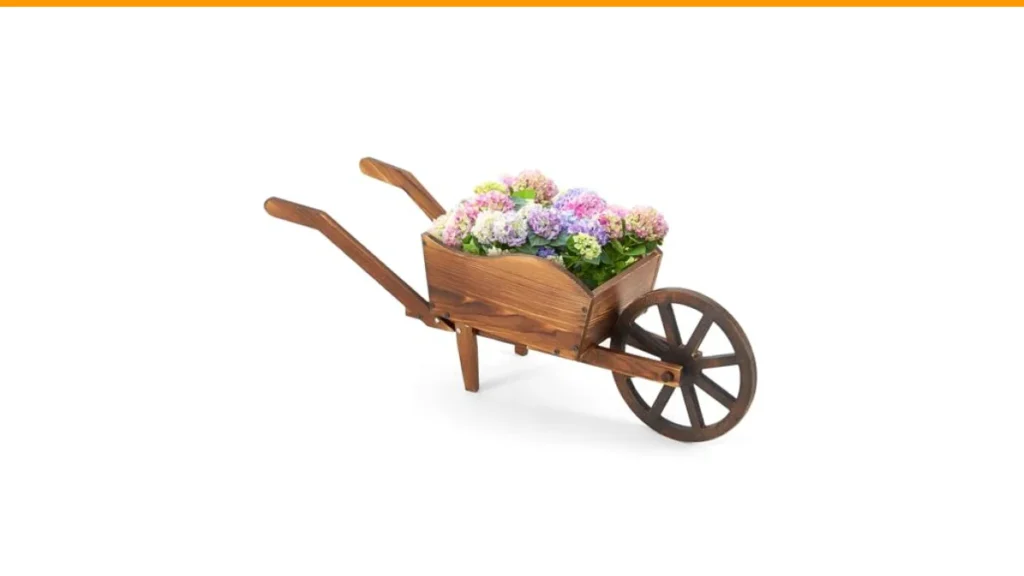
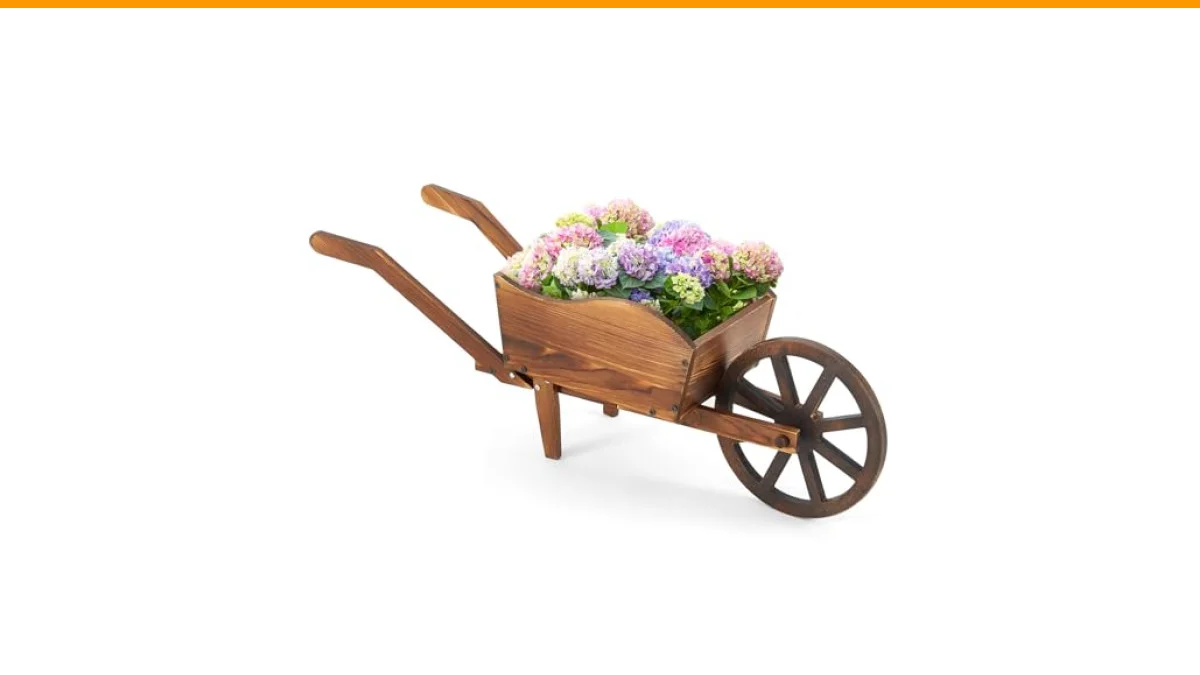
If you’re leaning toward buying rather than building, the Beeveer wooden wagon planter gives you a solid cedar box with iron-reinforced wheels and a drainage hole already in place. It’s a good starting point to compare against the DIY route.
Myth One: All Cedar Is the Same
Most wooden wheelbarrow planters claim cedar, but cedar varies. Western Red Cedar is the gold standard for outdoor furniture because it contains natural oils that resist rot and insects. Some sellers use white cedar or aromatic cedar, which are softer and don’t hold up as well in wet soil.
The Beeveer planter uses solid cedar that’s been calcined, a heat treatment that darkens the wood and increases its weather resistance. That’s different from a cheap cedar-toned stain over pine. If a listing doesn’t specify the wood type, assume it’s not Western Red Cedar.
Here’s a quick test: press your fingernail into the wood. Soft and spongy means low density, which means it’ll absorb moisture faster. Dense and firm is what you want for outdoor longevity.
Drainage Is Not Optional
A planter without drainage holes is a swamp. Roots sit in water, oxygen gets cut off, and you get root rot. That’s true whether you’re growing succulents or tomatoes.
Many cheap wooden planters skip drainage entirely because it’s easier to manufacture. The Beeveer unit includes a drainage hole at the bottom, which is a small detail that makes a big difference. If you’re building your own, drill at least three 1/2-inch holes spaced evenly across the base. Add a layer of gravel or pot feet to keep the bottom from sitting in a puddle.
One thing to watch: drainage holes let water escape, but they also let soil escape. Line the interior with landscape fabric or a coffee filter before adding soil. That keeps the dirt in while letting water out.
Wheels Matter More Than You Think
The wheels are the first thing to fail on a wooden wheelbarrow planter. Wooden wheels look charming but warp and crack after repeated wet-dry cycles. Solid rubber wheels last longer but don’t match the aesthetic. Iron-reinforced wheels split the difference.
The Beeveer planter uses iron-reinforced wheels about 9 inches in diameter. That’s a practical size — big enough to roll over uneven patio stones but not so large that the planter looks like a toy. Check whether the wheels actually turn or are fixed in place. Some planters have decorative wheels that don’t roll, which is fine if you never move the planter, but disappointing if you planned to chase the sun.
If you’re moving the planter regularly, look for wheels with a metal axle rather than a nail or screw. A nail bends under weight; a proper axle holds up.
Comparing Wooden Wheelbarrow Planters
Not all planters are built the same. Here’s a side-by-side look at what to expect across common options.
| Feature | Beeveer Cedar Planter | Typic DIY Pine Build | Cheap Import (Unknown Wood) |
|---|---|---|---|
| Wood Type | Solid cedar, heat-treated | Untreated pine | Often poplar or mixed hardwood |
| Drainage | Pre-drilled hole | You add it yourself | Often none |
| Wheels | Iron-reinforced, 9-inch | Wooden or basic rubber | Plastic or thin metal |
| Weight Capacity | Holds standard potting soil and plants | Depends on build quality | Low — prone to splitting |
| Weather Resistance | High (calcined cedar) | Low without sealant | Very low |
| Assembly Time | Minimal — arrives ready | Several hours plus tools | Varies |
| Best For | Patio, balcony, porch display | Weekend project | Indoor or covered use only |
That table assumes you treat the DIY pine with an outdoor sealant before planting. Skip that step and the pine will show gray rot within one season, especially if it touches soil directly.
Myth Two: Bigger Is Always Better
A larger planter holds more plants, but it also holds more wet soil. That extra weight presses against the side joints. A cheaply built large planter will bulge and split at the seams within a year.
The Beeveer measures about 35 x 10.25 x 11 inches. That’s a compact footprint, but it’s deep enough for herbs, small vegetables, or a mix of annuals. For a balcony or a narrow porch, that size works better than a massive trough you can’t move.
Think about where the planter will live before you size up. Measure the space. A planter that’s too big becomes a permanent fixture, and you can’t rotate it to follow the light or move it out of a rainstorm.
Real Questions People Ask
Can I leave a wooden wheelbarrow planter outside in winter?
That depends on your climate and the wood. Cedar with a good sealant can survive freezing temperatures, but the soil inside will expand when it freezes. That pressure can crack the joints. Move the planter under cover or empty it before a hard freeze. If you live in zone 7 or colder, assume the planter needs winter protection.
What plants work best in a shallow planter like this?
Keep the root depth in mind. The Beeveer is about 11 inches tall, so the soil depth is roughly 9 inches. That’s fine for lettuce, radishes, herbs, pansies, or succulents. Deep-rooted plants like tomatoes or carrots need more room. Stick to shallow-rooted options and you’ll get better results.
Do I need to seal the wood before planting?
Even with cedar, a coat of outdoor wood sealant extends the life of the planter. The calcined cedar on the Beeveer has some natural resistance, but no wood is immortal. Apply a water-based exterior sealant once a year, focusing on the inside corners and the bottom edge where moisture collects.
How do I keep the wheels from rusting or seizing?
Iron wheels will develop surface rust — that’s part of the rustic look. To keep them turning, spray the axle with a silicone lubricant twice a year. Don’t use oil-based lubricant; it collects dust and turns into grime. If the planter sits on bare soil, put a paver or piece of gravel under the wheels to keep them out of standing water.
Is it cheaper to build one myself?
Building your own from scrap wood can be nearly free, but buying new cedar boards plus wheels and hardware usually lands close to the price of a ready-made planter. The real cost is your time and tools. If you already have a saw and drill, a DIY project can be satisfying. If you’d rather plant this weekend, a pre-built unit like the Beeveer saves you the hassle.
What to Check Before You Click Buy
- Confirm the wood type. Cedar is good; heat-treated cedar is better. Vague wood names mean lower quality.
- Look for a drainage hole. No hole means you’ll have to drill one, and that risks splitting the wood.
- Check the wheel axle. A metal axle with a cotter pin beats a nail driven through the frame.
- Measure your space first. A 35-inch planter fits most balconies, but verify it won’t block a door or walkway.
- Expect to seal the wood annually. Even premium cedar benefits from a yearly coat of sealant.
- Don’t overwater. Wood planters dry out differently than plastic — check the soil with your finger before adding water.
- If you’re handy, review DIY wooden wheelbarrow plans to see if building beats buying for your situation.
For more placement ideas and styling inspiration, decorative garden wheelbarrow displays can show you how others arrange these planters in small yards and porches. A wooden wheelbarrow planter is a charming piece, but it’s also a functional container. Treat it like a tool, not just a decoration, and it will serve you for years.