Rooftop Orchard Community Benefits
Contents
You have seen the raised beds full of kale and tomatoes on a neighbor’s roof. They look nice, but they produce leaves for three months and then go dormant. A rooftop orchard is a different animal entirely. It gives a community something to harvest for decades, not just one season. It also shades the building, cuts stormwater runoff, and gives people a reason to keep showing up long after the novelty fades.
This article walks through the measurable ways a rooftop orchard pays off for a neighborhood or housing cooperative. You’ll also learn what species actually survive on a roof, how to handle the weight and wind, and why the social side fails more often than the trees do. If you are part of a community garden committee or a condo board, the specifics here will help you make a case that holds up in a budget meeting.
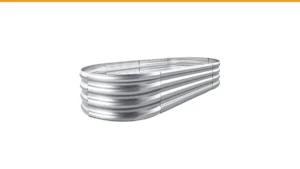
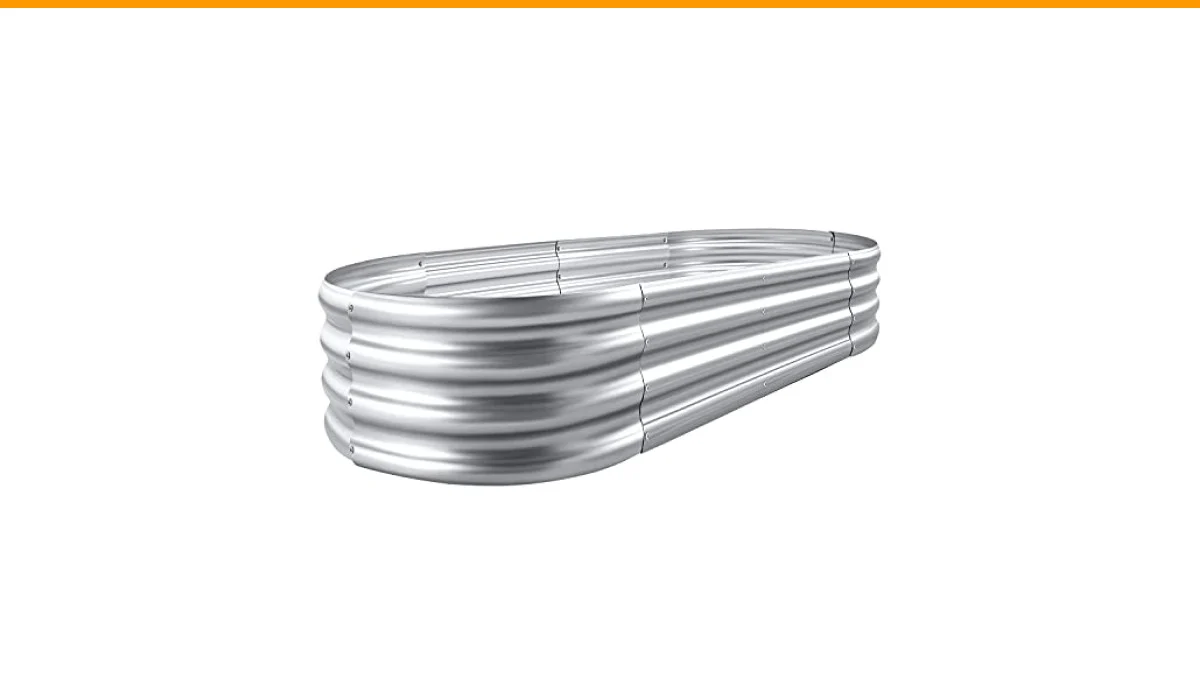
A galvanized raised bed kit like the Land Guard raised garden bed solves the first practical problem: getting deep, uncontaminated soil above a membrane. These oval metal planters come in a 4x2x1 foot size, which holds about 7.14 cubic feet of growing medium. The double-layer galvanized coating and 0.78mm average steel thickness mean they won’t rust through after two winters, and the open base lets roots breathe while preventing waterlogged soil. Assembly takes about five minutes per box, which matters when you are hauling materials up a stairwell.
What a Rooftop Orchard Actually Gives a Community
The most obvious gain is fruit. A single semi-dwarf apple tree can produce 50 to 80 pounds of apples per year once mature. On a roof with eight trees, that is several hundred pounds of fresh produce that does not need a delivery truck. For a housing co-op with 30 units, that covers a meaningful portion of the fall fruit supply.
But the bigger payoff is thermal. A vegetated roof surface with trees and shrubs can lower the ambient air temperature directly above the membrane by 5 to 10 degrees Fahrenheit on a hot afternoon. That translates to lower air conditioning loads on the top floor. One study from the University of Toronto found that a green roof with trees reduced building energy demand for cooling by up to 6 percent. It is not a miracle solution, but it takes the edge off the hottest months.
Stormwater retention is another quiet win. A mature tree canopy intercepts rainfall, and the soil profile in a deep raised bed holds water that would otherwise rush into the gutter system. A 12-inch deep bed can absorb roughly 1 to 1.5 inches of rainfall before it overflows. For older buildings with undersized drains, that buffer prevents basement backups and roof ponding.
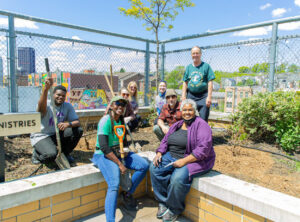
There is also the social dividend. Community orchards on rooftops become gathering spaces. People check on the trees, prune together in late winter, and argue about who gets the first ripe fig. A 2026 study in the Journal of Environmental Psychology found that shared gardening spaces increased neighborhood social cohesion scores by 15 percent compared to non-gardening control groups. You cannot measure that on a spreadsheet, but you can feel it during a harvest day.
Selecting Trees That Will Not Die on a Roof
Rooftops are harsher than ground-level gardens. Wind dries out leaves faster, the sun bakes the soil, and winter roots face freezing temperatures without the insulating blanket of deep earth. So you have to pick species that tolerate those specific stresses.
Dwarf and semi-dwarf rootstocks are non-negotiable. A standard apple tree grows 20 feet tall and will blow over in a wind event. Semi-dwarf trees stay around 12 to 15 feet, and dwarf varieties top out at 8 to 10 feet. For a rooftop, dwarf is usually the right call because it keeps the center of gravity low and makes pruning and harvesting safer.
Good candidates include figs (especially ‘Brown Turkey’ and ‘Chicago Hardy’), which thrive in hot, dry conditions. Pomegranates handle wind and drought well once established. Citrus trees in large pots work in warmer climates. For colder zones, look at columnar apple varieties like ‘Northpole’ or ‘Golden Sentinel’ that grow narrow and tall without taking up much lateral space.
You should avoid most stone fruits like peaches and cherries unless you have a protected corner. They bloom early, and a late frost at rooftop level will kill the flowers. Apples and pears bloom later and are more forgiving.
Wind protection is the detail most people skip. A solid parapet wall around the roof edge helps, but it creates turbulence at the corners. Install a windbreak mesh or a row of dense shrubs like juniper or holly on the windward side. It does not need to block all wind, just slow it down by 50 percent. That reduction alone can cut leaf transpiration rates dramatically.
Weight, Drainage, and the Structural Reality Check
Before you buy a single tree, you need a structural engineer to look at the roof. This is not optional. A saturated raised bed filled with soil weighs roughly 100 to 120 pounds per square foot. A 4×2 foot bed with 1 foot of soil holds about 960 pounds when wet. A row of eight beds along one edge creates nearly 8,000 pounds of point load.
Most modern commercial roofs are designed for a live load of 20 to 30 pounds per square foot, plus snow load. If your building cannot handle the weight, you have a few options. Use lighter growing media like a mix of perlite, coconut coir, and compost, which weighs about 40 to 50 pounds per cubic foot when saturated. Or place beds directly over load-bearing columns and beams, which transfer weight straight down to the foundation.
Drainage matters just as much as weight. You need a drainage layer between the soil and the roof membrane. A simple approach is to lay down a root barrier mat, then a 2-inch layer of gravel or plastic drainage cells, then a geotextile fabric, then the raised beds. The Land Guard beds have an open base, so water drains out the bottom naturally. That prevents the soil from staying soggy, which would suffocate tree roots and add unnecessary weight.
You also need to think about access for maintenance. A rooftop orchard requires regular watering, especially in the first two years. If there is no hose bib on the roof, you will be hauling water up stairs. A 5-gallon bucket weighs 40 pounds. For eight trees, you might need 20 buckets a week in summer. That is exhausting. Install a drip irrigation system with a timer connected to a rooftop spigot before you plant anything.
Comparing Rooftop Orchard Models
Not every community should build the same thing. The right model depends on your building’s size, the number of active volunteers, and whether you want production or recreation. Here is a breakdown of three common approaches.
| Model | Best For | Yield Potential | Volunteer Load | Failure Risk |
|---|---|---|---|---|
| Co-op Production Orchard | Housing co-ops with 20+ units | High (200+ lbs/year) | High (weekly tasks) | Burnout if not shared |
| Educational/School Orchard | Schools, community centers | Moderate (50-100 lbs) | Medium (seasonal bursts) | Summer neglect |
| Ornamental-Plus Orchard | Condos, offices | Low (10-30 lbs) | Low (monthly checks) | Low; mostly aesthetic |
The co-op model produces the most fruit but demands the most from members. You need a pruning schedule, a pest monitoring rotation, and a harvest distribution system. The educational model works well when teachers build orchard tasks into the curriculum. The ornamental-plus model is a compromise: you get the shade and beauty of fruit trees without the pressure to manage a full harvest. Pick the model that matches your group’s energy, not the one that looks best in a grant proposal.
Five Questions People Ask About Rooftop Orchards
How much space do I really need?
One dwarf tree needs a bed at least 4 feet square and 18 inches deep. For a meaningful community harvest, plan for at least six to eight trees. That requires roughly 300 to 400 square feet of usable roof space, including paths between the beds. You can squeeze more with columnar varieties planted closer together, but you will lose yield per tree.
Will tree roots damage the roof membrane?
They can, if you skip the root barrier. Most fruit tree roots stay in the top 18 inches of soil, but they will seek out moisture and can penetrate a compromised membrane. A heavy-duty root barrier made of PVC or polyethylene, rated for root penetration, prevents this. Never place a raised bed directly on a membrane without a protective layer underneath.
What do we do with all the fruit at once?
Apples and pears store well in a cool, dark place for weeks. For the glut, organize a community canning or preserving day. You can also donate surplus to a local food bank. Many food banks accept fresh produce, but call ahead to confirm they have refrigeration. Freezing sliced fruit in bags is the simplest method for berries and stone fruits.
How do we keep the trees watered during a heatwave?
You cannot rely on volunteers to water by hand during a 95-degree week. A drip irrigation system with a battery-powered timer is the only reliable answer. Set each tree with two or three emitters that deliver 1 gallon per hour. Run them for 2 hours every other day in extreme heat. Mulch the soil surface with 3 inches of wood chips to cut evaporation.
Do we need to worry about pests more than a ground orchard?
Rooftop orchards actually have fewer pest problems than ground-level ones. Many common pests like plum curculio and codling moth live in the soil and grass below. Being elevated reduces their access. You will still see aphids and scale, but you can usually manage them with horticultural oil sprays. Birds are the bigger nuisance, especially for cherries and figs. Netting over the canopy is the practical fix.
Building a Community That Lasts Past the First Harvest
The trees will survive if you give them decent soil and water. The community project will survive only if you design it for human nature. Most rooftop orchards fail in year three, not because the trees die, but because the core volunteers move away or lose interest.
You can reduce that risk with a few structural choices. First, create a rotating leadership team of at least five people. Do not let one person become the tree expert. Second, schedule regular social events around the orchard: a spring pruning workshop, a summer solstice picnic, a fall harvest festival. These anchor the orchard in the community calendar. Third, write down everything. Keep a simple binder or shared digital doc with watering schedules, pest sightings, and pruning notes. That institutional memory lets a new volunteer step in without reinventing what worked.
The economic case for a rooftop orchard is modest. You will not feed the whole neighborhood. But the environmental benefits of rooftop orchards are real, and the social return is often larger than the produce value. A building with a functioning orchard is a building where neighbors talk to each other.
- Start with a structural engineer’s sign-off before buying soil or trees. Weight is the dealbreaker.
- Choose dwarf rootstocks and wind-tolerant species like figs, pomegranates, and columnar apples.
- Install a root barrier and drainage layer to protect the roof membrane and prevent waterlogging.
- Automate irrigation with a drip system and timer. Hand watering will fail during a heatwave.
- Build a leadership team of five or more people to prevent volunteer burnout.
- Plan a harvest distribution system before the first fruit ripens. Surplus goes to food banks or the freezer.
- Use galvanized raised beds with an open base to keep soil healthy and avoid rot over the long term. Check the current price and options for the Land Guard kit on Amazon if you want a durable, quick-to-assemble option.
A rooftop orchard is not a weekend project. It is a five-year commitment that pays off in shade, fruit, and community connection. The first year is the hardest. The tenth year, you will wonder how you ever lived without it. For more detailed planning steps, read this guide on starting a rooftop orchard before you buy any trees.