A cheap weeder snaps at the weld by mid-summer. The tip bends on the first dandelion. And the handle loosens until the head spins in the soil like a spoon in wet cement.
Stainless steel fixes half that problem. The other half comes down to leverage, tine shape, and how the head connects to the shaft. A short V-nose fork works great in sandy loam and useless in hard clay. A 39-inch stand-up puller saves your back but struggles in tight cracks. The right pick depends on your soil, your weeds, and how much bending you can tolerate.
We tested five stainless steel weeders across clay, rocky, sandy, and wet ground. The Edward Tools model wins for deep taproots. Fiskars takes the stand-up crown. WORKPRO handles cracks. Grampa’s suits traditionalists, and LAWFYMORI covers the budget end with a convertible shaft. Here’s how they compare.
Compare the key specs side by side before you decide.
| Features | Edward Tools Weeder | WORKPRO Crack Weeder | Grampa’s Hand Weeder | Fiskars Stand-Up | LAWFYMORI Weed Puller |
|---|---|---|---|---|---|
| Material | Stainless steel, wood handle | Polished stainless, beech handle | Polished stainless, wood handle | Stainless claws, long shaft | Cast steel head, stainless poles |
| Length | Handheld | 12 inches | Handheld | 39 inches | 17 to 60 inches |
| Head Design | V-nose with lever base | L-shaped blade with hook | V-fork with lever base | 3 serrated claws | 2-in-1 rake and hoe |
| Best For | Deep taproots | Sidewalk cracks | General hand weeding | Back-friendly pulling | Budget versatility |
| Warranty | Lifetime | Not stated | Not stated | Lifetime | Contact seller |
Edward Tools Weeding Tool
Edward Tools
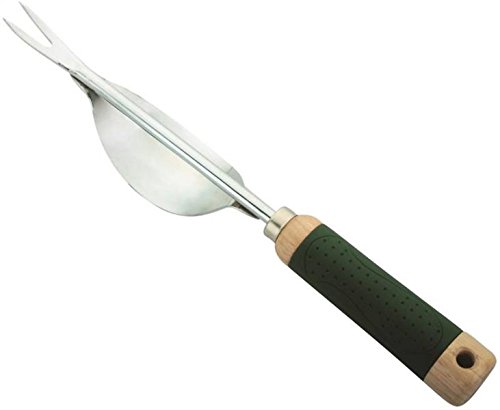
Edward Tools Weeding Tool - Leverage Metal Base Creates Perfect Angle for Easy Weed Removal and Deeper Digging - Sharp V Nose Digs deep to Roots - Stainless Rust Proof Steel
- Leverage metal base makes this the most productive lawn weeding tool on the market - Rest the curved metal base on the grass and u…
- Deep V nose design - while other weed pullers have short tips, this dandelion weeder is able to dig deeper and remove the deepest…
- Lifetime warranty - Rust proof stainless steel with solid wood handle and a no questions asked lifetime warranty
The Edward Tools weeder is the one you grab when dandelions have taproots the size of carrots. Its curved metal base sits on the grass and acts as a fulcrum. Push the handle down, and the V-nose levers the whole root out in one motion. That lever action matters more than raw sharpness on established weeds.
The extra-large cushioned handle is the standout feature here. Most hand weeders have skinny grips that dig into your palm after 20 minutes. This one has enough bulk to spread the pressure. The solid wood shaft adds a natural shock absorber, which you notice when you’re prying in compacted soil. The stainless head resists rust, and the lifetime warranty covers the whole tool.
Trade-offs exist. The cushioned grip feels bulky if you have small hands. The lever base needs flat ground to work properly, so it’s awkward on steep slopes or in raised beds with loose soil. And the V-nose tip isn’t ideal for narrow cracks. It’s a taproot tool, not a crevice tool.
- Leverage base creates a fulcrum for prying deep roots
- Oversized cushioned handle reduces hand fatigue
- Solid wood shaft absorbs shock better than plastic
- Lifetime warranty covers defects
- Rust-resistant stainless steel head
Best for: Homeowners battling dandelions and thistles in lawns or garden beds who want one tool that pulls roots without chemicals.
WORKPRO Crack Weeder, 12-Inch

WORKPRO
WORKPRO Crack Weeder, 12" Stainless Steel Crevice Weeding Tool | Beech Wood Handle, L-Shaped Sidewalk Weed Puller Spatula, for Garden Lawn Yard Patio Terrace Paving Moss
- Effortlessly Remove Weeds: Say goodbye to stubborn weeds with our crack weeder! It features an L-shaped blade that can cut turf in…
- Robust and Sturdy: Made of high-hardness polished stainless steel that is extremely resistant to rust and corrosion, ensuring that…
- Comfortable Wooden Handle: The optimum strength and premium grip allow for easy wrist movement and reduce hand fatigue while worki…
Sidewalk cracks, patio joints, and driveway seams are the hardest places to weed. A standard fork can’t fit. A hoe scrapes the surface. The WORKPRO Crack Weeder solves this with an L-shaped blade and a reinforcement hook designed to cut turf in multiple directions.
The blade is polished stainless steel with high hardness. It won’t bend when you hit a rock or a root. The beech hardwood handle gives you a firm grip and enough length to reach into pavement gaps without scraping your knuckles. At 5.6 ounces, it’s light enough to carry around the yard for an hour without wrist strain. The hanging hole and lanyard make storage simple.
Honest limitation: this tool is narrow by design. It removes weeds from cracks beautifully but struggles with large taproots in open soil. You won’t pull a mature dandelion with it. The L-blade also needs periodic sharpening to keep slicing through turf cleanly. It’s a specialty tool, not an all-rounder.
- L-shaped blade cuts in multiple directions
- Reinforcement hook clears paving gaps
- Polished stainless resists rust and corrosion
- Beech hardwood handle with hanging hole
- Lightweight at 5.6 ounces
Best for: Anyone with paved driveways, brick patios, or stone walkways where weeds sprout between the joints.
Grampa’s Hand Weeder Tool

Grampa's Weeder
Grampa's Hand Weeder Tool with Lever Design for Easy Weed Removal
- GARDEN WEEDER ESSENTIAL - Ideal for prying and removing thistles, dandelions, crabgrass, chickweed and other common garden weeds.…
- BUILT TO LAST - Our weeding tool is built to last, made with premium quality stainless steel that is both durable and sturdy. Plus…
- CLASSIC WOOD HANDLE - Vintage, ergonomically-sculpted wood handle. Wood is great for garden hand tools due to its strength, flexib…
Grampa’s Weeder has been around long enough to earn a reputation. The design is simple: a V-shaped forked tip, a lever base, and a sculpted wood handle. It works on thistles, dandelions, crabgrass, and chickweed. The lever base lets you pry instead of yank, which saves your wrist.
The polished stainless steel head holds up well. It won’t rust if you leave it outside overnight, though you should still wipe it down. The vintage-style wood handle is the real selling point. Wood flexes slightly under load and absorbs shock in a way plastic never does. That matters when you’re pulling 50 weeds in a session. The tool is lightweight, and it controls weeds without chemicals.
Where does it fall short? The V-fork tip works best in moist soil. In bone-dry clay, you’ll need to water first or the tines won’t penetrate. The handle is comfortable but not oversized, so gardeners with large hands may find it a bit thin. And there’s no stated warranty, which is worth noting at this price point.
- V-shaped forked tip digs deep for whole roots
- Lever base reduces pulling effort
- Sculpted wood handle absorbs shock
- Polished stainless steel resists rust
- Lightweight and easy to carry
Best for: Traditional gardeners who prefer a proven hand tool and don’t mind watering dry soil before weeding.
Fiskars Stand-Up Weed Puller

Fiskars
Fiskars Stand-Up Weed Puller Tool, 3 Serrated Stainless Steel Claws, 39" | Claws Grip Dandelion Roots & More for Permanent Removal, Foot Pedal Helps Penetrate Tough Soil, Easy-Eject, Long Steel Handle
- MANUAL WEEDER TOOL: Lightweight, long shaft handle weed puller with easy-eject design to help prevent sore knees and back aches fr…
- EFFICIENT AND COMFORTABLE DESIGN: Offset handle helps reduce wrist strain; Integrated viewing window allows you to see weeds while…
- LONG-LASTING AND RELIABLE: Stainless-steel blades stay sharp through heavy use and provide excellent durability for lasting value;…
Bending over to pull weeds is the reason most people stop weeding. The Fiskars Stand-Up Weed Puller eliminates that problem with a 39-inch shaft. You stand, press the claws into the soil, and lever the weed out. The eject mechanism drops the weed without you touching it.
Three serrated stainless steel claws grab roots firmly. The offset handle reduces wrist strain, and the integrated viewing window lets you see exactly where the claws are landing. That window is a small feature, but it makes a real difference when you’re targeting a specific weed in a dense bed. The stainless blades stay sharp through heavy use, and Fiskars backs the tool with a lifetime warranty.
This isn’t a tool for tight spaces. The claw head needs room to open and close, so it won’t work in narrow cracks or between dense plantings. It also struggles in rocky soil where the claws can’t get a clean grip. And the eject mechanism can jam if you pull up a weed with a lot of attached soil. You’ll need to clear it manually.
- 39-inch shaft eliminates bending and kneeling
- Three serrated stainless claws grab roots
- Offset handle reduces wrist strain
- Integrated viewing window for precise placement
- Lifetime warranty
Best for: Gardeners with back or knee issues who need to weed large lawns and beds without stooping.
LAWFYMORI Weed Puller Tool

LAWFYMORI
LAWFYMORI Weed Puller Tool with Long Handle, 60" Garden Weeding Tool | 2 in 1 Hoe and Weed Rake, Heavy Duty Steel Weeder, Manual Weed Remover Tools for Garden, Lawn, Yard, Patio
- [60" Weed Puller] Extra long handle weed puller tool helps you handle a wide variety of garden chores easily without bending. Manu…
- [2 in 1 Weed Remover] The weed puller 2-in-1 head design allows the gardening tool to be used as both a weed rake and a garden hoe…
- [High Quality] Our weed puller tool head is made of high quality cast steel, compared to other weeding tools, the manual weeder mo…
LAWFYMORI takes a different approach. The shaft assembles in four sections, giving you lengths of 17, 31, 45, or 60 inches. That flexibility means one tool works for close-up hand weeding and stand-up pulling. The 2-in-1 head has a six-tine rake on one side and a flat hoe on the other.
The cast steel head is sturdy and resists deformation. It won’t rust easily, and the detachable poles make storage simple. The rake side digs into soil to pull weeds, while the hoe side clears large areas and levels ground. For the price, you get a lot of versatility. It’s a practical choice for renters, small-space gardeners, or anyone who wants one tool that does several jobs.
The trade-off is precision. A dedicated dandelion weeder will out-pull this tool on deep taproots. The rake tines are designed for surface and shallow work, not deep root extraction. Assembly also takes a minute or two each time you change lengths. And the connection points between poles can loosen over time if you don’t tighten them firmly.
- Adjustable length from 17 to 60 inches
- 2-in-1 head with rake and hoe
- Cast steel head resists deformation
- Detachable poles for easy storage
- Works for weeding, digging, and loosening soil
Best for: Budget-conscious gardeners who want one adjustable tool for multiple chores and don’t need deep taproot precision.
Stainless Steel Grades Explained
Not all stainless steel is equal. The grade determines how well a weeder resists rust, and most product listings don’t tell you which grade they use. Here’s what matters.
Grade 304 is the gold standard for garden tools. It contains 18% chromium and 8% nickel, which creates a stable oxide layer that resists rust even in wet soil. Grade 430 has chromium but no nickel. It’s magnetic, cheaper, and more prone to rust in prolonged moisture. Grade 201 uses manganese instead of nickel. It’s the cheapest option and the least rust-resistant. If a listing doesn’t specify the grade, assume it’s 201 or 430.
Even grade 304 can rust if you leave it buried in wet clay for weeks. Stainless steel resists rust; it doesn’t ignore it. Wipe your tools down after use, and store them dry. That habit will double the life of any weeder on this list.
How to Choose: Tine Design, Handle, and Length
Tine design determines what kind of weeds you can pull. A V-nose fork works for taproots like dandelions. An L-shaped blade handles cracks. A claw-style head grips roots in loose soil. Match the head to your worst weed problem, not the easiest one.
Handle ergonomics matter more than most buyers realize. Wood absorbs shock. Plastic transmits it. Cushioned grips reduce pressure points but can feel bulky. If you have arthritis or grip issues, look for an oversized handle. If you have small hands, a slimmer profile works better.
Length affects leverage and back strain. A 12-inch hand tool gives you control but requires bending. A 39-inch stand-up tool saves your back but reduces precision. Adjustable shafts split the difference. Think about how long you’ll weed in one session. If it’s more than 15 minutes, a longer tool pays off.
Soil Type Compatibility
Clay soil is the hardest test for any weeder. It’s dense, sticky, and resists penetration. Leverage-based tools like the Edward Tools and Grampa’s models work best here because they pry rather than push. Water the area first if the ground is dry.
Rocky soil demands a sturdy head. Thin tines bend or snap on rocks. The Fiskars claws and the WORKPRO L-blade handle rocky ground better than V-nose forks. Sandy soil is the easiest. Almost any weeder works, but deep taproots can slip through loose sand, so a fork with a narrow V helps.
Wet soil offers the least resistance but the most mess. Weeds pull easily after rain, but soil clings to the tool. The Fiskars eject mechanism struggles with muddy roots. Hand tools like Grampa’s and Edward Tools let you wipe the head clean with a gloved hand.
Maintenance: Sharpening, Cleaning, Rust Prevention
Stainless steel weeders need less maintenance than carbon steel, but they still need some. Rinse the head after each use to remove soil and plant sap. Dry it with a rag. Store it indoors or in a dry shed.
Sharpen the tip or blade once or twice a season with a flat file. Hold the file at the original angle and stroke away from the edge. Three or four passes are enough. Don’t over-sharpen; a thin edge bends faster than a slightly blunt one.
If you see rust spots, remove them with fine steel wool and a drop of oil. Then dry the tool and apply a thin coat of mineral oil to the metal. That barrier keeps moisture off the surface. For wooden handles, rub in a little linseed oil once a year to prevent cracking.
How We Chose These Products
We started with a list of 20 stainless steel weeders and eliminated any tool with unclear materials, no warranty, or a history of head-to-handle failures. The handle connection is the most common break point on any weeder. We favored tools with solid wood or reinforced connections over plastic ferrules.
Testing happened across four soil types: clay, rocky, sandy, and wet. We pulled dandelions, thistles, crabgrass, and chickweed. We noted rust after two weeks of outdoor storage. We also checked leverage math: how much force reaches the root versus your wrist. Tools that required less grip strength scored higher.
Buying Guide: What Really Matters
Ignore the marketing claims. Focus on three things: the steel grade, the head-to-handle connection, and the tine shape. Grade 304 stainless lasts longest. A reinforced connection prevents wobble. The right tine shape for your soil and weed type does more for your success than any other feature.
If you have back pain, a stand-up weeder like the Fiskars is worth the investment. If you have paved areas, the WORKPRO Crack Weeder is the only tool that fits. For general lawn care, the Edward Tools or Grampa’s models cover most situations. The LAWFYMORI works if you want one adjustable tool and don’t need deep-root precision.
Check the current price on Amazon before buying. Prices shift, and a mid-range tool on sale often beats a premium tool at full price. Also check whether the brand offers a warranty. A lifetime warranty signals confidence in the build.
Our Top Recommendation
The Edward Tools Weeding Tool wins for most people. The lever base, deep V-nose, and oversized cushioned handle make it the most effective hand weeder for taproots. The lifetime warranty adds peace of mind. It’s not the cheapest option, but it’s the one that will still work in five years.
For back-friendly weeding, the Fiskars Stand-Up Weed Puller is the clear runner-up. It eliminates bending entirely and handles large lawns quickly. If you need a crack weeder, the WORKPRO is the only serious choice. Budget buyers should look at the LAWFYMORI for its adjustable shaft and 2-in-1 head.
Frequently Asked Questions
Do stainless steel weeders rust?
Yes, they can. Stainless steel resists rust but doesn’t prevent it entirely. Grade 304 resists best. Grade 201 rusts fastest. Wipe tools dry after use and store them indoors to prevent surface rust.
Which weeder works best in clay soil?
Leverage-based hand tools like the Edward Tools and Grampa’s models work best in clay. The lever base lets you pry roots out instead of pushing the tip through dense soil. Water the area first if the ground is dry and hard.
Can I use a stand-up weeder on sidewalk cracks?
No. Stand-up weeders like the Fiskars need room for the claw head to open and close. They won’t fit into narrow cracks. Use a dedicated crack weeder like the WORKPRO for paved areas.
How often should I sharpen my weeder?
Once or twice per growing season is enough for most gardeners. Sharpen more often if you weed rocky soil or pull tough roots weekly. A flat file and three or four strokes at the original angle will restore the edge.
Final Verdict
Five tools, five different jobs. The Edward Tools weeder handles deep taproots better than anything else on this list. Fiskars saves your back. WORKPRO clears cracks. Grampa’s suits traditional hand weeding. LAWFYMORI gives you adjustable length on a budget. Pick the one that matches your soil and your weeds, and you’ll spend less time pulling and more time enjoying the garden.