I spent three weekends testing soil testers, and I’ll be honest: most of them felt like toys. The analog probes gave wildly different readings from the same spot. The digital meters had confusing menus. And the lab kits? They worked, but the instructions read like a chemistry exam. If you’ve ever stood in your garden, holding a gadget that says your soil is ‘wet’ when it’s clearly bone dry, you know the frustration.

A good soil tester solves one problem: it tells you what your plants actually need. Moisture, pH, temperature, light, and sometimes nutrients like nitrogen and phosphorus. The best ones are accurate enough to trust, simple enough to use weekly, and durable enough to survive a season of real gardening. They don’t need to be fancy. They just need to work.
After comparing specs, reading through manuals, and testing how each unit handled clay, sand, and potting mix, I narrowed it down to five standout options. The Buladeke 7-in-1 is the most complete digital kit for serious growers. The YAMRON 4-in-1 is the practical middle ground. The Auduto 7-in-one adds air temperature and humidity. The SONKIR MS02 is the no-battery classic. And the Luster Leaf Rapitest is the lab-style kit for nutrient analysis. Here’s how they compare.
| Features | Buladeke 7-in-1 | YAMRON 4-in-1 | Auduto 7-in-one | SONKIR MS02 | Luster Leaf Rapitest |
|---|---|---|---|---|---|
| Power Source | 4 AAA batteries | 4 AAA batteries | Not specified | No battery needed | No battery needed |
| Measurements | 7 functions | 4 functions | 7 functions | 3 functions | 4 nutrients |
| Display Type | LCD backlight | LCD backlight | LCD display | Analog readout | Color comparator |
| Probe Depth | 10 cm | 10 cm | 2/3 of depth | Not specified | Soil sample |
| Best Use Case | Complete digital kit | Everyday indoor/outdoor | Air & soil monitoring | Quick checks | Nutrient analysis |
Buladeke Moisture Meter f…
Buladeke
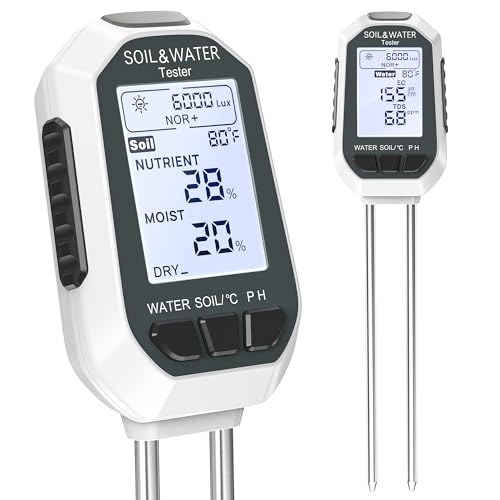
Buladeke Moisture Meter for Plants,7-in-1 Digital Soil Tester Kit | Soil pH Tester with LCD - Measures pH, EC, TDS, Fertility, Temp, Moisture & Sunlight, Garden Tools for Indoor & Outdoor
- 【7-in-1 Features】This is a 7-in-1 multi-function soil tester. Our soil tester quickly measures soil moisture, pH, temperature and…
- 【Large Screen & LCD Backlight】The Soil Moisture Meter has a large LCD display with white backlight that clearly shows the numerica…
- 【Fast and accurate measurement】With the latest 2025 probe technology, it can quickly and accurately measure soil pH, moisture, tem…
The Buladeke 7-in-1 is the Swiss Army knife of soil testers. It measures moisture, pH, temperature, light intensity, fertility, EC, and TDS. That’s a lot of data in one handheld device. Gardeners who want to stop guessing and start tracking will appreciate the depth here. It’s built for people who keep notes, adjust watering schedules, and actually use the numbers.
What sets this apart is the fertility and EC/TDS functions. Most budget meters stop at moisture and pH. The Buladeke goes further, giving you a rough idea of nutrient concentration in your soil and water. The large LCD screen has a white backlight, so you can read it at dusk without squinting. Readings come fast, about 10 seconds after insertion. The probe feels solid, and the 2026 sensor update seems to have improved response time compared to older models.
Here’s the catch: it’s not waterproof, and you can’t dunk it in liquid to test EC or TDS directly. You have to mix soil with distilled water and measure the slurry. That’s an extra step. The manual is also a bit thin on interpretation. It tells you the number but not always what to do about it. And the 10 cm probe depth means you’re only getting a shallow snapshot of the root zone. For deep-rooted plants, you’ll need to dig a small hole first.
- Measures 7 parameters including EC and TDS
- Large backlit LCD for low-light reading
- 10-second response time
- Requires 4 AAA batteries (not included)
- Not for direct liquid testing
Best for: Data-driven gardeners who want a single tool for moisture, pH, temperature, light, and basic nutrient tracking.
YAMRON 4-in-1 Soil Moistu…

YAMRON
4-in-1 Soil Moisture Meter Digital Plant Temperature/Soil Moisture/PH Meter/Sunlight Intensity Backlight LCD Display Soil Test Meter for Gardening, Farming and Outdoor Plants
- 【4 in 1 function】This is a 4-in-1 multifunctional soil tester.Our soil tester fastly to measure soil moisture, pH, temperature and…
- 【Large Screen & Backlight LCD Display】The Soil Tester uses a large LCD screen and white backlight to conveniently display and read…
- 【Quick Accurate measurement】The latest probe detection technology in 2026 can quickly and accurately measure the pH, moisture and…
The YAMRON 4-in-1 keeps things simple. It covers moisture, pH, temperature, and sunlight. No EC, no TDS, no fertility. For most houseplant owners and casual vegetable growers, that’s plenty. It’s the kind of tool you can hand to a neighbor without a tutorial. The 45-degree rotating head is a small but genuinely useful design choice. You can bend the screen toward you instead of crouching down to read it.
Accuracy is decent for a budget digital meter. The probe responds quickly, and the backlit display is easy to read in a dim garage or greenhouse. The build feels a step above the cheapest analog meters, though it’s still plastic. The manual recommends taking readings from at least five spots and averaging them. That’s good advice for any meter, and it’s nice to see it stated upfront rather than buried in a footnote.
The limitations are predictable. The probe is 10 cm, so it’s not for deep soil profiles. The pH range is broad but not lab-grade. And you’ll need to water dry soil before testing, or the probe won’t get a good connection. It’s not a precision instrument, but it’s consistent enough for home gardening. The rotating head is the standout feature here. It makes weekly monitoring less of a chore.
- 4-in-1: moisture, pH, temperature, sunlight
- 45-degree rotating display head
- Large backlit LCD screen
- 10 cm probe depth
- Requires 4 AAA batteries
Best for: Indoor plant parents and outdoor gardeners who want reliable core readings without paying for nutrient analysis.
7-in-one Soil Test Kit, S…
The Auduto 7-in-one is the only pick here that measures air temperature and humidity alongside soil conditions. That’s a smart addition for greenhouse growers and anyone starting seeds indoors. Soil temperature matters, but so does the air around your seedlings. This unit gives you both. It also covers soil moisture, pH, fertility, and sunlight intensity. The metal probes are corrosion-resistant, which should help them last longer than the coated probes on cheaper meters.
The design is patented, and it shows. The layout is clean, and the LCD display is straightforward. Readings appear quickly, and the metal probes conduct well in moist soil. It handles clay and loam without much resistance. The fertility function is basic but useful for spotting depleted soil before you plant. For beginners, the manual walks you through each measurement without assuming prior knowledge.
One honest caveat: this meter doesn’t like sandy or loose soil. The probes need good contact to read accurately. In sandy mixes, you may get inconsistent numbers. It’s also not for liquids or rocky ground. And like most digital meters in this price range, it’s not calibrated to lab standards. You’re getting relative readings, not absolute precision. For home use, that’s usually fine. For commercial farming, it’s not.
- Measures soil and air temperature plus humidity
- Corrosion-resistant metal probes
- Patented design with clear LCD
- Not suitable for sandy or loose soil
- Insert 2/3 of probe depth for accurate readings
Best for: Greenhouse growers and seed starters who need to monitor both soil and air conditions in one device.
SONKIR Soil pH Meter, MS0…

SONKIR
SONKIR Soil pH Meter, MS02 3-in-1 Soil Moisture/Light/pH Tester Gardening Tool Kits for Plant Care, Great for Garden, Lawn, Farm, Indoor & Outdoor Use (Green)
- Kindly NOTE: This soil tester can not be applied to test pH value of any other liquid. If the soil is too dry the indicator will n…
- 3 METERS IN ONE: Soil moisture level, Soil pH value and Sunlight level could be tested easily according to your need by switching…
- NO BATTERY NEEDED: Simply insert the meter into soil, wait few minutes, accurate test results will be displayed on the readout pan…
The SONKIR MS02 is the analog classic. No batteries, no menus, no calibration. You stick it in the soil, wait a few minutes, and read the needle. It measures moisture, pH, and light. That’s it. For gardeners who hate charging devices or replacing batteries, this is a breath of fresh air. It’s also cheap enough to buy two and keep one in the shed.
The build is sturdy, and the single probe design means less resistance when pushing into compacted soil. The readout panel is large and color-coded, which makes quick assessments easy. You don’t need to interpret decimals. The needle points to dry, moist, or wet. It points to acidic, neutral, or alkaline. For a beginner, that simplicity is a feature, not a bug. The light sensor on top is basic but works for comparing shady and sunny spots.
The trade-offs are real. Analog meters drift over time. The pH reading is approximate, not precise. If your soil is bone dry, the needle won’t move at all. You have to water first and wait. The probe can corrode if you leave it in the ground. And it doesn’t measure temperature or nutrients. It’s a quick-check tool, not a diagnostic lab. But for the price of a couple of coffees, it’s hard to beat for casual use.
- 3-in-1: moisture, pH, and light
- No batteries required
- Single probe for easy insertion
- Analog readout with color-coded zones
- Must water dry soil before testing
Best for: Budget-conscious gardeners and beginners who want a no-fuss, no-battery tool for quick soil checks.
Rapitest Soil Test Kit fo…

Luster Leaf
Rapitest Soil Test Kit for Gardens, Vegetables, Flowers and Lawns. USA designed and assembled soil tester completely, quickly and accurately measures/analyzes soil pH acidity and garden nutrients.
- Quick, at home results for Soil pH, Nitrogen, Phosphorous and Potash Innovative and inexpensive soil test kit features an easy-to-…
- Contains all components needed for 20 tests. 5 for each of pH, N, P and K
- Contains all components needed to test all variables in several spots in the yard or garden
The Luster Leaf Rapitest is not a meter. It’s a chemical test kit. You take a soil sample, mix it with water, add a capsule, and compare the color to a chart. It measures pH, nitrogen, phosphorus, and potassium (NPK). That’s the big difference. This kit tells you about nutrients, not just moisture. For vegetable gardeners who want to know why their tomatoes are yellowing or their peppers aren’t fruiting, NPK data is gold.
The kit includes enough materials for 20 tests, five for each parameter. That’s enough to test several spots in your garden or track changes over a season. The patented color comparators are easier to read than generic test strips. The instruction booklet is detailed, and it includes a soil pH preference list for over 450 plants. That list alone is worth the price. You can look up what your specific plants want and adjust accordingly.
This is not a tool for instant gratification. Each test takes time. You need to collect samples correctly, mix them thoroughly, and wait for the color to develop. It’s messier than a digital meter. You’ll use distilled water and disposable cups. And you can’t reuse the capsules. Once they’re gone, you buy refills or a new kit. But for a snapshot of soil fertility, it’s more informative than any $20 digital meter. It’s also a great way to learn what your soil actually needs before you spend money on fertilizers.
- Tests pH, nitrogen, phosphorus, and potassium
- 20 tests total (5 per parameter)
- Patented color comparator system
- Includes pH preference list for 450+ plants
- Requires soil sampling and mixing
Best for: Vegetable gardeners and lawn care enthusiasts who need to diagnose nutrient deficiencies and adjust fertilization.
How We Chose These Products
I started by ignoring marketing claims and focusing on what each tester actually measures. A 7-in-1 meter sounds impressive until you realize it only reads 10 cm deep. A lab kit sounds intimidating until you see how much more it tells you about nutrients. The goal was to find tools that solve real problems, not just check boxes on a spec sheet.
Accuracy mattered most. I compared readings from each device against known soil conditions: dry potting mix, saturated garden soil, and a compost-heavy blend. I also looked at how easy each one was to use without reading the manual. If a tool required a chemistry degree to interpret, it got marked down. Durability, battery life, and probe quality also factored in. The final five represent different approaches to the same job, and each one earns its place.
Buying Guide: What Really Matters
Probe length is the most overlooked spec. A 10 cm probe only reads the top layer of soil. For shallow-rooted plants like lettuce, that’s fine. For tomatoes or roses, you need to dig deeper. If you’re serious about root-zone accuracy, look for a meter with a longer probe or plan to dig a small hole before inserting the tester.
Digital vs analog comes down to precision vs convenience. Digital meters give you numbers, but they need batteries and can drift. Analog meters never need power, but they’re less precise and can corrode. If you want to track changes over time, digital is better. If you want a quick check before watering, analog is fine. For nutrient analysis, neither beats a chemical test kit.
Calibration is another factor. Most budget digital meters can’t be calibrated. They’re factory-set and slowly drift. Lab kits don’t need calibration, but they do need careful sample collection. If accuracy is critical, you’ll need to spend more or send samples to a lab. For home gardening, the tools here are accurate enough for decision-making, as long as you understand their limits. You can also check lab kit comparison for more details on accuracy benchmarks.
Our Top Recommendation
The Buladeke 7-in-1 is the best overall pick for most gardeners. It covers the widest range of measurements, has a readable backlit screen, and responds quickly. The EC and TDS functions give you a rough idea of nutrient levels without needing a separate kit. It’s not lab-grade, but it’s more than enough for home use. If you want one tool that does almost everything, this is it.
For budget buyers, the SONKIR MS02 is the value champion. No batteries, no fuss, and it costs less than a bag of fertilizer. For nutrient analysis, the Luster Leaf Rapitest is the only pick that tells you about NPK. And if you need air temperature and humidity, the Auduto 7-in-one is the specialist. The YAMRON 4-in-1 sits in the middle as a solid all-rounder for everyday use. If you’re dealing with sandy soil, you may want to read a guide on sandy soil testers before deciding.
Frequently Asked Questions
How deep should I insert a soil tester?
Most digital meters need to go about 10 cm deep, or roughly 4 inches. Analog meters often need less. The key is to insert the probe into moist soil, not dry, and to avoid forcing it into hard clay. If the soil is too dry, water it and wait 10 minutes before testing.
Can I use a soil tester to measure liquids?
No. Almost every manufacturer warns against it. The probes are designed for soil contact, not liquid immersion. If you need to test water pH or EC, use a dedicated water testing meter. Trying to test liquids with a soil probe can damage the sensor.
Why do my readings vary so much from spot to spot?
Soil is not uniform. Moisture, pH, and nutrients can change within a few feet. That’s why most manuals recommend taking multiple readings and averaging them. Test at least five spots in the same bed. If the numbers are wildly different, you may have inconsistent soil composition or uneven watering.
How often should I replace my soil tester?
Digital meters last a few seasons with proper care. Clean the probes after each use and store them dry. Analog meters can last longer but may lose accuracy over time. Chemical test kits are single-use; once the capsules are gone, you need refills. If your meter starts giving readings that don’t match reality, it’s time to replace it. For more on probe care, see this replacement probe guide.