You’ve sketched out a four-year rotation. Tomatoes this season, then beans, then brassicas, then roots. It looks perfect on paper. Then you actually test your soil and find the pH has drifted, or the nitrogen is lower than expected. Suddenly the plan needs adjusting.

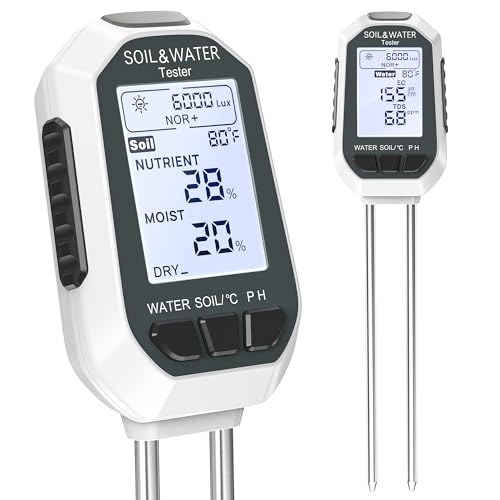

A good soil tester turns crop rotation from guesswork into a data-driven decision. You need to know pH, moisture, and ideally nutrient levels before you commit a bed to a specific crop family. The right tool depends on whether you want quick spot checks or detailed nutrient profiles.
We’ve tested five popular soil testers, from simple analog meters to comprehensive digital kits. Here’s who each one is perfect for, and where they fall short.
Here’s a quick look at how these five testers compare on the specs that matter most for rotation planning.
| Features | SONKIR MS02 | YAMRON 4-in-1 | Buladeke 7-in-1 | HSLGOVE 7-in-1 | Rapitest Kit |
|---|---|---|---|---|---|
| Measurement Type | Analog, 3-in-1 | Digital, 4-in-1 | Digital, 7-in-1 | Digital, 7-in-1 | Chemical, 4-test |
| Key Metrics | pH, moisture, light | pH, moisture, temp, light | pH, moisture, temp, light, EC, TDS, fertility | pH, moisture, temp, light, fertility, air temp/humidity | pH, N, P, K |
| Power Source | None | 4 AAA batteries | 4 AAA batteries | 3 batteries | None |
| Best Use Case | Quick field checks | General gardening | Detailed soil analysis | Comprehensive monitoring | Nutrient-specific planning |
SONKIR Soil pH Meter, MS0…

SONKIR
SONKIR Soil pH Meter, MS02 3-in-1 Soil Moisture/Light/pH Tester Gardening Tool Kits for Plant Care, Great for Garden, Lawn, Farm, Indoor & Outdoor Use (Green)
- Kindly NOTE: This soil tester can not be applied to test pH value of any other liquid. If the soil is too dry the indicator will n…
- 3 METERS IN ONE: Soil moisture level, Soil pH value and Sunlight level could be tested easily according to your need by switching…
- NO BATTERY NEEDED: Simply insert the meter into soil, wait few minutes, accurate test results will be displayed on the readout pan…
This is the tester for the gardener who wants to grab a tool, stab it in the ground, and get a reading without thinking about batteries or menus. It’s a simple analog meter with a single probe and a dial. You switch between moisture, pH, and light. That’s it. For crop rotation, it’s best for quick pH spot checks before you plant. If you’re rotating tomatoes (which prefer slightly acidic soil) into a bed that previously held brassicas (which like it sweeter), you can check the pH in seconds.
What stands out is the lack of fuss. No batteries, no calibration, no waiting for a digital display to settle. The probe is sturdy enough for average garden soil. The light meter is a bonus, though not directly relevant to rotation planning. The moisture reading helps you avoid testing dry soil, which can skew pH results. For the price, it’s a solid entry-level tool.
The trade-off is precision. Analog dials are less exact than digital readouts. You’ll get a general sense of pH, not a precise number. The probe also needs soil that’s moist but not soaked. If your soil is bone dry, the needle won’t move. You’ll need to water and wait. It also doesn’t measure nutrients, so you can’t fine-tune nitrogen or phosphorus needs for specific crops.
- No batteries required, works instantly
- Measures pH, moisture, and light with a single probe
- Analog dial gives a general range, not precise numbers
- Requires moist soil for accurate readings
- Lightweight and portable for field use
Best for: The budget-conscious gardener who wants a quick, no-hassle pH check before rotating crops.
YAMRON 4-in-1 Soil Moistu…
This digital meter suits the home gardener who wants a bit more data than an analog dial provides. It measures moisture, pH, temperature, and sunlight. The 45-degree rotating head is a small but genuinely useful feature. You can bend the screen toward you without crouching. For crop rotation, the temperature reading is helpful. Soil temperature affects germination and root growth, so you can time your rotations better.
The backlit LCD screen is clear and easy to read, even in low light. It takes four AAA batteries, which aren’t included. The probe needs to go about 4 inches into the soil. The manufacturer recommends taking readings from at least five spots and averaging them. That’s good advice for any meter. It gives you a more accurate picture of the bed. The 10-second wait time is reasonable.
It’s not perfect. The pH range is limited, and it won’t give you the same precision as a laboratory test. The probe can be damaged if you force it into hard, dry soil. You’ll need to water the test area first and wait. The battery door feels a bit flimsy. And it doesn’t measure nutrients, so you’ll still need a separate test for nitrogen, phosphorus, and potassium.
- Digital display with backlight for easy reading
- Measures moisture, pH, temperature, and light
- Rotating head allows viewing without bending over
- Requires 4 AAA batteries (not included)
- Needs moist soil and multiple readings for accuracy
Best for: The tech-comfortable gardener who wants digital readouts and temperature data for planning rotations.
Buladeke Moisture Meter f…
This is the tool for the serious grower who wants to understand soil fertility alongside pH and moisture. It’s a 7-in-1 digital tester. It measures pH, moisture, temperature, light intensity, EC, TDS, and fertility. The EC and TDS readings are the standout features. They give you a sense of the soluble salt levels in your soil. That’s useful for crop rotation because different crops have different salt tolerances. Beans, for example, are sensitive to high salts. If you’re rotating from a heavily fertilized bed, you’ll want to know that.
The large LCD screen with white backlight is easy to read. The fertility function is a helpful proxy for nutrient availability. It won’t tell you exact nitrogen levels, but it gives you a relative idea. The 10-second read time is quick. The probe is designed for soil only, not liquids. The manufacturer warns against forcing it into dry, hard soil. You’ll need to moisten the area first. The 2026 probe technology claim is marketing, but the readings are consistent.
The main limitation is that it’s still not a lab test. The fertility reading is a general indicator, not a precise measurement of N-P-K. The EC and TDS functions are more relevant for hydroponics or container growing than open soil. For crop rotation in a garden, the pH and moisture readings are the most useful. The battery life is average. It takes four AAA batteries.
- 7-in-1 functionality includes EC, TDS, and fertility
- Large backlit LCD screen for clear readings
- Fertility function helps gauge nutrient availability
- Requires moist soil and careful probe insertion
- EC/TDS more useful for containers than open garden beds
Best for: The data-driven gardener who wants fertility and salt-level insights for precise rotation planning.
HSLGOVE Soil Test Kit, 7-…
This tester is for the gardener who wants a comprehensive dashboard of soil and air conditions. It’s a 7-in-1 meter with a dual-dial design. One dial is analog for soil moisture, pH, and fertility. The other is a digital LCD for soil temperature, air temperature, and humidity. That combination is unusual. For crop rotation, the air temperature and humidity readings help you understand the microclimate of different beds. A bed near a wall might be warmer and drier, which affects which crops will thrive there.
The single-probe design is less harmful to plant roots than multi-probe meters. The probe is about 6.8 inches long, so it works for medium to large pots and garden beds. The 3-metal probe is durable. The LCD screen displays soil temp, air temp, and humidity. The analog dial gives you the pH and fertility readings. It takes 3 batteries, and you need to replace all of them at once. The instructions say to read LCD results in 3-5 minutes.
The trade-off is complexity. The dual-dial system takes some getting used to. The analog dial is less precise than a digital readout. The fertility reading is a general indicator, not a specific nutrient measurement. The battery compartment is a bit fiddly. And the 3-5 minute wait for LCD results feels slow compared to other digital meters. But the combination of soil and air data is genuinely useful for planning rotations in different microclimates.
- Dual-dial design combines analog and digital readings
- Measures soil moisture, pH, fertility, temp, light, air temp, and humidity
- Single probe is less damaging to roots
- 3-5 minute wait for LCD results
- Requires 3 batteries, replaced all at once
Best for: The meticulous gardener who wants to monitor both soil and air conditions across different garden beds.
Rapitest Soil Test Kit fo…

Luster Leaf
Rapitest Soil Test Kit for Gardens, Vegetables, Flowers and Lawns. USA designed and assembled soil tester completely, quickly and accurately measures/analyzes soil pH acidity and garden nutrients.
- Quick, at home results for Soil pH, Nitrogen, Phosphorous and Potash Innovative and inexpensive soil test kit features an easy-to-…
- Contains all components needed for 20 tests. 5 for each of pH, N, P and K
- Contains all components needed to test all variables in several spots in the yard or garden
This is the tester for the gardener who needs to know actual nutrient levels, not just a relative fertility reading. It’s a chemical test kit, not a meter. You take a soil sample, mix it with water, add a capsule, and compare the color to a chart. It measures pH, nitrogen, phosphorus, and potassium. That’s the core data for crop rotation. If you’re rotating heavy feeders like corn with light feeders like carrots, you need to know your nitrogen levels. This kit tells you.
The capsule system is straightforward. You get 20 tests total, 5 for each of pH, N, P, and K. That’s enough to test several spots in your garden. The color comparators are patented and easy to use. The instructions are detailed. The kit includes a soil pH preference list for over 450 plants. That’s a genuinely useful reference for rotation planning. You can look up what each crop family prefers and compare it to your test results.
The limitation is that it’s a one-time test per capsule. You can’t reuse them. You’ll need to buy refills if you test frequently. The color matching is subjective. Two people might see slightly different shades. It takes more time than a meter. You need to collect samples, mix, and wait. But for the depth of information, it’s worth the effort. It doesn’t measure moisture or temperature, so you’ll need a separate tool for that.
- Chemical test kit measures pH, nitrogen, phosphorus, and potassium
- Includes 20 tests (5 each for pH, N, P, K)
- Patented color comparators for easy reading
- Includes pH preference list for over 450 plants
- One-time use capsules, refills needed for frequent testing
Best for: The rotation planner who needs actual nutrient data, not just a general fertility indicator.
How We Chose These Products
We focused on what actually matters for crop rotation planning. That means pH accuracy, nutrient data, and ease of use in real garden conditions. A tester that’s fussy or slow won’t get used. We looked for tools that give you actionable information before you plant, not just interesting numbers.
We also considered the different ways gardeners work. Some want a quick check with no batteries. Others want digital precision and data logging. We weighed the trade-offs of each approach. Analog meters are fast but less precise. Digital meters give more data but need batteries. Chemical kits give nutrient specifics but take more time. The best choice depends on your priorities.
Buying Guide: What Really Matters
For crop rotation, pH is the first thing to check. Different plant families have different pH preferences. Legumes like it closer to neutral. Brassicas prefer slightly alkaline. If your pH is off, you can adjust it before planting. A meter with a clear pH range is essential. Analog meters give you a general idea. Digital meters give you a number. Chemical kits give you a color match.
Nutrient data is the second consideration. Nitrogen, phosphorus, and potassium drive plant growth. A fertility indicator on a digital meter is a rough guide. A chemical test kit gives you actual levels. If you’re rotating heavy feeders with light feeders, you need to know what’s left in the soil. For more on testing specific soil types, see our guide to the best soil tester for sandy soil.
Moisture and temperature affect when you can plant. A meter with these functions helps you time your rotations. You can’t plant warm-season crops until the soil reaches a certain temperature. A tester with a temperature probe saves you from guessing. For raised beds and containers, a compost bed soil tester can be more appropriate. Consider how you’ll use the tool. If you want quick spot checks, a simple meter works. If you want detailed data, a digital or chemical kit is better.
Our Top Recommendation
The Buladeke 7-in-1 is our top pick for most crop rotation planners. It balances digital convenience with useful data. The pH, moisture, and temperature readings are solid. The fertility function gives you a relative idea of nutrient levels. The EC and TDS readings are a bonus for container growers. It’s not a lab test, but it’s a practical tool for making planting decisions.
For budget-minded gardeners, the SONKIR MS02 is a reliable alternative. It’s simple, durable, and doesn’t need batteries. It won’t give you nutrient data, but it handles pH and moisture well. For those who need actual nutrient levels, the Rapitest Soil Test Kit is the best choice. It’s more work, but it gives you the N-P-K numbers that matter for rotation planning.
Frequently Asked Questions
Can I use a soil tester to plan crop rotation without a lab test?
Yes. A good tester gives you enough data to make informed decisions. You’ll know your pH range and have a sense of nutrient levels. That’s enough to group crops by their needs. You won’t get the precision of a lab, but you’ll be far ahead of guessing.
How often should I test my soil when rotating crops?
Test before each planting season. If you’re doing multiple rotations in one year, test between each one. Soil conditions change as crops grow and are harvested. A quick check before planting saves you from putting the wrong crop in the wrong bed.
What’s the difference between a fertility reading and a nutrient test?
A fertility reading on a digital meter is a relative indicator. It tells you if fertility is low, medium, or high. A nutrient test, like the Rapitest kit, gives you actual levels of nitrogen, phosphorus, and potassium. For rotation planning, nutrient tests are more precise.
Do I need a tester that measures light for crop rotation?
Light matters for choosing crops, but it’s less critical for rotation. Most garden beds get similar light. If you have varying light conditions, a light meter helps you match crops to the right spot. For rotation planning, focus on pH and nutrients first.