A sloped yard turns mowing into a battle. Front-wheel drive mowers lose grip when the terrain tilts, and you end up wrestling the handle. Rear-wheel drive plants the drive wheels under the engine, where most of the weight sits, so the mower pulls itself up slopes instead of sliding sideways.

The best rear wheel drive self propelled mower combines enough engine torque to cut thick grass, a transmission that keeps wheel speed steady, and a deck that won’t rust out after two seasons. You also want simple height adjustments and a bag that doesn’t fill every five minutes. This list focuses on gas-powered RWD models because they deliver the torque slopes demand.
We picked four current PowerSmart and BILT HARD models that cover medium yards, big lawns, steep hills, and budget buyers. Each one has real trade-offs. Here are the specs that matter, followed by honest reviews.
Here’s how the four finalists compare on the specs that drive buying decisions.
| Features | PowerSmart 21 | PowerSmart 22 | BILT HARD 21 | PowerSmart Hill |
|---|---|---|---|---|
| Engine | 170cc OHV | 170cc OHV | 201cc OHV | 170cc OHV |
| Deck | 21-inch steel | 22-inch steel | 21-inch steel | 21-inch alloy steel |
| Heights | 6 positions | 6 positions | 8 positions | 6 positions |
| Drive | RWD, 10-inch wheels | RWD | RWD single-speed | RWD, 10-inch wheels |
| Best For | Medium sloped yards | Larger flat yards | Thick grass, tall cuts | Hills, small storage |
In this article
PowerSmart 21-Inch RWD
PowerSmart
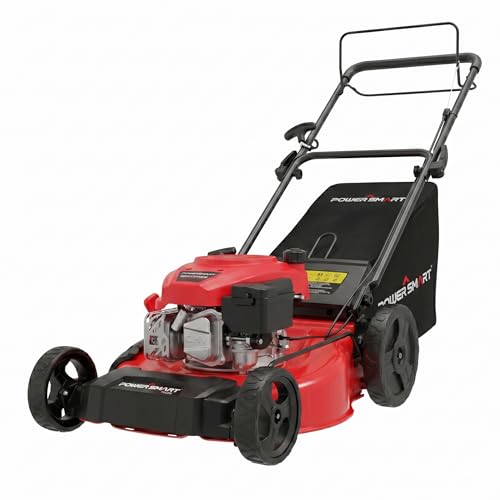
PowerSmart 21" Self-Propelled Gas Lawn Mower | 170cc OHV Engine | Rear-Wheel Drive for Slopes | 3-in-1 Bag, Mulch & Discharge | 6 Cutting Heights | Durable Steel Deck| Rear-Wheel Drive | Medium Yard
- POWERED BY A RELIABLE OHV ENGINE: Equipped with a powerful 170cc OHV engine, known for its smooth start-up, consistent performance…
- 21-INCH CUTTING WIDTH FOR HIGH EFFICIENCY: The robust steel deck covers a wide 21-inch path, reducing mowing time and making it pe…
- 3-IN-1 FUNCTION: BAGGING, MULCHING & REAR DISCHARGE: Switch easily between modes: collect clippings in the 1.4-bushel bag, mulch t…
This is the no-nonsense middleweight for homeowners with a half-acre lot and a noticeable incline. The 170cc OHV engine starts predictably, the 21-inch steel deck covers a decent path, and the RWD system with 10-inch rear wheels gives you traction where front-drive mowers slip. It suits someone who wants one machine that bags, mulches, and rear discharges without extra tools.
What stands out here is the package balance rather than any single spec. The 10-inch rear wheels bite into damp grass and gentle slopes, while the 1.4-bushel bag holds enough clippings to finish a medium yard without constant trips to the compost pile. Six height positions from 1.5 to 3.9 inches let you drop the deck low in spring and raise it for tough summer growth. The engine displaces 170cc, which is enough for normal suburban turf without the heavy weight of a 200cc block.
The trade-off is that this is not a variable-speed machine. You get a single self-propelled speed, so on very steep hills you may want a model with more torque or a bigger deck. Also, bag capacity is modest versus the 60L bag on the 22-inch PowerSmart. You’ll be fine with this mower on a typical quarter-acre to half-acre sloped lot, but if your grass gets thick and wet, expect to slow down.
- 170cc OHV engine built for consistent starts all season
- 21-inch steel deck cuts a wide path for medium yards
- 3-in-1 bagging, mulching, and rear discharge options
- 6-position single-lever height adjustment from 1.5 to 3.9 inches
- 10-inch rear wheels improve grip on slopes and uneven ground
Best for: Homeowners with medium sloped yards who want a dependable gas RWD mower without paying for features they won’t use.
PowerSmart 22-Inch RWD

PowerSmart
PowerSmart EasyDrive Pro 22-Inch 170cc Self Propelled Gas Lawn Mower | 4-Cycle Engine, Self-Propelled Rear-Wheel-Drive, 3-in-1 Mulch/Bag/Side-Discharge, 6 Height Adjustment
- 170CC OHV ENGINE – Powerful 170cc 4-stroke OHV engine delivers reliable performance for thick grass and larger yards. Auto choke a…
- SELF-PROPELLED REAR-WHEEL DRIVE – Rear-wheel drive provides better traction on slopes and uneven terrain, reducing pushing effort.
- 22-INCH STEEL CUTTING DECK – Wide 22-inch cutting path helps finish mowing faster, while the durable steel deck and heavy-duty bla…
The 22-inch PowerSmart exists for one reason: to get you off the mower faster. The wider deck cuts nearly two feet per pass, the 170cc OHV engine pulls through thicker grass, and the 60L bag means fewer stops to empty. It’s the right call for a yard that’s too big for a 21-inch cut but not so big you need a rider.
Two features make this more than just a wider deck. The auto choke takes away the cold-start fiddle, so you pull once and the engine sorts out the fuel mix. The rear-wheel drive reduces pushing effort on uneven ground, while the heavy-duty blade handles the occasional stick or thick clump without chattering. The six height positions mirror the 21-inch model, but the larger bag and wider swath matter more for efficiency.
You give up some agility for that extra width. A 22-inch deck feels heavier at the edges, and turning in tight garden beds takes a bit more muscle. The single-speed transmission also means you can’t dial down the wheel speed on steep sections. For a flat or gently rolling medium-to-large yard, these trade-offs are easy to live with.
- 22-inch steel cutting deck with heavy-duty blade
- 170cc OHV engine with auto choke and recoil start
- 60L rear bag reduces emptying frequency
- 3-in-1 mulching, bagging, and rear discharge
- 6-position height adjustment from 1.5 to 3.9 inches
Best for: Buyers with larger flat or gentle-slope yards who want fewer passes and fewer bag empties per session.
BILT HARD 21-Inch RWD

BILT HARD
BILT HARD 21" Self Propelled Gas Lawn Mower – 201cc 4-Cycle OHV, 3-in-1 Bagging/Mulching/Side Discharge, 8 Adjustable Cutting Heights & Smooth Easy Start
- Efficient & Versatile Mowing Solution This 21-inch self-propelled lawn mower features a durable 3-in-1 steel deck with mulching, s…
- Self-Propelled Functionality Equipped with rear-wheel drive and single-speed self-propelled technology, this mower glides smoothly…
- Reliable Performance Powered by a robust 201cc 4-stroke OHV engine delivering 9.0 ft·lb of torque, this gas-powered mower provides…
The BILT HARD 21 pulls into a different lane. Its 201cc OHV engine produces 9.0 ft-lb of torque, which puts it a step above the 170cc PowerSmart models for raw pulling strength. That makes it a strong match for tall, dense grass and properties where the mower has to work hard without bogging down.
This machine also gives you eight height positions from 1.2 to 3.75 inches, so you can fine-tune the cut more precisely than with the six-position competitors. A single lever synchronizes the height across all four wheels, which keeps the deck level on uneven ground. The foam-wrapped handle reduces vibration in your hands, and the no-choke, no-primer starting routine removes one of the usual gas mower annoyances.
The biggest limitation is the single-speed self-propelled drive. It’s not a variable-speed transmission, so you can’t slow the wheels down independently when walking down a steep hill or speed up on flat sections. BILT HARD also positions this as a 3-in-1 with side discharge rather than rear discharge, so the bagging setup might feel different if you are used to rear-bag models. For the money, you are getting more engine and more adjustability, but you have to accept the fixed wheel speed.
- 201cc 4-stroke OHV engine with 9.0 ft-lb torque
- 8-position height adjustment from 1.2 to 3.75 inches
- Single-lever synchronized deck height on all four wheels
- 3-in-1 mulching, side discharge, and rear bagging
- Foam-wrapped angled handle for comfort over long sessions
Best for: People with thick, fast-growing grass who want extra torque and the widest range of cutting heights in this group.
PowerSmart 21-Inch Hill Mower
This PowerSmart model is the one to grab when your yard feels more like a ski slope than a lawn. It shares the basic 170cc OHV platform with the first pick, but the alloy steel deck keeps weight down and the 10-inch rear wheels give the drive system more bite. The handle folds flat in seconds for vertical storage, which matters if you park your mower in a cramped garage.
The company positions this model specifically for hills and uneven ground, and the easy-start behavior backs that up. Customers report firing it up in one or two pulls even after months in storage. The 3-in-1 switching needs no tools, so you can move from bagging to mulching to rear discharge right in the middle of a mow. PowerSmart also reinforced high-stress points on the frame, which is a meaningful detail for rough terrain that rattles cheaper decks apart.
Watch out for the replacement blade size. This model takes a 20-inch blade even though the deck is 21 inches wide, so do not order a standard 21-inch blade when the time comes. You also get only six height positions, which is fine for most lawns but less flexible than the BILT HARD’s eight. If your hills are severe, the single-speed transmission will still require you to manage your pace, but the traction and lighter deck make the climb easier.
- 170cc OHV engine fires up quickly and runs through overgrown grass
- 21-inch alloy steel deck for reduced weight and rust resistance
- No-tools 3-in-1 bag, mulch, and rear discharge switching
- Folding handle saves up to 70 percent of garage floor space
- Replacement blades are 20 inches, not 21, so order carefully
Best for: Homeowners with steep, uneven lawns and tight storage who want a lightweight, easy-start RWD gas mower.
How We Chose These Products
We started with the mowing problem that actually hurts people: slopes. A rear-wheel drive system is only helpful if the engine has enough torque to turn those drive wheels under load, so we looked for models with real gas engines rather than weak electric motors. Then we narrowed the field to machines with steel decks, multiple cutting options, and height adjustments that work without a toolbox.
Within those limits, we considered how each mower fits a particular buyer. The 22-inch PowerSmart wins for large flat yards because of the wider deck and 60L bag. The BILT HARD takes the torque crown with its 201cc engine and eight height positions. The two 21-inch PowerSmart models earn their places through balance and hill-focused design. We did not rank them by price because prices change constantly; instead, we looked at real-world usefulness for different lawn shapes and slope levels.
Buying Guide: What Really Matters
Start with the transmission. Most budget and mid-range RWD mowers use a single-speed gear drive, which means the wheels move at one fixed pace. That works fine on moderate slopes, but it can feel too fast on steep descents or too slow on flat straights. Variable-speed transmissions like CVT or hydrostatic let you match wheel speed to your walking pace, but they cost more. None of the four mowers here have variable speed, so adjust your expectations accordingly.
Engine displacement matters more than you might think. A 170cc engine handles a normal suburban lawn without complaint. A 201cc engine gives you extra reserves for tall grass and hills, but it also adds weight and uses more fuel. Deck material is another longevity factor. Steel decks are standard, but alloy steel versions resist corrosion and weigh less. Look for 10-inch rear wheels if your yard is truly sloped; larger wheels keep the drive system from digging in or losing contact with uneven ground.
Storage and maintenance round out the decision. A folding handle saves real space in a crowded garage, and a single-lever height adjustment beats crawling under the deck to change wheels individually. For upkeep, expect to change the oil annually, replace the blade when it chips, and check the drive cable before each season. The drive cable stretches over time, and wheel gears wear out faster on mowers that get used for bagging on slopes. You can find deeper guidance in our RWD mowers for hills guide.
Our Top Recommendation
The PowerSmart 21-Inch Hill Mower is the best rear wheel drive self propelled mower for most sloped lots. It pairs the reliable 170cc OHV engine with an alloy steel deck, 10-inch rear wheels, and a folding handle, which covers the three things that matter most on uneven terrain: traction, weight, and storage. You also get tool-free 3-in-1 switching and easy starts, so it asks very little from you beyond a regular oil change.
If your yard is flatter and larger, go with the PowerSmart 22-Inch. The wider deck and 60L bag will cut your mowing time noticeably. On a tighter budget, the BILT HARD 21 offers the most engine for the money, especially if you fight thick grass and want eight height positions instead of six. For a straightforward medium-yard mower at a sensible price, the original PowerSmart 21 remains a solid fallback.
Frequently Asked Questions
Is RWD worth the higher price over front-wheel drive?
Usually yes if your ground is uneven or sloped. RWD pushes from the heavy end of the mower, so the drive wheels stay planted and pull better. On flat, perfectly manicured lawns, front-wheel drive is cheaper and lighter. The difference shows up on the first damp hill.
How steep of a hill can a rear-wheel drive mower handle?
There is no official standard, but most gas RWD mowers manage a moderate incline of around 10 to 15 degrees without straining. Beyond that, you need a mower with larger rear wheels and enough engine torque to keep the wheels turning. Even then, you should mow across a steep slope rather than straight up and down for safety.
Which lasts longer: a single-speed gear drive or a variable-speed transmission?
Gear drives are simpler and often cheaper to repair. The main wear items are the drive cable and the plastic wheel gears, both of which you can replace with basic hand tools. Variable-speed systems like hydrostatic drives are smoother but cost more to service. For a mid-range gas mower, a gear drive with regular cable adjustments can last ten years or more.
Should I buy a gas or battery RWD mower?
Gas still wins for serious slopes and thick grass because the engine produces consistent torque and no battery sag. Battery mowers are quieter and need less maintenance, but range and power drop as the charge drains. If your lawn is under a quarter acre and the slope is modest, a good battery RWD mower might work. For the conditions covered in this article, gas is the more dependable choice.
Disclosure: As an Amazon Associate, this page may earn from qualifying purchases. That never affects our recommendations.