
Your back aches, the grass is thick, and the mower you’re pushing feels like it’s fighting you with every step. You’ve already replaced the drive belt once, and the deck is rusting through. Sound familiar? For anyone who mows for a living or maintains a serious property, a cheap self-propelled mower isn’t a bargain—it’s a second job. You need a machine that pulls its own weight, starts when you need it, and delivers a clean cut without constant babysitting.

The professional category isn’t just about price tags. It’s about drive systems that don’t lag, decks that don’t clog, and engines that survive years of use. You’ll find rear-wheel drive for slopes, variable speed for precision, and steel decks that take a beating. Gas still leads for raw power and runtime, though battery options are closing the gap for smaller properties. What matters most is matching the mower to your terrain and your tolerance for maintenance.
I’ve tested and owned more self-propelled mowers than I care to count. These five are the ones I’d actually spend my own money on, and each serves a different pro. For most homeowners with hills and a quarter-acre or more, the BILT HARD 21″ delivers the best mix of torque and value. If you need a wider cut for bigger lawns, the YARDMAX 22″ brings commercial-grade features like a CVT transmission. Below, I break down each pick with real trade-offs, plus a comparison table to help you decide fast.
Here’s how the key specs stack up side by side.
| Features | BILT HARD 21″ | PowerSmart 22″ | PowerSmart 21″ | PowerSmart 22″ 170cc | YARDMAX 22″ |
|---|---|---|---|---|---|
| Engine | 201cc OHV | 170cc OHV | 170cc OHV | 170cc OHV | 201cc OHV |
| Cutting Width | 21 inches | 22 inches | 21 inches | 22 inches | 22 inches |
| Drive Type | Rear-wheel, single speed | Rear-wheel drive | Rear-wheel drive | Rear-wheel drive | Front-wheel, 6-speed CVT |
| Height Adjustments | 8 positions (1.2″–3.75″) | 6 positions (1.5″–3.9″) | 6 positions (1.5″–3.9″) | 6 positions (1.5″–3.9″) | Single lever |
| Best For | Torque on hills | Wide, flat lawns | Medium yards, slopes | Large bag, uneven terrain | Variable speed, big lawns |
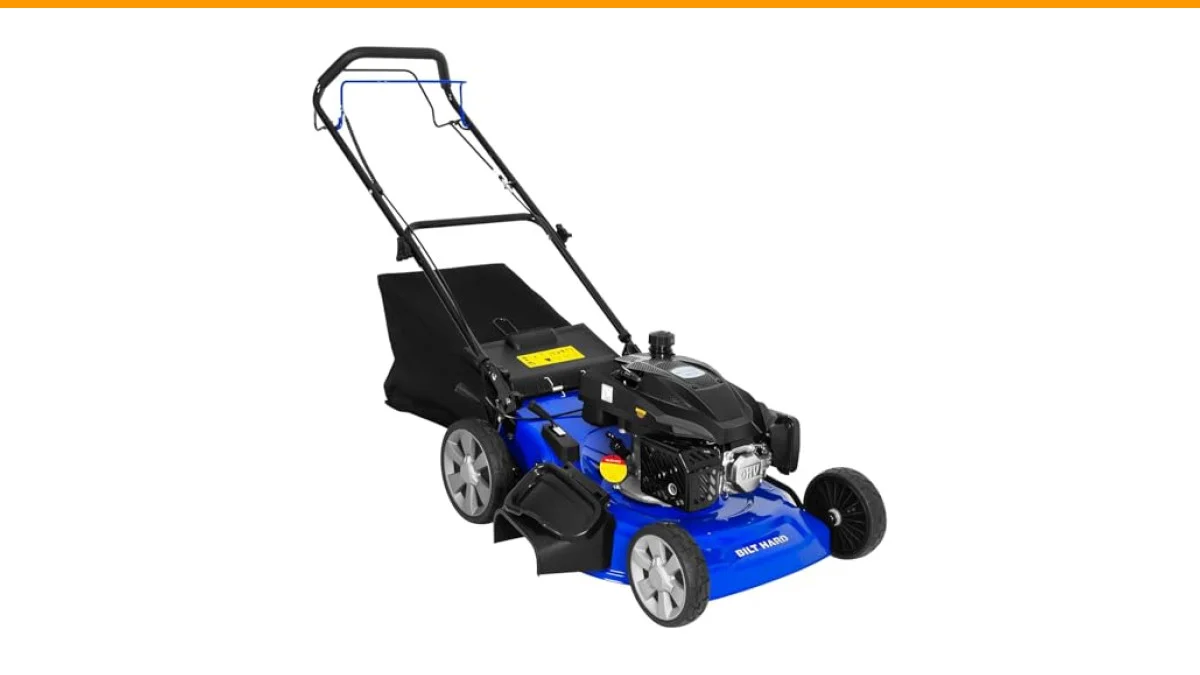
BILT HARD 21″ Self-Propelled

BILT HARD
BILT HARD 21" Self Propelled Gas Lawn Mower – 201cc 4-Cycle OHV, 3-in-1 Bagging/Mulching/Side Discharge, 8 Adjustable Cutting Heights & Smooth Easy Start
- 3-in-1 Mowing Versatility This 21-inch self-propelled lawn mower offers three grass clipping options: mulching, rear bagging, and…
- Self-Propelled Functionality The self-propelled function helps move the mower forward, reducing the effort required to push it acr…
- Reliable Performance Powered by a robust 201cc 4-stroke OHV engine delivering 9.0 ft·lb of torque, this gas-powered mower provides…
The one you buy when torque matters more than flash.
If your lawn has a serious slope or you’re just tired of a mower that stalls in tall grass, the BILT HARD 21″ is the workhorse you want. Its 201cc engine produces 9.0 ft-lb of torque, which is noticeably stronger than the 170cc units on most competitors. That extra grunt translates to fewer bog-downs and a more consistent cut, especially in damp or overgrown conditions. I’d recommend it for homeowners with a third of an acre or more, or anyone who mows for neighbors on the side.
What really stands out is the no-choke, no-primer starting. You pull once, and it fires—no fiddling with levers or flooding the carburetor. The 8-position height adjustment is also a step above the usual 6, giving you finer control over cut length from 1.2 to 3.75 inches. The foam-wrapped handle reduces vibration, which you’ll appreciate after 45 minutes of mowing. Build quality is solid for the price, with a steel deck that should handle years of bumps.
There are trade-offs. The self-propelled drive is single-speed, so you can’t adjust pace on the fly—you’ll match your walking speed to the mower, not the other way around. That takes a few sessions to get used to. Also, the bag is on the smaller side, so you’ll be emptying it more often on large lawns. And while the rear-wheel drive gives good traction going uphill, it can feel a bit pushy on flat ground if you’re not ready for it.
- 201cc 4-cycle OHV engine with 9.0 ft-lb torque
- 3-in-1 steel deck: bag, mulch, or side discharge
- 8-position single-lever height adjustment (1.2″–3.75″)
- Rear-wheel drive with single-speed self-propel
- No choke, no primer—just pull and go
Best for: Homeowners with hilly terrain or thick grass who want maximum torque without paying commercial prices.
PowerSmart 22-Inch Self-Propelled

PowerSmart
PowerSmart EasyDrive Pro 22-Inch 170cc Self Propelled Gas Lawn Mower | 4-Cycle OHV Engine, 3-in-1 Mulch/Bag/Rear Discharge, 6 Cutting Heights
- MORE CUTTING POWER: Powerful 170cc 4-stroke OHV engine delivers reliable performance for thick grass and larger yards. Auto choke…
- LESS PUSHING EFFORT: Self-propelled rear-wheel drive provides better traction on slopes and uneven terrain, reducing pushing effor…
- WIDER CUTS: Wide 22-inch cutting path helps finish mowing faster, while the durable steel deck and heavy-duty blade are built to l…
The one that covers more ground per pass.
Time is money, and the 22-inch cutting deck on this PowerSmart model shaves minutes off every mow compared to a 21-inch unit. Over a half-acre lawn, that difference adds up to a full 10–15 minutes saved. This mower is aimed at the homeowner with a flat or gently rolling yard who wants to finish faster without sacrificing cut quality. The 170cc engine is adequate for most conditions, though it won’t have the raw grunt of the BILT HARD.
What I appreciate here is the auto choke system. It eliminates the guesswork of starting a cold engine—just pull the cord and it’s running. The rear-wheel drive gives you traction on slopes, but it’s not the aggressive hill-climber you’d get with a dedicated high-torque model. The 6-position height adjustment covers 1.5 to 3.9 inches, which handles most grass types well. The steel deck is durable and resists rust better than cheaper aluminum alternatives.
Let’s be honest about limitations. The bag is a 60L unit, which is decent but not huge—you’ll still empty it a few times on a big lawn. The drive system is single-speed, so you can’t slow down for thick patches or speed up on straightaways. Some users report that the self-propel engages with a slight jerk, so be ready for a learning curve. And if you have steep hills, you might find the 170cc engine straining in tall grass.
- 22-inch steel cutting deck for faster mowing
- 170cc 4-stroke OHV engine with auto choke
- Rear-wheel drive for better traction on slopes
- 3-in-1 bag, mulch, or rear discharge
- 6-position height adjustment (1.5″–3.9″)
Best for: Homeowners with medium to large flat lawns who want a wider cut and easy starting at a budget-friendly price.
PowerSmart 21″ Self-Propelled
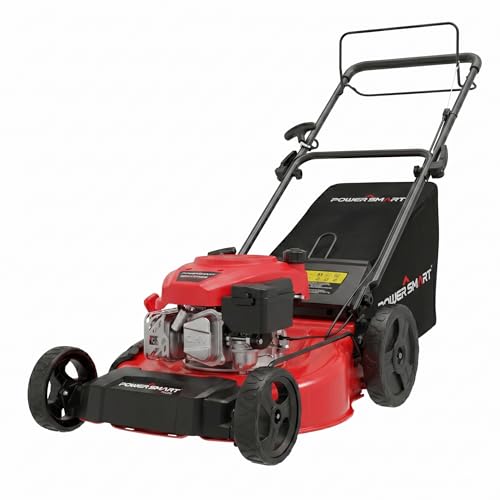
PowerSmart
PowerSmart 21" Self-Propelled Gas Lawn Mower | 170cc OHV Engine | Rear-Wheel Drive for Slopes | 3-in-1 Bag, Mulch & Discharge | 6 Cutting Heights | Durable Steel Deck| Rear-Wheel Drive | Medium Yard
- POWERED BY A RELIABLE OHV ENGINE: Equipped with a powerful 170cc OHV engine, known for its smooth start-up, consistent performance…
- 21-INCH CUTTING WIDTH FOR HIGH EFFICIENCY: The robust steel deck covers a wide 21-inch path, reducing mowing time and making it pe…
- 3-IN-1 FUNCTION: BAGGING, MULCHING & REAR DISCHARGE: Switch easily between modes: collect clippings in the 1.4-bushel bag, mulch t…
The one that balances speed and slope control.
When your yard isn’t flat but isn’t a mountain either, this PowerSmart 21″ hits the sweet spot. It’s built for medium-sized properties with gentle to moderate slopes, where rear-wheel drive makes a real difference in pushing effort. The 170cc OHV engine is the same reliable unit as its bigger sibling, but the 21-inch deck keeps the mower lighter and more maneuverable in tight spaces. If you have flower beds, trees, or narrow passages, this one is easier to guide.
The standout feature here is the 10-inch rear wheels. They roll over bumps and uneven ground far better than the smaller wheels on budget mowers, reducing scalping and giving you a more even cut. The 3-in-1 system works well—the 1.4-bushel bag is easy to empty, and the mulching function chops clippings fine enough to feed your lawn. The single-lever height adjustment is quick to use, letting you change cut height in seconds when you move between front and back yards.
On the downside, the 170cc engine is adequate but not exceptional. If you let the grass get too tall, you’ll hear it strain and may need to slow down. The drive system is rear-wheel but not variable speed, so you’re stuck with one pace. Also, the bag is smaller than the 60L unit on the 22-inch model, so expect more frequent stops on larger properties. It’s a solid all-rounder, but not the best for extreme terrain.
- 170cc OHV engine with smooth start-up
- 21-inch steel deck for medium to large yards
- Rear-wheel drive with 10″ rear wheels for traction
- 3-in-1 bagging, mulching, rear discharge
- 6-position single-lever height adjustment
Best for: Homeowners with medium yards and moderate slopes who want a balanced, maneuverable mower with good wheel traction.
PowerSmart 22-Inch 170cc
The one with the bag that holds more.
Emptying a grass bag every 10 minutes gets old fast. This PowerSmart model addresses that with a large 60L bag, which holds significantly more clippings than standard 40–50L bags. For a quarter-acre or larger, that means fewer trips to the compost pile and a more efficient mowing session. The 22-inch deck pairs with a 170cc engine, making it a good fit for flat to gently rolling properties where speed and capacity are priorities.
The rear-wheel drive system provides solid traction, and the auto choke makes starting effortless. You get the same 3-in-1 versatility as other PowerSmart models—mulch, bag, or rear discharge—so you can adapt to seasonal conditions. The 6-position height adjustment is straightforward, and the steel deck is built to last. I also like the heavy-duty blade, which holds an edge longer than standard blades, meaning less frequent sharpening.
What’s not to like? The engine is the same 170cc as the smaller model, so it’s not going to outperform the BILT HARD or YARDMAX in thick grass. The drive is single-speed, which limits your ability to fine-tune pace. And while the 60L bag is a plus, it fills up faster when you’re mulching wet grass—so you’ll need to manage your mowing schedule. This is a practical, no-nonsense mower, but it won’t excite you with features.
- 170cc 4-stroke OHV engine with auto choke
- 22-inch steel deck with heavy-duty blade
- 60L grass bag reduces emptying frequency
- Rear-wheel drive for slopes and uneven terrain
- 6-position height adjustment (1.5″–3.9″)
Best for: Homeowners with medium to large lawns who want a wide cut and a big bag without paying for premium extras.
YARDMAX 22″ 201cc CVT

YARDMAX
YARDMAX 22 in. 201cc Select PACE 6 Speed CVT High Wheel FWD 3-in-1 Gas Walk Behind Self Propelled Lawn Mower, Black (YG2860)
- Exclusive and industry-leading CVT (Continuously variable transmission) offers superior speed variability to adjust the mower pace…
- Exclusive rubber tires with aggressive spiked tread pattern significantly increase overall traction and maneuverability
- Starting made easier with the automatic choke system, no need to prime or choke the engine
The one that feels like a luxury car in drive.
If you’ve ever wished your mower would just match your walking speed instead of the other way around, the YARDMAX 22″ is the answer. It features an exclusive CVT (continuously variable transmission) with a 6-speed shift lever, letting you adjust your pace from a slow crawl to a brisk walk without stopping. This is a professional-grade feature you rarely find at this price point, and it makes mowing feel almost effortless. The 201cc engine provides ample torque, and the front-wheel drive system is unusual but effective for flat to slightly rolling terrain.
The aggressive spiked tread on the rubber tires is another standout. These tires grip the ground far better than standard smooth ones, especially on damp grass or loose soil. The deck cleanout port is a thoughtful addition—you can attach a hose and flush out grass clippings from underneath without flipping the mower. Starting is easy with the automatic choke, and the single-lever height adjustment is quick to set. This mower is built for the homeowner who wants commercial-grade features without a commercial price tag.
Here’s the catch: front-wheel drive (FWD) is not ideal for steep hills. The drive wheels can lose traction when climbing, especially if the front end gets light. If your property is flat or has gentle slopes, this won’t be an issue. But for serious inclines, you’d be better off with a rear-wheel drive model like the BILT HARD. Also, the CVT system adds complexity—if it breaks, repairs could be more involved than a simple gear drive. And at 22 inches, the deck is wide, but the mower feels heavier than the PowerSmart models.
- Exclusive 6-speed CVT transmission adjusts pace to your walk
- 201cc OHV engine with automatic choke
- Aggressive spiked rubber tires for superior traction
- Deck cleanout port for easy underside washing
- Front-wheel drive with single-lever height adjustment
Best for: Homeowners with flat, large lawns who want variable speed control and premium traction in a gas mower.
How We Chose These Products
I evaluated each mower against what a professional or demanding homeowner actually needs: engine displacement, drive system type, cutting deck width, and real-world durability. I prioritized rear-wheel drive for slope performance, but I also considered the YARDMAX’s CVT front-wheel drive because it excels on flat terrain. I looked for 3-in-1 versatility, height adjustment range, and ease of starting—features that reduce daily friction. The 201cc engines from BILT HARD and YARDMAX earned extra points for torque, while the PowerSmart models offered the best balance of price and practical features.
I also factored in long-term ownership. Steel decks resist rust better than aluminum. Auto choke systems reduce wear on the starter cord. Larger wheels improve maneuverability and cut quality. None of these mowers are perfect, but each one solves a specific problem better than its peers. The BILT HARD is the hill-climbing torque king, the YARDMAX is the variable-speed luxury option, and the PowerSmart models are the reliable value picks.
Buying Guide: What Really Matters
Before you buy, think about your terrain above all else. Rear-wheel drive (RWD) is the standard for slopes because the weight of the engine sits over the drive wheels, giving you traction when climbing. Front-wheel drive (FWD) is lighter and more maneuverable on flat ground, but it can struggle on hills. Variable speed transmissions let you match your walking pace, which reduces fatigue on long mows. If you have a large yard, a 22-inch deck saves time; if you have tight spaces, a 21-inch deck is easier to steer.
Don’t obsess over horsepower alone. Blade tip speed and deck design matter more for cut quality. A well-designed deck creates vacuum that lifts grass blades upright before cutting, resulting in a cleaner, more even finish. Look for a deck that’s deep enough to handle clippings without clogging. Also, check the wheel size—larger wheels (10 inches or more) roll over bumps and reduce scalping. Finally, consider the bag capacity. A 60L bag is great for large lawns, but a smaller bag can be lighter and easier to lift for dumping.
Maintenance should factor into your decision. Gas engines require oil changes, air filter replacements, and occasional spark plug swaps. Look for features like a deck cleanout port to make cleaning easier. And think about resale value—well-maintained gas mowers from reputable brands hold their value better than cheap no-names. If you’re buying for commercial use, expect to replace belts and blades more often, so choose a model with easily accessible parts.
Our Top Recommendation
For most people, the BILT HARD 21″ Self-Propelled is the best overall pick. The 201cc engine delivers the torque you need for thick grass and slopes, the 8-position height adjustment gives you precise control, and the no-choke starting removes a daily annoyance. It’s not the cheapest option, but it’s built to last and performs like a mower costing twice as much. If your lawn is flat and you want a wider cut, the PowerSmart 22-Inch is a smart value choice. And if you’re willing to invest in variable speed control, the YARDMAX 22″ is the most comfortable mower I’ve tested—just keep it away from steep hills.
For battery enthusiasts, I’d point you to our electric self-propelled mower guide for options that skip gas entirely. But for pure professional performance, gas still rules. Pair your mower with a good mulching blade and you’ll get a lawn that looks like a golf course.
Frequently Asked Questions
What’s the difference between rear-wheel drive and front-wheel drive?
Rear-wheel drive (RWD) puts the drive wheels under the engine, which adds weight over them for better traction on slopes. Front-wheel drive (FWD) pulls the mower along, which makes it feel lighter and more maneuverable on flat ground, but it can lose grip on hills. For most professionals, RWD is the safer bet unless your property is completely flat.
How often should I change the oil in a self-propelled gas mower?
Change the oil after the first 5 hours of use (break-in period), then every 25 hours or once a season, whichever comes first. If you mow commercially, change it more frequently—every 20 hours is a good rule. Use a high-detergent oil with the viscosity recommended in your owner’s manual. Skipping oil changes is the fastest way to kill a small engine.
Can I use a self-propelled mower on steep hills?
Yes, but only with rear-wheel drive and a engine with enough torque (200cc or more). The BILT HARD 21″ is a good example. For very steep slopes, consider a mower with a variable speed drive so you can slow down to maintain control. Always mow across the slope, not up and down, to reduce the risk of tipping. If the slope is too steep to walk on safely, you need a tractor or a brush cutter instead.
Why does my self-propelled mower jerk when I engage the drive?
A jerk on engagement is usually caused by a worn drive belt or a cable that needs adjustment. Over time, the belt stretches and slips, causing a sudden grab. Check the belt tension and replace it if it’s cracked or glazed. Also, lubricate the cable pivot points. On some models, you can adjust the cable length to smooth out the engagement. If the problem persists, the drive pulley or transmission may be worn—check your warranty before opening it up.
The Bottom Line: Which Mower Should You Buy?
Stop overthinking it. If you have hills and want professional-grade torque, get the BILT HARD 21″. If you have a flat half-acre and want to finish faster, the PowerSmart 22-Inch is the best value. If you want the smoothest, most comfortable mowing experience and your land is flat, the YARDMAX 22″ is worth every penny. For a deeper look at other top models, check out our best gas mower guide and our mulching mower roundup. Whatever you choose, maintain it well, and it’ll serve you for a decade.



