
Every autumn, the same argument plays out in driveways across the country: rake, blow, or bag? Raking a half-acre of maple leaves takes hours and leaves your shoulders sore for days. A leaf blower moves the problem from one side of the yard to the other. And a mower bagger fills up before you finish the front lawn.


A good push leaf sweeper solves the problem differently. It uses spinning brushes to lift debris off the grass and throw it into a hopper behind you. No fuel, no cord, no dust cloud. The best models sweep 26 to 32 inches per pass, hold 3.5 to 12 cubic feet of debris, and adjust brush height without tools. The trade-off is simple: they work best on dry leaves, and they demand some muscle on slopes.
We looked at five push sweepers from VEVOR and EWORK, ranked by real-world scenarios rather than spec sheets alone. The short version: the VEVOR 30-inch model wins for large yards, the EWORK 32-inch is the best all-rounder, and the 21-inch VEVOR is the right call for small lots and tight storage. Details below, plus a buying guide on path width, hopper size, and why wet leaves change everything.
Compare the key specs side by side before you read the full reviews.
| Features | VEVOR 26 in Sweeper | VEVOR 21 in Sweeper | VEVOR 30 in Sweeper | EWORK 32 in Sweeper | VEVOR 26 in Classic |
|---|---|---|---|---|---|
| Sweep Path | 26 inches | 21 inches | 30 inches | 32 inches | 26 inches |
| Hopper Capacity | 7 cu. ft. | 3.5 cu. ft. | 12 cu. ft. | 4.5 cu. ft. | 7 cu. ft. |
| Brush System | Three V-shaped brushes | Thickened densified brushes | Three V-shaped brushes | 5:1 brush-to-wheel ratio | Four quad brushes |
| Height Adjustment | 10-level side handle | Stepless hand knob | 10-level side handle | Tool-free side knob | Tool-free manual knob |
| Best Use Case | Mid-size yards | Small yards, tight storage | Large yards, fewer dumps | All-rounder with big bag | Proven classic design |
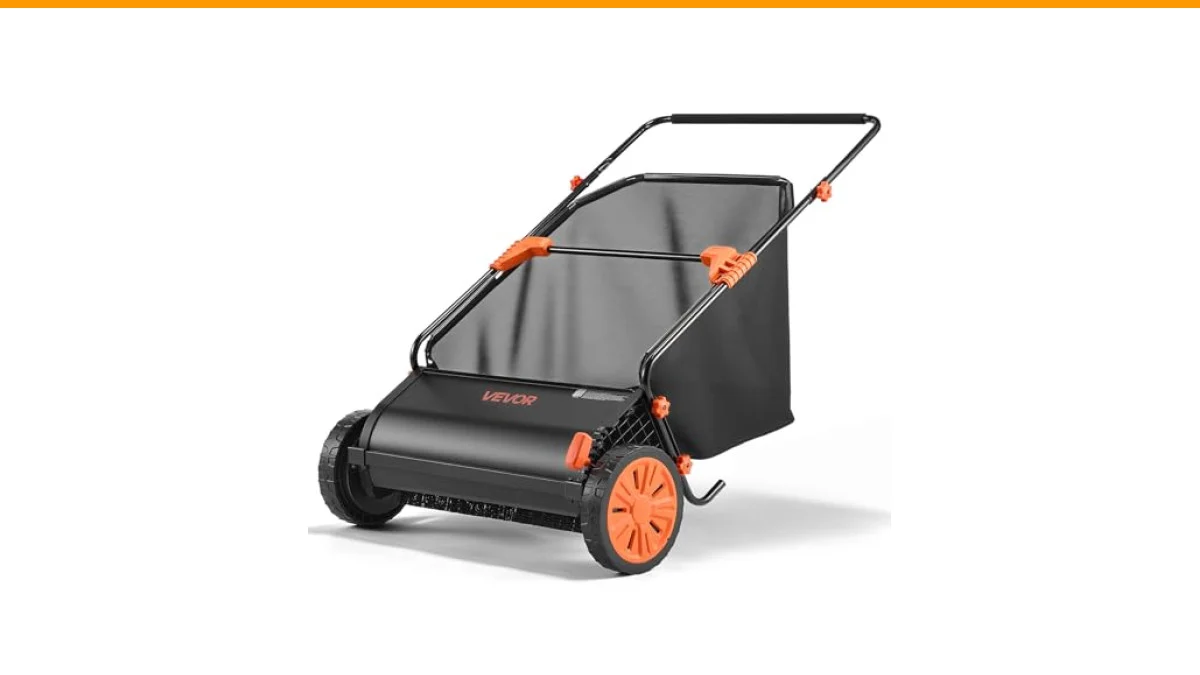
VEVOR Push Lawn Sweeper 26 in
The 26-inch VEVOR is the middle child of this lineup, and that’s not a knock. It’s sized for suburban lots where a 21-inch model means too many passes and a 30-inch model feels like overkill. Homeowners with a quarter to half acre of lawn will find the 7 cubic foot hopper hits a sweet spot: big enough to clear a front yard in one fill, small enough to dump without wrestling.
What separates this from cheaper sweepers is the V-shaped brush design. Three rotating brushes reach into the grass instead of skating over the top, and the polypropylene bristles resist tangling from pine needles and weeds. That matters more than it sounds. Tangled brushes are the number one maintenance complaint on sweepers, and a design that sheds debris on its own saves you ten minutes of picking with a screwdriver every session. The 1:5 brush-to-wheel ratio also means the brushes spin fast enough to lift leaves without you sprinting behind the handle.
Here’s the honest part: this sweeper does not like wet leaves. The product data says so directly, and it’s true of every push sweeper in this price range. Damp leaves clump, stick to the brushes, and clog the hopper opening. If your yard holds moisture or you get heavy morning dew, plan to sweep in the afternoon or wait for a dry stretch. The 10-level height adjustment helps on uneven ground, but it won’t fix a soggy lawn.
- 26-inch sweep path covers most residential lawns in 4-6 passes
- 7 cu. ft. tear-resistant hopper with four-point quick-release buckles
- 10-position brush height adjusts from a side-mounted handle
- PP and rubber wheels grip damp ground without slipping
- Core parts pre-assembled; you attach the frame and hopper
Best for: Homeowners with a quarter to half acre who want fewer passes than a 21-inch sweeper but don’t need the bulk of a 30-inch model.
VEVOR Push Lawn Sweeper 21 in

VEVOR
VEVOR Push Lawn Sweeper, 21" Leaf & Grass Collector 3.5 cu. ft. Hopper Bag | Adjustable Brush Height, 2 Spinning Brushes, Manual Yard Sweeper for Leaves, Grass Clippings and Lawn Debris
- Keep Your Lawn Spotless: Unlike most lawn sweepers, our lawn sweeper has thickened and densified brushes to increase the overall s…
- Stepless Brush Height Adjustment: The lawn sweeper is designed with an adjustable spinning brush height–simply adjust the knob by…
- Collect More Debris: Our yard sweeper has a high-quality non-woven hopper bag with a large capacity of 3.5 ft³, allowing you to co…
Small yards don’t need big sweepers. That’s the logic behind this 21-inch VEVOR, and it’s sound. A postage-stamp lawn, a narrow side yard, or a townhouse lot with a strip of grass out front doesn’t justify a 30-inch machine that takes up half the garage. This one folds down, hangs on a wall, and leans against a shed without tipping over thanks to its bottom support feet.
The stepless brush height adjustment deserves attention. Most sweepers in this class use notched settings, which means you’re stuck between two heights that don’t quite match your turf. This one uses a hand knob that moves the brushes up and down smoothly, so you can dial in the exact contact point for short grass, tall grass, or a concrete driveway. It’s a small feature that makes a real difference on mixed terrain.
The 3.5 cubic foot hopper is the obvious limitation. On a small yard that’s fine. On anything larger, you’ll be dumping every few minutes, and that gets old fast. The 80% pickup rate in a single pass is respectable but not class-leading; you’ll want a second pass on heavy leaf drop. And the thickened brushes, while durable, don’t shed pine needles as cleanly as the V-shaped design on the 26-inch model. If you deal with a lot of pine, factor that in.
- 21-inch path fits narrow gates and tight side yards
- 3.5 cu. ft. non-woven hopper removes quickly for dumping
- Stepless height adjustment via hand knob, no tools needed
- Quick-clip storage design hangs flat on a garage wall
- Handles leaves, twigs, and grass clippings on dry surfaces
Best for: Townhouse and small-lot owners who need a sweeper that stores flat and fits through narrow spaces.
VEVOR Push Lawn Sweeper 30 in
If you’ve ever spent a Saturday afternoon emptying a hopper every fifteen minutes, the 30-inch VEVOR will feel like a promotion. The 12 cubic foot bag is the largest in this roundup, and it changes the rhythm of yard work. Instead of constant dump trips, you sweep for twenty or thirty minutes, then empty once. On a half-acre or larger lot, that adds up to real time saved.
The 30-inch sweep path compounds the advantage. Wider passes mean fewer trips across the lawn, and the 1:5 brush-to-wheel ratio keeps the brushes spinning fast enough to lift leaves without dragging. Three V-shaped brushes reach into the turf, and the PP bristles resist tangling from weeds and pine needles. The 10-level height adjustment uses a side-mounted handle, so you can raise or lower the brushes without bending over or grabbing a tool.
The downside is size and weight. A 30-inch sweeper with a full 12 cubic foot hopper is a lot of machine to push, especially on slopes or soft ground. The foam-padded handle helps, but this isn’t a casual tool. It also takes up significant garage space. If you have a small shed or a tight storage corner, measure before you buy. And like every push sweeper here, wet leaves will reduce efficiency. The product data flags this directly, and it’s worth repeating.
- 30-inch path and 12 cu. ft. hopper cut dump trips dramatically
- Three V-shaped brushes with durable PP bristles
- 10-level height adjustment via side-mounted handle
- Upgraded PP and rubber wheels resist slipping on damp ground
- Four-point quick-release buckles for fast emptying
Best for: Large-lot owners who want the biggest hopper available and don’t mind pushing a heavier machine.
EWORK Push Lawn Sweeper 32 in
The EWORK 32-inch is the widest sweeper in this group, and it pairs that width with a 4.5 cubic foot hopper. That combination sounds mismatched at first. A 32-inch path with a smaller bag means more frequent dumping than the VEVOR 30-inch. But the EWORK makes up for it with an 85% single-pass pickup rate, the highest claimed in this lineup, and a lightweight build that keeps the machine manageable even when the bag is full.
The 5:1 brush-to-wheel ratio is the same as the VEVOR 26 and 30-inch models, so brush speed is comparable. What sets this one apart is the anti-rust and anti-deformation construction. If you live in a humid climate or store your sweeper in an unheated shed, that matters. Cheap sweepers rust at the frame joints and warp at the brush mounts after a season or two. This one is built to avoid that, which stretches your dollar over time.
The honest trade-off: 4.5 cubic feet is small for a 32-inch sweeper. You’ll cover a wide strip per pass, then dump sooner than you’d like. On a large lawn, that rhythm gets tedious. The 10-inch wheels provide good traction, but the lightweight design means you’ll feel every bump on rough ground. And like the others, wet leaves will clog the works. Dry conditions only.
- 32-inch sweep path, the widest in this roundup
- 4.5 cu. ft. hopper with four-point quick-release buckles
- 5:1 brush-to-wheel ratio for fast brush spin
- Anti-rust, anti-deformation frame for humid climates
- 10-inch wheels with strong traction on damp ground
Best for: Buyers in humid or coastal climates who want a wide sweep path and durable construction.
VEVOR Push Lawn Sweeper 26 in Classic
This is the veteran of the group. The 26-inch Classic VEVOR has been on the market long enough to accumulate real-world feedback, and the design reflects it. The heavy-duty steel frame is the same width as the newer 26-inch model, but the brush system is different: four spinning brushes instead of three V-shaped ones. That quad-brush setup covers more ground per rotation and sweeps up to 80% of leaves and grass clippings in a single pass.
The ergonomics stand out. The handle is angled to reduce lower back strain, which sounds like marketing until you spend an hour pushing a sweeper with a flat handle. The 7 cubic foot hopper is the same capacity as the newer 26-inch model, and the balanced frame keeps it stable when full. The tool-free height adjustment knob gives clear tactile feedback, so you know when you’ve hit the right setting without guessing.
What holds this one back is the brush design. Four quad brushes are effective, but they don’t shed pine needles and weeds as cleanly as the V-shaped brushes on the newer models. If your yard is mostly broadleaf leaves, that’s a non-issue. If you have pine trees, you’ll spend more time clearing tangled bristles. The Classic also lacks the upgraded wheel compound of the newer 26-inch model, so traction on damp ground is slightly less sure. It’s still a solid machine, just not the newest design.
- Quad-brush system sweeps up to 80% in one pass
- Heavy-duty steel frame with market-tested durability
- 7 cu. ft. hopper with balanced frame for stability
- Ergonomically angled handle reduces back strain
- Tool-free height adjustment with tactile feedback
Best for: Buyers who want a proven, back-friendly design and mostly deal with broadleaf leaves rather than pine needles.
How We Chose These Products
We started with the specs that actually affect yard work: sweep path, hopper capacity, brush-to-wheel ratio, and height adjustment range. Then we filtered out models with vague or missing data. Every sweeper here lists its brush system, hopper size, and adjustment mechanism clearly, which is more than you can say for a lot of listings.
From there, we weighed real-world scenarios against spec sheets. A 12 cubic foot hopper sounds great until you realize it makes the machine heavy on slopes. A 32-inch path is efficient until you’re dumping a 4.5 cubic foot bag every ten minutes. We ranked each sweeper by how well its specs match a specific buyer’s situation, not by raw numbers alone. For a broader look at how these compare to tow-behind and powered options, see our guide to the best tow-behind lawn sweeper.
Buying Guide: What Really Matters
Sweep path width is the first number to check. A 21-inch sweeper is fine for a small yard but means more passes on anything larger. A 30 or 32-inch model covers ground faster but takes up more storage space and weighs more to push. Match the path to your lawn size, not to the biggest number on the box.
Hopper capacity determines how often you stop to dump. A 3.5 cubic foot bag fills fast on a heavy leaf drop. A 7 cubic foot bag is the practical minimum for a half-acre lot. A 12 cubic foot bag lets you sweep for half an hour without stopping, but the machine gets heavy when full. Think about your back before you buy the biggest hopper available.
Brush-to-wheel ratio and height adjustment separate the good sweepers from the frustrating ones. A 5:1 ratio spins the brushes fast enough to lift leaves without you running. Stepless or multi-level height adjustment lets you match the brushes to your turf height and surface type. Tool-free adjustment is worth paying for; you’ll use it more often than you think. For a deeper dive into how these features compare across models, see our leaf sweeper guide.
Wet leaves are the great equalizer. Every push sweeper in this roundup struggles with damp debris. If your yard stays wet or you get heavy dew, plan to sweep in the afternoon. No brush design or hopper size fixes a soggy leaf. Dry conditions only.
Our Top Recommendation
The VEVOR 30-inch push lawn sweeper is our top pick for most homeowners with a half-acre or larger. The 12 cubic foot hopper and 30-inch path cut dump trips and passes dramatically, and the V-shaped brushes handle pine needles better than the quad-brush Classic. It’s heavy when full, and it takes up garage space, but the time savings are real.
For smaller yards, the VEVOR 21-inch is the better call. It stores flat, fits through narrow gates, and the stepless height adjustment is genuinely useful on mixed terrain. The 3.5 cubic foot hopper is small, but on a townhouse lot that’s not a dealbreaker.
If you want the widest path and live in a humid climate, the EWORK 32-inch is worth a look. The anti-rust frame and 85% pickup rate are strong points, but the 4.5 cubic foot hopper means more dumping than the 30-inch VEVOR. It’s a trade-off between width and capacity.
For a full comparison of sweeper types and how they handle different debris, our leaf collecting sweeper roundup covers tow-behind and powered options as well.
Frequently Asked Questions
Will a push leaf sweeper pick up wet leaves?
Poorly. Wet leaves clump, stick to the brushes, and clog the hopper opening. Every manufacturer in this roundup notes that wet leaves reduce efficiency. Sweep in dry conditions for best results. If you must sweep damp leaves, make multiple passes and empty the hopper often.
Can you sweep while mowing?
No. Push sweepers are designed to be pushed on their own. They don’t attach to a mower. If you want to sweep and mow in one pass, you need a tow-behind sweeper that hitches to your riding mower. Push models are for dedicated cleanup sessions.
How often do you need to replace the brushes?
It depends on use and surface type. Sweeping a concrete driveway wears brushes faster than sweeping grass. Most homeowners get two to three seasons out of a set of brushes. Replacement brushes are available for VEVOR models, including optional sets for hard nuts and heavy debris.
Do push sweepers work on slopes?
They work, but with effort. A full hopper adds weight, and pushing uphill gets tiring. The rubber wheels on the VEVOR 26 and 30-inch models resist slipping on damp ground, which helps. For steep slopes, a tow-behind sweeper or a leaf blower is often a better choice.
What about acorns and thatch?
Acorns are tricky. Standard brushes can’t grip them well. VEVOR offers optional replacement brushes designed for hard nuts, which is worth noting if acorns are a problem. Thatch is a different issue: sweepers skim the surface and don’t pull up matted thatch. For thatch, you need a dethatcher, not a sweeper.

