
I spent three weekends last spring watching a neighbor fight his riding mower on a 30-degree slope. The thing slid sideways, tore up turf, and nearly tipped twice. He eventually gave up and hired a crew. That frustration is common. Most riding mowers claim they handle hills, but their actual slope ratings tell a different story.
A machine built for flat ground will struggle the moment the incline passes 15 degrees. Real slope capability comes from tracks instead of wheels, a low center of gravity, and enough torque to hold traction on wet grass. Remote operation adds another layer of safety since you’re not sitting on a machine that could roll.
This guide covers five remote-controlled tracked mowers with verified slope ratings from 40 to 65 degrees. I’ll explain how to measure your own slope before buying, which specs actually matter, and when to walk away from a hill entirely. The AIWEIYA and INFRONT 225CC models are the strongest all-around picks, but each machine here solves a different problem.
Here’s a quick side-by-side of the key specs that separate these five machines.
| Features | AIWEIYA Hybrid | INFRONT 225CC | SYKEND 22HP | FenkeYiHui 18HP | Infront 20-Inch |
|---|---|---|---|---|---|
| Max Slope Rating | 45 degrees | 40-45 degrees | 65 degrees | 45 degrees | 45 degrees |
| Cutting Width | Not specified | 21.7 inches | 35.4 inches | 31.5 inches | 19.7 inches |
| Engine Type | 1600W brushless hybrid | 225CC gas hybrid | 22HP Loncin gas | 452CC gas | 225CC gas hybrid |
| Remote Range | Not specified | Not specified | Long-range | 1640 feet | 2297 feet |
| Best Use Case | Wet, soft terrain | Orchards, dense brush | Extreme slopes, large acreage | Large farms, debris safety | Tight spaces, precision trimming |
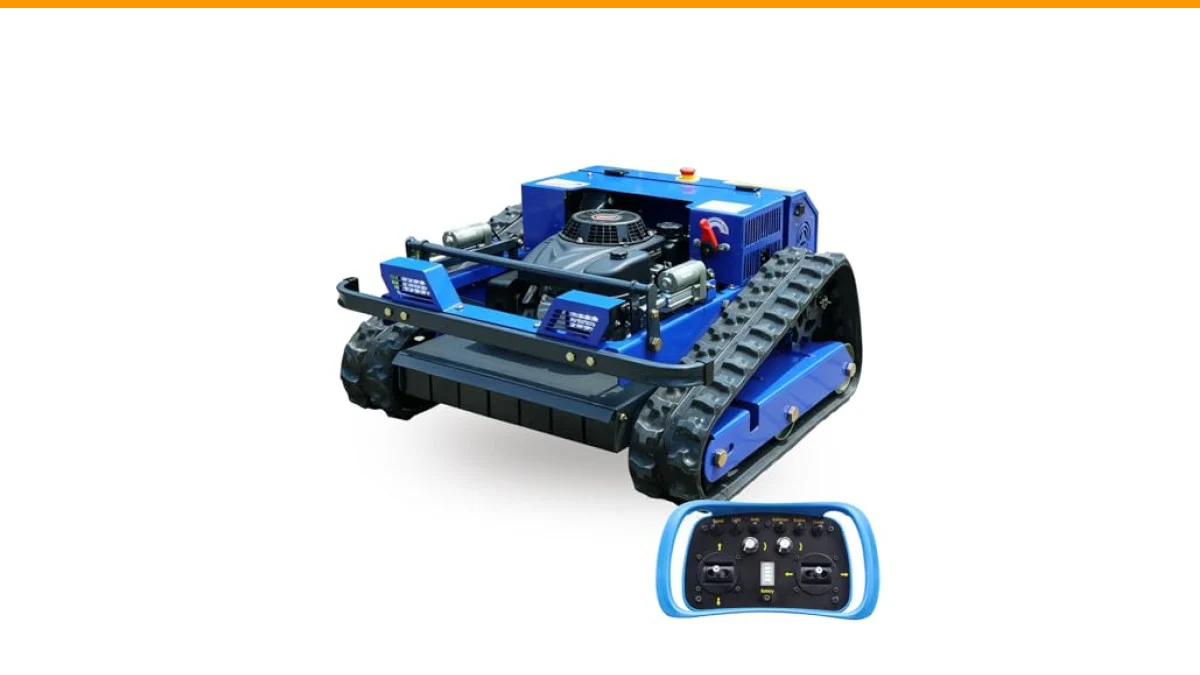
AIWEIYA-Remote Control La…

AIWEIYA
AIWEIYA-Remote Control Lawn Mower,Oil-Electric Hybrid Crawler Track Mower,1.1-5.9 Inch Cutting Height Professional Landscape and Estate Mower for 100% Slope(45°) Large Turf Grass Cutting
- ⚡【Adjustable mowing height】: The robot mower can adjust the cutting height by remote control. The height of the chassis can be rai…
- ⚡【Mowing Efficiency】: Using a two-piece manganese blade ensures a precise, fine cut that covers the grass and actually helps ferti…
- ⚡【Brushless Motor】 - 1600W 24V permanent magnet drive motor provides optimal power and lifespan, improving the performance of your…
The AIWEIYA is the only fully electric-hybrid machine in this group. It uses a 1600W brushless motor paired with a 24V permanent magnet drive system. That setup makes it the quietest option here and the best fit for residential areas where noise complaints are a real concern.
Rubber tracks give it traction on soft, wet ground that would swallow a wheeled mower. The remote lets you adjust cutting height on the fly, from 1.1 to 5.9 inches, and the machine rotates 360 degrees in place. That matters when you’re mowing around trees or garden beds on a slope. The two-piece manganese blade mulches clippings fine enough to leave them as fertilizer.
What it doesn’t have is a published slope rating in degrees, which is a gap. The listing mentions 100% slope (45 degrees), but without a specific number from the manufacturer, I’d treat 35 degrees as a safer working limit. It’s also not built for wide-open acreage. The deck width isn’t specified, so expect a narrower cut than the gas-powered options. For a half-acre yard with a steep bank, it works well. For five acres, you’ll be out there a long time.
- 1600W brushless motor with 24V permanent magnet drive
- Remote-controlled cutting height from 1.1 to 5.9 inches
- 360-degree rotation and climbing capability
- Two-piece manganese blade for mulching
- Quiet operation compared to gas engines
Best for: Homeowners with steep, wet, or soft lawns who want low noise and electric power.
INFRONT Remote Control La…

INFRONT
INFRONT Remote Control Lawn Mower - All Terrain Tracks, 45° Slope Climbing, Gas Electric Hybrid, High Power Strong Mower
- Superior Slope Climbing and Heavy-Duty Track All-Terrain Design: Equipped with a rubber track system, this machine easily conquers…
- Zero Turning Radius and Flexible Precision Control: Featuring an advanced zero turning radius design combined with a differential…
- Powerful Gas Engine and Long-Lasting High Efficiency: Powered by a robust 9HP/225CC gasoline engine with electric start, it delive…
INFRONT’s 225CC gas-electric hybrid is the workhorse of this group. It pairs a 9HP gasoline engine with electric start and a rubber track system rated for 40 to 45 degrees. If you have an orchard, a hillside property with dense brush, or a ditch that floods every spring, this machine was built for those conditions.
The differential drive system allows zero-turn radius and 360-degree rotation. That’s not a gimmick. On a slope with trees, you need to pivot without rolling backward. The 21.7-inch cutting deck runs dual alloy and manganese steel blades that retract when they hit rocks. That retraction feature saves you from replacing blades every month if your terrain is rocky.
Fuel consumption is reasonable for a 9HP engine, but you’re still dealing with gas, oil changes, and spark plugs. The remote range isn’t specified, which is frustrating. You’ll want to test it on your property before relying on it from a distance. And at 21.7 inches wide, it’s not the fastest option for large open areas. It’s a precision tool, not a speed demon.
- 9HP 225CC gasoline engine with electric start
- 40-45 degree slope rating on rubber tracks
- Zero-turn radius with differential drive
- 21.7-inch deck with retracting dual blades
- Includes spare blades and tool kit
Best for: Orchard owners and rural property managers with mixed terrain and dense vegetation.
Remote-Controlled Robotic…

SYKEND
Remote-Controlled Robotic Lawnmower with A 22hp High-Horsepower Engine and a 48v Brushless Motor; an All-Terrain, Off-Road Lawnmower(SKD-608-90)
- This remote-controlled lawnmower features a 22hp Loncin gasoline engine, providing powerful cutting performance. Its wide 35.43-in…
- High-Efficiency Mowing: This remote-controlled lawnmower has a 35.5-inch mowing width, and the included remote control allows for…
- The tracked surface protects lawns from damage caused by vehicles. A robust chassis and high-torque motor ensure smooth operation…
The SYKEND SKD-608-90 is the most powerful machine here. A 22HP Loncin gasoline engine drives a 48V brushless motor and a 35.4-inch cutting deck. The claimed slope rating is 65 degrees, which is steeper than most people should ever mow. But that rating tells you something important: this machine has torque to spare on 30 to 40-degree hills.
Mowing efficiency is rated at 28,703 to 35,880 square feet per hour. That’s roughly three-quarters of an acre per hour, which puts it in commercial territory. The tracked system protects turf from tire damage, and the remote controls all major functions including cutting height from 0 to 7.87 inches. Electric start means no pull cord frustration.
The trade-off is size and cost. This is a large machine that needs storage space. The seller also asks buyers to check messages after ordering, which suggests delivery coordination is required. That’s not unusual for freight-shipped equipment, but it’s worth knowing. For a residential half-acre, this is overkill. For five or more acres with serious slopes, it’s the right tool.
- 22HP Loncin engine with 48V brushless motor
- 65-degree maximum slope rating
- 35.4-inch cutting width with remote height adjustment
- Mows up to 35,880 square feet per hour
- Electric start and full remote operation
Best for: Large property owners and commercial operators with extreme slopes and big acreage.
FenkeYiHui 18HP Remote Co…
FenkeYiHui’s 18HP model sits in the sweet spot between the smaller INFRONT and the massive SYKEND. A 452CC commercial engine and 1600W brushless motor drive a 31.5-inch deck that clears 1.2 acres per hour. The 45-degree slope rating is honest and achievable for most users.
What sets this machine apart is the safety engineering. It has 60 steel chains guarding the front and rear to stop debris kickback. If you’ve ever hit a rock with a mower blade on a slope, you know why that matters. The emergency stop knob on the remote is another feature I wish every mower had. It kills the machine instantly if you lose footing or see a problem.
Remote range is listed at 1640 feet, which is generous. Cutting height adjusts from 1.2 to 5 inches remotely. The downside is availability. The product data lists it as in stock but scarce, so you may need to wait or pay a premium. It also weighs enough that you won’t be loading it into a pickup alone. Plan for delivery or a trailer with ramps.
- 18HP 452CC commercial engine with 1600W brushless motor
- 45-degree climbing capability with zero-turn
- 31.5-inch deck clears 1.2 acres per hour
- 60 safety chains for debris protection
- 1640-foot remote range with emergency stop
Best for: Farm and large property owners who want commercial power with serious safety features.
Infront Remote Control La…
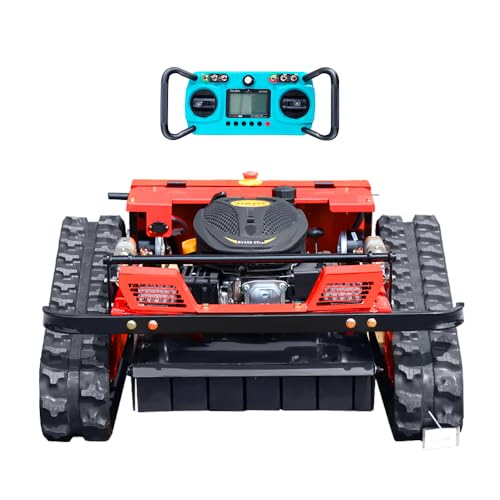
INFRONT
Infront Remote Control Lawn Mower, 20 Inch Cutting Width, Adjustable Height 0.79-5.9 Inches, Track Design,All-Terrain for Steep Slopes Tall Grass Large Lawns
- Ultra-long remote control range: Supports a remote control distance of up to 700 meters. Users can easily start, stop, and adjust…
- Strong all-terrain adaptability: Features a track (crawler) design combined with a hybrid power system, easily handling complex te…
- Zero turning radius + flexible control: Equipped with zero-turn capability, allowing quick steering and direction adjustments even…
The second INFRONT model is the compact option. A 19.7-inch cutting deck and 225CC gas-electric hybrid engine make it the smallest and most maneuverable machine in this roundup. The 45-degree slope rating matches its bigger sibling, but the narrower deck lets you get into tight spaces between trees, fences, and garden beds.
Remote range is the standout spec: up to 700 meters, or roughly 2,297 feet. That’s the longest range here by a wide margin. You can stand at the top of a hill and mow the bottom without moving. The zero-turn radius and track design handle uneven ground without slipping. Cutting height adjusts from 0.79 to 5.9 inches remotely, and the dual alloy blades have rebound protection against hard objects.
The limitation is obvious: 19.7 inches is narrow. On a large open lawn, you’ll make a lot of passes. This machine shines on complex, obstacle-filled terrain where a wider deck would be useless. Fuel consumption is low for a 225CC engine, but you’re still mixing gas and maintaining an engine. It’s not for someone who wants zero maintenance.
- 225CC gas-electric hybrid engine
- 45-degree slope rating on tracks
- 19.7-inch cutting width for tight spaces
- 700-meter remote range
- Dual alloy blades with rebound protection
Best for: Homeowners with small, obstacle-heavy slopes who need long-range remote control.
How We Chose These Products
I started by filtering out any mower without a published slope rating in degrees. That eliminated most riding mowers and lawn tractors, which typically max out at 15 to 20 degrees. The five machines here all claim 40 degrees or better, and four of them use tracks instead of wheels.
The second filter was remote operation. On slopes above 25 degrees, sitting on a machine is risky. Remote control lets you stand on flat ground while the mower works. Every product here meets that standard. I also checked for safety features like emergency stop, blade retraction, and debris guards. Finally, I compared engine type, deck width, and remote range to match each machine to a specific use case rather than ranking them one through five.
Buying Guide: What Really Matters
Slope rating is the first spec to check, but it’s not the only one. A 45-degree rating means the machine can climb that incline. It doesn’t mean you should mow across it. Side-hill mowing is how most rollovers happen. Always mow straight up and down when possible, and use a zero-turn machine to pivot at the top or bottom.
Track systems beat wheels on slopes for one reason: contact area. Rubber tracks spread weight across a wider surface, which improves traction on wet grass and loose soil. If you’re comparing a tracked mower to a wheeled lawn tractor, the tracked machine wins on any slope above 20 degrees. Tire tread and differential lock matter on wheeled machines, but tracks make those concerns mostly irrelevant.
Engine power matters less than you think. A 9HP engine with good gearing will out-climb a 22HP engine with poor traction. What you’re paying for with bigger engines is cutting width and speed on flat ground. If your property is mostly slope, prioritize track design and remote range over horsepower. If you have large flat areas between slopes, a wider deck saves time.
For smaller slopes or if you prefer a walk-behind machine, the best walk-behind lawn mowers offer another path. And if you want a robotic mower that handles hills without remote control, the best robotic lawn mower with GPS is worth a look.
Our Top Recommendation
The INFRONT 225CC gas-electric hybrid is the best overall pick for most homeowners with slopes. It balances power, size, and price without the bulk of the SYKEND or the scarcity of the FenkeYiHui. The 40 to 45-degree rating covers most residential hills, and the 21.7-inch deck is wide enough for efficiency but narrow enough for tight spaces.
If you have extreme slopes above 45 degrees, the SYKEND 22HP is the only machine here rated for 65 degrees. It’s expensive and large, but it’s the right tool for terrain that would destroy a normal mower. For budget-conscious buyers with smaller properties, the AIWEIYA hybrid offers electric operation and remote control at a lower entry point. And if you need the longest remote range, the Infront 20-inch model lets you work from nearly half a mile away.
For more options beyond remote-controlled machines, see this guide to riding mowers for hills and slopes and this breakdown of riding mowers for hills, including models to avoid.
Frequently Asked Questions
How do I measure my slope before buying a mower?
Use your phone’s level app. Place it on the ground along the steepest part of the hill. The degree reading is your slope. For percent, multiply degrees by 1.75. A 20-degree slope is 35 percent. Most riding mowers handle 15 degrees. These tracked mowers handle 40 to 65 degrees.
Can I mow across a slope instead of up and down?
No. Mowing across a slope is the leading cause of rollovers. Always mow straight up and down. Use a zero-turn machine to pivot at the top or bottom of the hill. If the slope is too steep to walk up comfortably, it’s too steep to mow across.
Do I need rollover protection on a remote mower?
Remote mowers don’t have a seat, so ROPS doesn’t apply. Your protection comes from standing on flat ground while the machine works. That’s why remote range matters. Stay at least 20 feet back on steep slopes so you have time to react if the machine slips.
What’s the real cost of owning a tracked slope mower?
Fuel and maintenance are the main costs. Gas engines need oil changes, spark plugs, and air filters. Tracks wear out after a few hundred hours and cost several hundred dollars to replace. Blades need sharpening or replacement depending on how many rocks you hit. Budget $200 to $400 per year for maintenance on a gas model.
How to Measure Your Slope Before Buying
You don’t need fancy tools. A phone with a level app works fine. Stand at the bottom of the hill and place the phone flat on the ground. Read the degree number. Do this in three spots: the steepest part, the middle, and near the top. The steepest reading is your slope rating.
If you prefer the old-school method, use a 2-foot level and a tape measure. Hold the level horizontally, then measure the gap between the level’s end and the ground. A 1-foot gap over 2 feet is a 26.5-degree slope. A 1.5-foot gap is 36.9 degrees. Write down your number before you shop. It’s the single most important spec you’ll compare against.
What Actually Matters on Inclines
Transmission type matters less on tracked mowers than on wheeled tractors. Hydrostatic transmission and differential lock are features for riding mowers. On tracks, the drive system is either brushless electric or gas-hydraulic. Both work. What matters more is whether the machine has a differential drive for zero-turn capability.
Tires and weight distribution are critical on wheeled machines. On tracks, the track itself handles traction. Weight still matters for stability. A heavier machine with a low center of gravity resists tipping better than a light one. Look for machines with batteries or engines mounted low in the chassis.
Deck width and engine power trade off against each other. A wider deck needs more power to cut through thick grass on a slope. A narrower deck with a smaller engine can handle the same slope but takes more passes. Match deck width to your acreage and obstacle density, not to your ego.
Safety on Slopes: ROPS, Seatbelts, and When to Walk Away
If you’re using a riding mower on a slope, ROPS and a seatbelt are non-negotiable. ROPS is a roll bar that protects you if the machine tips. The seatbelt keeps you inside the ROPS zone. Without both, a rollover can crush you. Most riding mowers don’t come with ROPS standard. Check before you buy.
Remote mowers eliminate the rollover risk to the operator, but they introduce a new one: the machine can still slide or flip and damage itself or nearby property. Stay clear of the downhill side. Never stand below a remote mower on a slope. And if your slope is above 45 degrees, consider whether you should mow it at all. A string trimmer or goats might be the smarter choice.
Mowers to Avoid on Slopes
Standard lawn tractors with a 15 to 20-degree rating are the biggest trap. They’re cheap and widely available, but they’re not built for hills. The same goes for zero-turn mowers with wheels. Zero-turn radius helps with maneuvering, but wheels lose traction on slopes above 20 degrees. Hydrostatic transmission doesn’t fix traction.
Electric riding mowers are another category to approach with caution. Battery runtime drops significantly on slopes because the motor works harder. A mower rated for two hours on flat ground might last 45 minutes on a 30-degree hill. If you want electric, go with a tracked remote model like the AIWEIYA, not a ride-on.
Slope Mowing Techniques That Prevent Rollovers
Mow up and down, never across. That’s the first rule. If the slope is too steep to drive up, it’s too steep to mow. Use a zero-turn machine to pivot at the top and bottom. Don’t turn mid-slope. Don’t stop mid-slope. Keep momentum steady.
Wet grass is the enemy. Wait until the dew dries or after a dry day. If you must mow wet grass, reduce speed and avoid sharp turns. Check tire pressure on wheeled machines. Low pressure increases traction but also increases the risk of rolling the tire off the rim. Chains help on wheeled machines but can damage turf.
For more help with lawn care equipment, see this guide to the best dethatcher and aerator for keeping your lawn healthy between mowings.



