


Best Lawn Mower for Steep Banks: Slope-Safe Picks That Won’t Tip or Stall
Contents
You know the spot. The bank beside the driveway drops at an angle that makes your ankles ache just looking at it. Push a standard mower up that grade and the wheels spin uselessly, or worse, the deck digs in and the whole thing threatens to roll back onto your feet. Mowing slopes is the one job where the wrong tool turns a Saturday chore into a genuine safety hazard.
The core problem is physics, not effort. A mower needs enough torque to climb, enough traction to hold its line, and a low enough center of gravity to stay upright when you’re working across the slope. Most standard push mowers lack at least one of those three things. The best mowers for steep banks combine rear-wheel drive or aggressive tread with a balanced deck, so the machine works with the grade instead of fighting it.
This guide walks through five solid options, from a lightweight electric push mower for gentle banks to a gas self-propelled workhorse for serious grades. You’ll also learn how to measure your slope angle accurately, why gas engines can starve for oil on steep hills, and a few tethering tricks for extreme terrain. If you need something even more specialized, check our guide on cutting steep hills for additional context.
Here is how the five contenders stack up on the specs that matter most for slope work.
| Features | Casince 17-Inch | Greenworks 80V | BILT HARD Gas | Casince 13-Inch | Greenworks 40V |
|---|---|---|---|---|---|
| Power Source | Cordless 40V (dual 20V) | Cordless 80V | Gas 201cc OHV | Cordless 40V (dual 20V) | Cordless 40V |
| Deck Width | 17 inches | 21 inches | 21 inches | 13 inches | 16 inches |
| Drive Type | Push (pull-bar start) | Self-propelled RWD | Self-propelled RWD | Push (pull-bar start) | Push |
| Weight | 31 lbs (14 kg) | Heavier steel deck | Heavy duty steel | 22 lbs (10 kg) | Ultra-lightweight |
| Best For | Small-medium banks | Large yards, mild slopes | Steep, tough terrain | Narrow, small banks | Flat, small yards |
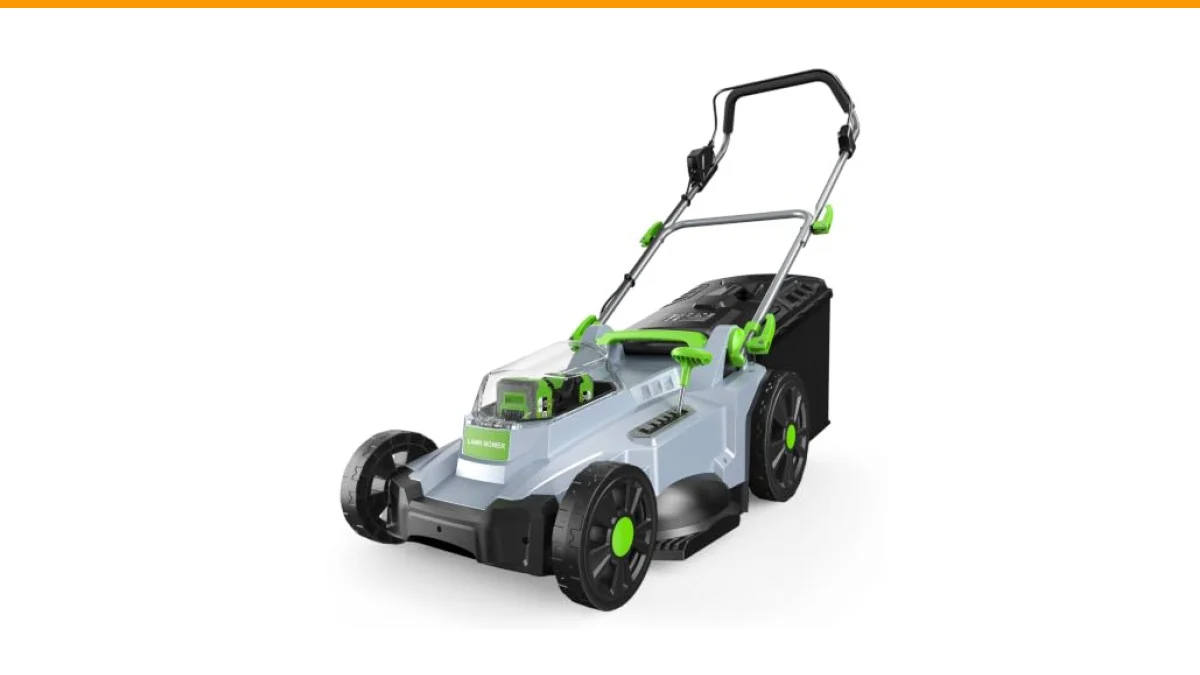
Casince 17-Inch Cordless
1st Pick

Casince
Cordless Lawn Mower, 17 in Walk Behind Lawn Mower for Yard & Garden | 2×4.0Ah Batteries, Up to 40-Min Runtime, 6-Position Height, 50L Grass Bag, 1200W Max Brushless Power
- WIDER MORE EVEN CUTTING: The 17-inch cutting deck and 6 height settings from 1 to 3 inches (25–75 mm) help this cordless lawn mowe…
- DUAL BATTERY EXTENDED RUNTIME: Powered by two 20V 4.0Ah batteries, this walk behind lawn mower runs for up to 40 minutes and cover…
- LARGE CAPACITY GRASS COLLECTION: The 50L collection bag holds more clippings between emptying cycles, while regular cleaning aroun…
This mower suits homeowners with small to medium lawns where the bank is more of a gentle swell than a cliff. It weighs just 31 pounds, so you can muscle it up a modest incline without feeling like you’re wrestling a bear. The 17-inch deck is narrow enough to navigate around flower beds and tight corners at the top of a slope.
The dual 20V batteries deliver up to 40 minutes of runtime, which covers roughly 5,380 square feet under normal conditions. That’s enough for a typical suburban lot with a sloped backyard. One-button start and a pull-bar design mean you don’t need to yank a cord while balancing on an angle. The brushless motor spins the blade at 3000 RPM, keeping cutting power steady even when the grass is slightly damp.
You’ll hit limits on steeper grades. As a push mower, it relies entirely on your strength for traction. On a bank steeper than about 20 degrees, the lightweight frame might slide sideways, especially if the grass is slick. The 50L collection bag adds weight at the rear, which helps stability but can make the mower feel tail-heavy when you lift it.
- Six height settings from 1 to 3 inches
- 1200W max brushless motor output
- 50L grass collection bag
- Folds for compact storage
Best for: Homeowners with modest slopes under 20 degrees who want a lightweight, cordless option that doesn’t require gas.
Greenworks 80V 21-Inch
2nd Pick

Greenworks
Greenworks 80V 21in Self-Propelled Lawn Mower, 4.0 Ah Battery and Charger | Brushless motor with LED headlight and rapid charger; self-propelled drive reduces effort on larger lawns.
- [80V 21” SELF-PROPELLED LAWN MOWER] - Get more done, faster, with Greenworks electric lawn mowers. This 80V lawn mower cuts up to…
- [BRUSHLESS MOTOR / DURABLE STEEL DECK] - This electric mower features a durable 21" deck, and a highly efficient brushless motor t…
- [SELF-PROPELLED] – Rear wheel drive and variable speed control for maximum traction, maneuverability, and control
The Greenworks 80V is the electric answer for larger lawns that include a stretch of bank. Its rear-wheel drive and variable speed control give you genuine traction assistance, which makes a real difference when you’re pushing uphill. The 21-inch steel deck covers ground fast, so you spend less time on the slope overall.
This mower runs on a high-voltage 80V battery that handles thicker grass without bogging down. The brushless motor produces more torque than typical cordless models, which translates to consistent blade speed on the uphill pass. It cuts up to half an acre per charge, making it a practical replacement for a gas mower on flat ground and gentle slopes alike.
The trade-off shows up on genuinely steep banks. Rear-wheel drive helps with forward motion, but the mower’s weight sits higher than dedicated slope models. On grades over 25 degrees, you’ll need to mow diagonally rather than straight up and down to avoid tipping risk. The LED headlight is a nice touch for early morning sessions, but it adds complexity to an already heavy machine.
- Self-propelled rear-wheel drive with variable speed
- Durable steel 21-inch deck
- LED headlight for low-light mowing
- Runs on Greenworks 80V platform (75+ compatible tools)
Best for: Owners of quarter-acre to half-acre yards with moderate banks who want self-propelled convenience without gas.
BILT HARD 21-Inch Gas
3rd Pick

BILT HARD
BILT HARD 21" Self Propelled Gas Lawn Mower – 201cc 4-Cycle OHV, 3-in-1 Bagging/Mulching/Side Discharge, 8 Adjustable Cutting Heights & Smooth Easy Start
- Efficient & Versatile Mowing Solution This 21-inch self-propelled lawn mower features a durable 3-in-1 steel deck with mulching, s…
- Self-Propelled Functionality Equipped with rear-wheel drive and single-speed self-propelled technology, this mower glides smoothly…
- Reliable Performance Powered by a robust 201cc 4-stroke OHV engine delivering 9.0 ft·lb of torque, this gas-powered mower provides…
When the bank is steep enough to make electric motors strain, the BILT HARD 21-inch gas mower steps in. Its 201cc OHV engine produces 9.0 ft-lb of torque, giving it the grunt to climb grades that would stall lesser machines. Rear-wheel drive with a single-speed transmission keeps the mower moving forward while you focus on steering.
The 3-in-1 steel deck offers bagging, mulching, and side discharge. On a slope, mulching is often the smart play because it eliminates the need to carry a heavy bag uphill. The no-choke, no-primer starting system means fewer frustrating pulls when you’re already working at an awkward angle. An 8-position height adjustment lets you raise the deck for tall grass on the bank, then lower it for the flat lawn below.
Gas power solves one slope problem but creates another. On steep angles, the engine’s oil can slosh away from the pickup tube, leading to lubrication starvation. You’ll want to keep the fuel tank full and avoid operating on grades steeper than about 30 degrees for extended periods. The foam-wrapped handle reduces vibration fatigue, but this is still a heavy machine to maneuver on uneven ground.
- 201cc 4-cycle OHV engine with 9.0 ft-lb torque
- Single-lever height adjustment across all four wheels
- Three cutting modes: bag, mulch, side discharge
- Rear-wheel drive with single-speed transmission
Best for: Homeowners with steep, rough banks where maximum torque and gas-powered reliability trump electric convenience.
Casince 13-Inch Cordless
Narrow spaces and steep banks often go together. The Casince 13-inch model is built for those tight, awkward areas where a full-size deck simply won’t fit. At just 22 pounds, it’s the lightest option here, which makes it feasible to carry up a bank and mow in strips without exhausting yourself.
This mower shares the same dual-battery system as its larger sibling, offering up to 40 minutes of runtime. The smaller deck covers about 3,230 square feet per charge, which suits small gardens and narrow strips beside driveways or fences. Five height settings from 1 to 2.6 inches give you flexibility for different grass types, and the 30L bag holds clippings without constant emptying.
The obvious limitation is cutting width. You’ll make more passes to cover the same area, and the small deck means more time spent on the slope. The light weight that makes it portable also works against it on steep banks, where you might find yourself holding it back more than pushing it forward.
- 13-inch cutting deck for tight spaces
- 22-pound body for easy carrying
- 30L grass collection bag
- Five height positions from 1 to 2.6 inches
Best for: Gardeners tackling narrow banks, terraced strips, or small yards where a compact, ultra-light mower is the only practical option.
Greenworks 40V 16-Inch
5th Pick
Greenworks
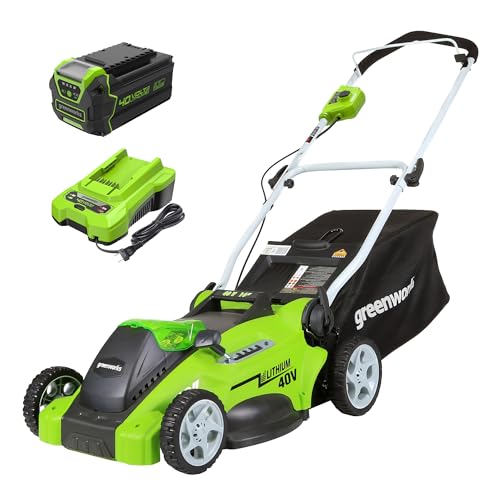
Greenworks 40V 16in Push Lawn Mower, 4.0 Ah Battery and Charger | Quiet walk-behind mower with push-button start; gas-free operation eliminates fumes and pull starts
- [16" LAWN MOWER] - This 40V lawn mower cuts up to 1/3 acre with fully charged 4.0Ah battery (varies based on grass condition and o…
- [ULTRA LIGHTWEIGHT] - 35% lighter than steel deck mowers
- [SINGLE LEVER HEIGHT ADJUST] - 5 position height adjustment
The Greenworks 40V 16-inch push mower serves a specific role in this lineup: it’s the budget-friendly electric option for small, mostly flat lawns with a slight rise at the edge. Its polymer deck makes it 35% lighter than steel alternatives, so lifting and turning on a modest bank is manageable.
This mower runs on the versatile Greenworks 40V platform, meaning the battery works with trimmers, blowers, and chainsaws from the same brand. The 2-in-1 system offers mulching and rear bagging, letting you switch based on the season. A single-lever height adjustment with five positions makes quick work of changing cutting height between the flat lawn and the bank.
There’s no self-propulsion here, and that’s the catch for slope work. On anything steeper than a 15-degree incline, you’ll feel every pound of the mower pulling against you. The 4.0Ah battery covers up to a third of an acre, but hills drain batteries faster than flat ground, so expect less runtime on sloped sections.
- 16-inch deck with 5-position single-lever height adjust
- Ultra-lightweight polymer construction
- 2-in-1 mulching and rear bagging system
- Compatible with 75+ Greenworks 40V tools
Best for: Budget-conscious buyers with small, mostly level yards who need a light electric mower for occasional gentle slopes.
How We Chose These Products
Selection started with slope physics, not brand popularity. Each mower was evaluated on three criteria: traction capability, torque output, and center of gravity. We looked for rear-wheel drive or lightweight designs that could maintain control on an incline, then verified that the power source could sustain performance without stalling or starving.
We also considered real-world usability. A mower that’s technically capable but impossible to start or exhausting to push fails the practical test. Runtime claims were weighed against typical battery drain rates on slopes, and gas models were checked for oil system reliability at angles. The final list spans different price points and power types so there’s a match for every bank gradient.
Buying Guide: What Really Matters
Before buying, measure your slope. Use a phone app with a level or an inclinometer to check the angle at the steepest section of your bank. Under 15 degrees, almost any mower works. Between 15 and 25 degrees, you need rear-wheel drive or a very lightweight push mower. Above 25 degrees, you’re in specialized territory where gas torque or alternative methods like tethering become necessary.
Traction comes from tire tread and weight distribution. Knobby tires grip loose soil but tear up turf, while turf tires are gentler but slip on wet grass. Self-propelled mowers with rear-wheel drive push from behind, which keeps the front light and easier to turn. Front-wheel drive models tend to lose grip when climbing because weight shifts to the rear wheels.
Consider the mowing pattern before you buy. Mowing diagonally across a bank reduces erosion compared to straight up and down, but it requires a mower with good side stability. If your bank is steep enough that you’d need a safety tether, look at a robot mower for steep slopes instead, which eliminates the risk entirely.
Our Top Recommendation
The BILT HARD 21-inch gas mower takes the top spot for genuinely steep banks. Its 201cc engine delivers the torque needed to climb, and the rear-wheel drive keeps you moving forward without wheel spin. The steel deck adds weight that lowers the center of gravity, improving stability on uneven terrain.
For electric users, the Greenworks 80V is the runner-up. It handles moderate slopes well and offers the convenience of battery power with self-propelled assistance. If your bank is narrow or you need something ultra-portable, the Casince 13-inch model is the practical pick, provided you keep expectations realistic about its limits on steep grades.
For those with extreme slopes where no walk-behind mower feels safe, consider a robot mower for small lawns as an alternative approach that removes the human element from the danger zone.
Frequently Asked Questions
What is the maximum slope angle for a standard walk-behind mower?
Most manufacturers rate their mowers for slopes up to 15 degrees for safe side-to-side operation. Above that, you’re safer mowing straight up and down. At 25 degrees or more, standard mowers become unstable, and you should consider specialized equipment or alternative methods.
Does mowing up and down or side-to-side cause more erosion on a bank?
Mowing straight up and down creates channels that funnel water and cause ruts over time. Mowing diagonally across the slope reduces this effect by spreading the wheel track’s impact. Alternate your diagonal direction each mow to prevent soil compaction in one pattern.
Why does my gas mower stall or smoke on steep hills?
Gas engines rely on gravity to keep oil pooled around the pickup tube. On a steep angle, the oil shifts away, causing momentary starvation that leads to overheating or smoking. Running at an angle for more than a minute or two can damage the engine. Keep the oil level full and take breaks on flat ground.
Can I add wheel weights to improve traction on a slope?
Adding weight to the wheels can improve grip, but it also raises the center of gravity and increases tip-over risk. If you’re considering wheel weights, you’re likely better off with a mower designed with a lower deck and wider wheelbase for stability. Check the manufacturer’s slope rating before modifying.


