Best Indoor Plant Soil: 5 Tested Picks Plus DIY Recipes and Repotting Guide
Contents
You bring home a healthy pothos, pot it in whatever bag was sitting in the garage, and three weeks later the leaves yellow and the soil smells like a swamp. The plant was fine. The soil was not.
| 1st Pick | 2nd Pick | 3rd Pick | 4th Pick | 5th Pick |
|

|

|
|

|
| Miracle-Gro Miracle-Gro Indoor Potting Mix for All Plants, 6 qt., 2-Pack | Miracle-Gro Miracle-Gro Houseplant Potting Mix, 4 qt. | Miracle-Gro Miracle-Gro Organic Indoor Potting Mix, 16 qt. | Back to the Roots Back to the Roots 100% Organic Indoor Potting Mix (6 Quart), Promotes Healthy Houseplant Growth, Made in The USA | Rosy Soil Rosy Soil Houseplant Potting Soil, Organic Indoor Potting Mix, 4 Quarts |
| Buy on Amazon | Buy on Amazon | Buy on Amazon | Buy on Amazon | Buy on Amazon |
Indoor soil has a harder job than outdoor dirt. It has to drain fast in a pot with no ground to escape into, hold enough moisture to survive a week between waterings, and stay airy enough that roots do not suffocate. Get those three things right and most houseplants forgive almost everything else.
Below are five mixes worth your money, ranked by how they actually behave in real pots. You’ll also find exact DIY ratios, a repotting method that prevents shock, and answers to the questions most soil guides skip.
| Features | Miracle-Gro Bundle | Miracle-Gro Houseplant | Miracle-Gro Organic | Back to the Roots | Rosy Soil |
|---|---|---|---|---|---|
| Primary ingredients | Peat moss, coir, perlite | Perlite, peat moss, coir | Peat moss, coir, natural fertilizer | Yucca extract, mycorrhizae, no peat | Biochar, worm castings, bark fines |
| Feeds for | Up to 6 months | Up to 6 months | Quick-start natural fertilizer | Not specified | Not specified |
| Fungus gnat risk | Low, no compost or bark | Low, no compost or bark | Not specified | Low, no bark or compost | Contains compost and bark |
| Bag size | 2 x 6 qt | 4 qt | 16 qt | 6 qt | 4 qt |
| Best use case | Multiple repots at once | Single small plant | Large containers, seed starting | Eco-conscious plant parents | Long-term aroid mixes |
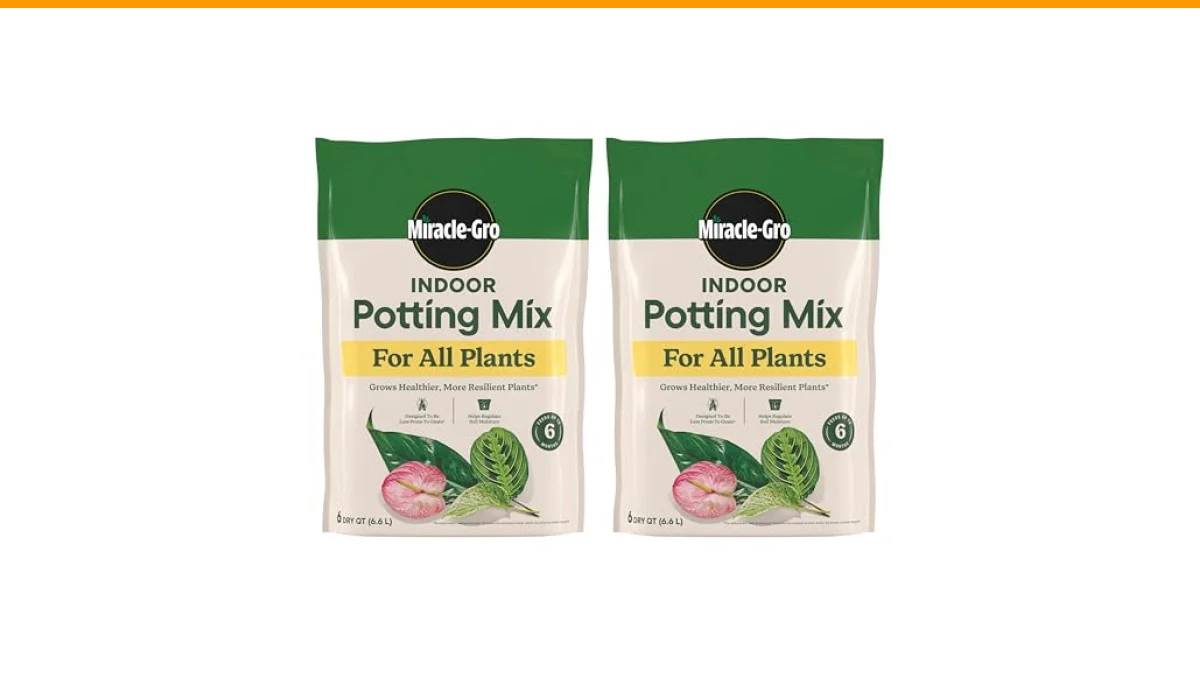
Miracle-Gro Indoor Plant Bundle
1st Pick
Miracle-Gro
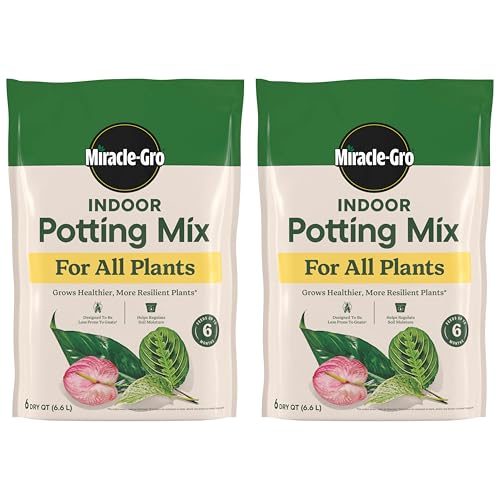
Miracle-Gro Indoor Potting Mix for All Plants, 6 qt., 2-Pack
- Miracle-Gro Indoor Potting Mix for All Plants feeds houseplants for up to 6 months and grows healthier, more resilient plants (vs…
- This potting mix contains sphagnum peat moss, coconut coir, and perlite to help with water retention and release so indoor plants…
- Blended potting soil for a wide variety of indoor container plants, including herbs, climbing, foliage, and flowering plants
The one you buy when you have a shelf full of plants to repot and no patience for measuring.
Two 6-quart bags arrive together, and each one fills roughly four 6-inch containers. That math matters if you’re working through a collection on a Saturday afternoon. The mix itself is a straightforward blend of sphagnum peat moss, coconut coir, and perlite, with fertilizer already worked in that feeds for up to six months.
What separates this from bargain-bin soil is what’s missing. No compost. No bark. Those two ingredients are the most common hiding spots for fungus gnat larvae, and leaving them out is the single biggest reason this mix stays clean indoors. The coir also helps the peat rewet more evenly after it dries out, which is a real problem with straight peat mixes.
The trade-off is that six months of built-in fertilizer cuts both ways. If you’re the type who feeds on a schedule anyway, you can push a heavy feeder like a monstera into fertilizer burn without realizing it. Skip your own feeding for the first season and let the mix do the work.
- Two bags per order, roughly eight 6-inch pots total
- Feeds up to 6 months without additional fertilizer
- No compost or bark, which lowers gnat pressure
- Ready to use straight from the bag, no blending
- Works for herbs, foliage, climbing, and flowering plants
Best for: Anyone repotting several plants at once who wants one bag to handle all of them.
Miracle-Gro Houseplant Potting Mix
2nd Pick
Miracle-Gro
Miracle-Gro Houseplant Potting Mix, 4 qt.
- INDOOR GROWING: Growing indoors is easy under the right conditions; Miracle-Gro Houseplant Potting Mix is an indoor plant potting…
- NOURISHES HOUSEPLANTS: This houseplant potting soil contains fertilizer that feeds your indoor container plants for up to 6 months
- LESS FUNGUS GNATS: This indoor plant soil potting mix is formulated with a blend of perlite, sphagnum peat moss, coir; and fertili…
The one for a single repot when you don’t want a 16-quart bag taking up closet space.
Four quarts fills one 8-inch container, which covers the most common scenario: you bought one new plant and need soil for it. The formula mirrors the bundle above, with perlite, sphagnum peat moss, coir, and slow-release fertilizer, so you get the same six months of feeding and the same gnat-resistant profile.
Plant-specific guidance on the label names pothos, spider plants, monstera, philodendron, and English ivy. Those are all tropical understory plants with similar needs, and this mix suits them well. Water moves through at a reasonable pace and the peat holds enough moisture that you’re not watering every other day.
Here’s the honest limitation: four quarts is not much. If you’re potting anything larger than an 8-inch container, you’ll need two bags, and the cost per plant climbs fast. This is a convenience size, not a value size.
- 4-quart bag fills one 8-inch pot
- Perlite, peat moss, and coir base
- Slow-release fertilizer lasts up to 6 months
- Formulated without compost or bark
- Suited to tropical houseplants like pothos and philodendron
Best for: A single new houseplant and limited storage space.
Miracle-Gro Organic Indoor Potting Mix
3rd Pick
Miracle-Gro
Miracle-Gro Organic Indoor Potting Mix, 16 qt.
- HELPS REGULATE SOIL MOISTURE: Miracle-Gro Organic Indoor Potting Soil Mix is an organic potting soil that protects indoor plants a…
- INDOOR PLANT SOIL: This organic container mix for indoor gardening is made with responsibly sourced sphagnum peat moss (one hundre…
- WHERE TO USE: Use this indoor potting soil mix with all types of indoor container plants, including houseplants and herbs; also gr…
The one that earns its keep when you’re filling a big planter or starting seeds.
Sixteen quarts is the largest bag on this list, and it fills a 12-inch container. That size makes it the practical choice for floor planters, herb troughs, and seed-starting trays where you need volume without buying three small bags. The blend uses responsibly sourced sphagnum peat moss, coir, and a quick-start natural fertilizer.
The moisture regulation claim is the interesting part. This mix is designed to buffer against both overwatering and underwatering, which sounds like marketing until you’ve killed a fern by alternating between neglect and drowning it. A mix that holds a steadier moisture band takes some of the guesswork out of watering.
One thing to know: the label doesn’t make the same gnat-resistance claim as the other Miracle-Gro picks. It’s an organic mix, and organic matter can attract pests if the bag sits open in a warm garage. Store it sealed and dry and you’ll be fine. Also note this is a natural fertilizer, so it releases more slowly and less predictably than synthetic slow-release pellets.
- 16-quart bag fills one 12-inch container
- Organic blend with responsibly sourced peat
- Designed to regulate against over and underwatering
- Works for houseplants, herbs, and seed starting
- Natural fertilizer rather than synthetic slow-release
Best for: Large containers, seed starting, and anyone who wants an organic label in bulk.
Back to the Roots 100% Organic Mix
4th Pick
Back to the Roots
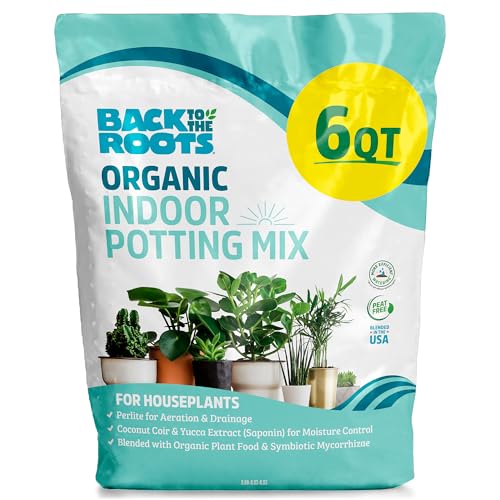
Back to the Roots 100% Organic Indoor Potting Mix (6 Quart), Promotes Healthy Houseplant Growth, Made in The USA
- Includes 6qt of Back to the Roots Indoor Potting Mix. Our Potting Mix contains organic yucca extract that aids in retaining moistu…
- ROOT-BOOSTING MYCORRHIZAE: This beneficial soil component provides your plants with a natural, organic way to boost their root dev…
- ORGANIC AND PEAT-FREE: Our indoor potting mix helps reduce greenhouse emissions and environmental impact, making it a responsible…
The one for plant parents who care as much about the bag as the plant.
This 6-quart mix is peat-free, which is the headline. Peat harvesting releases stored carbon, and peat-free blends reduce that footprint. If that matters to you, this is one of the few mainstream options that commits to it fully. Yucca extract handles moisture retention in place of peat, and mycorrhizae are added to support root development and nutrient uptake.
Dolomitic limestone is in the blend to buffer pH, which keeps nutrients available instead of locked up. That’s a detail most budget soils skip, and it shows up in how consistently plants feed over a full season. The mix also leaves out bark and compost, so gnat pressure stays low, and it’s made without inputs that would concern pets or kids in the house.
The catch with peat-free mixes is water behavior. Yucca extract holds moisture differently than peat, and some growers find they need to water slightly more often for the first few weeks while roots adjust. It’s not a flaw, just a different rhythm. Give it a month before you judge it.
- 6-quart bag, peat-free formula
- Yucca extract for moisture retention
- Mycorrhizae support root growth and nutrient uptake
- Dolomitic limestone buffers pH
- No bark or compost, low gnat risk
Best for: Eco-conscious growers who want a peat-free mix that still performs.
Rosy Soil Houseplant Potting Soil
5th Pick
Rosy Soil
Rosy Soil Houseplant Potting Soil, Organic Indoor Potting Mix, 4 Quarts
- ORGANIC INDOOR POTTING SOIL, MADE WITHOUT PEAT: Biochar, worm castings, mycorrhizae, compost, and bark fines replace peat moss ent…
- ROOTS GROW STRONGER WITH LIVING SOIL: Mycorrhizal fungi and beneficial microbes in this planting soil colonize root zones and dram…
- DRAINS WELL SO ROOTS DON'T ROT: Bark fines, sand, and charged biochar keep the indoor plant soil open and aerated; water moves thr…
The one that lasts longer than everything else here and costs accordingly.
Rosy Soil swaps peat for biochar, worm castings, mycorrhizae, compost, and bark fines. That’s a chunky, living mix, and it behaves very differently from a peat-based bag. Biochar resists compaction, so the soil structure holds up over years instead of collapsing into a dense brick after a few waterings. You replace it less often, which offsets some of the upfront cost.
Mycorrhizal fungi and beneficial microbes colonize the root zone and improve how efficiently the plant takes up water and nutrients. Worm castings supply micronutrients from the first watering. Bark fines, sand, and charged biochar keep the mix open, so water drains through rather than pooling around roots. For aroids like monstera and philodendron, that drainage profile is close to ideal.
Two things to weigh. First, this mix contains compost and bark, which are the ingredients the Miracle-Gro and Back to the Roots picks deliberately avoid. Indoors, that raises the odds of fungus gnats if you overwater. Second, four quarts fills only two to three medium pots, so a large collection gets expensive fast. The resealable bag helps, but plan your repots to use it up.
- 4 quarts fills 2 to 3 medium pots
- Peat-free blend of biochar, worm castings, bark fines
- Biochar resists compaction for longer soil life
- Mycorrhizae and microbes boost nutrient uptake
- Suits monstera, pothos, philodendron, ferns, and herbs
Best for: Aroid collectors who want a chunky, long-lasting mix and don’t mind the gnat watch.
How We Chose These Products
We started with ingredients, not marketing. A mix earns a spot here only if we can identify what’s in it and why. Peat, coir, perlite, biochar, bark fines, and worm castings all do specific jobs. Fillers that pad weight without improving drainage or nutrition got cut.
Then we weighed real-world behavior. Does the mix drain fast enough for aroid roots? Does it hold moisture long enough that you’re not watering daily? Does it invite fungus gnats into your living room? We also factored bag size against typical repotting jobs, since a 4-quart bag is useless if you’re filling a 12-inch planter. Cost per plant mattered too, and so did whether the fertilizer schedule forces you to skip your own feeding.
Buying Guide: What Really Matters
Start with drainage. Squeeze a handful of moist mix. It should crumble apart, not clump into a ball. Perlite, pumice, bark fines, and biochar all create air pockets. Peat and coir hold water. You want both, in roughly a 60/40 ratio of moisture-holding material to drainage material for most tropicals.
Read the label for what’s absent. Compost and bark are fine outdoors but shelter fungus gnat larvae indoors. If gnats have been a problem in your home, choose a mix that explicitly leaves them out. Conversely, if you want a living soil with microbial activity, you need those organic components, so accept the gnat risk and manage it with sticky traps and careful watering.
Check the fertilizer claim. A mix that feeds for six months means you should not add your own fertilizer during that window. Overfeeding causes brown leaf tips and stalled growth, and it’s one of the most common mistakes new plant owners make. Match your feeding schedule to what the bag already provides.
For plant-specific needs, a general indoor mix won’t cover everything. Succulents, snake plants, and yuccas want a grittier blend, and you can find dedicated guidance in this snake plant soil guide. If you’re growing food indoors, this vegetable soil breakdown covers what edible crops need.
DIY Indoor Potting Mix Recipes With Exact Ratios
Commercial mixes are convenient, but you can build better soil for less per plant. Here are three tested ratios.
All-purpose tropical mix: 5 parts peat moss or coco coir, 3 parts perlite, 2 parts worm castings. This suits pothos, philodendron, monstera, and most foliage plants. It drains well and holds enough moisture for weekly watering.
Aroid chunky mix: 4 parts orchid bark, 3 parts coco coir, 2 parts perlite, 1 part worm castings. The bark keeps air moving around roots, which aroids need. Water runs through fast, so expect to water more often.
Succulent and cactus mix: 3 parts perlite or pumice, 2 parts coco coir, 1 part coarse sand. Low organic content, high drainage. Water thoroughly, then let it dry completely before the next round.
Cost per plant runs roughly a third of what you’d pay for a premium bagged mix once you buy ingredients in bulk. The trade-off is storage space and a few minutes of measuring. For a collection under ten plants, bagged soil usually wins on convenience.
How to Repot Without Shock and Adjust Watering
Plants don’t die from repotting. They die from repotting badly. Water the plant a day before so the root ball holds together. Then slide it out, loosen the outer roots gently with your fingers, and shake off about a third of the old soil.
Set the plant so the crown sits at the same height it did before. Burying it deeper suffocates stems. Fill around the root ball with your new mix, press lightly to remove air pockets, and water until it runs out the drainage holes. Skip fertilizer for the first month, since fresh mix usually has enough.
Expect a watering adjustment. A chunky aroid mix dries out in three to five days. A peat-heavy mix might hold moisture for ten. Stick your finger two inches into the soil before watering, and let the plant tell you the schedule instead of a calendar.
Avoiding Fungus Gnats, Root Rot, and Fertilizer Burn
Fungus gnats breed in consistently wet topsoil. Let the top inch dry between waterings and they lose their habitat. Yellow sticky traps catch the adults, and a mix without compost or bark removes the larvae’s food source. For a deeper look at soil options by plant type, this plant-by-plant soil guide is worth reading.
Root rot comes from the same cause: water sitting around roots with no oxygen. Drainage holes are non-negotiable. So is a mix that crumbles instead of clumping. If your soil stays soggy for more than a week, add perlite or repot into something chunkier.
Fertilizer burn shows up as crispy brown leaf edges and stalled growth. It happens when a pre-fertilized mix gets additional feeding too soon. Read the bag, note the feed window, and wait it out before reaching for the bottle.
Storing Leftovers and Sterilizing Bagged Soil
Bagged soil isn’t sterile, and that’s fine for most plants. But if you’ve had gnat problems, you can pasteurize small batches by spreading the mix on a baking sheet and heating it to 180°F for 30 minutes. It smells like a wet forest floor, so open a window.
Store leftovers in a sealed bin or the original bag rolled tight. Keep it dry and out of direct sun. Moist, warm soil in an open bag is a breeding ground for pests and mold. A five-gallon bucket with a lid works well and costs less than a dedicated soil bin.
Our Top Recommendation
The Miracle-Gro Indoor Plant Bundle takes the top spot for most people. Two bags cover a full shelf of repotting, the mix feeds for six months, and the absence of compost and bark keeps gnats away. It’s the least fussy option on this list.
If you only have one plant, the 4-quart Miracle-Gro Houseplant Potting Mix does the same job in a smaller bag. For eco-conscious growers, Back to the Roots delivers a peat-free formula that performs. And if you keep aroids and want a chunky, long-lasting mix, Rosy Soil is worth the higher cost per quart.
Frequently Asked Questions
Can I reuse old potting soil?
Yes, with caveats. Old soil loses structure and nutrients, and it may harbor pests or disease. Reuse it for less demanding plants after mixing in 30% fresh perlite and a handful of worm castings. Never reuse soil from a plant that died of root rot.
Why does my new soil grow mold on top?
Mold means the surface stays too wet and air circulation is poor. Scrape it off, let the top inch dry, and water less often. It’s usually harmless to the plant but a sign your watering schedule needs adjusting.
How do I switch a plant from nursery soil to a chunky mix?
Do it gradually. Shake off about a third of the old soil at repotting and fill with the new mix. The roots adapt over a few weeks. A full swap in one session can shock sensitive plants, especially ferns and calatheas.
Do I need different soil for herbs grown indoors?
Herbs like basil, mint, and parsley do well in a standard indoor mix with extra perlite for drainage. Avoid heavy pre-fertilized blends for culinary herbs, since you’ll be feeding them regularly anyway. A lighter, faster-draining mix keeps their roots happy in small kitchen pots.