Best Indoor Plant Soil for Vegetables: 5 Tested Picks Plus a DIY Recipe That Works
Contents
You planted a tomato seedling in a pot by the window, watered it faithfully, and watched it stall at six inches while the leaves turned pale. The problem usually isn’t your watering schedule. It’s the dirt.
| 1st Pick | 2nd Pick | 3rd Pick | 4th Pick | 5th Pick |

|

|

|

|

|
| Miracle-Gro Miracle-Gro Organic Indoor Potting Mix, 16 qt. | Burpee Burpee, 9 Quarts | Premium Organic Potting Natural Soil Mix Food Ideal for Container Garden-Vegetable, Flower & Herb Use for Indoor Outdoor Plant | Miracle-Gro Miracle-Gro Organic Outdoor Potting Mix, 16 qt. | Miracle-Gro Miracle-Gro Indoor Potting Mix for Seed Starting, 8 qt. (2-Pack) | Miracle-Gro Miracle-Gro Potting Mix, 16 qt. (2-Pack) |
| Buy on Amazon | Buy on Amazon | Buy on Amazon | Buy on Amazon | Buy on Amazon |
Indoor vegetables have different demands than a pothos on a shelf. They need a mix that drains fast, holds moisture without turning swampy, and carries enough nutrition to push fruit instead of just leaves. Garden soil straight from the yard fails indoors because it compacts, drains poorly, and can harbor pests in a warm room with no natural predators.
Below are five mixes worth buying, ranked by how well they handle real indoor vegetable growing. You’ll also find a scalable DIY recipe, a pH chart for common crops, and fixes for the problems that show up two months in. The Miracle-Gro Organic Indoor Potting Mix takes the top spot for most people, with Burpee close behind if you want a coir-based option.
Here’s a quick side-by-side of the five picks before the detailed reviews.
| Features | Miracle-Gro Organic Indoor | Burpee Premium Organic | Miracle-Gro Organic Outdoor | Miracle-Gro Seed Starting | Miracle-Gro Potting Mix |
|---|---|---|---|---|---|
| Base material | Peat moss, coir | Coconut coir | Peat moss | No compost or bark | Standard potting blend |
| Feeding window | Quick-start natural fertilizer | Up to 3 months | Up to 2 months | Enriched plant food | Up to 6 months |
| Moisture control | Guards against over/under watering | Coir retains steady moisture | Standard retention | Lightweight, stays moist | Standard retention |
| Fungus gnat risk | Low | Moderate | Moderate | Designed to resist gnats | Moderate |
| Best use case | Indoor herbs and veggies | Containers and raised beds | Patio and balcony pots | Seed germination and cuttings | Long-season outdoor containers |
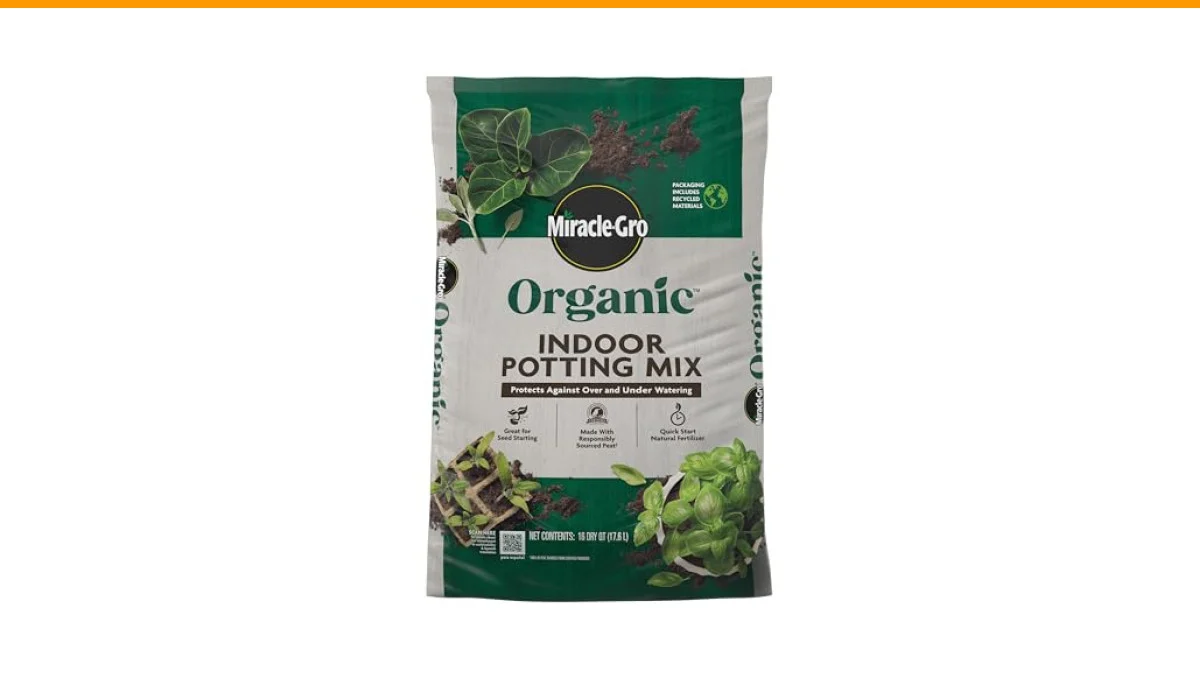
Miracle-Gro Organic Indoor Potting Mix
1st Pick
Miracle-Gro
Miracle-Gro Organic Indoor Potting Mix, 16 qt.
- HELPS REGULATE SOIL MOISTURE: Miracle-Gro Organic Indoor Potting Soil Mix is an organic potting soil that protects indoor plants a…
- INDOOR PLANT SOIL: This organic container mix for indoor gardening is made with responsibly sourced sphagnum peat moss (one hundre…
- WHERE TO USE: Use this indoor potting soil mix with all types of indoor container plants, including houseplants and herbs; also gr…
The one to grab when your vegetables live permanently inside.
This 16-quart bag is built for plants that never see a patio. The blend of sphagnum peat moss and coir gives you a light, airy texture that roots push through easily, which matters when you’re growing peppers or determinate tomatoes in a five-gallon pot. It’s also certified for organic use, so herb growers who care about what touches their basil leaves have a clear answer.
What separates this from generic potting soil is the moisture regulation. Overwatering kills more indoor vegetables than underwatering, especially in winter when evaporation slows to a crawl. The coir fraction holds water while the peat keeps air pockets open, so a slightly heavy hand with the watering can doesn’t immediately drown the root zone. The quick-start natural fertilizer gives seedlings a gentle push without the salt burn you get from synthetic blends.
The trade-off is feeding duration. That quick-start fertilizer won’t carry a fruiting tomato through a full season. Plan on supplementing with a liquid feed around week four or five. The 16-quart size also fills roughly one 12-inch container, so a serious indoor setup needs multiple bags. Check the current price on Amazon before you commit to a bulk order.
- Peat and coir blend drains fast while holding moisture
- Organic certification suits edible crops
- Works for seed starting and transplants
- One bag fills about one 12-inch pot
- Needs supplemental feeding after roughly a month
Best for: Anyone growing herbs, lettuce, or compact peppers indoors year-round who wants organic certification and forgiving moisture control.
Burpee Premium Organic Potting Mix
2nd Pick
Burpee
Burpee, 9 Quarts | Premium Organic Potting Natural Soil Mix Food Ideal for Container Garden-Vegetable, Flower & Herb Use for Indoor Outdoor Plant
- ALL-NATURAL MIX: Burpee Organic Premium Potting Mix is formulated with plant food & coconut coir to promote seed & root growth and…
- PERFECT FOR CONTAINERS: Use this growing mix for planting in containers or raised beds. The potting soil feeds plants instantly, t…
- RETAINS MOISTURE: Sustainable coconut coir helps hold the right amount of water for potted plants, indoors or outdoors. Coconut co…
The coir-first option for gardeners who dislike peat.
Burpee has been selling seeds since 1876, and this mix reflects that gardening-first mindset. Coconut coir replaces peat as the primary moisture-holding ingredient, which appeals to growers concerned about peat harvesting. The 9-quart bag is smaller than the Miracle-Gro options, so it suits a windowsill setup rather than a full indoor farm.
The slow-release plant food is the standout feature here. It feeds for up to three months, which covers most leafy greens from seed to harvest and gets a bush bean or cherry tomato well into flowering. Coir also rewets more easily than peat after it dries out, a real advantage if you travel and come home to bone-dry pots. That rewetting behavior alone makes it worth considering if your schedule is unpredictable.
One honest caveat: coir-based mixes can hold slightly more water than peat blends, so you’ll want a pot with solid drainage holes. The 9-quart volume also runs out fast if you’re filling multiple containers. For a larger indoor vegetable garden, buy two or three bags at once. If you’re specifically growing fruiting crops, our tomato soil guide covers what to add on top of a base mix.
- OMRI listed for certified organic growing
- Coir retains moisture and rewets easily
- Feeds plants for up to three months
- Works in containers and raised beds
- Smaller bag means more frequent reorders
Best for: Gardeners who prefer coir over peat and want a mix that feeds leafy greens and herbs for a full growing cycle without extra inputs.
Miracle-Gro Organic Outdoor Potting Mix
3rd Pick
Miracle-Gro
Miracle-Gro Organic Outdoor Potting Mix, 16 qt.
- OUTDOOR POTTING SOIL: Miracle-Gro Organic Outdoor Potting Mix contains a quick-release natural plant fertilizer and also feeds pla…
- PEAT MOSS: This organic potting soil mix is made with responsibly sourced peat (one hundred percent of peat sourced from certified…
- OUTDOOR CONTAINER USE: Use this organic potting mix with all types of outdoor container plants, including flowers, vegetables, her…
Made for the balcony, not the bookshelf.
This one shares the organic peat base of the indoor version but is formulated for outdoor containers. If your vegetable setup lives on a balcony, fire escape, or patio, the outdoor blend handles temperature swings and stronger sun better than an indoor-specific mix. It feeds for up to two months with a quick-release natural fertilizer.
The peat sourcing is certified, which addresses a common complaint about unsustainable harvesting. Vegetables, herbs, annuals, and perennials all grow well in it. The real-world advantage shows up in summer heat, where outdoor pots dry out fast and a mix that holds moisture without staying soggy keeps plants from stressing between waterings.
Here’s the catch: this is not the right pick for a windowsill. Outdoor mixes often drain faster and dry quicker, which becomes a problem in still indoor air where evaporation is slow. If your plants live inside, the indoor version is the better call. Reserve this one for anything that spends time outdoors. One bag fills a single 12-inch pot, so plan your quantities before ordering.
- Quick-release fertilizer feeds for two months
- Peat sourced from certified producers
- Suits vegetables, herbs, and flowering annuals
- Handles outdoor temperature swings
- Not ideal for indoor-only setups
Best for: Balcony and patio vegetable growers who want an organic peat-based mix that tolerates outdoor conditions.
Miracle-Gro Indoor Potting Mix for Seed Starting
4th Pick
Miracle-Gro
Miracle-Gro Indoor Potting Mix for Seed Starting, 8 qt. (2-Pack)
- Miracle-Gro Indoor Potting Mix for Seed Starting grows stronger roots for seeding success (vs unfed when used as directed)
- This lightweight potting mix is enriched with plant food and designed to be less prone to fungus gnats (contains no compost or bar…
- This seed starting mix is excellent for germinating vegetable, flower, and herb seeds, and also for starting leaf, stem, and root…
The gnat-resistant starter for seeds and cuttings.
Fungus gnats are the number one complaint from indoor growers, and this mix attacks the problem at the source. It contains no compost or bark, the two ingredients that shelter gnat larvae. The 8-quart two-pack is designed for cell trays and small containers, making it a natural fit for starting vegetable seeds before transplanting into a larger pot.
The lightweight texture lets delicate roots establish without resistance, and the included plant food supports early growth. It also works for leaf, stem, and root cuttings, so you can propagate herbs like basil and mint in the same medium. Each bag fills roughly three 72-cell trays, which is a lot of seedlings for the money.
Don’t expect this to carry a plant long-term. It’s a starter mix, not a growing mix. Once seedlings develop two sets of true leaves, move them into a richer blend like the Miracle-Gro Organic Indoor Potting Mix. The lack of compost means lower initial nutrition, which is fine for germination but insufficient for fruiting. Keep the mix moist and out of direct sun until germination, then transition.
- No compost or bark reduces gnat problems
- Light texture suits delicate seedling roots
- Two 8-quart bags fill multiple seed trays
- Works for cuttings as well as seeds
- Requires transplanting into a richer mix later
Best for: Seed starters and propagators who’ve battled fungus gnats and want a clean, lightweight medium for germination.
Miracle-Gro Potting Mix 2-Pack
5th Pick
Miracle-Gro
Miracle-Gro Potting Mix, 16 qt. (2-Pack)
- FEEDS UP TO 6 MONTHS: Miracle-Gro Potting Mix is a gardening soil for outdoor containers that feeds all types of potted plants, in…
- PROMOTES GROWTH: This potting soil for outdoor plants Grows Plants Twice As Big! (vs. unfed plants)
- WHERE TO USE: Use this home gardening product with all types of outdoor container plants, including annual and perennial flowers,…
The long-feeding workhorse for outdoor containers.
This is the conventional (non-organic) Miracle-Gro blend, and its headline feature is feeding duration. It keeps potted plants fed for up to six months, which is the longest window in this lineup. Two 16-quart bags give you enough volume for a couple of large containers, making it a practical buy for a patio vegetable garden with tomatoes, peppers, and herbs.
Growth claims aside, the real benefit is convenience. You fill a pot, plant, water, and forget about fertilizing for most of the season. That’s a genuine advantage for busy growers who don’t want to mix liquid feed every two weeks. It handles annuals, perennials, vegetables, herbs, and shrubs, so one product covers an entire balcony.
The trade-off is that this isn’t organic, which matters if you’re growing edibles and want certified inputs. It also drains and dries faster than indoor-specific blends, so indoor use requires more frequent watering. For outdoor containers in full sun, that’s actually helpful. For a windowsill, it’s a hassle. Two bags fill two 12-inch containers, so scale your order to your pot count.
- Feeds for up to six months without extra fertilizer
- Two 16-quart bags cover multiple containers
- Suits vegetables, herbs, flowers, and shrubs
- Not certified organic
- Dries faster indoors than dedicated indoor mixes
Best for: Outdoor container gardeners who want to plant once and skip fertilizing for most of the season.
Why Indoor Vegetables Need Specialized Soil
Outdoor garden soil has an entire ecosystem working for it. Earthworms tunnel air channels, rain flushes salts downward, and ground contact moderates temperature. A pot on a shelf has none of that. The mix you choose becomes the entire root environment, and it has to do every job the ground used to do.
Three things matter most: drainage, aeration, and nutrient holding capacity. A vegetable like a tomato wants consistent moisture but absolutely cannot sit in waterlogged soil, because root rot moves fast in a warm room. Compacted mixes suffocate roots and stunt growth before you see any visible symptom above the surface.
There’s also the pest question. Indoor pots sit in still air with no rain, no predators, and no cold snaps to knock back insect populations. A mix carrying compost or bark gives fungus gnats a perfect nursery. That’s why seed-starting blends deliberately leave those ingredients out.
Potting Mix vs. Garden Soil
The two terms get used interchangeably, and that causes real problems. Potting mix is usually soilless, built from peat, coir, perlite, and vermiculite. Garden soil is actual topsoil, sometimes blended with organic matter. They behave nothing alike in a container.
Understanding Soilless Mixes
Soilless mixes are light, sterile, and drain predictably. They hold water in the medium itself rather than in soil particles, and they don’t compact over time. Most indoor vegetable growing succeeds with a soilless mix plus regular feeding, because the mix provides structure while you control nutrition.
Why Garden Soil Fails Indoors
Garden soil turns into a brick in a pot. It has fine particles that settle and block air movement, and it often carries weed seeds, fungal spores, and insect eggs. In an outdoor bed, those problems get managed by weather and biology. In your living room, they multiply. Skip it for containers.
The Ideal DIY Indoor Vegetable Soil Recipe
You can build a better mix than most bags for less money if you’re filling several containers. The classic ratio is 60 percent base, 30 percent compost, and 10 percent perlite by volume. For vegetables specifically, push the perlite to 15 percent if your pots are deep or your room runs humid.
Base, Compost, and Aeration Ratios
Use coconut coir or peat moss as the base. Coir is more sustainable and rewets better. Compost supplies slow nutrition and beneficial microbes. Perlite creates air pockets so roots breathe. A five-gallon batch looks like three gallons base, one and a half gallons compost, and half a gallon perlite. Mix it in a wheelbarrow or a large tote, and moisten slightly as you blend to keep dust down.
Choosing the Right Amendments
Perlite improves drainage and never breaks down. Vermiculite holds water and suits lettuce and other thirsty greens, but it compacts over time, so use it sparingly in long-season pots. Worm castings are a gentler compost alternative for seedlings. Add a slow-release organic fertilizer at the rate on the package, and you’ve got a mix that rivals anything on a shelf.
Matching Soil pH to Your Vegetables
pH controls whether nutrients are available at all. A mix at the wrong pH can be fully stocked with fertilizer and still starve your plants, because roots can’t absorb what’s locked up. Most vegetables sit in a narrow band between 6.0 and 7.0.
pH Needs for Tomatoes, Peppers, and Leafy Greens
Tomatoes prefer 6.0 to 6.8. Peppers want 6.0 to 6.8 as well. Lettuce, spinach, and most leafy greens do best at 6.0 to 7.0. Basil and most herbs land around 6.0 to 7.0. If you’re growing blueberries indoors, which is uncommon but possible, they need 4.5 to 5.5 and a completely different mix. A reliable soil tester for alkaline soil takes the guesswork out of monitoring.
Sterilizing and Reusing Indoor Soil
Reusing mix saves money, but only if you deal with pathogens and pests first. Old soil can carry root rot organisms, gnat larvae, and depleted nutrients. The fix is heat.
Spread damp (not wet) mix in a roasting pan, cover with foil, and bake at 180 to 200 degrees Fahrenheit for 30 minutes, until the center reaches 180 degrees. A probe thermometer helps here. Let it cool completely before planting. Expect a strong earthy smell during baking, so ventilate the kitchen. After sterilizing, you must replenish nutrition, since heat destroys organic matter. Blend in fresh compost and slow-release fertilizer at roughly one part compost to three parts old mix.
Don’t reuse soil from a plant that died of disease. The risk isn’t worth the savings. For more on what to feed indoor edibles, this guide to what soil to use for an indoor vegetable garden covers feeding schedules in detail.
Troubleshooting Common Soil Problems
Most indoor vegetable failures trace back to one of two issues: water management or nutrition. Both show visible symptoms before the plant dies, which gives you time to correct course.
Fixing Drainage and Overwatering Issues
Yellow lower leaves, soft stems, and a sour smell from the pot all point to waterlogged roots. Check that your container has drainage holes and that the saucer isn’t holding standing water. If the mix stays wet for more than a week after watering, add perlite at roughly 10 percent by volume and repot. Water less often, and water deeply when you do.
Identifying Nutrient Deficiencies
Pale yellow leaves starting at the bottom usually mean nitrogen shortage. Purple-tinged leaves on tomatoes and peppers often signal phosphorus deficiency, especially in cool conditions. Brown leaf edges can indicate potassium shortage or salt buildup from over-fertilizing. A basic liquid feed corrects nitrogen and potassium gaps within a week. Phosphorus issues often resolve when soil temperature rises. Flush the pot with plain water if you suspect salt buildup, then resume feeding at half strength.
How We Chose These Products
We evaluated each mix on four criteria: drainage behavior, moisture retention, feeding duration, and pest risk. The last one matters more indoors than most buyers realize, which is why a seed-starting blend with no compost earns a spot despite its limited lifespan.
Organic certification carried weight for edible crops, but it wasn’t a dealbreaker. We also considered bag size against realistic container counts, since a 9-quart bag that fills one pot is a different value proposition than a two-pack covering four. Products that promised long feeding windows without the texture to support healthy roots got marked down.
Buying Guide: What Really Matters
Start with where the plant lives. A mix formulated for indoor use handles still air and slow evaporation better than an outdoor blend, which dries out fast and needs constant watering indoors. Match the mix to the environment first, then worry about brand.
Next, look at what’s already in the bag. A mix with a long feeding window saves you work but limits your control over nutrition. A lightly fertilized mix gives you flexibility to feed on your own schedule, which matters for fruiting crops that need different nutrients at different stages.
Finally, consider pest history. If you’ve dealt with fungus gnats before, choose a mix without compost or bark, or plan to bottom-water and use sticky traps from day one. Prevention beats treatment every time.
Our Top Recommendation
The Miracle-Gro Organic Indoor Potting Mix wins for most indoor vegetable growers. It balances drainage, moisture control, and organic certification in a way the others don’t, and the coir-peat blend forgives occasional overwatering. Pair it with a liquid feed after the first month and it handles herbs, lettuce, and compact fruiting crops well.
If you want a coir-based mix with a longer feeding window, Burpee Premium Organic is the runner-up. For seed starting specifically, the Miracle-Gro Seed Starting Mix is the cleanest choice because it avoids the ingredients gnats love. Outdoor container growers should look at the Miracle-Gro Potting Mix 2-Pack for its six-month feed window. Whichever you pick, check the current price on Amazon before ordering, since bag sizes and bundles change.
Frequently Asked Questions
Can I use outdoor potting mix for indoor vegetables?
You can, but you’ll water more often. Outdoor mixes drain faster and dry quicker, which becomes a chore in still indoor air. They also may carry pests better suited to outdoor conditions. An indoor-specific mix is the better choice for anything living permanently inside.
How often should I replace indoor vegetable soil?
Once per growing season for fruiting crops like tomatoes and peppers. Leafy greens and herbs can go two cycles if you replenish nutrition between plantings. Always sterilize reused mix before planting into it again, and never reuse soil from a plant that died of disease.
Do I need to fertilize if my potting mix already contains plant food?
Eventually, yes. Most mixes feed for two to six months depending on the blend. Once that window closes, plants stall and leaves pale. Start a liquid feed schedule around the time the bag’s stated feeding window ends, and watch new growth for signs you’re on track.
What causes white mold on top of indoor potting soil?
It’s usually a saprophytic fungus feeding on dead organic matter, and it thrives when the surface stays damp. Scrape it off, let the top inch of mix dry between waterings, and improve airflow around the pot. It’s rarely harmful to the plant itself, but it signals you’re overwatering. Persistent mold calls for repotting into a fresh, well-draining mix.