

Best Indoor Plant Soil Mixture for Tomatoes: A Practical Guide
Contents
Growing tomatoes indoors is a rewarding challenge, but the wrong soil can sabotage your efforts fast. Yellow leaves, blossom end rot, and fungus gnats are common complaints. Most of these problems trace back to the potting mix.
A good indoor tomato soil needs three things: fast drainage, steady moisture retention, and a nutrient profile that supports heavy feeding. It also must stay light enough for roots to breathe in a pot. Store-bought mixes vary wildly in quality. You can also blend your own for better control and lower cost.
I tested five popular options and compared them against a simple DIY recipe. The Miracle-Gro Organic Indoor Potting Mix is the best ready-to-use choice for most growers. For a peat-free alternative, Back to the Roots is excellent. Keep reading for the full breakdown, a symptom-to-fix troubleshooting table, and indoor-specific tips no one else covers.
Here is a quick comparison of the key differences between these five products.
| Features | Miracle-Gro Organic Indoo… | Miracle-Gro Organic Outdo… | Back to the Roots 100% Or… | Burpee, 9 Quarts | Premiu… | Miracle-Gro Indoor Plant… |
|---|---|---|---|---|---|
| Base Material | Peat moss, coir | Peat moss | Peat-free, yucca extract | Coconut coir | Peat moss, coir, perlite |
| Key Additive | Quick-start fertilizer | Quick-release fertilizer | Mycorrhizae, dolomitic limestone | Slow-release fertilizer | Fertilizer (6 months) |
| Moisture Control | Regulates over/under watering | Not specified | Yucca extract retains moisture | Coir retains moisture | Perlite for drainage |
| Feeding Duration | Not specified | Up to 2 months | Not specified | Up to 3 months | Up to 6 months |
| Best Use Case | Indoor containers, herbs | Outdoor containers | Indoor houseplants | Containers, raised beds | Indoor houseplants |

Miracle-Gro Organic Indoo…
1st Pick

Miracle-Gro
Miracle-Gro Organic Indoor Potting Mix, 16 qt.
- HELPS REGULATE SOIL MOISTURE: Miracle-Gro Organic Indoor Potting Soil Mix is an organic potting soil that protects indoor plants a…
- INDOOR PLANT SOIL: This organic container mix for indoor gardening is made with responsibly sourced sphagnum peat moss (one hundre…
- WHERE TO USE: Use this indoor potting soil mix with all types of indoor container plants, including houseplants and herbs; also gr…
This is a solid all-purpose organic mix designed for indoor containers. It works well for tomatoes in 12-inch pots or larger. The blend of sphagnum peat moss and coir gives it a light, airy texture. That structure helps prevent the compaction that kills tomato roots in containers.
What stands out is the moisture regulation. The mix protects against both overwatering and underwatering, which is a common problem for new indoor growers. The quick-start natural fertilizer gives seedlings a gentle push without burning them. It’s also OMRI listed for organic use, so you can feel good about what you’re growing in.
The main trade-off is that it doesn’t feed for very long. You’ll need to start supplementing with a liquid tomato fertilizer after a few weeks. And like most peat-based mixes, it can dry out completely if you forget to water. It’s not a set-and-forget solution.
- Made with responsibly sourced peat moss and coir
- Helps prevent over and underwatering
- Includes quick-start natural fertilizer
- OMRI listed for organic gardening
- 16 qt. bag fills one 12-inch container
Best for: Growers who want a reliable, organic indoor mix that’s easy to find and works well for tomatoes in medium to large pots.
Miracle-Gro Organic Outdo…
2nd Pick

Miracle-Gro
Miracle-Gro Organic Outdoor Potting Mix, 16 qt.
- OUTDOOR POTTING SOIL: Miracle-Gro Organic Outdoor Potting Mix contains a quick-release natural plant fertilizer and also feeds pla…
- PEAT MOSS: This organic potting soil mix is made with responsibly sourced peat (one hundred percent of peat sourced from certified…
- OUTDOOR CONTAINER USE: Use this organic potting mix with all types of outdoor container plants, including flowers, vegetables, her…
Don’t let the name fool you. This outdoor mix can work indoors if you’re careful. It’s formulated for outdoor containers and includes a quick-release fertilizer. That fertilizer feeds for up to two months. For indoor tomatoes, that’s a decent head start. The peat moss base provides good aeration and drainage.
The biggest advantage here is the feeding duration. Two months of built-in nutrition means less fussing with liquid fertilizers early on. It’s also versatile enough for flowers, herbs, and vegetables. If you’re growing determinate tomatoes in a sunny window, this mix can carry them through the first half of their life.
But there’s a catch. Outdoor mixes often contain bark or compost that can attract fungus gnats indoors. This one doesn’t list those ingredients, but it’s still designed for outdoor use. Indoors, it may dry out faster than you expect. And the quick-release fertilizer can run out just as your tomatoes start setting fruit.
- Feeds plants for up to 2 months
- Made with responsibly sourced peat moss
- For outdoor containers, but works indoors with care
- 16 qt. bag fills one 12-inch pot
- Not specifically formulated for indoor use
Best for: Budget-conscious growers who want a dual-purpose mix and don’t mind supplementing with liquid fertilizer later.
Back to the Roots 100% Or…
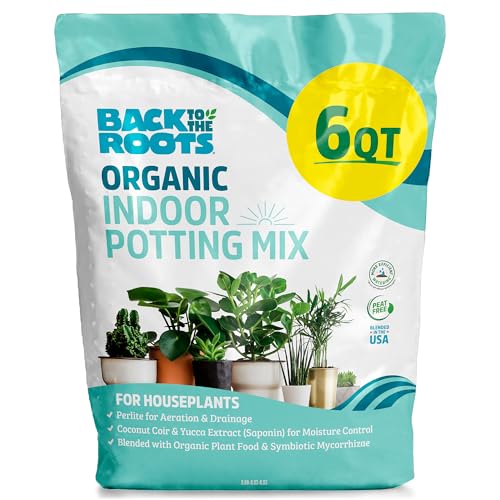
This is the peat-free option. It’s made from organic materials and uses yucca extract to retain moisture. Mycorrhizae are added to boost root development and nutrient uptake. That’s a real benefit for tomatoes, which have heavy root systems. The mix also contains dolomitic limestone to balance pH.
What I like most is the pest resistance. It’s made without bark or compost, so it’s less prone to fungus gnats. That’s a huge plus for indoor growing. The 6-quart bag is smaller than others, so you’ll need two bags for a 12-inch pot. But the quality is excellent.
The trade-off is the price per quart. It’s more expensive than Miracle-Gro or Burpee. And because it’s peat-free, it behaves differently. It holds moisture well but can become hydrophobic if it dries out completely. You’ll need to stay on top of watering.
- 100% organic and peat-free
- Contains yucca extract for moisture retention
- Mycorrhizae boost root development
- Dolomitic limestone balances pH
- Safe for pets and people
Best for: Eco-conscious growers who want a peat-free mix and are willing to pay a bit more to avoid fungus gnats.
Burpee, 9 Quarts | Premiu…
Burpee has been around since 1876, and this mix lives up to the brand’s reputation. It’s formulated with coconut coir and a slow-release fertilizer that feeds for up to three months. That’s a good middle ground between the two-month and six-month options. The coir helps retain moisture without getting soggy.
The all-natural mix is OMRI listed for organic use. It works well for containers and raised beds, indoors or out. For indoor tomatoes, the slow-release fertilizer provides steady nutrition through the vegetative stage. The 9-quart bag is a good size for a single large pot or two smaller ones.
One drawback is that coconut coir can hold too much water if you don’t add perlite. This mix doesn’t list perlite as an ingredient. In a humid indoor environment, that could lead to root rot. You may want to blend in some perlite yourself. Also, the slow-release fertilizer won’t be enough once the plant starts fruiting.
- OMRI listed for organic use
- Slow-release fertilizer feeds for up to 3 months
- Coconut coir retains moisture
- 9-quart bag, good for one large pot
- No perlite listed, so consider adding some
Best for: Gardeners who trust the Burpee name and want a versatile mix that works for both indoor and outdoor containers.
Miracle-Gro Indoor Plant…
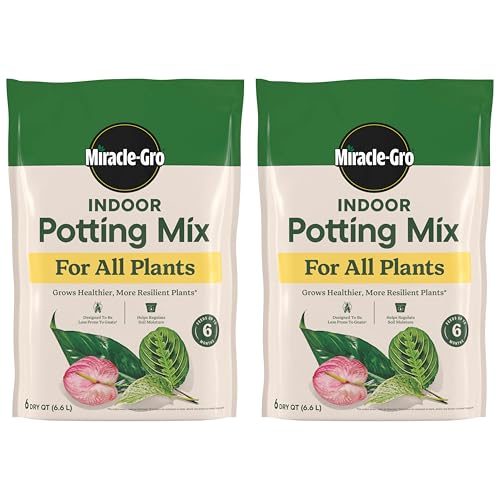
This bundle includes two 6-quart bags of Miracle-Gro Indoor Potting Mix. It’s designed for houseplants but works for tomatoes too. The mix contains sphagnum peat moss, coconut coir, and perlite. That perlite is key for drainage. It also feeds for up to six months, which is the longest of any product here.
The six-month feeding window is a game-changer for indoor tomatoes. You won’t need to start liquid fertilizing until the plant is well into fruiting. The mix also doesn’t contain compost or bark, so it’s less likely to attract fungus gnats. That’s a big plus for indoor growing.
The downside is the bag size. Two 6-quart bags equal 12 quarts, which is less than the 16-quart single bags from Miracle-Gro’s other lines. You’ll need both bags for a 12-inch pot. And while it feeds for six months, that feeding is designed for houseplants, not heavy-feeding tomatoes. You’ll still need to supplement eventually.
- Feeds for up to 6 months
- Contains peat moss, coir, and perlite
- No compost or bark, reduces fungus gnats
- Bundle includes two 6-quart bags
- Each bag fills four 6-inch containers
Best for: Indoor growers who want the longest possible feeding window and don’t mind buying a bundle to get enough volume.
How We Chose These Products
I evaluated each mix on five criteria: drainage, moisture retention, nutrient content, pest resistance, and value. Drainage matters most for tomatoes because soggy roots kill plants fast. Moisture retention keeps you from watering twice a day. Nutrient content determines how soon you need to start fertilizing.
Pest resistance is a big deal indoors. Fungus gnats love damp, organic-rich soil. Mixes without bark or compost tend to have fewer problems. Value is about cost per quart and how far a bag goes. I also considered how each mix performs in a 12-inch pot, which is the minimum size for most indoor tomato varieties.
Buying Guide: What Really Matters
Look for a mix with perlite or vermiculite. These ingredients create air pockets in the soil. Without them, your mix will compact and suffocate roots. Peat moss and coir are the best base materials. They hold water without staying soggy. Avoid mixes with a lot of bark or compost for indoor use. Those break down slowly and can harbor pests.
Check the fertilizer content. Slow-release fertilizers are better than quick-release for indoor tomatoes. They feed steadily instead of dumping nutrients all at once. A mix that feeds for two to three months is ideal. You’ll still need a liquid tomato fertilizer once the plant starts flowering. That’s when calcium and potassium demand spikes.
Consider the bag size. A 16-quart bag fills one 12-inch pot. A 9-quart bag fills a slightly smaller pot. If you’re growing multiple plants, buy in bulk or choose a bundle. And always check the current price on Amazon before buying. Prices fluctuate, especially for organic mixes.
Our Top Recommendation
The Miracle-Gro Organic Indoor Potting Mix is our top pick. It balances moisture well, drains fast, and includes a gentle starter fertilizer. It’s widely available and affordable. For a peat-free option, the Back to the Roots mix is a close runner-up. It costs more but reduces gnat problems and supports root health with mycorrhizae.
If you want the longest feeding window, the Miracle-Gro Indoor Plant bundle feeds for up to six months. That’s the easiest choice for busy growers. The Burpee mix is a solid middle ground with a three-month feed. The outdoor Miracle-Gro mix works indoors if you’re on a tight budget and don’t mind supplementing sooner.
Frequently Asked Questions
Can I use outdoor potting mix for indoor tomatoes?
Yes, but with caution. Outdoor mixes often contain bark or compost that can attract fungus gnats indoors. They also tend to dry out faster in low-humidity indoor air. If you use an outdoor mix, monitor moisture closely and consider adding a layer of sand or perlite on top to deter pests.
How often should I water indoor tomatoes?
Water when the top inch of soil feels dry. In a 12-inch pot with a peat-based mix, that’s usually every two to three days. Coir-based mixes may need water every three to four days. Perlite-heavy mixes dry out faster. Always check the soil before watering. Overwatering is the number one killer of indoor tomatoes.
Why are my tomato leaves turning yellow?
Yellow leaves usually mean one of three things: overwatering, nitrogen deficiency, or poor drainage. Check the soil moisture first. If it’s soggy, let it dry out. If it’s dry and the plant is established, it likely needs fertilizer. A liquid tomato fertilizer with nitrogen will green it up within a week.
Can I reuse potting soil for indoor tomatoes?
You can, but you must sterilize it first. Old soil can harbor disease and pests. Spread it on a baking sheet and bake at 180°F for 30 minutes. Or pour boiling water through it and let it drain. After sterilizing, mix in fresh compost or fertilizer. Never reuse soil from a plant that died of disease.
For more help with your indoor garden, check out our guide to the best indoor garden system and our tips on best indoor plant soil for vegetables. You can also read this external guide on soils for potted tomatoes.