
I spent three weeks digging through hydroponic grow system listings, and most of them read the same. Every product claims to be the easiest, the fastest, the most efficient. The specs are a mess of watts, CFM, and gallon counts that mean nothing without context. So I stopped reading bullet points and started comparing what actually matters: how much it costs to run, how loud it is, and whether it survives past the first harvest.
A good hydro grow system solves three problems at once. It delivers enough light for photosynthesis, moves water and oxygen to the roots, and keeps the environment stable enough that you are not babysitting it every day. The best systems also tell you when something is wrong before your plants do. That means water level indicators, temperature monitoring, or at minimum a viewing window so you can see what is happening.
The five systems below cover a wide range. Two are complete tent kits with lights and ventilation, one is a simple DWC bucket setup, one is a countertop herb garden, and one is a six-tier vertical rack for serious production. I ranked them by how well they solve real problems for real growers, not by how many features they list.
Here is a quick look at how these five systems compare on the specs that drive most buying decisions.
| Features | MARS HYDRO 2x2ft Kit | Mars Hydro DWC | MARS HYDRO 3×3 Smart | URUQ 8 Pods | MARS HYDRO 6 Tier |
|---|---|---|---|---|---|
| System Type | Complete grow tent kit | DWC bucket system | Smart grow tent kit | Countertop hydroponic garden | Vertical multi-tier rack |
| Light Output | 100W TS600 LED | None included | 150W TS1000 LED | 24W LED panel | 10 x 25W LED bars |
| Grow Space | 2×2 ft tent, 55 in tall | 2 x 5-gallon buckets | 32×32 in tent, 63 in tall | 8 plant sites, 3L tank | 6 tiers, adjustable shelves |
| Smart Control | Bluetooth/WiFi app | Manual air flow regulator | WiFi iControl app | Built-in timer | Plug-and-play lights |
| Best Use Case | Small-space all-in-one | Root-focused DWC growing | Automated tent growing | Herbs and small greens | High-volume vertical growing |
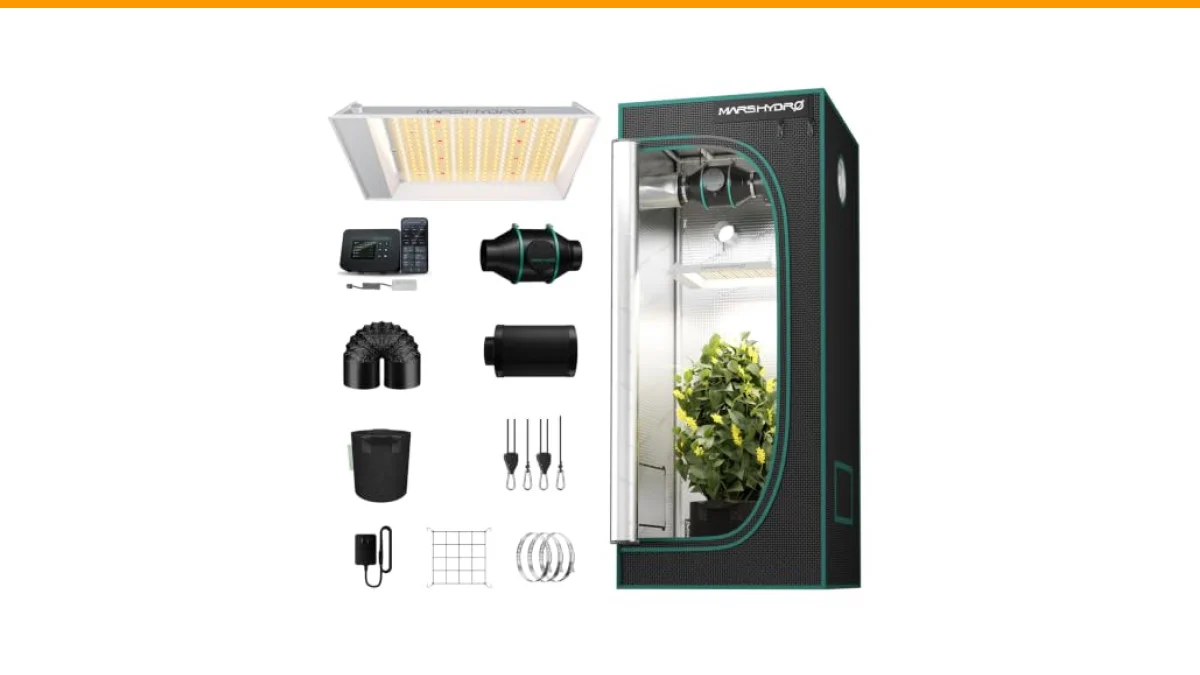
MARS HYDRO 2x2ft Grow Tent Kit

MARS HYDRO
MARS HYDRO 2x2ft Grow Tent Kit with TS600 100W Full Spectrum LED Grow Light | with 24"x24"x56" High Reflective Grow Tent 4" Automatic Ventilation Complete System
- 【New Upgraded Smart Ventilation】This ventilation kit has been completely upgraded. Simply connect to the Mars Hydro app via Blueto…
- 【HIGH EFFICIENCY ENERGY SAVING,DIMMABLE GROW LIGHT】Our TS600 light has been completely upgraded, equipped with a dimming knob that…
- 【HIGH REFLECTIVE&HIGH QUALITY GROW TENT】Grow tent interior is high reflective and density 1680D diamond mylar,boost 25% PPFD than…
This is the system I would hand to someone who has never grown indoors before but wants to start with real equipment. The 2×2 foot tent fits in a closet, a corner of a spare room, or a garage shelf. Everything arrives in one box: the TS600 light, the tent, a 4-inch inline fan, carbon filter, ducting, trellis netting, and three grow bags. You add seeds, water, and nutrients.
What stands out is the ventilation upgrade. The inline fan connects to the Mars Hydro app over Bluetooth or WiFi, so you can check temperature and humidity from your phone. That sounds like a gimmick until you realize how many first-time growers lose a crop to heat buildup in a sealed tent. The 205 CFM fan moves enough air for a 2×2 space, and at 26.8 dB it is quiet enough to run in a bedroom without driving you crazy. The 1680D tent fabric blocks light properly, and the zipper has a light-blocking flap sewn behind it, which matters more than most people realize.
The trade-off is the light. The TS600 draws 100 watts and covers 2×2 feet for veg but only about 1.5×1.5 feet for flowering. If you want to fill the whole tent with blooming plants, you will want a stronger light eventually. The 55-inch height also limits you to shorter strains or aggressive training. It is not a production machine, but it is a solid first system.
- TS600 LED: 100W draw, 225 LEDs, 0-100% dimming knob
- 4-inch inline fan: 205 CFM, 2550 RPM, 26.8 dB noise level
- Tent: 24x24x55 inches, 1680D diamond mylar, 0.8mm metal frame
- Includes carbon filter, 25 ft ducting, trellis net, and 3 grow bags
- App-based temperature and humidity monitoring via Bluetooth/WiFi
Best for: Beginners who want a complete, app-connected starter kit without piecing together components.
Mars Hydro DWC Hydroponic System
If the last pick felt like a lot of hardware, this one strips things down to the essentials. It is a deep water culture setup with two 5-gallon buckets, an 8W air pump, air stones, top drip kits, and visual water level indicators. No tent, no light, no fan. You supply the grow space and the lighting. That makes it a flexible building block rather than a complete solution.
The DWC approach works by suspending roots in oxygenated nutrient water. The 8W air pump pushes air through two stones, creating bubbles that keep dissolved oxygen levels high. More oxygen at the root zone means faster growth and healthier plants. The top drip kit adds a secondary watering method during early growth stages, which helps seedlings establish before their roots reach the reservoir. The water level indicators are a small feature with big value. You can see when the bucket needs topping off without lifting the lid and disturbing the roots.
Here is the honest part. This system has no light, so you need to buy one separately. It also has no environmental controls. You are responsible for pH, nutrient strength, and water temperature. DWC is less forgiving than other methods because root rot can set in fast if water gets too warm or oxygen drops. The buckets are opaque, which helps block algae, but you still need to change the nutrient solution every one to two weeks. It is a great system for someone who wants to learn DWC properly, but it demands attention.
- Two 5-gallon opaque buckets with lids and net pots
- 8W air pump with dual outlets, 4 x 63.4 GPH max airflow
- Includes air stones, check valves, air flow regulators, and clay pebbles
- Visual water level indicators on each bucket
- Top drip rings for early-stage root development
Best for: Growers who already have a tent and light but want a reliable DWC bucket system to run inside it.
MARS HYDRO 3×3 Smart Grow Tent Kit

MARS HYDRO
MARS HYDRO 3x3 Smart Grow Tent Kit with TS1000 with iControl Controller | 150W Full Spectrum Grow Light 4" Automatic Ventilation, 32"x32"x63" 1680D High Reflective Grow Tent Complete System
- SMART WIFI AUTOMATION & APP CONTROL: iControl Smart Controller connects with the TS1000 LED grow light and 4" inline fan to monito…
- FULL SPECTRUM & PATENTED REFLECTIVE HOOD: It offers 0-100% dimming, making it easy to adjust light levels for different growth sta…
- QUIET 4" SMART VENTILATION & ODOR CONTROL: Includes 4" smart inline fan with 0-100% adjustable speed, 205 CFM airflow, 3000 RPM, a…
This is the grown-up version of the 2×2 kit. The tent measures 32x32x63 inches, giving you more floor space and eight more inches of vertical room. The TS1000 light draws 150 watts and covers 2.5×2.5 feet for veg and 2×2 feet for flower. That extra coverage matters if you want to grow two or three medium-sized plants instead of one.
The iControl smart controller is the headline feature. It connects the light and the 4-inch inline fan to a single WiFi app. You can monitor temperature, humidity, VPD, and CO2 targets if you add compatible sensors. The app lets you automate dimming schedules and fan speeds, which is genuinely useful during the transition from veg to flower when light intensity and humidity need to shift gradually. The 4-inch fan runs at 205 CFM and 26.8 dB, same noise level as the smaller kit. The carbon filter uses Australian virgin charcoal and handles odor well for a tent this size.
The limitations are similar to the 2×2 kit. The TS1000 is a solid light but not a powerhouse. If you push into high-yield flowering, you may want more wattage. The 63-inch height helps, but tall sativa strains will still outgrow it. And the smart features only work if your WiFi is stable. A dropped connection means manual control until you reconnect.
- TS1000 LED: 150W draw, full spectrum with IR, 0-100% dimming
- iControl WiFi controller for light, fan, and sensor monitoring
- 32x32x63 inch tent with 1680D mylar and viewing window
- 4-inch smart inline fan: 205 CFM, 3000 RPM, 26.8 dB
- Includes carbon filter, 13 ft ducting, trellis net, and 4 grow bags
Best for: Growers who want automation and remote monitoring without building a custom setup from scratch.
URUQ 8 Pods Hydroponics System

URUQ
URUQ 8 Pods Hydroponics Growing System with LED Grow Light - Black | Quiet Water Pump, Automatic Timer, Adjustable Height for Fresh Herbs, Vegetables, Indoor Kitchen Gardening Gifts for Women
- 5 TIMES FASTER GROW: Hydroponics growing system with a 24-watt LED light that simulates the effects of sunlight which promotes pho…
- QUIET CIRCULATE MOISTURE PUMP: Herb garden with super quiet (less than 20 dB) water pump that circulation every 30 minutes, not on…
- EXTREMELY EASY SETUP & USE: indoor herb garden with grow light comes with everything you need for gardening plant grower germinati…
This one belongs on a kitchen counter, not in a grow tent. The URUQ 8 Pods is a countertop hydroponic garden with eight plant sites, a 3L water tank, and a 24-watt LED panel that adjusts up to 21 inches high and tilts 180 degrees. It is designed for herbs, lettuce, and small greens. You fill the tank, drop in seed pods, and the built-in timer runs the light for 16 hours on and 8 hours off.
The quiet water pump circulates every 30 minutes and runs under 20 dB, which is quieter than a refrigerator hum. A water shortage indicator tells you when to refill, and the viewing window lets you watch root growth without lifting the lid. The light pole detaches for cleaning, which sounds minor until you try to scrub a fixed unit. For someone who wants fresh basil in January without touching a bag of soil, this does the job.
Do not expect to grow tomatoes or peppers in this. The 3L reservoir is small, and the 24W light is not strong enough for fruiting plants. You are limited to leafy greens and herbs. The pump is reliable but not serviceable, so if it fails after a year, the unit is done. Seed pod refills are the ongoing cost, and third-party pods work if they fit the openings, but the URUQ-branded pods are the safe bet.
- 8 plant sites with 3L water tank and viewing window
- 24W adjustable LED panel: 21-inch height range, 180-degree tilt
- Quiet pump under 20 dB, circulates every 30 minutes
- Smart timer: 16 hours light, 8 hours dark
- Detachable light pole for easy cleaning
Best for: Home cooks who want fresh herbs and microgreens on the counter with minimal effort.
MARS HYDRO 6 Tier Indoor Garden
This is the opposite of a countertop herb garden. The MARS HYDRO 6 Tier is a vertical growing station with six shelves, ten 25W full-spectrum LED bars, and a 1680D Oxford fabric tent enclosure. Each tier holds up to 110 pounds, and the shelves adjust from 30 to 180 centimeters to fit everything from seedlings to taller plants. Four lockable wheels let you move the whole rack around a garage or spare room.
The enclosed tent design is the smart part. It creates a stable microclimate and reflects light back onto the plants, improving utilization by about 20 percent. The transparent viewing window lets you check growth without opening the tent and losing humidity. The U-shaped LED bars deliver 180-degree illumination, which reduces shadowing on lower leaves. Setup takes about ten minutes with snap-on assembly and no tools. The drainage system has raised 2-inch edges and reusable pads to manage runoff.
This system is not for someone who wants to grow one plant. It is for microgreens production, seedling starting, or running a small vertical farm. The 225W total light draw adds up on the electricity bill if you run it 16 hours a day. The tent enclosure traps heat, so you need airflow inside or temperatures will climb. And while the shelves are sturdy, the fabric tent is not as durable as a metal cabinet over five or ten years.
- Six adjustable tiers, each supporting up to 110 lbs
- Ten 25W full-spectrum LED bars with plug-and-play connections
- 1680D Oxford fabric tent with reflective silver lining and viewing window
- Lockable swivel wheels for mobility
- Waterproof drainage system with raised edges and reusable pads
Best for: Serious growers producing microgreens, seedlings, or leafy greens at scale in a garage or spare room.
How We Chose These Products
I started by filtering out systems with vague specs or missing critical details. If a listing did not state the light wattage, reservoir size, or pump airflow, it did not make the cut. I also eliminated products with no clear documentation on replacement parts or customer support. A grow system is a long-term purchase, and you need to know you can get help if something breaks.
Next, I compared real-world operating factors: noise levels, power draw, and maintenance requirements. A system that runs at 50 dB is useless in an apartment. A pump that clogs every month is a headache. I weighed these practical concerns against the features each product offers. The final five represent different price points and use cases, from a countertop herb garden to a six-tier vertical rack. You can see how other reviewers approach this category at Bob Vila’s tested hydroponic system guide.
Buying Guide: What Really Matters
The first thing to figure out is what you actually want to grow. Leafy greens and herbs need less light and smaller reservoirs. Fruiting plants like tomatoes and peppers need strong LED lights, larger root zones, and more vertical space. If you buy a countertop system and try to grow peppers, you will be disappointed. Match the system to the crop before you spend money.
Noise is the most overlooked spec. A 26.8 dB fan is about as loud as a quiet conversation. A 50 dB fan is as loud as a dishwasher running. If your grow space is near a bedroom or living area, pay attention to the decibel rating. The same goes for pump noise in countertop systems. Under 20 dB is effectively silent.
Operating cost adds up faster than most people expect. A 100W light running 16 hours a day uses about 1.6 kWh per day. At average US electricity rates, that is roughly $6 to $8 per month just for lighting. Add a fan, an air pump, and nutrients, and you are looking at $15 to $30 per month for a small tent setup. Larger systems with 225W of light can push $25 to $40 per month. Factor this in before you buy.
Finally, think about cleaning and maintenance. Every hydroponic system needs a full clean between cycles. Roots, nutrient salts, and algae build up in crevices. Systems with removable reservoirs, detachable light poles, and smooth interior surfaces are easier to clean. If a system has hard-to-reach corners or permanently attached components, you will dread maintenance and probably skip it. That leads to root rot and poor yields.
Our Top Recommendation
The MARS HYDRO 3×3 Smart Grow Tent Kit is the best overall hydro grow system for most people. It balances size, automation, and price without forcing you to buy extra parts. The iControl app gives you real monitoring and control, the 150W light covers a useful footprint, and the 63-inch height gives you room to grow. It is not the cheapest option, but it is the one most likely to get you through a full harvest without major problems.
If you are on a tighter budget, the MARS HYDRO 2x2ft Grow Tent Kit is the runner-up. It costs less, takes up less space, and still includes everything you need. The trade-off is a smaller footprint and less powerful light. For countertop growers, the URUQ 8 Pods is the best pick for herbs and greens. And if you want to grow at scale, the MARS HYDRO 6 Tier is the only system here built for volume production.
Frequently Asked Questions
How much does it cost to run a hydro grow system per month?
A small 2×2 tent with a 100W light and a 4-inch fan costs roughly $10 to $15 per month in electricity, depending on your rates. Add nutrients and you are looking at $20 to $25 total. A 3×3 tent with a 150W light runs about $15 to $20 in electricity. Larger systems with 225W of lighting can hit $30 to $40 per month. These numbers assume 16 hours of light per day.
Can I use third-party seed pods in a countertop system?
Usually yes, as long as the pod fits the opening and the grow medium is appropriate. Most systems use standard net pots or sponge inserts. The risk is poor germination rates from low-quality seeds or mediums that do not wick water properly. Branded pods cost more but remove the guesswork. If you go third-party, check reviews for that specific system before buying in bulk.
What causes root rot in DWC systems and how do I fix it?
Root rot happens when water temperatures climb above 70°F and dissolved oxygen drops. The roots turn brown, slimy, and smell like decay. Fix it by changing the reservoir immediately, adding beneficial bacteria or hydrogen peroxide, and lowering water temperature with a chiller or by moving the system to a cooler spot. Prevent it by keeping water below 68°F and running your air pump continuously.
How often do I need to clean a hydroponic system between cycles?
Full cleaning every 4 to 6 weeks is ideal, or between every harvest. Dump the reservoir, scrub all surfaces with a mild bleach solution or food-safe cleaner, rinse thoroughly, and let everything dry. Clean air stones, drip lines, and net pots separately. Skipping this step is the fastest way to get algae blooms and pump clogs. A clean system grows healthier plants with fewer problems.
