You kneel in the dirt, ready to plant a row of bulbs, and your trowel hits a knot of roots. You push. The blade bends. You grab a pair of clippers, snip the root, then switch back to the trowel. This stop-start dance repeats until your knees ache and your patience is gone. A plain trowel just doesn’t cut it when the soil fights back.
A serrated edge changes the job. That row of teeth saws through roots, vines, and compacted clay without a separate tool. The best models also give you depth marks, a blade that won’t flex, and a handle you can grip with muddy gloves. Skip the flimsy stamped metal ones at the dollar store. They look fine until the first real root.
I dug through spec sheets, owner feedback, and material details to find five trowels that actually earn their keep. The Haliaeetus Garden Trowel leads for most gardeners. The Kemaier Heavy Duty is the tank of the group. And the Garden Weasel brings decades of transplanting know-how. Here’s how they stack up.
Compare the key specs side by side before you pick.
| Features | Haliaeetus Trowel | Kemaier Heavy Duty | Kemaier Stainless Steel | Garden Weasel Transplanter | Berry&Bird Serrated Trowel |
|---|---|---|---|---|---|
| Material & Build | Thick stainless steel, wood handle | Rust-resistant stainless steel, rubber grip | 2.5mm stainless steel, HRC50 hardness | Premium metal, full tang | Stainless steel, ash wood handle |
| Key Specification | 1-4 inch depth marks | Dual-sided serrated edge | 3-inch sawtooth, built-in scale | Depth gauge, serrated edges | Depth marks in inches and cm |
| Main Feature | Sharp V-shaped blade | Argon arc welded joint | Full tang metal tube handle | Multi-use digging and weeding | Left-side serrated edge |
| Performance | Cuts roots, opens bags | Slices clay and gravel | Handles rocky yards | Precise transplanting | Combines hori hori and trowel |
| Best Use Case | Bulb planting, weeding | Tough soil, roots | Arthritis-friendly gardening | Transplanting seedlings | Perennial and bulb planting |
Haliaeetus Garden Trowel
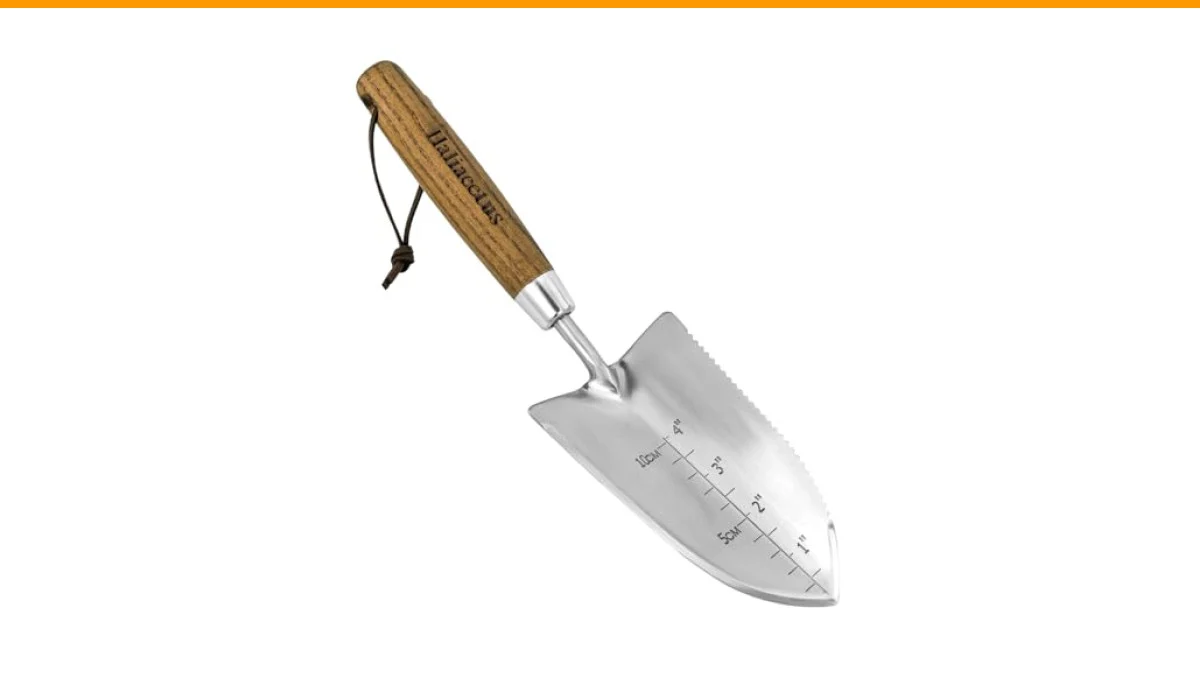
The Haliaeetus Garden Trowel targets the gardener who plants bulbs by the dozen and weeds by the bucket. It’s a 4-inch depth-marked trowel with a serrated edge and a pointed V-shaped blade. Beginners and weekend gardeners will get the most from it because the depth scale removes guesswork.
What sets this one apart is the blade geometry. The V-shape and sharp point slide into soil with almost no downward force. Owners compare it to cutting room-temperature butter with a butter knife. The serrated edge doubles as a bag opener for mulch and potting mix, which sounds minor until you’re fumbling for scissors with dirty hands. The solid wood handle has an ergonomic curve that reduces hand strain during long sessions.
Trade-offs exist. The wooden handle needs occasional oiling to prevent drying and cracking over years of use. And the serrations are fine-toothed, so they work better on soft roots than thick woody ones. It’s not the tool for hacking through a mature shrub root. For everyday planting and weeding, though, it’s hard to beat.
- 1 to 4-inch English depth marks on the blade side
- Thicker stainless steel resists bending under pressure
- Serrated edge opens mulch and soil bags
- Lifetime warranty from the manufacturer
- Wood handle fits the natural hand shape
Best for: Home gardeners who plant bulbs and seedlings at consistent depths and want one tool for digging, weeding, and opening bags.
Kemaier Heavy Duty Garden Trowel

Kemaier
Kemaier Heavy Duty Garden Trowel, Hand Shovel Digging Tool | Dual-Sided Serrated Edge, Stainless Steel, Full Tang Handle, Sharp Blade, Non-Slip Handle, Hand-Welded, Bend-Resistant
- HEAVY-DUTY CONSTRUCTION: Crafted from premium rust-resistant stainless steel, this garden trowel is built like a tank to withstand…
- EFFORTLESS DIGGING & CUTTING: The ultra-sharp blade slices through compacted soil, clay, and gravel like a knife through butter. E…
- ERGONOMIC & NON-SLIP GRIP: Designed for comfort and control, the handle features a full-metal tang for superior strength. The heat…
Kemaier built this trowel for people who garden in clay, gravel, or yards full of stubborn roots. It’s the heaviest-duty option in this roundup. Professional landscapers and serious gardeners who destroy lesser tools will appreciate the construction.
The dual-sided serrated edge is the headline feature. Most trowels put teeth on one side only. This one has them on both, so you can saw in either direction without rotating your wrist. The blade slices through compacted soil and small roots fast. A full-metal tang runs through the handle, and the blade-to-handle joint uses manual argon arc welding. That weld point is where cheap trowels snap. Here, it’s reinforced. The heat-dipped matte rubber grip stays non-slip even with wet, muddy hands.
Availability is the main catch. This model is often in scarce supply, so check stock before you get set on it. The rubber grip also collects dirt in the texture over time and needs a brush to clean properly. And the extra weight, while a sign of durability, may tire some gardeners during extended use.
- Dual-sided serrated edge for cutting in both directions
- Full-metal tang with argon arc welded joint
- Heat-dipped rubber grip stays secure when wet
- Rust-resistant stainless steel blade
- Built for compacted soil, clay, and gravel
Best for: Landscapers and gardeners with tough, rocky soil who need a trowel that won’t bend, break, or slip.
Kemaier Heavy Duty Garden Trowel
This second Kemaier model takes a different approach. It’s a 2.5mm thick stainless steel trowel with a 3-inch sawtooth on the left side and a built-in scale. The brand specifically designed it with arthritis sufferers in mind. The larger handle and full tang metal tube reduce the grip strength needed to work.
Hardness matters here. The blade goes through high-temperature quenching to reach HRC50 on the Rockwell scale. That’s a real number, not marketing fluff. It means the edge holds up against hard soil and rocky yards without dulling quickly. The bright yellow markings on the handle make the tool easy to spot when you set it down in tall grass. Professional gardeners also use the ruler for precise bulb planting and checking burial depth.
The 5.7-inch blade and 0.66-pound weight make this a substantial tool. Some users find it heavier than expected for a hand trowel. The sawtooth is only on one side, so it’s less versatile than the dual-edge Kemaier above. And the bright yellow won’t suit gardeners who prefer muted tool colors.
- 2.5mm stainless steel with HRC50 hardness
- 3-inch sawtooth for cutting small branches and roots
- Built-in scale for precise planting depth
- Full tang metal tube handle with large grip
- Bright yellow markings for easy locating
Best for: Gardeners with arthritis or hand strength issues who need a larger grip and a blade that holds its edge in hard soil.
Garden Weasel Multi-Use Transplanter Trowel
Garden Weasel has been making transplanting tools for decades, and this multi-use transplanter shows the experience. It’s designed for digging, cultivating, planting, and weeding with one tool. Gardeners who start seeds indoors and transplant seedlings outdoors will find the depth gauge especially useful.
The serrated edges cut through roots and loosen compacted soil. A handy depth gauge lets you transplant at consistent depths, which matters when you’re setting out dozens of seedlings. The design is tried and true, and the brand backs it with a lifetime guarantee against defects. US-based customer service is a real advantage if something goes wrong.
This trowel leans toward transplanting rather than heavy digging. The blade isn’t as thick as the Kemaier models, so it’s not the best choice for rocky ground or thick roots. The handle shape works for most hands but doesn’t have the ergonomic contouring of the Haliaeetus. It’s a precision tool, not a pry bar.
- Serrated edges for cutting roots and loosening soil
- Depth gauge for consistent transplanting
- Multi-use design for digging, cultivating, planting, weeding
- Lifetime guarantee against defects
- US-based customer service team
Best for: Seed starters and transplanters who want a precision tool with a depth gauge and reliable US-based support.
Berry&Bird Garden Serrated Trowel

Berry&Bird
Berry&Bird Garden Serrated Planting Trowel, Multifunctional Shovel with ash Wood and Stainless Steel Digging Trowel Transplanter
- WHAT YOU GET - 1 * Serrated Trowel. Our Loop Weeders are made by traditional manual process and can be used for more than 10 years…
- MULTIPURPOSE - Serrated edges facilitate digging, weeding, root cutting and opening soil bags, easily breaking hardened soil and r…
- EASY TO USE - The saw blade of the ergonomic grip transplanter is specially designed for transplanting small perennial plants and…
Berry&Bird makes tools for gardeners who care about sustainability and traditional craftsmanship. This serrated planting trowel combines the advantages of a hori hori knife and a trowel. The ash wood handle comes from FSC certified forests, and the stainless steel blade has depth marks in both inches and centimeters.
The left-side serrated edge handles root cutting, dead perennials, and stubborn vines. It also opens soil bags and mixes fertilizer into the soil. The ergonomic ash handle gets smoother with use, and the brand claims the tool can last over 10 years with proper care. A 2-year warranty backs it up. Gardeners who appreciate wood-handled tools will like the feel.
Wood handles require maintenance. You’ll need to oil the ash periodically to keep it from drying out. The serrated edge is on the left side only, so left-handed gardeners may find it awkward. And the blade isn’t as thick as the heavy-duty Kemaier models, so it’s not ideal for rocky yards. It’s a refined tool for refined work.
- Left-side serrated edge for roots and vines
- Depth marks in inches and centimeters
- FSC certified ash wood handle
- Combines hori hori knife and trowel functions
- 2-year warranty with 30-day replacement
Best for: Eco-conscious gardeners who want a traditional wood-handled tool for perennial and bulb planting.
How We Chose These Products
We started with the blade. A serrated trowel lives or dies by its steel. We looked for thickness, hardness ratings, and rust resistance. The Kemaier with HRC50 stood out because it gives a real number. The Haliaeetus and Garden Weasel use quality stainless steel without a hardness spec, which is common but less transparent.
Next came the handle and joint. A trowel that snaps at the weld is useless. We prioritized full tang construction and reinforced welding. The dual-sided serration on the Kemaier Heavy Duty earned points for versatility. Depth marks mattered for anyone planting bulbs or transplanting seedlings. We also weighed customer service and warranty terms, since a lifetime guarantee from Garden Weasel or Haliaeetus tells you the brand stands behind the tool.
Buying Guide: What Really Matters
Blade thickness is the first thing to check. A 2.5mm stainless steel blade like the Kemaier Stainless Steel model resists bending. Thinner blades flex under pressure and eventually warp. If you garden in clay or rocky soil, thickness matters more than anything else. For raised beds and loose potting mix, a thinner blade is fine and lighter in the hand.
Serration placement changes how you work. A single-sided edge, like on the Berry&Bird or Kemaier Stainless Steel, is great for right-handed gardeners who saw in one direction. A dual-sided edge, like on the Kemaier Heavy Duty, lets you cut both ways without twisting your wrist. Left-handed gardeners should look for a left-side serration or a dual-edge design.
Depth marks are not a gimmick. If you plant bulbs at inconsistent depths, they bloom at different times or not at all. A built-in scale, whether in inches or centimeters, removes the guesswork. The Haliaeetus and Berry&Bird both include marks. The Garden Weasel uses a depth gauge. All three help you plant more precisely.
Handle material affects comfort and maintenance. Wood handles like the Haliaeetus and Berry&Bird feel warm and natural but need oiling. Rubber grips like the Kemaier Heavy Duty stay secure when wet but collect dirt. Metal handles are durable but cold and slippery without a coating. Pick based on your climate and how much maintenance you’ll actually do. For more options, see this guide to wooden handle trowels.
Our Top Recommendation
The Haliaeetus Garden Trowel wins for most gardeners. It balances a sharp V-shaped blade, a serrated edge, depth marks, and a comfortable wood handle at a price that won’t make you wince. The lifetime warranty seals it. You get one tool that digs, weeds, opens bags, and plants bulbs at the right depth. That’s a lot of value in a small package.
If your soil is compacted clay or full of rocks, step up to the Kemaier Heavy Duty. The dual-sided serration and reinforced weld handle abuse that would destroy a lighter trowel. For gardeners with arthritis, the Kemaier Stainless Steel model offers a larger grip and a hardness rating that keeps the edge sharp. And if you want a precision transplanter with US-based support, the Garden Weasel is a proven choice. The Berry&Bird suits anyone who prefers traditional wood and sustainable materials. For more on handling tough roots, check this guide to serrated tip trowels for roots.
Frequently Asked Questions
Can a serrated trowel replace a hori hori knife?
For most garden tasks, yes. The Berry&Bird model specifically combines both tools. A serrated trowel cuts roots, opens bags, and digs holes. A hori hori knife is longer and better for slicing through thick sod or dividing perennials. If you only buy one tool, a serrated trowel covers more everyday jobs.
How do I keep the serrated edge sharp?
Use a diamond file or a small round file that matches the tooth size. Run it through each serration at the original angle. Don’t use a flat sharpening stone on serrations because it will flatten the teeth. Most stainless steel trowels hold an edge for a season or two with normal use.
Will a serrated trowel damage plant roots?
It can if you’re careless. The serrations are designed to cut through dead roots and weeds, not healthy plant roots. When you dig near a plant you want to keep, angle the blade away from the root ball. Use the smooth side of the blade for scooping around delicate roots. For more on root-friendly tools, see this guide to dual-sided blade trowels.
Are wooden handles better than rubber grips?
It depends on your priorities. Wood handles feel warmer, absorb shock better, and look traditional. They need oiling once or twice a year. Rubber grips offer more traction when wet and require no maintenance, but they can degrade in harsh sunlight over time. Both work well. Pick the one that matches your climate and how much upkeep you’ll do.