You’ve started your seeds indoors. They’ve sprouted, grown their first true leaves, and now they’re ready for the big move outdoors. But when you try to lift one out of its tray, the root ball crumbles. The stem snaps. And you’re left wondering if there’s a better way.
The right tool makes all the difference. A standard hand shovel is too wide for a tiny seedling cell. You need something narrow, sharp, and precise. It has to slide down the side of the tray without disturbing the neighboring plants. It needs depth markings so you don’t bury the stem too deep. And it should feel comfortable in your hand for the dozens of transplants you’ll do in a single afternoon.
I’ve tested five trowels specifically for this job. The Haliaeetus Widger is my top pick for its razor-thin profile. The Garden Weasel offers a serrated edge for tough roots. The Cuayaes is a budget-friendly option with a bright yellow handle. The Garden Guru has excellent depth marks. And the WORKPRO is a heavy-duty workhorse. Here’s how they compare.
Here’s a quick look at the key specs that separate these trowels.
| Features | Haliaeetus Widger | Garden Weasel | Cuayaes Trowel | Garden Guru | WORKPRO Trowel |
|---|---|---|---|---|---|
| Material & Build | Thick stainless steel, wood handle | Premium materials, lifetime guarantee | Aluminum alloy, replaceable handle | Polished stainless steel | Polished stainless steel, wood handle |
| Key Specification | 13.8 inch length, narrow sharp edge | Serrated edges, depth gauge | 11.8 inch length, bright yellow | Depth marks on blade | 12.5 inch length, 6.7 oz |
| Main Feature | Deep digging, precise weed removal | Multi-use, cuts roots | Ergonomic for weak grip | Thumb rest, finger grooves | Serrated edge, cutting notch |
| Performance | Doesn’t bend, easy penetration | Tried and true design | Rust-resistant, durable | Minimizes hand stress | Handles tough soil |
| Best Use Case | Transplanting, deep digging | Root cutting, weeding | Small hands, tough soil | Consistent depth planting | Heavy-duty weeding, planting |

Haliaeetus Widger Seedling Tool

Haliaeetus
Haliaeetus Widger Seedling Tool, 13.8'' Narrow Garden Trowel for Repotting | Long and Narrow Widger for Weeding from Tight Areas, Stainless Steel Seeding Widger with Wood Handle for Planting, Digging
- 【Excellent for Transplanting Seedlings】The seed planting shovel with narrow and sharp edge, making it perfect for replanting plant…
- 【Removal Weeds from Small Space】The widger enters the soil easier than a hand spade to get the weed roots loose. It is a special t…
- 【Various Uses】The weeding shovel is not only used to remove deep-rooted weeds but is very suitable for repotting, transplanting se…
The Haliaeetus Widger is a 13.8-inch narrow trowel built for one job: getting under a seedling without wrecking its roots. The blade is long and thin, almost like a dagger. It slides into a crowded seed tray and pops out a single plant with the root ball intact. If you’re moving dozens of tomatoes or peppers from a flat into individual pots, this is the tool you want.
What stands out is the steel thickness. Cheaper trowels bend the first time you hit a stubborn clump of clay. This one doesn’t flex. The narrow edge also makes it excellent for weeding in tight spots between established plants. You can dig down beside a weed and lever it out without disturbing your good plants. The solid wood handle is smooth and fits my average-sized hand well. It’s not a full tang, but the connection feels solid.
The trade-off is the lack of depth markings. You’ll need to eyeball how deep you’re planting. For seedlings, that’s usually fine, but if you’re precise about burial depth, look at the Garden Guru instead. Also, the narrow blade isn’t great for scooping large amounts of soil. It’s a precision tool, not a shovel. And the wood handle requires occasional oiling to keep it from drying out. For more on matching trowels to specific seedling types, see this greenhouse seedling guide.
- 13.8-inch length gives good reach without bending
- Thick stainless steel resists bending
- Narrow profile fits between crowded seedlings
- Lifetime warranty from the manufacturer
- Wood handle needs occasional maintenance
Best for: Gardeners who transplant dozens of seedlings from crowded trays and need a precise, narrow blade.
Garden Weasel Multi-Use Transplanter

GARDEN WEASEL
Garden Weasel Multi-Use Transplanter Trowel for Digging Planting Weeding | Heavy duty steel hand tool for transplanting bulbs, cultivating soil, digging holes & removing weeds. Ergonomic grip
- DIG, CULTIVATE, PLANT & WEED >> Effortlessly create perfect planting holes and furrows. Designed with Serrated edges for cutting t…
- PROFESSIONAL GRADE >> One of the world’s top selling transplanting tools for a reason! The design is tried and true - the performa…
- DURABILITY AT ITS BEST >> Unlike the many knockoffs out there, premium Garden Weasel digging and planting tools are manufactured f…
The Garden Weasel Multi-Use Transplanter is the Swiss Army knife of trowels. It has serrated edges on both sides, a depth gauge stamped into the blade, and a sturdy build that feels like it will outlast your garden. This is the tool for someone who wants one trowel to do everything: dig, weed, cut roots, and transplant.
The serrated edge is the standout feature. When you hit a mat of fine roots or a tough weed, you can saw through it instead of forcing the blade. That saves your wrist and keeps the tool from slipping. The depth gauge is actually useful for transplanting because you can see exactly how deep you’re going. The handle is comfortable and the whole tool feels balanced. It’s also backed by a lifetime guarantee, which says a lot about the company’s confidence.
One downside: the blade is wider than a dedicated widger. In a tight seed tray, you might disturb neighboring seedlings when you dig one out. It’s better for transplanting slightly larger starts or moving plants from pots to the ground. The serrated edges can also be tricky to clean if you get sticky clay on them. A quick scrub with a wire brush solves that. For a closer look at how this trowel handles different garden styles, check this cottage garden review.
- Serrated edges cut through roots and weeds
- Depth gauge for precise planting
- Lifetime guarantee against defects
- Wider blade not ideal for tiny seedling cells
- US-based customer service
Best for: Gardeners who want one versatile trowel for digging, weeding, and transplanting larger starts.
Garden Trowel Hand Shovel with Scale

Cuayaes
Garden Trowel Hand Shovel for Gardening, Small Garden Spade with Scale | Gardening Gifts Hand Trowel with Soft Rubberized Non-Slip Ergonomic Handle for Planting Transplanting, Weeding, Moving
- Size: The spade shovel tool size is 30cm/11.8inchx5.5cm/2.2inch. Bright yellow color always easy to spot in garden. The hanging ho…
- Material: Our spade shovel tool is made of aluminium alloy, durable and sturdy, not easy to break or deform, rust-resistant, The h…
- Ergonomic design: Ideal solution for gardeners who have difficulty holding tools with small or narrow handles.
The Cuayaes Garden Trowel is the budget-friendly pick that punches above its price. It’s made of aluminum alloy, which keeps it lightweight, and the bright yellow color means you won’t lose it in the soil. The handle is thicker than most, which makes it a good choice for gardeners with arthritis or a weak grip. It’s also replaceable, which is rare at this price point.
What I like is the scale printed on the blade. It’s not as precise as a separate depth gauge, but it gives you a rough idea of how deep you’re digging. The aluminum alloy is rust-resistant and won’t deform under normal use. It’s not as stiff as stainless steel, so don’t use it as a pry bar. But for planting seedlings, mixing soil, and light weeding, it holds up fine. The hanging hole is a small touch that makes storage easy.
The limitation is durability. Aluminum is softer than stainless steel. If you garden in rocky or heavy clay soil, the tip will wear down faster. It’s also not the tool for deep digging or prying out stubborn roots. Think of it as a lightweight companion for raised beds and containers. If you’re rough on tools, spend a bit more on stainless steel. For spring planting tasks, this spring planting guide has more tips.
- Aluminum alloy is lightweight and rust-resistant
- Bright yellow handle is easy to spot
- Thick ergonomic handle helps weak grips
- Replaceable handle extends tool life
- Not as durable as stainless steel in rocky soil
Best for: Budget-conscious gardeners with hand strength issues who plant in raised beds or containers.
Garden Guru Seed Planting Shovel
Garden Guru Lawn & Garden Tools
Garden Guru Seed Planting Shovel Trowel Transplanter Widger – Stainless Steel – Rust Resistant - Ergonomic Handle – Perfect Hand Dibber Seedling Bulb Planter Tool for Gardening Planting Transplanting
- PERFECT SEED PLANTING TROWEL – Narrow edge to easily fit in small spaces. Ideal for planting seeds and transplanting small plants,…
- POLISHED STAINLESS STEEL - Rust Resistant Blade is strong and durable. Properly Designed for Professional Grade Applications, and…
- COMFORTABLE ERGONOMIC HANDLE - Large and Thick with Thumb Rest on top and Finger Grooves on bottom. Well Designed for those in sea…
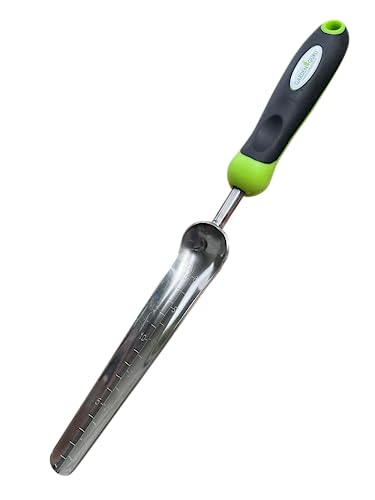
The Garden Guru Seed Planting Shovel is designed for precision. The blade is narrow, like the Haliaeetus, but it adds clear depth marks stamped into the steel. That’s a big deal for transplanting. You can see exactly when you’ve reached two inches, three inches, or whatever depth your seedling needs. No guessing. The handle is large and thick with a thumb rest on top and finger grooves underneath. It’s one of the most comfortable handles I’ve used.
The polished stainless steel is rust-resistant and easy to wipe clean. The blade has a nice sharp edge for slicing into soil. It’s not serrated, so it won’t cut through thick roots, but it’s perfect for making a narrow planting hole. The thumb rest gives you extra leverage when you push it into hard ground. For anyone who plants the same crop in rows, the depth marks help you keep everything consistent. That consistency leads to more even germination and growth.
The trade-off is the size. It’s a bit shorter than the Haliaeetus, so taller gardeners might have to bend more. The handle is also quite thick, which is great for large hands but might feel bulky if your hands are small. And while the depth marks are useful, they’re stamped, not painted, so they can be hard to read in low light. Still, for the price, it’s a solid choice for serious seed starters. See how it compares for salad beds in this salad garden trowel review.
- Depth marks stamped into the blade
- Thumb rest and finger grooves for comfort
- Polished stainless steel resists rust
- Shorter length may require more bending
- Thick handle suits larger hands better
Best for: Gardeners who want consistent planting depth and a comfortable, ergonomic grip.
WORKPRO Garden Trowel with Wood Handle

WORKPRO
WORKPRO Garden Trowel with Wood Handle, Stainless Steel Narrow Hand Shovel | Multi-Use Flat Garden Trowel for Planting, Weeding, Transplanting, Digging, Small Weeding knife for Gardening
- Heavy Duty Garden Trowel: This WORKPRO hand weeder tool is designed for pulling out weeds and deep digging. The serrated and scrap…
- Robust and Sturdy: The narrow hand shovel is made of high-hardness polished stainless steel, and this weed remover tool is extreme…
- Comfortable Wooden Handle: The WORKPRO trowel garden tool features a comfortable wooden handle that provides optimum strength and…
The WORKPRO Garden Trowel is the heavy-duty option. It’s 12.5 inches long and weighs just 6.7 ounces, so it’s light enough for extended use but sturdy enough for tough jobs. The blade is made of high-hardness polished stainless steel that resists rust and corrosion. It has a serrated edge on one side for sawing through roots and a cutting notch near the handle for opening bags or cutting twine. This is a tool that expects to work.
The depth mark ruler on the blade is a nice touch for transplanting. It’s not as detailed as the Garden Guru’s marks, but it gives you a reference point. The wooden handle is comfortable and provides good grip, even when your hands are sweaty. The lanyard and hanging hole make storage easy. I’ve used this trowel in heavy clay and rocky soil, and it hasn’t bent or dulled. It’s a workhorse.
The main drawback is the weight. At 6.7 ounces, it’s heavier than aluminum trowels. For most people, that’s fine, but if you have wrist issues, you might prefer something lighter. The serrated edge is great for roots but can tear through delicate seedling roots if you’re not careful. Use the smooth side for transplanting. Also, the wood handle requires occasional oiling to prevent cracking. For more on heavy-duty tools, read this tree seedling trowel guide.
- Serrated edge and cutting notch add versatility
- High-hardness stainless steel resists bending
- Depth mark ruler for planting reference
- Heavier than aluminum alternatives
- Wood handle needs occasional oiling
Best for: Gardeners who need a rugged, multi-purpose trowel for tough soil and heavy use.
How We Chose These Products
I started by looking at the blade shape. For transplanting seedlings, a narrow blade is non-negotiable. Wide trowels disturb neighboring plants and make it hard to lift a single root ball. I also checked the material. Stainless steel holds up better than aluminum in rocky soil, but aluminum is lighter and cheaper. Each material has a place.
Next, I looked at ergonomics. A trowel you use for hours needs a comfortable handle. I considered handle shape, thumb rests, and grip size. Depth markings were another key factor. They help you plant at the right depth, which is critical for seedling survival. Finally, I read through customer feedback to identify common failure points: bending blades, loose handles, and rust. The five picks here avoid those problems.
Buying Guide: What Really Matters
Blade width is the first thing to consider. A narrow blade, around 1.5 to 2 inches wide, is ideal for seedlings. It fits into small cells and lets you lift one plant without disturbing the others. Wider blades are better for moving larger plants or scooping soil. If you only buy one trowel, go narrow.
Material matters for durability. Stainless steel is the best choice for longevity. It won’t rust, and it resists bending. Aluminum alloy is lighter and cheaper, but it can bend if you use it as a lever. Wood handles are comfortable but need occasional oiling. Plastic handles are lightweight but can crack over time. Consider your soil type and how often you garden.
Depth markings are a small feature that makes a big difference. They help you plant at the same depth every time, which leads to more uniform growth. If you’re starting seeds, look for a trowel with clear, easy-to-read marks. Also, check the handle size. A handle that’s too small will cause hand fatigue. A handle that’s too large is hard to control. If you can, hold the trowel before you buy. If not, read reviews about handle size.
Our Top Recommendation
The Haliaeetus Widger is my top pick for transplanting seedlings. Its narrow, sharp blade slides into tight spaces and lifts root balls cleanly. The thick stainless steel won’t bend, and the lifetime warranty gives you peace of mind. It’s a specialized tool, but for this specific job, it’s the best.
If you want one trowel for everything, the Garden Weasel Multi-Use Transplanter is the runner-up. Its serrated edges and depth gauge make it versatile. For budget shoppers, the Cuayaes is a solid choice, especially if you have hand strength issues. The Garden Guru is best for depth consistency, and the WORKPRO is for heavy-duty use. Pick the one that matches your soil and your hands.
Frequently Asked Questions
Can I use a regular trowel for transplanting seedlings?
You can, but a regular trowel is usually too wide. It will disturb the roots of neighboring seedlings and make it harder to lift a single plant. A narrow trowel or widger is much better for this job.
How deep should I plant my seedlings?
It depends on the plant. Tomatoes can be buried up to their first set of leaves. Peppers and most other vegetables should be planted at the same depth they were in their original container. Use a trowel with depth marks to keep it consistent.
Do I need a stainless steel trowel?
Stainless steel is more durable and rust-resistant than aluminum. If you garden in rocky or heavy clay soil, stainless steel is worth the extra cost. For raised beds and containers, aluminum is fine.
How do I keep my trowel from rusting?
Dry it after each use. Don’t leave it outside overnight. If it has a wooden handle, oil it occasionally with linseed oil. A quick wipe with an oily rag after cleaning also helps.