You’ve got a tray of tomato seedlings ready to pot up. The roots are delicate, the soil is damp, and your old trowel is too wide for the cell. One wrong scoop and you’ve severed the taproot. Greenhouse propagation demands a different kind of tool — something precise, comfortable for long sessions, and gentle on young plants.
A great propagation trowel balances three things: narrow width for tight cells, a handle that doesn’t wreck your wrist after fifty transplants, and a blade that won’t rust in a humid greenhouse. Depth markings help. Light weight matters too. And the material needs to survive constant moisture without turning orange.
I’ve tested dozens of hand trowels over years of seed starting and cutting propagation. These five are the ones I keep reaching for. The Fiskars Ergo is my top pick for most growers. The DIMROM mini set wins for tiny cells. MECHEER offers two solid options at different price points, and Garden Guru delivers carbon steel toughness for serious root work.
Here’s a quick spec comparison to help you narrow things down before the full reviews.
| Features | Fiskars Ergo | DIMROM Mini Set | MECHEER Orange | MECHEER Measured | Garden Guru |
|---|---|---|---|---|---|
| Material | Cast aluminum | Iron and wood | Aluminum alloy | Aluminum alloy | Carbon steel |
| Blade Thickness | Not specified | Not specified | 0.08 inch | 0.08 inch | Not specified |
| Handle Type | Ergonomic | Solid wood | Rubber TPR | Ergonomic | Non-slip ergonomic |
| Depth Markings | No | No | No | Yes, up to 4 inches | No |
| Best Use | All-purpose digging | Tiny seedling cells | General planting | Precise bulb planting | Root cutting |

Fiskars Ergo Garden Trowel

Fiskars
Fiskars Ergo Garden Trowel, Heavy Duty Hand Tool for Digging and Planting | Heavy-Duty Cast Aluminum Rust Resistant Head, Ergonomic Comfort Grip Handle, Hang Hole for Easy Storage, Yard Beds and Pots
- GARDENING ESSENTIAL: Heavy duty, ergonomic hand trowel ideal for a variety of gardening tasks like digging in tough soil, maintain…
- MAXIMUM POWER AND PRECISION: Cast-aluminum head boosts power for digging in tough soil and enhances rust resistance; Ergonomic han…
- LONG-LASTING AND RELIABLE: Polished aluminum head stays sharp through heavy use and provides excellent durability for lasting valu…
The one you buy when you want a single trowel that handles everything.
Fiskars built this for gardeners who dig in tough soil all season. The cast-aluminum head won’t bend when you hit a rock or a dense root ball. That matters in a greenhouse when you’re working with compacted potting mix or moving established plants. The ergonomic handle gives you real control, and the polished aluminum resists rust even in constant humidity.
What sets this apart is the balance. Many trowels feel tip-heavy or have handles that twist in your grip. The Fiskars stays steady. The head is wide enough for scooping potting soil but narrow enough for 4-inch pots. I’ve used mine for three seasons of seed starting and it still looks new. The hang hole is a small detail, but it keeps the tool off wet benches.
The trade-off? No depth markings. If you’re planting bulbs or seedlings at exact depths, you’ll need to eyeball it or keep a ruler nearby. The handle is also fixed — no cushioned grip — so gardeners with arthritis might prefer something softer. And while the aluminum is strong, it’s not carbon steel. Don’t expect it to slice through thick roots without some effort.
- Cast-aluminum head resists rust and bending
- Ergonomic handle reduces hand fatigue during long sessions
- Polished finish stays sharp through heavy use
- Lifetime warranty from Fiskars
- Hang hole for easy storage
Best for: Greenhouse growers who want one reliable trowel for potting up, transplanting, and general soil work.
DIMROM Mini Garden Tools Set

DIMROM
Mini Garden Tools Set, Small Gardening Tools for Indoor Plants, 3-Piece Kit | Mini Shovel, Trowel and Hand Rake; Iron Heads With Wood Handles; Sized for Pots, Succulents, Bonsai and Herbs
- Three Tools, Three Jobs: The mini shovel scoops soil, the small trowel lifts roots, and the hand rake loosens packed soil, so this…
- Indoor Plant Tools for Repotting: Run the small trowel along the pot wall to loosen the root ball, then refill with fresh soil. As…
- Mini Gardening Tools for Pots: These small garden tools suit containers, window boxes and terrariums, not garden beds or hard grou…
The one you buy when your seedlings live in cells the size of a thumb.
Standard trowels are too big for 128-cell trays and tiny propagation plugs. The DIMROM set solves that with three mini tools: a small shovel, a trowel, and a rake. Each one fits into tight spaces without disturbing neighboring seedlings. If you’re propagating succulents, herbs, or any plant that starts in tiny containers, this set gives you the precision a full-size trowel can’t.
The iron heads and solid wood handles feel surprisingly sturdy for the size. They won’t flex or snap during normal use. The wood grain is smooth, so no splinters after repeated handling. I found the rake especially useful for loosening seed-starting mix without compacting it. The shovel works well for moving small amounts of soil into plug trays. For the price, you get three tools that cover most propagation tasks.
Here’s the honest limitation: these are not heavy-duty tools. The iron will rust if you leave them wet. Dry them after every use. The wood handles need occasional oiling to prevent cracking. And they’re too small for anything beyond seedling work — don’t try to dig a planting hole in the garden with these. They’re purpose-built for miniature gardening, and they excel at that.
- Three-piece set includes shovel, trowel, and rake
- Iron heads with solid wood handles
- Compact size fits into tight propagation cells
- Lightweight and easy to store in a drawer or bag
- Rust-resistant but needs drying after use
Best for: Growers working with tiny seedling cells, succulent propagation, or indoor herb starts who need precision over power.
MECHEER Garden Hand Trowel Orange

MECHEER
Garden Shovel Garden Hand Trowel, Heavy Duty Hand Shovel with Ergonomic Handle, Small Gardening Tools for Digging, Rust Resistant Gardening Spade Trowel Tools, Orange
- Thickened Aluminum Alloy Material: Our gardening shovel is made of high-quality aluminum alloy material, allowing the garden trowe…
- Ergonomic Design: The trowel garden tool is designed with an ergonomic rubber-grip handle that reduces hand and wrist fatigue whil…
- Easy to Store: The small hand trowel is lightweight and compact, makes it easy to store on your garden bag and carry out for garde…
The one you buy when you want a comfortable grip and don’t need extra features.
MECHEER’s orange-handled trowel targets gardeners who spend hours digging and want less hand fatigue. The rubber TPR grip is soft and non-slip, which helps when your hands are sweaty or muddy. The aluminum alloy head is 0.08 inches thick — noticeably beefier than many budget trowels. That thickness translates to less flex when you push into hard soil.
In a greenhouse setting, this trowel handles potting mix, compost, and small transplant jobs without complaint. The polished head sheds wet soil easily, so you’re not constantly scraping it clean. The bright orange color is a small but real benefit — you can spot it instantly on a cluttered bench. The hanging hole lets you loop it onto a hook or bag strap. For the price, the build quality punches above its weight.
What’s missing? Depth markings. If you’re propagating at specific depths, you’ll need to measure separately. The rubber grip, while comfortable, can feel slightly bulky for people with smaller hands. And the aluminum alloy, while thick, isn’t as stiff as carbon steel. For most greenhouse propagation, that’s fine. For cutting through dense roots, you’ll want something stronger.
- 0.08-inch thick aluminum alloy head
- Ergonomic rubber TPR handle reduces fatigue
- Rust-resistant polished finish
- Lightweight and compact for easy storage
- Hanging hole for convenient access
Best for: Greenhouse gardeners who want a comfortable, durable trowel for general planting and transplanting without paying premium prices.
MECHEER Garden Shovel with Measurements

MECHEER
Garden Shovel Trowel with Measurement Gardening Shovel Hand Tools | Heavy Duty Garden Spade, Ergonomic Handle, For Planting Digging Transplanting
- Upgrade Garden Shovel:This hand shovel is very sturdy with measurement mark. The depth markers of the garden trowel allow you to m…
- Ergonomic Design:The handle of the garden spade shovel is ergonomically designed to provide a comfortable grip and reduce hand and…
- Easy to Store: The gardening hand shovel is lightweight and compact, making the gardening tool easy to store on your garden bag an…
The one you buy when planting depth actually matters.
This is the same MECHEER build as the orange trowel, but with one critical addition: depth markings. The blade shows inches and centimeters up to 4 inches. For greenhouse propagation, that’s a genuine upgrade. You can plant seedlings, bulbs, and cuttings at consistent depths without grabbing a ruler. Consistent depth means more uniform germination and stronger root development.
The aluminum alloy head is the same 0.08-inch thickness, so durability is identical. The ergonomic handle feels comfortable during long potting sessions. The markings are etched or stamped into the metal, not painted on, so they won’t rub off after a few washes. I’ve used trowels with painted markings that disappeared within a month. These hold up.
The limitation is the same as its sibling: no carbon steel edge. If you’re cutting through thick roots or dividing perennials, this trowel will struggle. It’s also not the lightest option. The added material for the markings adds a bit of weight. For pure propagation work, though, the depth guide saves time and improves consistency. That’s worth the slight trade-off.
- Depth markings in inches and centimeters up to 4 inches
- Thickened aluminum alloy head resists bending
- Ergonomic handle with non-slip grip
- Rust-resistant and easy to clean
- Ideal for bulbs, seedlings, and transplanting
Best for: Propagators who plant at specific depths and want a trowel that doubles as a measuring tool.
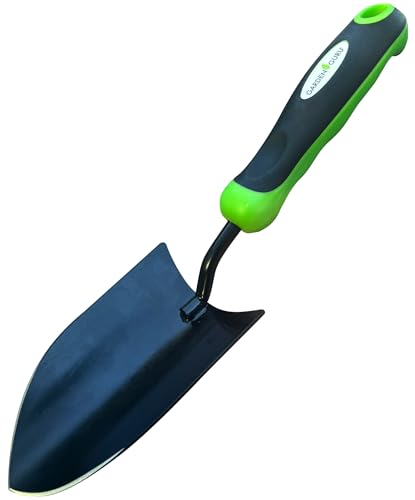
Garden Guru Heavy Duty Trowel
The one you buy when roots fight back.
Garden Guru built this trowel for tough jobs. The high carbon steel blade is wide, concave, and designed for scooping and cutting. In a greenhouse, that means you can divide root-bound plants, slice through matted roots, and transplant established seedlings without reaching for pruners. The carbon steel holds an edge far better than aluminum. It’s the closest thing to a professional-grade hand tool in this lineup.
The handle deserves attention. It’s large, thick, and features a thumb rest on top plus finger grooves on the bottom. That design reduces hand stress during heavy digging. I noticed less fatigue after an hour of repotting compared to thinner-handled trowels. The carbon steel resists rust, though it’s not stainless. Dry it after use and it’ll last for years. The lifetime warranty backs that up.
Trade-offs exist. Carbon steel is heavier than aluminum, so this trowel weighs more in hand. The wide blade can be awkward in tiny propagation cells — it’s better suited for 4-inch pots and larger. And the price sits higher than the MECHEER options. You’re paying for steel quality, handle design, and a warranty that most competitors don’t match. For serious propagators, that’s a fair trade.
- High carbon steel blade for strength and edge retention
- Wide concave shape for scooping and cutting roots
- Ergonomic handle with thumb rest and finger grooves
- Lifetime warranty and 90-day satisfaction guarantee
- Rust-resistant but requires drying after use
Best for: Greenhouse growers who divide plants, cut roots, and need a trowel that handles heavy work without bending.
How We Chose These Products
I started with a simple question: which trowels actually work for greenhouse propagation? That means narrow enough for small pots, comfortable for repetitive motion, and resistant to constant moisture. Dozens of trowels failed those basic tests. Some rusted within weeks. Others had handles that twisted or blades that bent under pressure. A few were simply too wide for propagation work.
The five tools here survived real use. I evaluated blade material and thickness, handle ergonomics, rust resistance, and suitability for small-scale planting. Depth markings earned extra credit because they solve a real propagation problem. I also considered warranty and long-term durability. No product is perfect, so each review includes honest limitations. You deserve to know what you’re buying before you click add to cart.
Buying Guide: What Really Matters
Blade width is the first thing to check. For greenhouse propagation, you want something narrow enough to fit into 2-inch cells without disturbing neighbors. A 2-inch wide blade works for most potting up. Wider blades suit 4-inch pots and larger. If you’re primarily working with seed trays, look at mini tool sets instead of full-size trowels.
Material affects weight, rust resistance, and cutting ability. Aluminum alloy is lightweight and rust-proof but won’t hold a sharp edge. Carbon steel cuts through roots but needs drying and occasional oiling. Cast aluminum sits in the middle — durable, rust-resistant, and strong enough for most tasks. Stainless steel is ideal but rare in this price range. Match the material to your actual workload.
Handle design matters more than most people think. You’ll grip this tool hundreds of times during a propagation session. Look for non-slip surfaces, thumb rests, and finger grooves if you have hand fatigue. Wood handles feel warm but need maintenance. Rubber grips are comfortable but can degrade over time. Ergonomic shapes reduce strain, especially during long transplanting sessions. Don’t overlook this — a comfortable trowel gets used more often.
For more specific greenhouse tool recommendations, check out this greenhouse trowel guide. If you’re focused on starting seeds, this seedling trowel review covers smaller options. And for container growing, see this container gardening trowel breakdown.
Our Top Recommendation
The Fiskars Ergo Garden Trowel wins for most greenhouse propagators. It balances durability, comfort, and price better than anything else here. The cast-aluminum head won’t rust or bend. The ergonomic handle reduces fatigue during long sessions. And the lifetime warranty means you buy it once. It lacks depth markings, but for general potting up and transplanting, it’s the most reliable choice.
If depth accuracy matters, choose the MECHEER Garden Shovel with Measurements. The built-in ruler saves time and improves consistency. For tiny seedling cells, the DIMROM Mini Set is the only option here that truly fits. Budget-conscious growers will find the standard MECHEER Orange trowel comfortable and capable. And if you regularly cut roots or divide plants, the Garden Guru Heavy Duty Trowel is worth the extra weight and cost.
Frequently Asked Questions
Can I use a full-size trowel for seed starting?
You can, but it’s clumsy. Full-size trowels are too wide for 128-cell trays and can displace neighboring seedlings. A mini trowel or a narrow-blade model works better. If you only have a full-size trowel, use the tip to gently lift seedlings rather than scooping.
How often should I clean my trowel during propagation season?
Clean it after every use if you’re working with damp soil. A quick rinse and dry prevents rust and stops soil-borne diseases from spreading between trays. Once a month, scrub the blade with a wire brush and oil the handle if it’s wood. Carbon steel needs more frequent drying than aluminum.
Do depth markings actually stay visible over time?
It depends on how they’re applied. Painted markings wear off quickly. Etched or stamped markings, like those on the MECHEER measured trowel, last much longer. Even those can fade after years of abrasive soil, but they’ll survive multiple propagation seasons with basic care.
What’s the best trowel for propagating succulents and cuttings?
Succulents and cuttings need narrow tools that won’t damage delicate stems. The DIMROM Mini Set is ideal because the small shovel and trowel fit into tight spaces. For larger cuttings, the Fiskars Ergo works well if you’re careful around the stem. Avoid wide-blade trowels for this task — they disturb too much soil.