You’ve probably done this dance before. You search for a garden hand fork, get buried in near-identical listings, and every one claims to be heavy duty. Then a tine snaps the first time you hit a root, or the handle wobbles loose after a season. I’ve killed more cheap forks than I care to admit.
A hand fork earns its keep in three jobs: lifting weeds with the root intact, breaking up compacted soil around plants, and turning over small beds before you sow. The good ones share a few traits. Stainless steel tines resist rust and shed sticky clay. A forged or well-welded head won’t splay under leverage. And the handle shape matters more than most listings admit, especially if your hands ache after an hour of work.
I compared five forks across the price and build spectrum, from a short ash-handled classic to a long-reach border tool. The Berry&Bird hand fork takes the overall nod for build quality and comfort. The Haliaeetus is the one to grab if your soil fights back. Read on for the full breakdown, a task-matching guide, and honest trade-offs on each pick.
Here’s a quick side-by-side of the specs that actually separate these five forks.
| Features | Berry&Bird Hand Fork | Haliaeetus Hand Fork | Garden Guru Fork | MECHEER Hand Rake | Berry&Bird Long Handle |
|---|---|---|---|---|---|
| Material and Build | Stainless steel, ash handle | Thick stainless, seamless weld | Stainless steel tines, ergonomic grip | Aluminum alloy, rubber grip | Stainless steel, 12-inch ash handle |
| Key Specification | Short traditional hand size | 12.3-inch overall length | Hang hole in handle | 0.28-inch thick claws | 22.6-inch overall length |
| Main Feature | Balanced, penetrates clay | Sharp 3-prong tine for deep roots | Maneuvers around delicate stems | 3 curved claws for aeration | 12-inch handle for reach |
| Handle Type | Ergonomic FSC ash | Streamlined natural wood | Ergonomic comfort grip | Non-slip TPR rubber | Ergonomic FSC ash |
| Best Use Case | Pots, beds, borders | Large weeds, hard soil | Weeding near small plants | Light cultivating, aerating | Borders without kneeling |
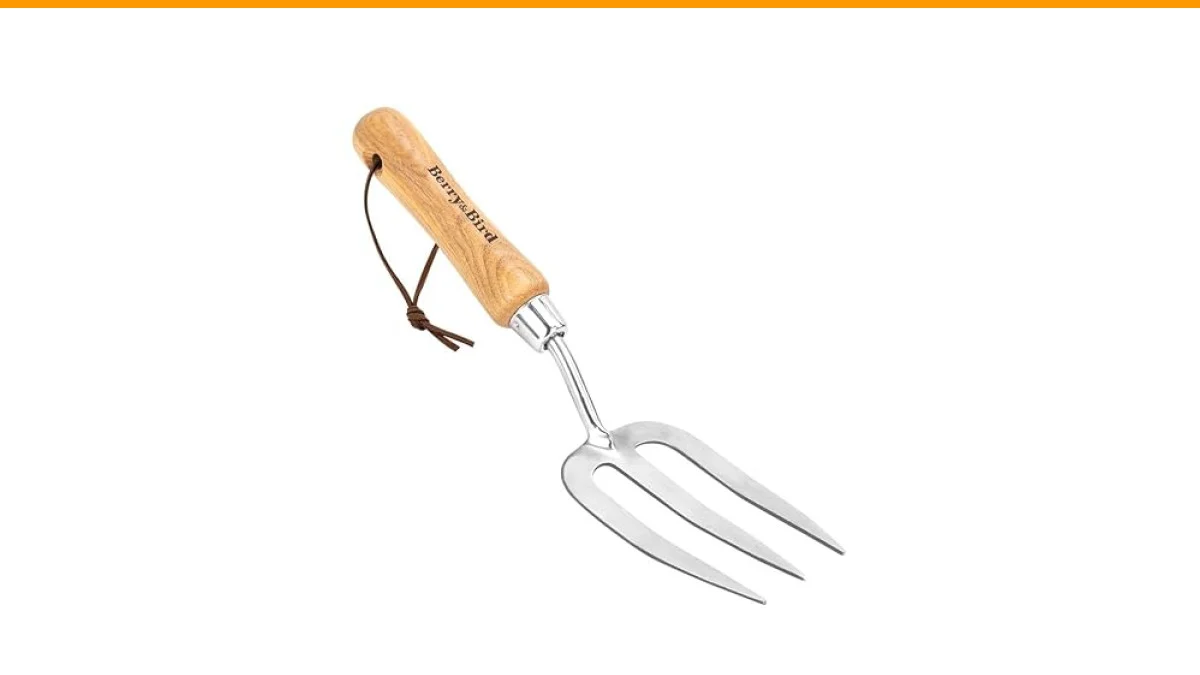
Berry&Bird Gardening Hand Fork
This is the fork I’d hand to someone who wants one tool for pots, raised beds, and border edges. The short ash handle sits naturally in the palm, and the stainless head has enough weight to drop into soil without you pushing hard. It’s a traditional design done properly, and Berry&Bird backs it with a 2-year warranty.
The standout detail is the balance. A lot of short forks feel top-heavy, so your wrist does the work. This one doesn’t. The stainless tines also shed wet clay instead of caking up, which saves you stopping to scrape them every few minutes. Berry&Bird uses ash from FSC-certified forests, and the wood darkens and smooths with use rather than splintering.
One honest caveat: this is a compact hand fork, not a leverage monster. If you’re wrestling out deep taproots in hard-packed ground, you’ll want something longer. It’s also a tool you’ll want to wipe dry after use, since the ash handle won’t thank you for sitting in a damp shed.
- Stainless steel head resists rust and soil adhesion
- FSC-certified ash handle, ergonomic and balanced
- Compact size suits pots, beds, and borders
- 2-year warranty with 30-day replacement
- Not built for deep-root leverage in heavy ground
Best for: The gardener who wants one well-made short fork for everyday bed and container work.
Haliaeetus Garden Hand Fork

Haliaeetus
Haliaeetus Garden Hand Fork, 12.3'' Hand Weeding Fork with Sharp Tine | for Easy Uprooting Large Weeds, Stainless Steel Garden Fork, Comfortable Wood Handle Hand Fork for Loosening Soil, Composting
- 【Great to Uproot Large Weeds】The gardening fork easily goes through the ground to digs deep under the weed and give more reach and…
- 【Loosens Soil Almost Effortlessly】With sharp and sturdy 3 prong tine that make it very easy to break through hard soil, even if yo…
- 【Comfortable Wooden Handle】Wood is a natural shock absorber and will not cause sore wrists even work for a few hours. The handle o…
If your soil is the kind that bends cheap tools, start here. The Haliaeetus fork runs 12.3 inches overall with a thicker stainless head and a seamless welded joint. That construction is the whole point. It’s aimed at people digging out large weeds and turning heavy soil, and it has the length to give you real leverage.
The sharp 3-prong tine digs deep under a weed and lets you lever the root out instead of snapping the top off. That matters most in moist soil after rain, when roots release more easily. The wooden handle acts as a natural shock absorber, so long sessions don’t leave your wrists buzzing. Haliaeetus also covers it with a lifetime warranty, which tells you they expect the weld to hold.
Trade-off time. The longer handle and heavier head make this less nimble in tight spots between delicate plants. It’s also overkill if all you grow is herbs in small pots. And like any wood-handled fork, it wants to be stored dry.
- 12.3-inch length gives real digging leverage
- Thick stainless steel with seamless welding
- Sharp 3-prong tine lifts deep weed roots
- Wood handle absorbs shock on long jobs
- Lifetime warranty on the tool
Best for: Gardeners battling large weeds and compacted or rocky soil who need leverage over finesse.
Garden Guru Stainless Steel Fork
Garden Guru’s fork sits in the middle ground, and its strength is precision. The stainless tines are slim enough to work around smaller stems and young plants without gouging them. If you’ve ever uprooted a seedling while weeding beside it, you’ll appreciate the difference.
Rust resistance is the other selling point. Stainless tines won’t warp or corrode the way cheaper carbon steel can, and the ergonomic grip spreads pressure across the palm instead of digging into it. There’s a large hang hole in the handle, which sounds minor until you’ve lost a fork in the undergrowth for a month. Garden Guru backs it with a lifetime warranty and a 90-day satisfaction guarantee.
The flip side of slim tines is less brute force. This fork maneuvers well but won’t pry out a stubborn root the way the Haliaeetus will. It’s a weeding and transplanting tool, not a demolition crew.
- Stainless tines resist rust and warping
- Narrow profile works around delicate plants
- Ergonomic grip reduces hand and wrist fatigue
- Large hang hole for easy storage
- Lifetime warranty plus 90-day guarantee
Best for: Detail work in mixed plantings where you can’t afford to damage neighboring stems.
MECHEER Hand Rake Cultivator
This one is a cultivator rather than a classic fork, and that’s worth being clear about. Three thick curved claws rake through soil to loosen and aerate the top layer. It’s the tool for scratching up the surface before planting, not for lifting deep roots. Think of it as the budget-friendly cousin that does a narrower job well.
The aluminum alloy claws measure 0.28 inches thick, which is genuinely chunky for the price bracket. That thickness lets the tines bite into hard turf without flexing. The TPR rubber grip is non-slip and comfortable, and the whole thing is light enough to toss in a garden bag and forget about until you need it. A hanging hole in the handle keeps it off the ground.
Where it falls short: aluminum isn’t as stiff as steel, so heavy prying is out of the question. The claws also don’t have the fine points you need to get under a deep taproot. It’s a surface cultivator, and it’s honest about that.
- 3 thick curved claws for loosening and aerating
- 0.28-inch aluminum alloy resists bending
- Non-slip TPR rubber ergonomic grip
- Lightweight with a hanging hole for storage
- Surface cultivation only, not deep root work
Best for: Budget-conscious gardeners who mostly loosen and aerate the top few inches of soil.
Berry&Bird Long Handle Fork

Berry&Bird
Berry&Bird Garden Hand Fork, 22.6 In Long Handle Stainless Steel Weed Fork
- WHAT YOU GET - 1 * Long Handled Weed Fork. Our garden forks are made by traditional manual process and can be used for more than 1…
- WIDE APPLICATION - The traditional long handled stainless steel weed fork has a traditional style and weatherproof 12 inch handle…
- COMFORTABLE HANDLE - The 12 inch handle provides greater reach and leverage, making it easier to reach a corner of the garden. Str…
Here’s the pick for anyone tired of kneeling. Berry&Bird’s long-handled version stretches to 22.6 inches with a 12-inch ash handle, giving you reach into borders and between plants without stepping on them. If bending down is painful or you just hate the crouch, this changes how you work.
The extra length translates directly into leverage. You can work a corner of the garden from a standing position and apply more force with less effort. The stainless head and FSC-certified ash handle match the build quality of the short version, and the same 2-year warranty applies. The streamlined handle is shaped for grip and comfort over longer sessions.
Limitations? The length makes it awkward in confined spaces and raised beds where you’re already close to the soil. It’s also heavier than a compact fork. For precision weeding in tight quarters, the short Berry&Bird is the better call.
- 22.6-inch overall length with 12-inch handle
- Work borders without kneeling or walking on beds
- Longer handle means more leverage, less strain
- Stainless steel head, FSC-certified ash handle
- 2-year warranty with 30-day replacement
Best for: Gardeners with back or knee trouble who want to weed borders from a standing position.
How We Chose These Products
I started with the failure points. Cheap forks break at the weld, bend at the tine, or rot at the handle. So I weighted construction first: how the head attaches, what the tines are made of, and whether the handle is a material that survives a damp shed. Stainless steel got preference over untreated carbon steel for rust resistance, and forged or seamlessly welded heads beat spot-welded joints every time.
Then I looked at the human side. Handle shape, overall length, and grip material decide whether you can work for an hour or ten minutes. I also factored in warranties, since a lifetime or multi-year guarantee signals the maker trusts the build. Finally I checked that each pick fills a distinct role, so you’re not choosing between five near-identical forks.
Buying Guide: What Really Matters
Stainless versus carbon steel is the first fork in the road. Stainless costs more but resists rust and releases sticky clay, which is why it dominates this list. Carbon steel takes a sharper edge but rusts fast without oiling. For most home gardeners, stainless wins on low maintenance.
Next, look at the head joint. A forged head is one piece of metal, so there’s nothing to snap. Welded heads vary wildly, and a poor weld is the number one failure point on budget forks. Seamless welding, like the Haliaeetus uses, is the next best thing to forged.
Tine count and spacing decide what the fork can do. Three or four tines spaced wide handle big weeds and clumpy soil. Narrow spacing with fine points suits precision work around seedlings. Wider tines move more soil per push; finer tines give control. Match the fork to the job, not the other way around. Handle material matters too. Ash and other hardwoods absorb shock and warm to the hand. Rubber and TPR grips add cushioning but can slip when wet. Fiberglass handles are tough but transmit more vibration.
Fork Type by Task: Weeding, Aerating, Transplanting
Weeding deep-rooted plants calls for a long-handled fork with sharp tines and leverage, like the Haliaeetus or the long Berry&Bird. You want to get under the root and lever it out, not chop at the top.
Aerating and loosening the top layer is cultivator territory. The MECHEER’s curved claws scratch up compacted surface soil and let air and water in. A standard hand fork can do this too, but a dedicated cultivator does it faster on open ground.
Transplanting and working around established plants rewards precision. The Garden Guru fork’s slim tines slip between stems without collateral damage. For pots and small beds, the short Berry&Bird is the comfortable all-rounder. If you want a second opinion on matching tools to soil types, this roundup of hand forks professional gardeners recommend covers similar ground.
Maintenance and Rust Prevention
Even stainless steel isn’t rust-proof forever. Wipe the head dry after every use and knock off caked soil before it hardens. A quick rub with an oiled rag once a month keeps the metal slick and slows corrosion, especially if you garden near the coast.
Wood handles need attention too. Ash dries out and can crack if left in the sun or a hot shed. A light coat of linseed oil once a season keeps the grain sealed and the surface smooth. Store forks hanging by the handle hole rather than standing tines-down in damp soil. If your tines dull over time, a few passes with a fine file restore the edge. For a deeper look at long-term durability testing, Bob Vila’s team put garden forks through hands-on testing worth reading before you buy.
Our Top Recommendation
The Berry&Bird Gardening Hand Fork is the best all-round pick. It balances well, sheds clay, and the FSC ash handle is genuinely comfortable for long sessions. The 2-year warranty backs it up. For most gardeners working beds, borders, and pots, it’s the fork you’ll reach for first.
If your soil is heavy clay or full of rocks, step up to the Haliaeetus for its thicker steel and longer leverage. On a tight budget, the MECHEER cultivator handles light loosening and aerating for far less. And if kneeling is the problem, the long-handled Berry&Bird solves that directly.
Frequently Asked Questions
How do I stop my fork tines from bending? Bending usually means too much sideways force on a tine that wasn’t built for prying. Use the fork to lift and lever straight up, not to twist. If you regularly hit rocks, choose a thicker stainless or forged head rather than a slim-tined model.
Is a 3-tine or 4-tine fork better? Three tines push through hard soil more easily and resist bending, which suits clay and rocky ground. Four tines move more soil per scoop and suit loose loam and general bed prep. There’s no universal winner, just a match to your soil.
Can I use a hand fork for transplanting seedlings? Yes, if the tines are narrow enough. A slim fork like the Garden Guru lifts a seedling with its root ball intact and slips between neighboring plants. Wide-tined forks disturb too much soil around young roots.
How often should I sharpen or oil my fork? Sharpen when the tines start sliding off roots instead of cutting in, usually once or twice a season for regular use. Oil the metal monthly and the wooden handle once a season to prevent rust and cracking.