You bought a beautiful clematis or a vigorous pole bean start, planted it with care, and then watched it flop over the edge of the pot within a week. The stems grow fast, but without a solid structure to grab, they tangle into a mess on the soil. A flimsy bamboo stake or a decorative wire cone rarely cuts it for long. What you need is a trellis that stays put, supports the weight of mature growth, and actually makes the plant look better as it climbs.
The right support does more than hold stems upright. It opens up airflow around the foliage, which cuts down on mildew problems. It pushes leaves into better light, so you get denser growth and more flowers or pods. A good trellis also keeps vines off the ground where slugs, rot, and dirt splatter do the most damage. For potted plants on a patio or a dedicated garden bed, the difference between a sturdy metal frame and a cheap stick is obvious within a single growing season.
Two metal trellises stand out for different jobs. One is a modular panel system built for containers and indoor pots. The other is a heavy spiral tower that handles aggressive climbers and vegetable crops in open soil. Neither is perfect for every situation, so this review breaks down exactly who should buy which, what each does well, and where each falls short.
Here is a quick look at how the two options compare on the specs that matter most.
| Features | JJSHUANL 2-Pack Panel | VRIEZOP Spiral Tower |
|---|---|---|
| Material | Powder-coated native iron, hand-welded | 0.6mm stainless steel, reinforced pole |
| Key Spec | 30 inches tall, splits to 15 inches | Adjusts from 12.2 to 44 inches |
| Main Feature | Modular, tool-free 10-second setup | Screw-lock coils, anti-tip stakes |
| Best Use Case | Potted indoor vines, small containers | Garden beds, beans, heavy climbers |
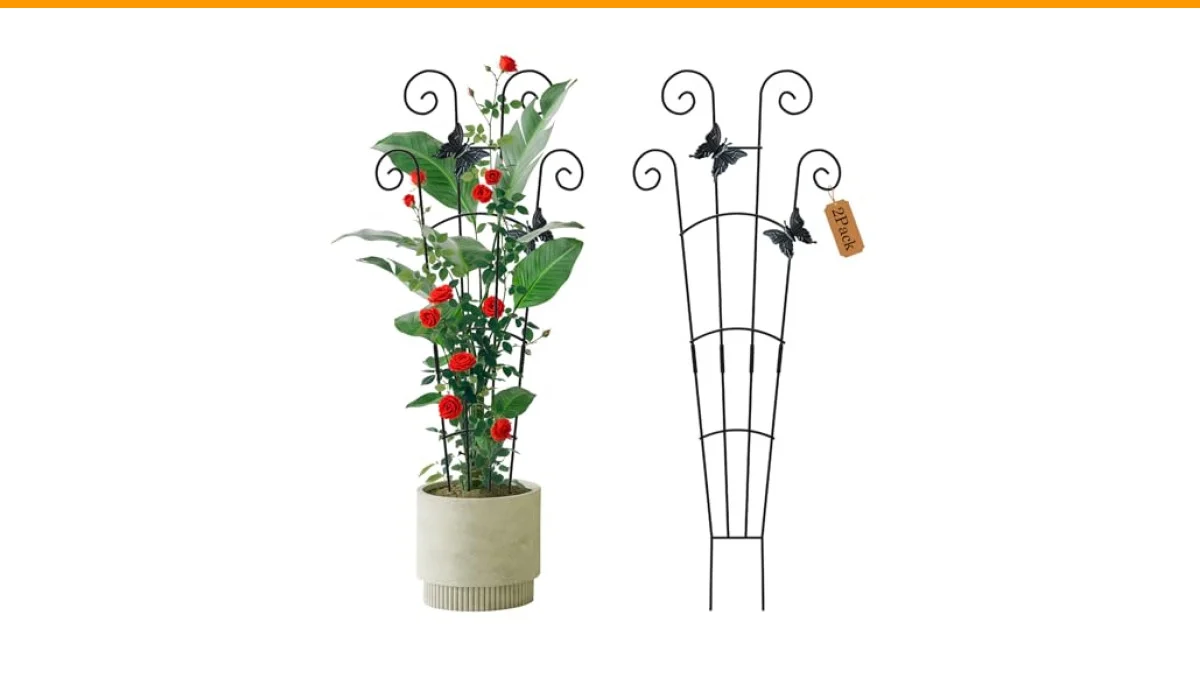
JJSHUANL 2-Pack Panel Trellis

JJSHUANL
2 Pack 30 Inch Taller Plant Trellis for Potted Climbing Plants Indoor,Expandable Metal Garden Trellis for Climbing Plants,Flowers Vine Ivy, Sturdy Houseplant Support for Potted Plants with Ties
- 🪴【Plant Trellis for Climbing Plants Indoor and Outdoor】:2 Pack of uniquely designed plant trellis 30 inches for taller climbers, a…
- 🪴【Sturdy Garden Trellis for Climbing Plants】:The climbing plant supports are made of high-quality metal material and crafted from…
- 🪴【Easy to Install and Maintain Trellis】:10 second quick installation, no tools required.Each trellis features two pieces that desi…
This set of two metal panels suits anyone growing climbing plants in pots. It works for houseplant vines like ivy or hoya on a shelf, and it handles outdoor container plants like jasmine or small clematis on a balcony. The 30-inch height is tall enough for compact varieties but not so tall that it topples a standard pot. Because you get two panels, you can support a single large plant from both sides or set up two separate pots at once.
The standout feature here is the modular design. Each panel splits in half, so you can use a 15-inch support for a young plant or a short pot. As the vine grows, you stack the pieces back to full height. You can also combine both panels around one vigorous plant to create a wider climbing frame. The metal is thicker than the average decorative trellis, and the hand-welded joints with a rust-proof coating make it feel like a tool, not a disposable accessory. Installation takes about ten seconds because the pieces just slide together—no screws, no tools, no guesswork.
There is a real limitation here. The panels have no stakes or spikes to anchor them into the ground. In a lightweight plastic pot, a top-heavy vine like a tall jasmine can still shift the whole trellis during a gust of wind. You will likely need to weigh down the pot or lean the panel against a wall for stability. Also, the 30-inch height is not enough for truly aggressive climbers like wisteria or full-size pole beans, which will outgrow this frame by midsummer. This is a support for tidy, managed growth, not a jungle gym.
- Two panels per pack, each 30 inches tall and collapsible to 15 inches
- Powder-coated iron with rust-resistant finish for indoor or outdoor use
- Tool-free assembly with slide-together pieces
- Can combine both panels for a wider or taller structure
- Best suited for small to medium potted vines and trailing plants
Best for: Container gardeners who want a quick, adjustable support for decorative vines indoors or on a sheltered patio.
VRIEZOP Spiral Frame Trellis

VRIEZOP
Spiral Frame Trellis for Climbing Plants Outdoor Indoor - 44" Adjustable Heavy Duty Metal Garden Plant Support with Anti-Tip Stakes,for Pole Beans,Tomato, Sweet Pea,Clematis,Potted Plants,Vine
- Heavy Duty Metal Trellis, Stability for All Climbing Plants: Crafted with 0.6mm thick stainless steel and a 0.63-inch reinforced c…
- Spiral Design for Easy Growth: This spiral trellis follows the natural climbing direction of vines, encouraging them to grow strai…
- Upgraded Screw-Lock System, Never Wobble or Shift for Unmatched Safety: Features reinforced screw-fastened coils that permanently…
This spiral tower is a different animal. It is built for outdoor garden beds and raised planters where plants get serious. The 44-inch maximum height and heavy construction make it a legitimate option for pole beans, snap peas, cucumbers, and flowering climbers like morning glory or clematis that put on real mass. The spiral shape gives vines a natural path to follow, which often results in straighter, more upright growth compared to flat panels.
The build quality is the main selling point. The 0.6mm stainless steel and the reinforced center pole handle wind and the weight of a mature bean plant without bending. The screw-lock system that fastens the coils to the center pole is a thoughtful upgrade—it prevents the whole frame from wobbling or springing loose, which is a common failure point on cheaper spiral supports. The anti-tip stakes push into the soil for a firm hold. You can adjust the height from just over a foot up to 44 inches, so it works as a small tomato cage early in the season and a tall bean tower later on. When the season ends, it folds flat for storage.
The honest downside is the price and the footprint. This trellis costs more than a simple stake setup, and its narrow spiral design means it supports one plant or a small cluster, not a long row of crops. You would need several of these to cover a traditional vegetable bed. The tool-free assembly is easy, but the screw-lock system takes a few minutes to get right, and you will want to make sure the coils are fully tightened before the plant gets heavy. It is also not ideal for very wide, bushy vines that need a broad surface to spread across.
- Adjustable height from 12.2 to 44 inches
- 0.6mm stainless steel with a 0.63-inch reinforced center pole
- Screw-fastened coils lock permanently to the tailpole
- Anti-tip stakes for secure placement in soil
- Folds flat for off-season storage
Best for: Vegetable gardeners and flower growers who need a tall, stable tower for a single heavy climber in open ground or a large raised bed.
How We Chose These Products
We evaluated these trellises on four practical criteria: material durability, ease of installation, stability under load, and the range of plants they can realistically support. A trellis that rusts after one season or bends under a heavy vine is useless, so we prioritized metal thickness and protective coatings. We also looked at how the design handles the natural growth habit of different climbing plants, from twining stems to heavy fruiting vines.
Real-world use matters more than marketing claims. We considered how each product performs in a typical container versus a garden bed, how much assembly time is actually required, and whether the design has obvious failure points. The JJSHUANL panel wins for versatility in pots, while the VRIEZOP spiral is the clear choice for outdoor, high-growth situations. Both earned a spot because they solve distinct problems without the flimsy construction that plagues most budget trellises.
Buying Guide: What Really Matters
Before you buy any trellis, look at the mature size of your plant. A small ivy in a 6-inch pot needs a very different support than a 10-foot pole bean. Check the height and spread of the trellis against your plant’s expected growth. Buying a 30-inch panel for a vigorous wisteria is a waste of money, just as a 44-inch spiral tower overwhelms a small potted houseplant.
Material and finish decide how long the trellis will last. Powder-coated metal resists rust better than bare wire. Stainless steel is heavier and stronger but costs more. For outdoor use, look for a rust-proof coating and joints that are welded or securely fastened. A trellis that wobbles in the wind will pull out of the soil or damage the plant’s roots over time. The best supports have stakes, a wide base, or a locking mechanism to keep them anchored.
Consider the climbing style of your vines. Twiners like morning glory and pole beans wrap around vertical supports, so a spiral or single pole works well. Plants with tendrils, like peas and cucumbers, prefer a grid or netting to grab. Heavy flowering vines like clematis need a sturdy frame that can hold significant weight without collapsing. Match the trellis structure to the plant’s method of climbing for the best results.
Our Top Recommendation
The VRIEZOP Spiral Frame Trellis is the stronger overall pick for most gardeners. Its adjustable height, heavy-duty steel construction, and secure anchoring make it a reliable workhorse for a wider range of plants. It handles vegetable crops and flowering vines with equal ease, and the foldable design is a practical bonus for seasonal storage. If you have a garden bed or a large raised planter, this is the one to buy.
The JJSHUANL 2-Pack is the better choice for container gardening and indoor use. Its modular design and quick setup are ideal for potted plants on a balcony or windowsill. It also offers great value since you get two panels in one purchase. For anyone growing smaller decorative vines in pots, this is the more practical and cost-effective solution.
For a deeper look at which plants pair best with these supports, check our guide to the best climbing plant options. If you are leaning toward flowering varieties, our review of the top flowering vines can help you decide. And for heavy climbers like wisteria, you will want specific advice on trellis selection for wisteria.
Frequently Asked Questions
Can I use these trellises for both indoor and outdoor plants?
Yes. The JJSHUANL panels have a rust-proof coating that holds up outdoors, but they are also light enough for indoor pots. The VRIEZOP spiral is heavier and designed for outdoor conditions, though you could use it in a very large indoor planter if you have the floor space.
How do I attach my climbing plant to the trellis?
You do not need to tie most twiners. Just guide the young stem toward the base of the trellis and it will wrap on its own. For heavier vines or plants with tendrils, use soft plant ties or garden clips to secure the main stem at a few points. The JJSHUANL pack includes ties for this purpose.
Will a 30-inch trellis be tall enough for my clematis?
Probably not. Most clematis varieties grow 6 to 10 feet tall. The JJSHUANL panel is best for compact or patio varieties. For a full-size clematis, the VRIEZOP spiral at 44 inches is a better match, though you may still need to prune the plant to keep it in bounds.
What is the best way to store these trellises over winter?
Both trellises can be disassembled. The JJSHUANL panels split into halves, and the VRIEZOP folds flat. Clean off any soil, let them dry completely, and store them in a shed or garage. Keeping them out of the elements will extend their lifespan significantly.