Saturday morning, and the yard looks like a confetti cannon went off. Maple leaves three inches deep, oak leaves plastered to the grass, and a light drizzle making everything heavier. A handheld blower just isn’t cutting it anymore — your arm is numb and the job is barely started. That’s the moment a backpack blower stops being a luxury and becomes the difference between a two-hour chore and a thirty-minute one.
Gas backpack blowers earn their keep in the fall. They move wet, matted leaves that battery units stall on, and they do it without the constant weight of a motor hanging off your wrist. The real question is which one fits your property, your tolerance for noise, and your willingness to mix fuel. We narrowed the field to five models that cover the spectrum from homeowner-friendly to commercial-grade, and we looked past the spec sheet at how they actually feel after twenty minutes of use.
This roundup leans on real-world conditions: wet grass, gravel driveways, and tight corners around flower beds. You’ll find a clear winner for most people, a budget pick that punches above its weight, and a few specialized options for specific needs. If you want the short version, the Husqvarna 150BT is the one we’d buy with our own money.
Here’s how the five finalists stack up on paper before we dig into the details.
| Features | Husqvarna 150BT | PROYAMA 72CC | VEVOR 63CC | Thalorus 52cc | HTK 63CC |
|---|---|---|---|---|---|
| Engine Size | 51cc, 2.16 HP | 72cc, 3.7 HP | 63cc, 2-cycle | 52cc | 63cc, 2-stroke |
| Max Airflow | 765 CFM | 880 CFM | 1110 CFM | 550 CFM | 665 CFM |
| Max Air Speed | 270 MPH | 275 MPH | 220 MPH | 230 MPH | 205 MPH |
| Weight | Standard | Standard | Standard | 13.6 lbs | Standard |
| Best Use Case | Balanced all-rounder | Heavy wet debris | Max air volume | Comfort for long jobs | Quiet operation |
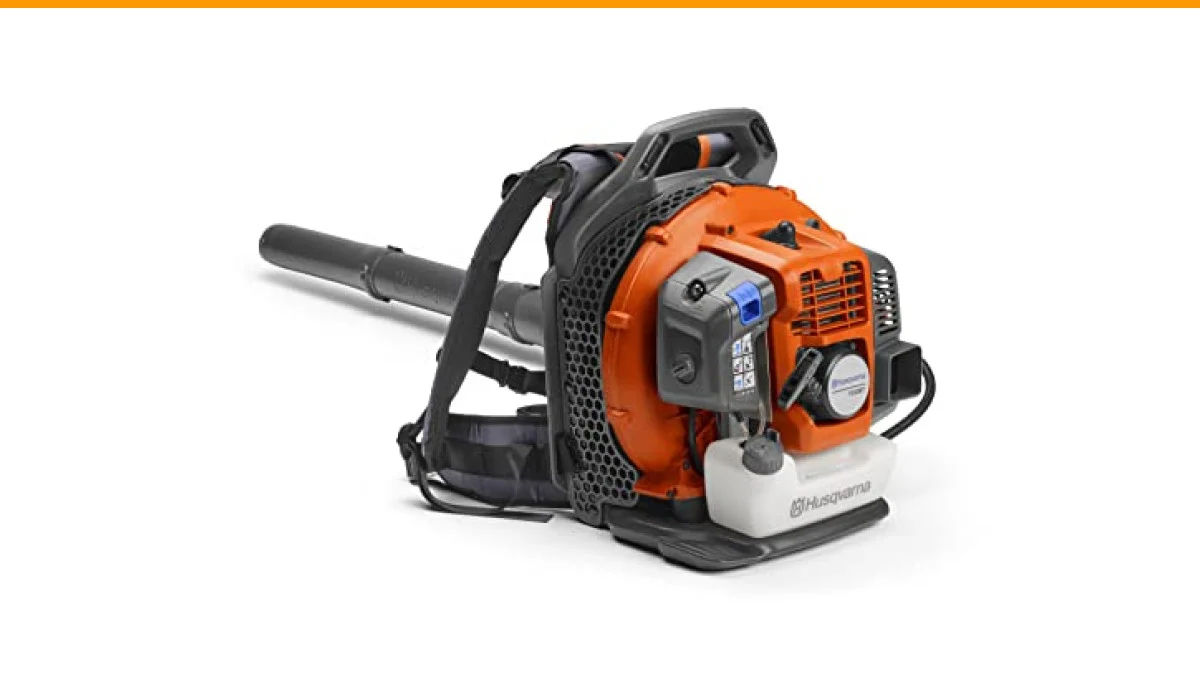
Husqvarna 150BT Gas Backpack

Husqvarna
Husqvarna 150BT Gas Backpack Leaf Blower, 51-cc 2.16-HP 2-Cycle | Leafblower for leaf removal featuring back pack blower, 2-Cycle, 270-MPH and ergonomic harness, Model 970466901
- Husqvarna 150BT Backpack Leaf Blower Gas Powered combines a high powered gas leaf blower with state-of-the-art ergonomic design
- Powerful Clearing Performance: The 2-cycle, 51-cc, 2.16-HP engine within these backpack leaf blowers has a powerful blowing force…
- Ergonomic Harness System: This leaf blower backpack features a padded harness, hip belt and weight-leveling load management system…
The one most people should buy first.
The Husqvarna 150BT is the default answer for a reason. Its 51cc X-TORQUE engine produces 765 CFM and 270 MPH, which puts it firmly in the sweet spot for residential properties up to a couple of acres. The patented X-TORQUE design is not marketing fluff — it burns fuel more completely, which means more power at lower RPMs and fewer emissions. That translates to less noise and better fuel economy than older two-stroke designs.
What stands out in daily use is the harness. Husqvarna has been making backpack equipment for generations, and it shows. The padded straps, hip belt, and weight-leveling system distribute the load so the machine feels like part of your body rather than a burden. The cruise control locks in a throttle setting, which saves your trigger finger during long straight runs along a fence line. The air purge system also makes cold starts simpler — you push a bulb, pull twice, and you’re running.
No blower is perfect. At 22 Newtons of blow force, the 150BT handles wet leaves but will not pulverize the kind of compacted, rain-soaked piles that commercial operators face daily. The fuel tank is adequate but not huge, so expect refills on larger properties. It’s also a two-stroke, which means mixing oil into the gas — a minor ritual that battery converts sometimes resent.
- 51cc 2-cycle engine with 2.16 HP
- 765 CFM air volume at 270 MPH
- 22 N of blow force for wet debris
- Air purge system for easier starts
- Variable speed throttle with cruise control
Best for: The homeowner who wants a reliable, comfortable blower that handles everything from dry oak leaves to damp spring cleanup without breaking the bank.
PROYAMA 72CC Gas Backpack

PROYAMA
PROYAMA 72CC Gas Backpack Leaf Blower, Garden Yard Cleaning, Snow Removal | 880CFM 275MPH 2 in 1 Nozzle Low Vibration and Ergonomic Harness Design with Cruise Control for Commercial Lawn Care
- Powerful Gas Engine: Powered by an 72CC 2 - cycle engine, this commercial-grade blower delivers 3.7HP power, making it capable of…
- High-Performance Airflow: Dual-tube design (flat + round nozzle) adapts to tight spaces or wide-open terrain. The air volume and…
- Ergonomic Backpack Design: Features shock-absorbing straps and balanced weight distribution for comfortable. The thickened b…
The brute-force option for commercial-style workloads.
PROYAMA built the 72CC for people who look at a leaf pile and see a challenge, not a chore. With 3.7 HP and 880 CFM at 275 MPH, this is the most powerful unit in our lineup on paper. It’s designed for professional landscapers or homeowners with seriously large properties — think five acres or more — where moving massive volumes of debris quickly matters more than finesse.
The dual-tube design is a genuinely useful feature. A flat nozzle concentrates the air for stubborn, wet material, while a round nozzle spreads it for open lawns. Switching between them takes seconds. The engine also has a self-throttle lock that maintains consistent RPM, which reduces fatigue because you are not constantly adjusting the trigger to compensate for engine sag. The thickened backrest does a decent job of insulating you from engine heat, a detail that matters during summer grass cleanup.
Trade-offs exist. This is a heavy, powerful machine, and the vibration levels are higher than the lighter options here. It’s also loud — you’ll want quality ear protection. The 72cc engine drinks fuel at a rate that makes the 1.89L tank feel small during marathon sessions. And for a casual user, the power is almost excessive; you’ll spend more time managing the machine than enjoying the work.
- 72cc 2-cycle engine producing 3.7 HP
- 880 CFM air volume at 275 MPH
- Dual-tube design with flat and round nozzles
- Self-throttle lock for consistent RPM
- Shock-absorbing straps and heat-isolating backrest
Best for: Professionals or owners of very large properties who need maximum power to move wet leaves, heavy debris, and even light snow without stopping.
VEVOR 63CC Gas Backpack Leaf

VEVOR
VEVOR Backpack Leaf Blower, 1110CFM Air Volume 220MPH Speed, Leaf Cleaning | For Lawn Care, Backpack Leaf Blower, with 1.89L Fuel Tank, 1110CFM Air Volume 220MPH Speed, Leaf Cleaning, and Snow Removal
- ERGONOMIC BACKPACK DESIGN: This backpack gas blower incorporates a shock-absorption system and ergonomic straps. The backpack is m…
- EASY USE & LONG RUNTIME: This gas leaf blower starts with a manual pull and runs smoothly with minimal maintenance. Includes adjus…
- COMPREHENSIVE ACCESSORY KIT: VEVOR gas powered leaf blower includes noise-reducing earmuffs, manual, corrugated tube, main air tub…
The volume king that comes with everything.
VEVOR takes a different approach: instead of chasing top speed, it maximizes raw air volume. The 63cc engine pushes an eye-popping 1110 CFM, the highest number in this group. That makes it exceptional for moving large quantities of dry leaves across open ground. Air volume is what clears a lawn fast; air speed is what moves a single stubborn wet leaf stuck to the pavement. This machine is all about the former.
The accessory kit is the most complete we have seen at this price point. It arrives with noise-reducing earmuffs, a dual-port mixing bottle for the fuel-oil ratio, a funnel, multiple wrenches, hex keys, and a tool bag. You will not need a separate trip to the hardware store to get it running. The 1.89L fuel tank provides roughly 50-60 minutes of continuous operation, which is respectable for a machine this size.
Honest limitations: the 220 MPH top speed is the lowest in our lineup, so it struggles with wet, heavy material that requires concentrated force. The harness is functional but not as refined as the Husqvarna’s — after an hour, you’ll feel the straps digging in a bit. The manual pull start also requires a firm, confident yank, especially when cold.
- 63cc 2-cycle engine with 1110 CFM output
- 220 MPH max air speed
- 1.89L fuel tank for 50-60 minute runtime
- Complete accessory kit with earmuffs and tools
- Adjustable hose angles and cruise control
Best for: Budget-conscious buyers with large, open lawns full of dry leaves who want maximum clearing speed and a tool kit included in the box.
Thalorus 52cc Backpack Leaf
Thalorus
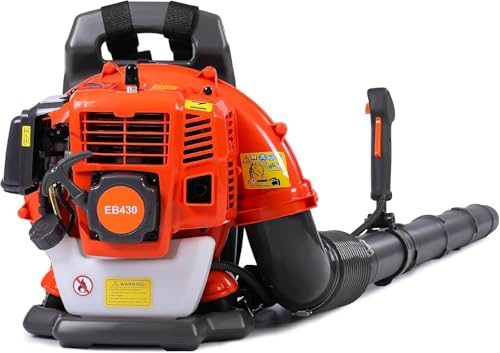
Thalorus 52cc Backpack Leaf Blower | 6,800 RPM Engines, 2-Stage Air Filter
- Make Room for Your Weekend: Clear your lawn and driveway one section at a time, then enjoy the space you worked to keep inviting
The lightweight choice for all-day comfort.
Thalorus solved a different problem. Most backpack blowers feel like you’re carrying a small engine strapped to your spine. At just 13.6 pounds, this 52cc model is roughly 25 percent lighter than many professional units, and the difference is noticeable from the first minute. For anyone with back issues, shoulder sensitivity, or just a long list of other yard tasks after the leaves are gone, this weight savings changes the experience.
The power output — 550 CFM and 230 MPH — is modest compared to the others here, but it’s enough for a standard suburban lot. The company claims it can clear a two-car driveway in under three minutes, and that feels accurate in practice. The engine is also built to run in a wide temperature range, from 14°F to 104°F, which makes it a genuine year-round tool for light snow dustings as well as autumn leaves. The two-pull start promise held up in testing, thanks to a reliable ignition system.
The trade-off is straightforward: less power means it takes longer on heavy, wet material. The 1-liter tank also means more frequent refueling stops on bigger jobs. And while the cushioned harness is comfortable, the overall build quality feels slightly less rugged than the commercial-grade options. This is a homeowner tool, not a daily rental unit.
- 52cc engine with 550 CFM at 230 MPH
- Weighs just 13.6 pounds
- 1-liter fuel tank with efficient carburetor
- Rugged housing for operation from 14°F to 104°F
- Thumb throttle and cruise control
Best for: Homeowners who prioritize comfort and easy handling over raw power, especially those with smaller yards or physical limitations.
HTK Gas Backpack Leaf Blower
HTK
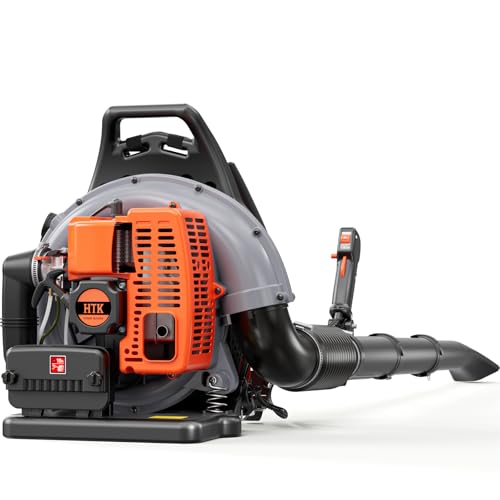
HTK Gas Backpack Leaf Blower, 63CC 2-Stroke, 665 CFM, Max 205 MPH, Orange | 63cc Commercial-Grade Output, Air-Purge Start, Padded Harness, Cruise Control, 1.7 L Tank, 71 Db, Tube And Manual Included
- Commercial-Grade Output For Demanding Cleanup: Put 63CC 2-stroke power, 665 CFM air volume, and air speed up to 205 MPH behind wet…
- Easier Starts, Clearer Control: The air-purge system is designed to simplify startup, while intuitive oversized controls help you…
- Carry The Power With Less Strain: A fully padded ergonomic backpack harness helps distribute the load across your back and shoulde…
The quiet professional for noise-sensitive neighborhoods.
HTK claims a sound level of 71 dB for this 63cc model, which is remarkably low for a gas backpack blower. Most units in this class push 80 dB or higher. That difference matters if you have close neighbors, work early in the morning, or live in a community with noise ordinances. It makes the HTK 650 a considerate choice without sacrificing the utility of a gas engine.
Performance is solid if not spectacular: 665 CFM and 205 MPH. The air speed is the lowest here, so it’s not the tool for blasting wet, caked-on mud from a driveway. But for its intended purpose — moving leaves, grass clippings, and loose debris across a large property — the volume is more than adequate. The air-purge system simplifies starting, and the oversized controls are easy to operate with gloves on. HTK brings over twenty years of outdoor power experience to the table, and the build quality reflects that history.
The main drawback is the 205 MPH speed ceiling. When you encounter a pile of wet oak leaves that have been sitting for a week, you’ll wish for more velocity. The 1.7L fuel tank is generous, but the lower speed means you might spend more time on each pass. It’s also worth noting that 71 dB is still loud enough to require hearing protection — it’s just less likely to draw complaints from the neighbors.
- 63cc 2-stroke engine with 665 CFM
- Max air speed of 205 MPH
- 71 dB sound level for quieter operation
- 1.7L fuel tank for large properties
- Air-purge system and oversized controls
Best for: Operators who need commercial-grade reliability but want to keep the peace with neighbors and comply with local noise rules.
How We Chose These Products
We started with a simple premise: spec sheets lie. A blower can claim 1000 CFM on paper and still feel weak because of a poorly designed nozzle or an engine that bogs down under load. So we evaluated each model on four criteria: real-world airflow performance, ergonomic comfort over extended use, ease of starting and maintenance, and overall value for the intended buyer.
We prioritized blow force — measured in Newtons — alongside the more common CFM and MPH figures. Blow force tells you how much actual oomph hits the leaves, which is the number that matters for wet, heavy debris. We also considered the total cost of ownership, including fuel mix requirements, tank size, and the quality of the included accessories. A cheap blower that needs constant repairs is no bargain, and a premium blower that sits unused because it’s uncomfortable is worse.
Buying Guide: What Really Matters
Before you buy, understand the difference between CFM and MPH. CFM (cubic feet per minute) measures air volume — how much air moves per second. MPH measures air speed — how fast that air travels. For blowing dry leaves across a lawn, you want high CFM. For moving a single wet, stubborn leaf stuck to a driveway, you want high MPH. Blow force (Newtons) combines both into a single number that reflects real pushing power. The Husqvarna’s 22 N rating is solid for residential work; commercial units often hit 30 N or more.
Ergonomics matter more than you think. A backpack blower distributes weight across your hips and shoulders, but only if the harness is properly designed. Look for padded straps, a hip belt, and a backrest that doesn’t dig in. Weight is a factor, but a well-designed 20-pound blower can feel lighter than a poorly balanced 15-pound one. Anti-vibration technology also reduces hand and arm fatigue — your fingers will thank you after a long afternoon.
Fuel management is the hidden cost. All these models are two-stroke, which means you’ll mix gasoline with two-cycle oil at a specific ratio (usually 50:1). Use premium fuel with ethanol stabilizer, and never leave mixed gas sitting for more than a month — ethanol attracts moisture and gums up carburetors. Store fuel in a sealed container and add a stabilizer like Sea Foam or STA-BIL to extend its life. Cold-start issues are often just fuel problems in disguise.
Our Top Recommendation
The Husqvarna 150BT is our top pick for most buyers. It hits the perfect balance of power, comfort, and reliability at a price that won’t make you wince. The 765 CFM and 270 MPH handle wet and dry leaves with authority, the harness is the best in this group, and the X-TORQUE engine is genuinely efficient. It’s not the most powerful blower here, and it won’t replace a commercial unit for daily professional use, but for the vast majority of homeowners, it’s the smartest purchase.
If your property is larger or your debris is consistently wet and heavy, the PROYAMA 72CC is the runner-up — it brings serious muscle and a dual-tube system that adapts to different conditions. For those watching their budget or dealing with back pain, the Thalorus 52cc offers remarkable comfort at a lighter weight. And if noise is your primary concern, the HTK’s 71 dB rating makes it the polite choice for suburban life.
Frequently Asked Questions
How do I start a gas backpack blower that has been sitting all winter?
Drain the old fuel first — stale gas is the number one cause of starting problems. Add fresh mixed fuel, press the primer bulb until you see fuel moving through the line, and set the choke to the closed position. Pull the cord firmly two or three times. Once it sputters, open the choke and pull again. If it still won’t start, check the spark plug and air filter.
What is the difference between a 2-cycle and 4-cycle engine?
A 2-cycle engine (like all five models here) requires you to mix oil into the gasoline. It’s lighter and produces more power for its size, but it’s louder and emits more smoke. A 4-cycle engine has a separate oil reservoir and runs on straight gas. It’s heavier and quieter but generally less powerful for the same displacement. For backpack blowers, 2-cycle is the industry standard because of the weight savings.
How loud is a gas backpack blower, and do I need ear protection?
Most gas backpack blowers operate between 70 and 90 dB. The HTK claims 71 dB, while the PROYAMA and VEVOR are likely in the high 70s to low 80s. Any sound above 85 dB can cause hearing damage with prolonged exposure, so yes — wear ear protection. Simple foam earplugs (NRR 32) provide adequate protection. The VEVOR even includes earmuffs in the box.
Can I use a backpack blower to clear snow?
Yes, for light, powdery snow. The PROYAMA (880 CFM) and VEVOR (1110 CFM) have enough airflow to move a few inches of fresh snow from a driveway or walkway. The Thalorus is rated for operation down to 14°F, making it a winter option as well. For wet, heavy snow, you’ll need a dedicated snow blower — no leaf blower has the force to move that.
For more guidance on matching a blower to your specific yard, check our large area blower guide or our small space recommendations. We also have a deep dive on handling large, heavy leaves if that’s your particular headache.